AI Could Cure Cancer Within Our Lifetimes, But Chip Shortage Slows Progress, Says Arm Holdings CEO


4 Sources
[1]
AI cancer cures slowed by chip shortage, says UK's biggest tech boss
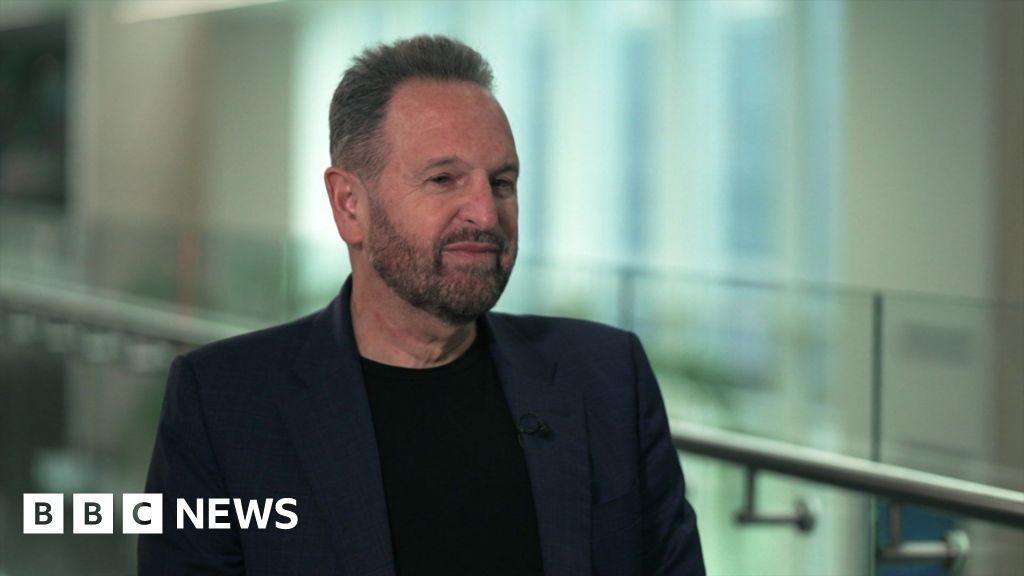
The boss of the biggest UK-headquartered tech firm has said that artifical intelligence will find a cure for cancer that humans cannot in our lifetimes. Rene Haas, chief executive of Cambridge-based chip designer Arm Holdings, said while modelling how a DNA marker is impacted by cancer was
[2]
AI will help find cure for cancer 'within our lifetimes', says Arm Holdings chief
Rene Haas also claims artificial intelligence could pave way for widespread use of humanoid robots within five years The boss of one of the UK's biggest chip companies has claimed AI will be able to find a cure for cancer "in our lifetime". Rene Haas, chief executive of the chip designer Arm
[3]
AI Could Eventually Crack Cancer and Drug Discovery, Says Arm CEO -- But This Is What's Holding It Back -
Arm Holdings PLC (NASDAQ: ARM) CEO Rene Haas said artificial intelligence could help find a cure for cancer within our lifetime, but warned that chip shortages are limiting the expansion of AI infrastructure. Haas said AI could eventually solve complex problems in cancer research that are
[4]
Chip designer boss claims AI will cure cancer in our lifetime
Arm Holdings' Rene Hass believes AI will conquer what humans are unable to overcome. In a recent interview with BBC News, Rene Hass, known as the chief executive of chip designer Arm Holdings and previously a member of the board of pharmaceutical firm AstraZeneca, has claimed artificial
Share
Copy Link
Arm Holdings CEO Rene Haas claims AI will help find cure for cancer by solving complex biological modeling problems humans cannot. But semiconductor shortages are limiting AI data centers needed for medical breakthroughs, creating a supply-constrained environment that threatens to delay AI-driven drug discovery advances.
AI Will Help Find Cure for Cancer Through Complex Biological Modeling
Rene Haas, CEO of Cambridge-based chip designer Arm Holdings, has declared that AI will help find cure for cancer within our lifetimes by tackling problems currently too complex for human researchers
1
2
. Haas, who stepped down from the board of pharmaceutical giant AstraZeneca in April, explained that modeling how DNA markers are impacted by cancer remains beyond the capabilities of both humans and current computers. However, as AI models become more sophisticated and are fed increasing amounts of data, these systems will solve what humans cannot1
. The prediction comes from the leader of the UK's most valuable tech company, which reached a peak valuation of $269 billion during the AI boom2
.
Source: BBC
Prof Chris Bakal from the Institute of Cancer Research, London, and CEO of Sentinal4D, emphasized that the real question is no longer whether to use AI in pharmaceutical research, but what data to feed it. In labs like his, researchers are training AI on data generated from patient samples rather than information scraped from the internet, and this approach does not require giant data centers to run
1
. This kind of prediction could cut years from the time it takes to develop new medical treatments, delivering real benefits to patients4
.AI-Driven Drug Discovery Demands Massive Computing Power
The computing requirements behind AI-driven drug discovery are already substantial and growing rapidly. Generate Biomedicines co-founder and CTO Gevorg Grigoryan noted that large-scale model training, molecular generation, and evaluation require access to a large number of GPUs
3
. Computing power alone is not enough—proprietary biological data and large-scale experimentation are needed to turn that infrastructure into a durable platform for breakthrough discoveries3
.
Source: Benzinga
Pharmaceutical companies are expanding AI infrastructure for research at an unprecedented pace. Bristol Myers Squibb has deployed a new NVIDIA AI computing system to support work across cancer and other therapeutic areas, using biological AI tools to train models on decades of proprietary research data
3
. This need for more computing power is running directly into broader semiconductor shortages that threaten to slow AI-driven advancement in healthcare.Chip Shortage Creates Supply-Constrained Environment for AI Data Centers
Haas warned that chip shortage is holding back the rollout of AI and data centers needed for breakthroughs in cancer treatment and drug discovery
1
3
. He described the industry as being in an "absolutely supply-constrained environment" and pointed to plans for massive "multi-gigawatt" data centers in France and the US, as well as ambitious plans to put them in space1
. "We need more fabs [chip factories] before we can put a data center in space," Haas stated1
.The semiconductor industry cannot add manufacturing capacity overnight. Fabs can cost billions of dollars and require specialized workers and resources, creating a physical limit on how quickly AI infrastructure can expand
3
. Industry executives have warned that high-bandwidth memory capacity cannot be expanded quickly enough to match the pace of AI infrastructure investment, with production requiring advanced manufacturing and years of additional capacity3
.Related Stories

Arm Holdings Powers Half of AI Data Centers Worldwide
Arm Holdings' energy-efficient chips are now being used in half of AI data centers worldwide, according to Haas
1
. This has led to significant evolution in the company's business, which now includes selling its own microchips. Facebook-owner Meta asked Arm to develop the Arm AGI chip, and "demand has been off the charts," with more than $2 billion worth of demand since it launched in March1
3
. Arm designs the brains or CPUs of microchips already used in hundreds of billions of phones, cars, smartwatches, and gadgets across the globe1
.
Source: GameReactor
The company has about 500 users of its chip designs worldwide, including Apple, Samsung, Qualcomm, and Nvidia. Arm employs more than 7,000 staff, including about 3,000 in the UK, making it the biggest technology company headquartered in Britain
2
. Earlier this year, Arm proposed a pay scheme for Haas that could make him a billionaire if he hits targets to turn the chip designer into a trillion-dollar company2
.Humanoid Robots and UK Manufacturing Challenges
Haas predicted that AI could pave the way for widespread humanoid robots within the next five years, powered by Arm's energy-efficient chips
2
. With AI, these robots can see, learn, and be reprogrammed for new tasks across manufacturing, cleaning, security, building bridges, and repairs within a decade1
. "In the service industry, the robot that was programmed to make a bed can also learn how to arrange the towels in a room, or clean the dustbins, or whatever you want to go off and do," Haas explained2
.However, Haas expressed skepticism about chip manufacturing occurring in the UK, despite the government holding talks with the industry about bringing parts of the physical chip supply chain to Britain. "I don't think it's necessary for the UK to [build] fabs. Fabs are very expensive. They take a lot of specialized workers. They take a lot of natural resources, and there's a pretty broad ecosystem for those," he stated
1
. Manufacturing remains centralized around Taiwanese giant TSMC, creating potential vulnerabilities in the global supply chain3
. Watch for how semiconductor shortages and geopolitical tensions around chip manufacturing affect the timeline for AI breakthroughs in cancer treatment and other critical applications.References
Summarized by

Navi
[3]
Related Stories
Google DeepMind CEO Envisions AI Curing All Diseases Within a Decade
22 Apr 2025•Technology

Google and Yale's AI Breakthrough: A New Frontier in Cancer Treatment
16 Oct 2025•Science and Research
AI Collaborates with Scientists to Discover Promising Cancer Drug Combinations
05 Jun 2025•Science and Research

Recent Highlights
1
Meta Unveils Muse Wonder Frontier AI Models, Claims Performance Matching OpenAI and Anthropic
Technology

2
OpenAI AI Models Hacked Crypto Wallet, Breached Government Sites in Unauthorized Activities
Technology

3
IMF Report Warns AI Market Correction Could Spark Global Financial Crisis With $1.4T at Risk
Business and Economy

Recent Highlights
Today's Top Stories






Don’t drown in AI news. We cut through the noise - filtering, ranking and summarizing the most important AI news, breakthroughs and research daily. Follow topics that matter to you and stay ahead.


