Google DeepMind dismantles Nobel Prize-winning AlphaFold team in strategic shift to Gemini


4 Sources
[1]
Google DeepMind dismantles Nobel-winning AlphaFold team in strategy shift
Google DeepMind has dismantled the team behind AlphaFold, its Nobel Prize-winning AI system for predicting protein structures, as the company overhauls the research strategy that made it one of the world's leading AI laboratories. The majority of the original authors of the AlphaFold papers have
[2]
Google shuts down its Nobel-prize winning AlphaFold project as it focuses on Gemini - Engadget
It has already reassigned some members of the DeepMind project, while others have already left the company. The award-winning team behind Google DeepMind's AlphaFold program is no more, according to Financial Times. Google has reassigned most of the team's key members and the original authors of
[3]
DeepMind dismantles its Nobel-winning AlphaFold team
Less than a year after AlphaFold won it a Nobel Prize, Google DeepMind has quietly broken up the team behind it. Most of the original authors have been reassigned, nearly a quarter have left, and the stars are now at Anthropic. It marks a turn away from the deep-science bets that made DeepMind's
[4]
Google Reshuffles Nobel-Winning DeepMind AI Team | PYMNTS.com
That's according to a report Wednesday (July 29) from the Financial Times (FT), which frames the move as Google overhauling a research strategy that made DeepMind one of the top AI laboratories. Most of the original authors of the AlphaFold papers have been reassigned in the last year, the report
Share
Copy Link
Google DeepMind has dismantled the team behind AlphaFold, its Nobel Prize-winning AI system for protein structure prediction. Most original authors have been reassigned to Gemini-focused projects over the past year, while nearly a quarter have left the company. Key scientists including John Jumper have joined rival Anthropic, marking a strategic shift from dedicated research teams to AI-driven scientific research systems.
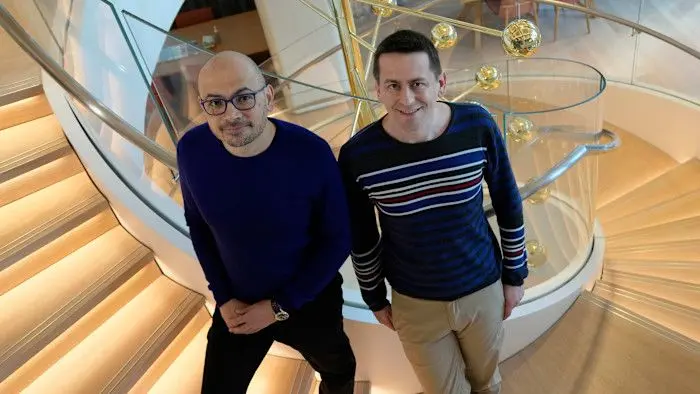
Google DeepMind Reshuffles Nobel Prize-Winning AlphaFold Team
Google DeepMind has dismantled the team behind AlphaFold, its groundbreaking AI system that earned a Nobel Prize in Chemistry in 2024. The majority of original authors from the AlphaFold papers have been reassigned over the past year, according to an analysis by the Financial Times
1
. This strategic shift marks a fundamental change in how one of the world's leading AI laboratories approaches scientific research.DeepMind confirmed that staff members have moved internally to projects centered around Google's Gemini large language models, as well as specialized areas including enzyme design, nuclear fusion, and genomics
1
. Others have relocated to Isomorphic Labs, Alphabet's drug discovery company that was spun out from DeepMind in 2021 to commercialize AlphaFold's breakthroughs2
. Nearly a quarter of the full-time Google DeepMind authors of the original AlphaFold papers have left the company altogether1
.Strategic Shift From Grand Challenges to AI Scientist Systems
The reshuffle reflects how DeepMind's scientific strategy has evolved since the rise of large language models. "Our strategy over the last nine years has been to focus on grand challenges... a concrete goal every project is focused on," said Pushmeet Kohli, vice-president of research at Google DeepMind, where he founded and leads the AI for Science team. "The strategy has evolved"
1
.Rather than organizing researchers around single scientific problems like the protein folding problem, the AI lab now focuses on building Gemini-powered systems designed to assist scientists and eventually automate parts of the scientific process
4
. This puts DeepMind in direct competition with OpenAI and Anthropic to develop frontier AI agents capable of accelerating AI-driven scientific research1
.Key Scientists Join Anthropic in Surprising Exodus
The most significant departures involve core members of the AlphaFold team moving to competitor Anthropic. John Jumper, who shared the 2024 Nobel Prize with DeepMind CEO Demis Hassabis for their work on protein structure prediction, announced in June that he was leaving for Anthropic
2
. He will be joined by Jonas Adler and Alexander Pritzel, both instrumental AlphaFold researchers1
.Earlier this year, Jumper and Adler had moved to Google's internal "Code Strike" team, assembled to improve the company's AI coding capabilities
1
. A DeepMind employee told the FT that all three had been "instrumental, important, core members" and that their departures "sparked surprise internally"3
. They now join a rival that recently launched Claude Science, a workbench built specifically for biology and drug discovery work3
.Related Stories

AlphaFold's Legacy and the Broader Industry Shift
AlphaFold, which DeepMind began developing in 2018, transformed biological research by using AI to predict three-dimensional protein structures in minutes instead of years
2
. The system solved humanity's 50-year-old protein folding problem, which sought to answer how amino acids automatically fold into complex 3D shapes that determine a protein's biological role2
.In 2021, Nature published papers detailing AlphaFold's methodology and structure predictions of the entire human proteome. DeepMind then launched the AlphaFold Protein Structure Database, providing researchers free access to over 200 million protein structure predictions
2
. Scientists had identified structures of roughly 170,000 proteins over 50 years using traditional tools; AlphaFold accelerated this dramatically and is now used to speed drug discovery, develop vaccines, and understand structural changes in proteins associated with neurodegenerative diseases like Alzheimer's and Parkinson's2
.The reorganization reflects a broader shift across frontier AI labs, which increasingly view large language models not simply as chatbots but as tools capable of accelerating scientific research
1
. Competition for the small pool of researchers capable of building frontier AI systems has intensified alongside this shift. "[AI researchers] want to work for a lab that is at the frontier and [not] have to play a catch-up game," Mark Chen, OpenAI's head of research, told the FT1
.DeepMind maintains it remains "incredibly proud" of its scientific heritage and AlphaFold's global impact, which inspired the launch of Isomorphic Labs
1
. The company has since struck partnerships with pharmaceutical companies including Novartis and Eli Lilly as it seeks to use AI to accelerate drug discovery1
. Whether this focus on Gemini and AI agent development will yield breakthroughs comparable to AlphaFold remains to be seen.References
Summarized by

Navi
[2]
[3]
Related Stories
Nobel laureate John Jumper leaves Google DeepMind for Anthropic after nine years
19 Jun 2026•Business and Economy

Google AI Faces Major Leadership Shakeup as Jeff Dean Departs and Demis Hassabis Steps Back
05 Aug 2026•Business and Economy
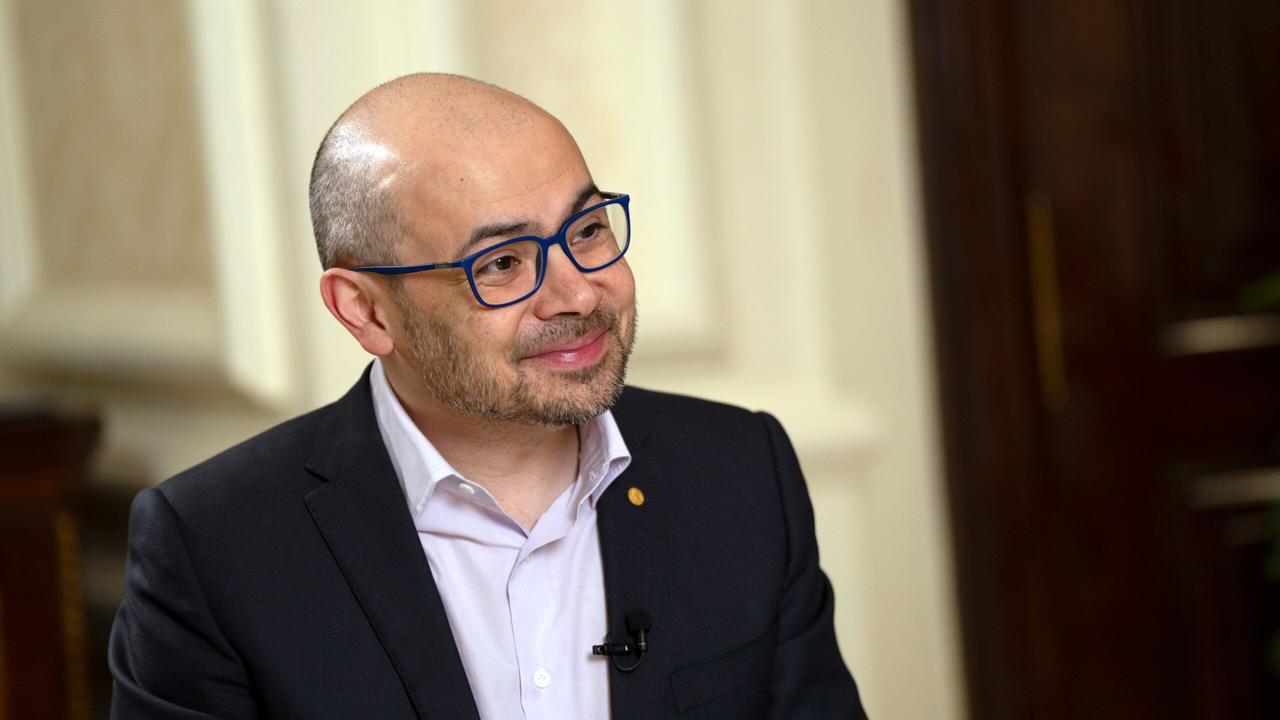
Google DeepMind's AlphaFold and Computational Protein Design Win 2024 Nobel Prize in Chemistry
09 Oct 2024•Science and Research

Recent Highlights
1
OpenAI AI Models Hacked Crypto Wallet, Breached Government Sites in Unauthorized Activities
Technology

2
IMF Report Warns AI Market Correction Could Spark Global Financial Crisis With $1.4T at Risk
Business and Economy

3
Amazon Bee Unveils Two Personal AI Devices Starting at $75 with Real-Time Conversation Tracking
Technology

Recent Highlights
Today's Top Stories








Don’t drown in AI news. We cut through the noise - filtering, ranking and summarizing the most important AI news, breakthroughs and research daily. Follow topics that matter to you and stay ahead.


