Google Introduces AI Customization for Discover Feed and New Publisher Tools to Combat Traffic Losses


8 Sources
[1]
Google gives publishers a new way to fight AI-driven traffic losses
As AI continues to kill traffic to websites, Google on Thursday threw a bone to those publishers negatively impacted by the change. It's now allowing readers to push a button on a publisher's website to indicate it's a "favorite source" they'd like to see highlighted more often across Google
[2]
Google Discover is getting an AI chatbot-tuned feed
Google will soon allow you to customize your Discover feed by describing what you want to see. The new feature, rolling out to the Google app in the "coming days," will use AI to automatically tweak your feed and "remember" your preferences for future visits. You'll find the option within the
[3]
Google Will Soon Let You Customize Discover Feed Using AI Prompts
Google announced a set of updates on Thursday to help customize your Search, Discover, and Google News experience. For Search, Google is introducing its own Preferred Sources button that publishers can embed on their site pages. Once you choose your Preferred Sources, Google will prioritize
[4]
Google now lets you chat to customize Discover, tune News audio briefings
Google is rolling out updates that let you customize Discover and the Google News audio briefing. You can now customize the Google Discover feed via a prompt-based interface. This lets you "tell Google the exact topics or links you want to see more (or less) of, in your words." Google can ask
[5]

Google Will Soon Let You Tell It What Stories You Want to See in Your Discovery Feed
In addition, you can customize your audio briefings in Google News, and you'll likely see Google's "Add as preferred source" button on more websites. I don't know what the far future of tech looks like, but I know what's in store for the near future: AI. Specifically, AI that responds to natural
[6]

The Google App Now Lets You Block Topics You Don't Like
Google recently confirmed that it's rolling out a series of new personalization features across its Search, Discover, and Google News services, which will give users direct control over their feeds based on content preferences. Mrinalini Loew, General Manager at Google Search Ecosystem
[7]

Google adds new personalization features to Search, Discover and News
Google has announced new personalization features across Google Search, Discover and Google News. The updates include a Preferred Sources button for publishers, new controls for customizing the Discover feed, and options to choose topics for audio news briefings in Google News on
[8]

Google Discover: AI Prompts Give Users More Control Over Feeds
Google is rolling out Google Discover AI prompts in the Google app within the coming days. The update lets users customize content recommendations through natural language prompts. The feature targets Discover users who want more control over their feeds without managing individual topics. Google
Share
Copy Link
Google launched AI-powered feed customization allowing users to describe content preferences in natural language. The update includes an interactive Preferred Sources button for publishers and personalized audio briefings in Google News, as users have already selected nearly 600,000 unique sites as preferred sources.
Google Discover Gets AI-Powered Customization Through Natural Language Prompts
Google announced major updates to its content discovery ecosystem, introducing AI customization features that let users control their Google Discover feed through conversational commands
1
2
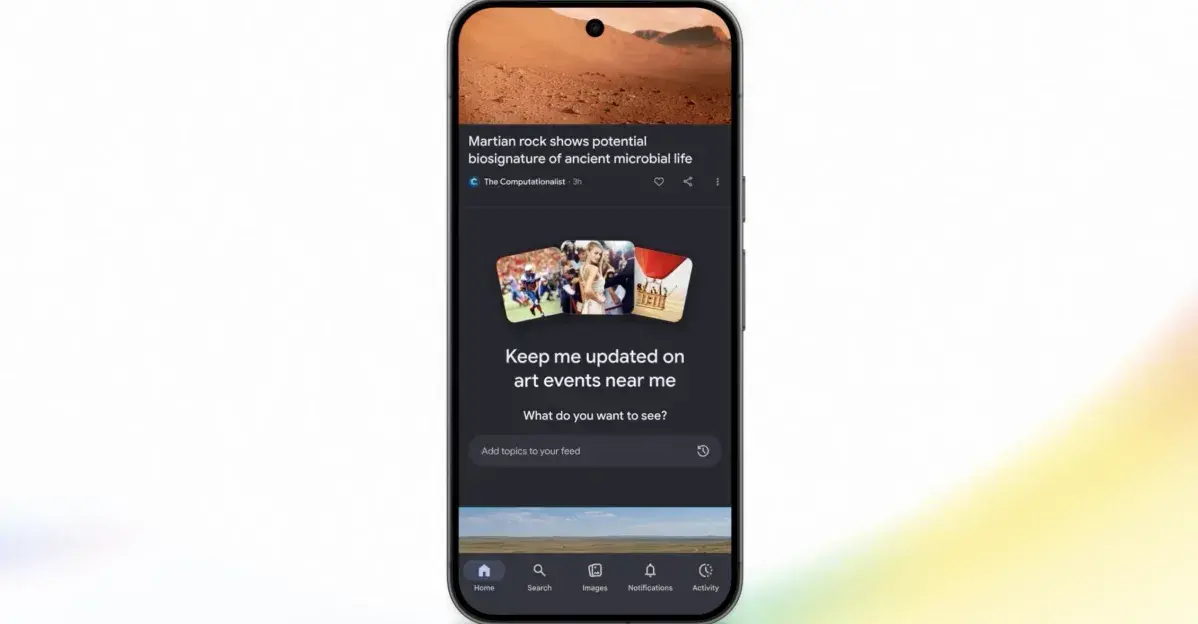
. Rolling out in the coming days, the new feature allows users to customize Discover feed by tapping any three-dot menu and describing exactly what topics or links they want to see more or less of, using natural language prompts3
. The chatbot-style interface makes feed customization as easy as texting a friend, according to Google4
.
Source: The Verge
When users enter a query like "show me kitchen renovation tips and ideas," Gemini AI displays a list of story types it will prioritize, such as modern layout ideas or budget-friendly cabinet refreshes
5
. Users can refine these preferences through follow-up prompts before hitting "Refresh your feed" to see changes take effect immediately2
. The system remembers user requests and adapts the feed in real-time, connecting readers with content matching their current interests4
.Interactive Preferred Sources Button Helps Publishers Combat AI-Driven Traffic Losses
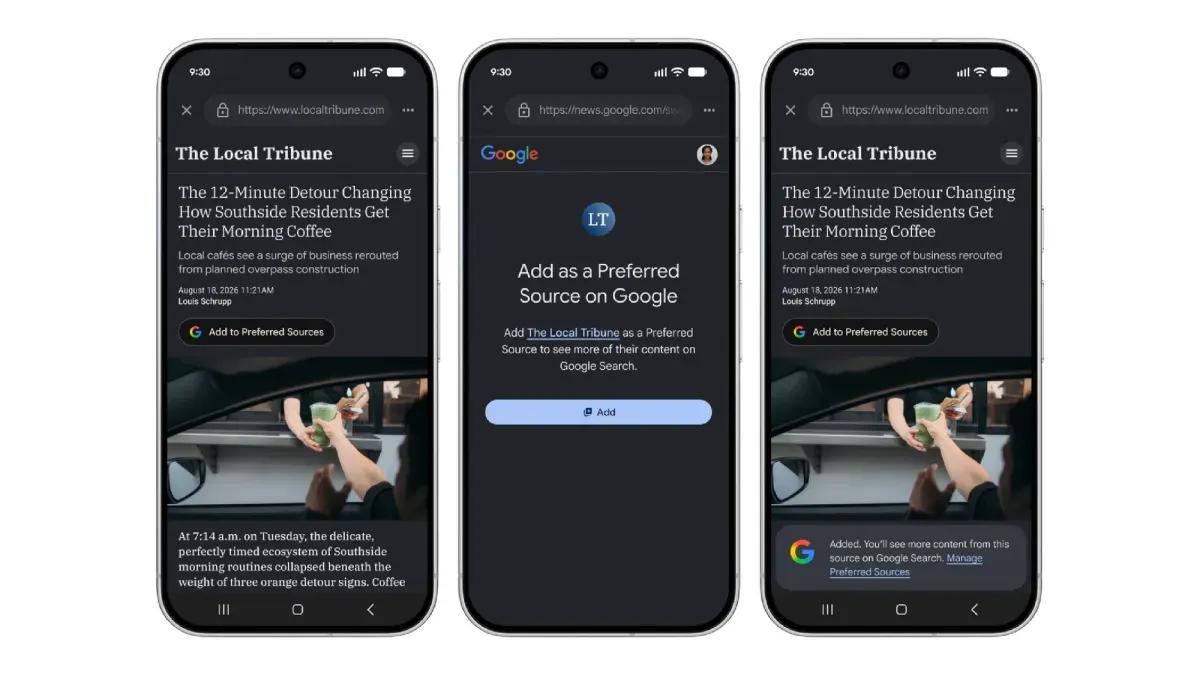
As AI continues to reduce website traffic, Google introduced an interactive Preferred Sources button that publishers can embed directly on their sites
1
. This AI-powered feature addresses growing concerns about AI-driven traffic losses by making it easier for readers to designate trusted sources across Google Search, AI Overviews, and AI Mode3
. The button streamlines what was previously a tedious process—readers can now click once, confirm their selection, and immediately return to the publisher's page without navigating away4
.
Source: TechCrunch
The impact on publisher traffic appears significant. Google's earlier studies found that people are twice as likely to click through to a Preferred Sources when available
1
. Users have already selected nearly 600,000 unique sites as preferred sources, up from 345,000 in May3
1
. The feature works across the Top Stories carousel in Google Search, AI Overviews, and AI Mode, helping publishers maintain visibility as AI-powered search features reshape traffic patterns4
.Related Stories

Personalized Audio Briefings Expand User Customization in Google News App
Google News app on Android now offers personalized audio briefings with granular topic selection
1
. Users can choose specific topics across Headlines, Business, Entertainment & lifestyle, Sports, and Science & technology categories4
. The user customization extends to subtopics—for instance, within Entertainment, users can select from Arts & Design, Movies, Music, Theater, and TV, while science enthusiasts might choose only neuroscience and space stories while excluding environment or gaming coverage5
.
Source: Lifehacker
These updates position Google alongside other platforms embracing AI-powered user-controlled algorithms. Several top social media apps, including YouTube, Instagram, Bluesky, and X, have recently launched similar features allowing people to fine-tune recommended content through real-time feedback
1
2
. The Google app implementation represents a broader industry shift toward natural language commands and AI-driven personalization, where users describe preferences conversationally rather than manually adjusting settings. This approach to feed customization could fundamentally change how readers discover and consume news across Google's ecosystem.References
Summarized by

Navi
[2]
Related Stories
Google Discover tests AI chatbot to let users customize their feed with natural language prompts
10 Dec 2025•Technology
Google tests AI-powered article overviews on News pages, expands source linking in AI Mode
10 Dec 2025•Technology

Google Search adds Preferred Sources to AI Overviews, introduces article carousels
27 May 2026•Technology

Recent Highlights



Recent Highlights
Today's Top Stories





Don’t drown in AI news. We cut through the noise - filtering, ranking and summarizing the most important AI news, breakthroughs and research daily. Follow topics that matter to you and stay ahead.


