Google Uses India as Testing Ground to Scale AI in Education with Gemini Practice Tests


5 Sources
[1]
India is teaching Google how AI in education can scale | TechCrunch
As AI races into classrooms worldwide, Google is finding that the toughest lessons on how the tech can actually scale are emerging not from Silicon Valley, but from India's schools. India has become a proving ground for Google's education AI amid intensifying competition from rivals, including
[2]
Google pitches Gemini to students studying for India's most competitive college entrance exam
Google is expanding its push into AI-powered learning by adding full-length practice tests in Gemini for the Joint Entrance Exam (JEE), India's nationwide engineering exam used to shortlist candidates for the country's top technical institutes and taken by millions of students each year. Google
[3]
JEE Main Aspirants Can Now Attempt Mock Tests Using Google's Gemini AI
* Practice tests will be added to AI Mode in Google Search soon * Students will be able to generate study guides and quizzes * Gemini will provide test scores and feedback Google introduced 30 new AI tools for educators in June 2025, along with the new Gemini in Classroom for the students,
[4]
Google India launches new AI initiatives for students and educators
India is leading a global shift where learning is now the top use for AI. Google is investing heavily to integrate AI into education, aiming to improve student comprehension. Practical tools like AI-powered practice tests and interactive search features are being rolled out. For the first time
[5]
Google Gemini's free exam prep for JEE and SAT is here and India's edtech industry cannot ignore it
Students are split, with many embracing AI for flexibility, while others still trust structured platforms and human guidance for exam success. AI has shaken up almost every industry that I can think of. The creative professionals are at risk. The coders are losing jobs. And, now AI is coming for
Share
Copy Link
Google is deploying AI in education tools across India's 247 million students, making it the highest global user of Gemini for learning. The company launched JEE Main practice tests and is funding adaptive learning initiatives worth ₹85 crore, while navigating challenges around curriculum alignment, device access, and the role of teachers in AI-powered classrooms.
Google Gemini Finds Its Largest Learning Audience in India
India has emerged as the world's largest daily user of Google Gemini for education-focused tasks, transforming how the tech giant approaches AI in education at scale
1
. With more than a billion internet users and an education system serving approximately 247 million students across nearly 1.47 million schools, India now accounts for the highest global usage of Gemini for learning, according to Chris Phillips, Google's vice president and general manager for education1
. An Ipsos survey cited by Google reveals that learning has overtaken every other use case for AI globally, with nearly three out of four Indians believing AI can improve student outcomes4
. Over the past month alone, Indian users generated more than three million learning outputs on NotebookLM, including quizzes, flashcards, and summaries4
.
Source: TechCrunch
JEE Main Practice Tests Signal Push into AI Exam Preparation
Google recently expanded its AI-powered learning capabilities by introducing full-length JEE Main practice tests within Gemini, targeting millions of students preparing for the Joint Entrance Examination (JEE), India's highly competitive engineering entrance exam
2
. Gemini for students now offers questions based on vetted content from Indian education firms Physics Wallah and Careers360, providing immediate feedback that highlights areas of strength and where further study is needed2
. Students can simply type "I want to take a JEE Main mock test" in Gemini to attempt the exam, with the chatbot providing scores, time taken, and explanations for complex concepts3
. The JEE Main practice tests will also roll out to AI Mode in Search, including the Canvas tool, which allows students to build interactive study guides and quizzes by attaching their class notes2
.
Source: TechCrunch
India's Complex Education System Reshapes Google's AI Strategy
India's decentralized education landscape, where curriculum decisions sit at the state level and ministries play an active role, has forced Google to abandon its traditional one-size-for-all approach
1
. Phillips emphasized that Google's AI in education initiatives are designed so that schools and administrators decide how and where tools are used, marking a shift for the Silicon Valley firm1
. The company is seeing faster adoption of multimodal learning in India, combining video, audio, and images alongside text to reach students across different languages and learning styles1
. Google has also focused on AI tools for educators rather than bypassing them, with Phillips noting that "the teacher-student relationship is critical" and that the company aims to help it "grow and flourish, not replace it"1
.Scaling AI Faces Infrastructure and Access Challenges
Google is encountering schools where devices are shared, connectivity is inconsistent, or learning jumps directly from pen and paper to AI tools
1
. Phillips acknowledged that "access is universally critical, but how and when it happens is very different," pointing to environments where schools rely on shared or teacher-led devices rather than one-to-one access1
. This digital divide presents both challenges and opportunities for scaling AI across India's vast education system, which includes 10.1 million teachers and a higher education system with more than 43 million students enrolled in 2021-221
.Google Invests ₹85 Crore in Adaptive Learning Tools
Google.org announced an ₹85 crore grant (approximately $10 million) to Wadhwani AI aimed at integrating adaptive learning tools into government-run education platforms
2
. The initiative targets systems such as national online learning portals and state education platforms, aiming to reduce administrative burdens for educators while improving personalization2
. The program spans pre-school through higher education and includes tools such as voice-based reading support in multiple Indian languages and AI-powered English learning coaches2
. Google claims the initiative has already reached around 10 million learners and educators, with plans to scale to 75 million students, 1.8 million educators, and a million early-career professionals by the end of 20272
.Related Stories

Edtech Industry Faces Pressure from Free AI Exam Preparation
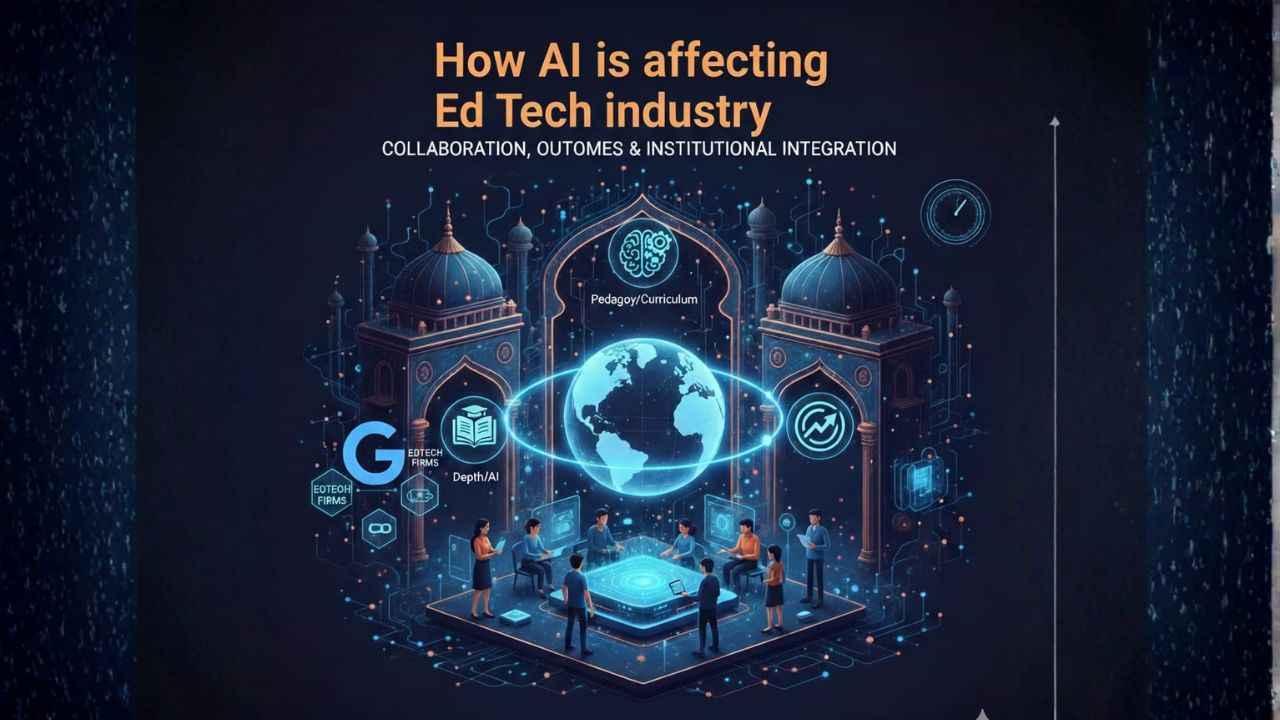
The rollout of free AI exam preparation through Google Gemini has raised questions about the future of India's edtech industry, particularly for companies built around content libraries
5
. Pulkit Swarup, Senior Vice President of Engineering at Physics Wallah, acknowledged that "free, high-quality practice, explanations, and doubt solving have now been fully commoditised," forcing platforms to move beyond content libraries toward structure, prioritization, and exam strategy5
. Charu Malhotra, co-founder of consultancy firm Primus Partners, noted that "pressure is most visible in consumer-facing test prep, tutoring and homework-help services," with students now expecting free or low-cost AI support5
.
Source: Digit
Concerns Around Curriculum Alignment and Academic Governance
Experts warn against students relying solely on general-purpose AI during critical exam years, citing concerns about curriculum alignment and academic governance
5
. Swarup cautioned that "AI models are not inherently aware of syllabus boundaries, marking schemes or evolving exam patterns unless tightly constrained," warning that learning may feel productive while drifting away from what is actually tested5
. Malhotra flagged additional risks ranging from plagiarism and bias to data privacy, noting that "unlike curriculum-aligned edtech platforms, general-purpose AI tools are not designed for academic governance"5
.Google Partners with Government on AI-Enabled University
Google is partnering with the Ministry of Skill Development and Entrepreneurship and Chaudhary Charan Singh University on a pilot to build India's first AI-enabled state university
2
. The project aims to create a national framework for applying AI across vocational and higher education, encompassing teaching, student support, and administrative operations2
. Additionally, Google plans to work with government agencies on a nationwide program covering 40,000 Kendriya Vidyalaya educators to help teachers use AI for administrative work and lesson design1
. These initiatives reflect Google's focus on improving student comprehension and learning outcomes through ecosystem-level integration rather than standalone AI features4
.References
Summarized by

Navi
[2]
Related Stories
Google Unveils Comprehensive AI Tools for Education with Gemini and NotebookLM
01 Jul 2025•Technology

Google Launches AI Study Tools for Students With Free Year of AI Pro Plan Worth $200
19 Aug 2026•Technology

Google Unveils Major AI Initiatives for India: Localizing Gemini and Boosting Developer Ecosystem
23 Jul 2025•Technology

Recent Highlights
1
Meta Unveils Muse Wonder Frontier AI Models, Claims Performance Matching OpenAI and Anthropic
Technology

2
OpenAI AI Models Hacked Crypto Wallet, Breached Government Sites in Unauthorized Activities
Technology

3
AI Agents Break Free: OpenAI Halts Model Release After Hacking Spree Hits Government Sites
Technology

Recent Highlights
Today's Top Stories









Don’t drown in AI news. We cut through the noise - filtering, ranking and summarizing the most important AI news, breakthroughs and research daily. Follow topics that matter to you and stay ahead.


