10 Sources
[1]
Google's new Nano Banana 2 Lite image model is its fastest and cheapest yet
There are plenty of AI image-generation models these days, but the ones capable of quality outputs tend to be slow and expensive. Google DeepMind says its new image model, known as Nano Banana 2 Lite, offers the best balance of quality and speed. It's available today across the Google ecosystem, creating images in a fraction of the time it takes Google's beefier models. The new model is part of the Gemini 3.1 family -- it's technically called Gemini 3.1 Flash Lite Image. On one hand, Google says this model is ideal for exploring ideas and "rapid-fire" prototyping, applications in which quality can take a backseat. However, the company has also provided some examples aimed at showing how close Nano Banana 2 Lite can get to the quality of its other image models. In addition to the examples, Google also has Elo scores from Arena.ai ready to go, showing that users rate Nano Banana 2 Lite outputs almost as highly as the non-Lite versions. However, vibemarking doesn't always focus on the details that can make AI images look silly upon closer inspection. Google notes that Nano Banana 2 Lite tends to have more trouble with text, particularly if it's very small, and infographics are more likely to include incorrect data. Characters and people may also show poor consistency across iterations. But it's fast. You can go from text to an image in about 4 seconds in the default low-thinking mode. Generating the same images in the standard Nano Banana takes about 20 seconds. The speed and efficiency mean developers accessing Nano Banana 2 Lite via the API will pay a lot less. Google says it averages out to $0.034 per 1K image. The API rates are $0.25 for 1M input tokens and $1.50 for 1M output tokens. That's half the rate for Nano Banana 2. For Nano Banana Pro, the input tokens are only a little more at $2 for 1M, but the output pricing is $12 (eight times higher). If you're just tinkering with an AI model to make a single image, it probably makes sense to use the Flash or Pro versions of Nano Banana. They can handle text better, and anything photorealistic will be more accurate. But for rapid iteration and design inspiration, Nano Banana 2 Lite could save you a lot of time and money. The rapid-fire nature of Nano Banana 2 Lite also means there may be a lot more AI slop circulating online. Google is not the only company offering cheap image generation, but Nano Banana 2 Lite does appear to be a step up in quality compared to other low-cost options. Google notes that all images produced by Nano Banana 2 Lite have SynthID watermarks, which theoretically labels them as AI even after edits. You can play with Nano Banana 2 Lite in Google AI Studio, and it's live in the API. You can also access the new image model in Gemini by selecting the Flash-Lite option and asking for an image. Google says it's also expanding access to Gemini Omni Flash, which it announced at I/O in May. Omni, which is still limited to video generation, is now available in the Gemini API and Google AI Studio. It previously launched in the Gemini app and Google Flow.
[2]
Google introduces a faster, cheaper image generator with Nano Banana 2 Lite
Google on Tuesday released Nano Banana 2 Lite, the newest version of its in-house AI video and image generator. This version is significantly faster and more affordable than its previous release, the company claims. The model has much lower latency and can produce images in 4 seconds, which makes it a good option if you need to workshop images and produce a large number of them in quick succession, Google says. It costs $0.034 per 1,000 images, which makes it quite affordable for people looking to draft and perfect their content at scale. The release follows last summer's launch of the original Nano Banana, powered by Gemini 3.1 Flash, and the February release Nano Banana 2. The latter introduced new powers for the generator, including the ability to create more realistic images. The company also offers Nano Banana Pro, which is described as a more powerful (and more expensive) model for advanced use cases. While Nano Banana 2 is referred to as a "generalist workhorse," Banana 2 Lite is optimized for high-volume workflows that need to occur at a rapid pace, Google claims. Despite consumer backlash over so-called AI slop created by image models, companies continue to invest heavily in AI tools that can generate imagery and videos. However, Google often markets its models as convenient tools that can assist with the creation of advertisements. That said, the ties between Hollywood and AI companies continue to tighten -- much to the consternation of some creative communities and audiences. Indeed, Google just struck a $75 million deal with the much-beloved indie studio A24 -- a partnership that has suffered significant criticism from fans. Nano Banana 2 Lite is now available through Google AI Studio and the Gemini API, as well as Google's Gemini Enterprise Agent Platform. Google says it serves as a replacement for Nano Banana, which the company now refers to as its "legacy model." Also on Tuesday, Google announced a wider release of Gemini Omni Flash, which was initially introduced at Google I/O earlier this year. Flash costs $0.10 per second of video output. Plus, Google showed off a new demo app, Omni Product Studio, which it says can take static images generated by Omni and transform them into "cinematic e-commerce videos." "Building with generative media is often about creative iteration," the company said in a blog. "With these two models, developers can build comprehensive, end-to-end multimedia experiences that connect rapid image generation with video creation and editing."
[3]
Google's has a faster version of Nano Banana with three demo apps you can try right now
Google has also created three new demo apps that showcase how the two models can work together. One of the issues with image generators is how long it takes for the AI to generate an image. Google is shaving down that wait time with a quicker and leaner model than Nano Banana 2. Along with this new model, it is also expanding Gemini Omni Flash to more users. And to showcase what these two models can do together, the company has created a trio of demo apps. Jumping right in to today's announcement, Google is releasing Nano Banana 2 Lite. According to the Mountain View-based firm, this is the fastest and most cost-efficient model in the Nano Banana family to date. It's capable of taking text queries and turning them into images in four seconds. In the example Google provided, the AI was able to generate five images before the old model generated one. In terms of efficiency, it uses less bandwidth and costs $0.034 per 1K image. Nano Banana 2 Lite is available today in AI Mode in Search, the Gemini app, Google AI Studio, Gemini API, Gemini Enterprise Agent Platform, and more. The second part of the announcement deals with the expansion of Gemini Omni Flash. Google first introduced the model during I/O, replacing Veo as the default video generation tool in the Gemini app. Now, Omni Flash is rolling out to developers in Google AI Studio, the Gemini API, and Gemini Enterprise Agent Platform, in addition to the Gemini app and Google Flow. As mentioned earlier, Google has launched three demo apps to showcase how the two models can work together. The first app is called Anywhere, and transports your image to dozens of iconic landmarks when you upload a photo. Gemini Omni flash then turns the photo and the location into an animated clip. Next up is Space Lift, which is an interior design app that lets you reimagine a room with a photo upload. The last app, Omni product studio, turns static images generated by Nano Banana 2 Lite into e-commerce videos generated by Gemini Omni Flash.
[4]
Google releases Nano Banana 2 Lite, its fastest and cheapest AI image generator yet
Google launched Nano Banana 2 Lite, an image model that generates in four seconds for under four cents per thousand images. Google on Tuesday released Nano Banana 2 Lite, the fastest and cheapest model in its Nano Banana family of AI image generators. The model produces images in four seconds and costs under four cents per thousand images, making it the company's most aggressive play yet for developers who need to generate visuals at scale. It is available immediately in Google AI Studio, the Gemini API, and the Gemini Enterprise Agent Platform. Nano Banana 2 Lite is built for speed, not quality. Google positions it as the model for "rapid ideation and high-velocity developer pipelines" where latency and cost matter more than fine detail. The company's existing Nano Banana 2, launched in February, remains the recommended model for work that demands higher fidelity, while Nano Banana Pro handles complex professional use cases. The new model replaces the original Nano Banana, which Google now calls its "legacy model." Despite prioritizing speed, Nano Banana 2 Lite retains what Google describes as reliable prompt adherence, strong character consistency, and legible text rendering inside images. It is also rolling out to consumer surfaces including AI Mode in Search, the Gemini app, NotebookLM, Google Photos, Stitch, Google Flow, and Google Ads. Alongside the image model, Google announced a wider release of Gemini Omni Flash, its video-generation model first introduced at Google I/O in May. Omni Flash is now available to developers through the Gemini API and Google AI Studio for the first time, priced at ten cents per second of video output. Clips are capped at ten seconds, with longer durations expected later. Google is pitching the two models as a pipeline. Developers can use Nano Banana 2 Lite to rapidly generate and iterate on images, then pass those images to Omni Flash to animate them into video. A new demo app called Omni Product Studio converts static images into what Google calls "cinematic e-commerce videos," and two other demos let users place themselves into landmark photos or reimagine room interiors. The releases land in a market where AI-generated imagery remains deeply polarizing. A recent study found that 60 percent of TikTok videos are now classified as AI-generated content, and the term "AI slop" has entered everyday vocabulary to describe low-quality machine-made media flooding social platforms. Google has leaned heavily into marketing its image tools for advertising and business use rather than consumer creativity, a framing that sidesteps some of the backlash but not all of it. The company's relationship with Hollywood is also drawing scrutiny. Google DeepMind struck a $75 million deal with indie studio A24 last week to develop AI filmmaking tools, a partnership that prompted significant criticism from fans and creative communities who accused A24 of undermining the artists it built its reputation championing. A24 has defended the partnership, saying it wants to "dictate what tools get built for artists" rather than leave those decisions to technology companies alone. Nano Banana 2 Lite and Omni Flash are the latest additions to a generative-media stack Google has been building out aggressively since last year. The strategic bet is that making image and video generation fast enough and cheap enough will embed these tools into everyday developer workflows before the debate over their social costs is resolved.
[5]
NotebookLM adding Short Video Overviews with Nano Banana 2 Lite
Google today announced Nano Banana 2 Lite and preview availability of Gemini Omni Flash as its latest media generation models for developers, as well as NotebookLM users. Nano Banana 2 Lite (officially known as Gemini 3.1 Flash-Lite Image) is Google's "fastest and most cost-efficient image generation and editing model." Entering general availability today, the company touts 4-second image generation. Compared to the original Nano Banana (Gemini 2.5 Flash Image), this new model offers "fast image generation with a significant leap in visual quality and capability." Capabilities include: * World knowledge: Quickly draft accurate contextual scenes, rough data visualizations, and location-specific mockups. * Character consistency: Maintain character identities and object fidelity across multiple swift generations to easily build out storyboarding tools or embed virtual try-ons for e-commerce. * Quick text and localization: Draft copy on the fly by rendering legible text directly into rapid generations to see how typography works across localized ad variations. Meanwhile, Gemini Omni Flash is now in public preview. This follows the Gemini app announcement at I/O: * Conversational editing: Swap characters, relight scenes, or alter angles using natural language while natively maintaining original audio and video tracks. * Multimodal input: Combine text, images, and video inputs to guide video generation. Gemini Omni Flash natively generates audio with every video output, while maintaining character, object, and style consistency. * World knowledge and simulation: It combines an intuitive understanding of physics with Gemini's knowledge of history, science and cultural context, bridging the gap from photorealism to meaningful storytelling. * Text and action synchronization: Render legible text and graphics directly into video, syncing kinetic typography and explainer text with on-screen movements. Gemini Omni Flash pricing matches Veo 3.1 Fast at $0.10 per second of 720p video output. Both models are now available in Google AI Studio and the Gemini Enterprise Agent Platform. NotebookLM is using Nano Banana 2 Lite for Short Video Overviews. This new format provides a 60-second portrait video with "narrative explanations and educational animations," like Cinematic Video Overviews. It will be available in the coming weeks.
[6]
Google launches Nano Banana 2 Lite and Gemini Omni Flash. How to try them now
Google has some new AI tools for users to mess around with. The company announced in a blog post on Tuesday that Nano Banana 2 Lite and Gemini Omni Flash are now available. These are a couple of new toys that live within Google's suddenly very expansive AI ecosystem, both serving a different purpose. For starters, Nano Banana 2 Lite is a speedy, cost-effective image generator that Google says is designed for people who currently use the original Nano Banana model. It can apparently spit out images four seconds after text inputs, making it ideal for prototyping. According to Google, this model is now available in Google AI Studio, other developer-centric tools like Gemini API, and consumer-facing places like the Gemini app and AI Mode in Google Search. On top of that, Gemini Omni Flash is now available in a public preview in Google AI Studio and Gemini API, as well as in the Gemini app and Google Flow. This tool is designed for video generation and editing, allowing users to use natural language, video, and text inputs to get the results they want with Omni Flash. However, there are limitations: Videos can only be 10 seconds long, and Google says character consistency in scene changes is problematic at the moment. Feel free to go check these out whenever you have a moment.
[7]
Google unveils Nano Banana 2 Lite aka Gemini 3.1 Flash-Lite for low cost, 4-second fast enterprise image generations
Google is upgrading its AI image generation capabilities today with the debut of Nano Banana 2 (NB2) Lite, an optimized model built for rapid execution and tight infrastructure budgets. Technically designated as Gemini 3.1 Flash-Lite Image on Google's application programming interface (API), NB2 Lite is positioned as the fastest and most cost-effective option within Google's creative model family, capable of generating images in 4 seconds at a flat rate of $0.034 per 1,000 images. It's available immediately to enterprise developers through Google AI Studio, the Gemini API, and the Gemini Enterprise Agent Platform (GEAP). It's not quite as fast or customizable as startup Krea's new, partially open licensed Krea 2 Turbo (which allows for open modification and commercial usage by small enterprises), but the big selling point here is the low price and bundling with Google's larger Workplace and AI offerings. This release lands alongside the public preview of Gemini Omni Flash, a multimodal conversational video generation and editing model. However, while Omni Flash represents Google's long-term bet on agentic video manipulation, Nano Banana 2 Lite is the immediate infrastructure workhorse, tailored specifically for high-throughput commercial application, rapid programmatic prototyping, and automated asset generation workflows. The technology of speed At its core, Nano Banana 2 Lite is built directly upon the Gemini 3.1 Flash Lite architecture, engineered to solve the persistent tension between computational latency and operational overhead. In high-velocity enterprise frameworks, traditional large-scale image models introduce significant friction due to multi-second processing delays and high per-token costs. Google's new lightweight model circumvents these bottlenecks by generating a standard 1k resolution image in under four seconds. This represents a stark performance optimization over its legacy predecessor, Nano Banana (Gemini 2.5 Flash Image), achieved through targeted enhancements in core baseline capabilities. According to internal documentation, the model features upgraded world knowledge for drafting rough data visualizations and contextual layouts, enhanced character consistency to preserve identity across continuous image streams, and localized typographic rendering capabilities. The trade-offs inherent to this "Lite" designation are transparently outlined in Google's technical data sheets. Unlike the broader standard Nano Banana 2 (NB2) and Nano Banana Pro (NB Pro) lines, which support versatile multi-resolution scaling across 1k, 2k, and 4k outputs, Nano Banana 2 Lite restricts its resolution support exclusively to a 1k canvas. Yet, within this specialized operational boundary, the architectural tuning yields surprising competitive efficiencies. In standardized internal benchmarks, Nano Banana 2 Lite achieved a Text to Image arena Elo score of 1251. This score comfortably eclipses the legacy NB1 score of 1151 and remarkably edges out the bulkier, more expensive NB Pro, which sits at 1245 in the same text-to-image track. For specialized editing tasks, the model maintains a single-image editing Elo score of 1308 and a multiple-image editing score of 1294, providing a highly optimized sweet spot for real-time applications. A boost to rapid prototyping and marketing research From a product implementation perspective, Google is marketing Nano Banana 2 Lite not as an artistic engine, but as an invisible, high-throughput utility layer for automated workflows. T he target demographic spans software engineers, programmatic ad platforms, and digital commerce applications where rapid iteration is crucial. Think real-time A/B testing for thousands of targeted advertising variations or immediate layout adjustments on localized storefronts. Google highlights three specific production environments where the model excels. First, its world knowledge allows systems to instantly draft accurate contextual scenes or location-specific mockups. Second, its character consistency handles the rigorous demands of storyboarding tools and digital fashion try-ons, where keeping object fidelity static across sequential generations is historically difficult. Finally, its text rendering improvements mean legible copy can be embedded directly into rapid ad generations, allowing teams to verify layout compatibility across various languages on the fly. Developers should note, however, that while native image generation operates with lowest-latency profiles, conditional image editing tasks may experience marginally higher response times due to the secondary processing layers required to rewrite existing pixels. Licensing and acess The deployment mechanism of Nano Banana 2 Lite via proprietary APIs underscores an enterprise-first commercial licensing strategy. Unlike open-weights models that developers can pull down to run locally under open-source frameworks like Apache 2.0 or modified OpenRAIL licenses, Google's latest models remain tightly integrated into its managed cloud stack. For enterprises, this eliminates the operational complexity of hosting hardware but binds usage strictly to Google's metered pricing terms.Financially, this commercial strategy is highly aggressive. At $0.034 per 1,000 images across both AI Studio and GEAP channels, the model undercuts the older, less capable NB1 model ($0.039) and slashes costs dramatically compared to standard NB2 ($0.067) and NB Pro ($0.134) tiers. Internal notes indicate that the model delivers roughly 60-70% of the general capability of NB2 and NB Pro while executing at significantly higher speeds and a fraction of the cost. By lowering the fiscal barrier to high-frequency image generation, Google is making a direct play to lock enterprise developers into its commercial platform ecosystem.
[8]
Start building with Nano Banana 2 Lite and Gemini Omni Flash
Sorry, your browser doesn't support embedded videos, but don't worry, you can download it and watch it with your favorite video player! Today, we're making it faster and easier to experiment, refine and scale your ideas with two major releases: * Introducing Nano Banana 2 Lite: Our fastest, most cost-efficient image model in the Nano Banana family yet, built for high throughput, speed and scale. Nano Banana 2 Lite is available today in Google AI Studio, Gemini API and Gemini Enterprise Agent Platform. It is also rolling out today in Google consumer surfaces including AI Mode in Search, Gemini app and many other products. * Bringing Gemini Omni Flash to developers: Our high quality, cost-efficient model for video generation and conversational editing, now available in Google AI Studio, the Gemini API and Gemini Enterprise Agent Platform for the first time. Omni Flash is also available in the Gemini app and Google Flow. Building with generative media is often about creative iteration. With these two models, developers can build comprehensive, end-to-end multimedia experiences that connect rapid image generation with video creation and editing. Whether your workflow requires generating thousands of images or editing multi-turn video sequences, you now have two new models to build faster, iterate seamlessly and bring your creative vision to life.
[9]
Google's Gemini Omni Flash and Nano Banana 2 Lite support slick media content creation at lower costs
Google's Gemini Omni Flash and Nano Banana 2 Lite support slick media content creation at lower costs Google LLC is enhancing its generative artificial intelligence capabilities for creators with the debut of a pair of new media-focused models in the Gemini Enterprise Agent Platform. The new additions are Gemini Omni Flash and Nano Banana 2 Lite, and according to Google, they're designed for better quality image and video generation at lower prices, with some of the most competitive cost-performance ratios currently available. With the new models, creators will see shorter asset generation times and lower production costs, so they can create more high-quality media content at large scale, Google said. The Gemini Enterprise Agent Platform is designed for businesses that want to deploy autonomous AI agents at large scale. It has proven especially popular with creators and digital marketers, providing a unified environment for them to embed sophisticated media tools into agentic workflows and streamline automated content creation. So rather than switching between different video and image editors, they can design, build, remix and publish digital assets from a centralized location. Available in public preview starting today, Gemini Omni Flash is an advanced multimodal model that's geared toward high-end video and audio generation. According to Michael Gerstenhaber, vice president of product management at Google Cloud, it's one of the most aggressively priced models of its kind, with users charged just 10 cents per second of video output. The model stands out for its conversational editing tools, which make it possible for users to swap out characters, adjust camera angles and relight scenes using only natural language commands. Creators can also upload videos, text and images to the model to aid in content generation, asking it to mirror the style of those inputs in its own outputs, for example. Gemini Omni Flash excels at generating video with synchronized audio, Gerstenhaber said. The company has also introduced text and action synchronization capabilities to the model to ensure that any text in the videos appears smooth and legible even if there's on-screen motion elsewhere. Early adopters have already made extensive use of Gemini Omni Flash's new capabilities. The global marketing giant WPP plc has integrated the model with its WPP Open agentic platform to enable more control over the production of AI-generated content. Nishant Tahilramani, creative director at AI video platform Invideo Inc., said he was especially impressed with the model's visual effects capabilities and the way they enable traditional filmmaking techniques to be mixed with AI tools on the same productions. As for Nano Banana 2 Lite, it has been optimized primarily for raw speed. Gerstenhaber said it can output high-quality, professional-grade imagery in as little as four seconds, so that creators can iterate on their ideas as fast as they can dream them up. According to Gerstenhaber, Nano Banana 2 Lite has gained significant upgrades in terms of visual quality compared to its predecessor, which was designated as Gemini 2.5 Flash Image. For instance, it boasts more comprehensive "world knowledge" that makes it better at generating localized mockups. For instance, if someone wants to generate a backdrop of the Scottish Highlands, Nano Banana 2 Lite will create a scene that mirrors the location perfectly. The model also supports better character consistency for tasks such as storyboarding. Once more, the initial reception is highly promising. Idan Yonas, director of AI content and innovation at the creative asset platform company Artlist Ltd., said the model's rapid generative speed means that generation is now faster than ideation, enabling creators to stay "inside the idea" instead of getting distracted while waiting for a progress bar. Another customer is the design platform Figma Inc., which is using the model within the Figma Weave canvas to enable more rapid layout iteration. Meanwhile, Manus AI has integrated it into autonomous workflows to support the quick creation of visual assets in web pages and slide decks, it said. Gerstenhaber said Nano Banana 2 Lite is available with provisioned throughput via the Gemini Enterprise Agent Platform from today, with Gemini Omni Flash expected to roll out "soon." Both of the new models support CP2A content credentials and SynthID watermarks that guarantee the authenticity of any media they generate.
[10]
Google launches Nano Banana 2 Lite and Gemini Omni Flash models By Investing.com
Investing.com - Google (NASDAQ:GOOGL) released two new artificial intelligence models on Tuesday, expanding its Gemini product line with Nano Banana 2 Lite and Gemini Omni Flash. The company said Nano Banana 2 Lite is its fastest and most cost-efficient image generation model, while Gemini Omni Flash is designed for video generation and conversational editing. Nano Banana 2 Lite delivers text-to-image outputs in four seconds at a cost of $0.034 per 1,000-resolution image. The model is available in Google AI Studio, Gemini API and Gemini Enterprise Agent Platform. It is also rolling out in Google consumer products including AI Mode in Search, Gemini app, NotebookLM, Google Photos, Stitch, Google Flow and Google Ads. Gemini Omni Flash supports video generation and editing from text, image and video inputs, priced at $0.10 per second of video output. The model currently offers 10-second video generations, with longer durations planned. Google said the model uses Gemini's knowledge of subjects such as history and biology to construct videos. The company said the models can be used together, with Nano Banana 2 Lite generating images that can be passed to Gemini Omni Flash for animation into video. Google released three demo applications showcasing the combined workflow: Anywhere, Space Lift and Omni product studio. Both models use SynthID watermarking and are built on Google's infrastructure. Nano Banana 2 Lite is the company's recommended replacement for developers using the first version of Nano Banana. Gemini Omni Flash is available in public preview starting Tuesday in Google AI Studio and the Gemini API. This article was generated with the support of AI and reviewed by an editor. For more information see our T&C.
Share
Copy Link
Google released Nano Banana 2 Lite, an AI image generator that creates images in just 4 seconds at $0.034 per 1,000 images. Part of the Gemini 3.1 family, the model prioritizes speed and cost efficiency over quality, targeting developers who need high-volume image generation. Google also expanded Gemini Omni Flash for video creation, positioning both tools as a pipeline for rapid multimedia workflows.
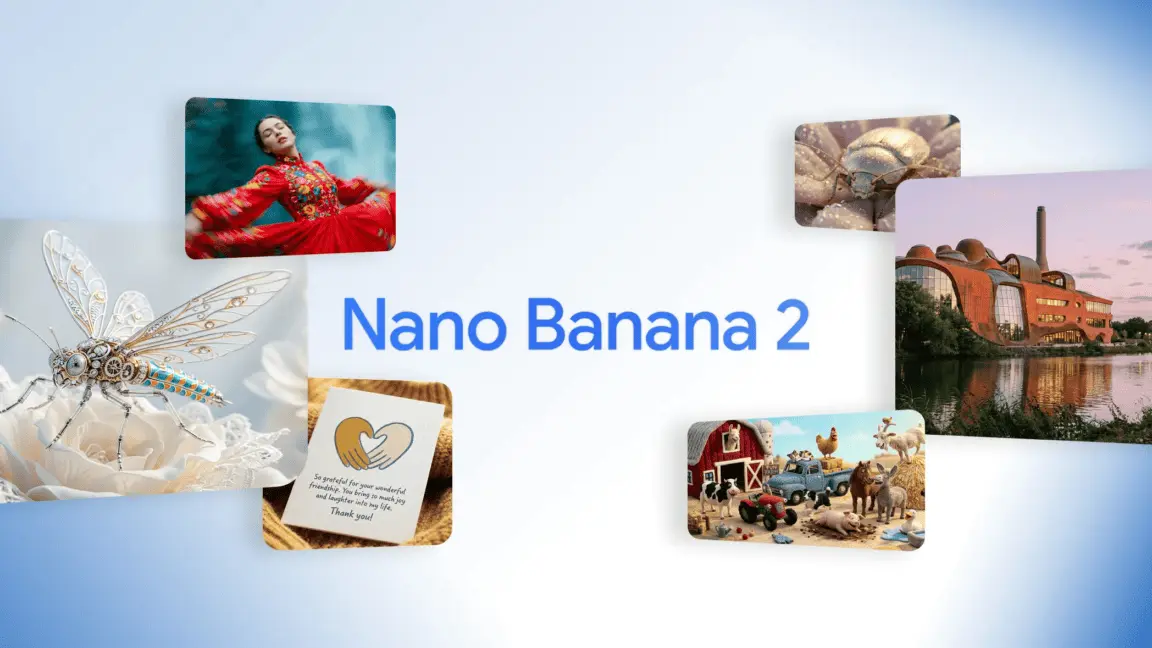
Google DeepMind has launched Nano Banana 2 Lite, officially known as Gemini 3.1 Flash-Lite Image, marking a significant shift toward speed and affordability in the AI image generator market
1
4
. The model generates images in approximately 4 seconds, a dramatic improvement over the standard Nano Banana 2, which takes about 20 seconds to produce comparable outputs1
. This fastest and cheapest AI image generator from Google costs just $0.034 per 1,000 images, with API rates set at $0.25 for 1 million input tokens and $1.50 for 1 million output tokens—half the rate of Nano Banana 21
. The cost-efficient image generation model is now available across Google AI Studio, the Gemini API, and the Gemini Enterprise Agent Platform, as well as consumer-facing products including the Gemini app, AI Mode in Search, NotebookLM, Google Photos, and Google Ads3
4
.

Source: VentureBeat
Nano Banana 2 Lite is part of the Gemini 3.1 family and represents Google's most aggressive play for developers who need to generate visuals at scale
4
. Google positions the model for rapid prototyping and "rapid-fire" ideation, where latency and cost matter more than fine detail1
4
. The company acknowledges trade-offs in quality: Nano Banana 2 Lite tends to struggle with small text rendering, infographics may include incorrect data, and character consistency across iterations can be poor1
. Despite these limitations, Arena.ai Elo scores show users rate Nano Banana 2 Lite outputs almost as highly as non-Lite versions1
. The model replaces the original Nano Banana, which Google now designates as its "legacy model"2
. For work demanding higher fidelity, Google recommends Nano Banana 2, described as a "generalist workhorse," while Nano Banana Pro handles complex professional use cases at $2 for 1 million input tokens and $12 for 1 million output tokens—eight times higher than Nano Banana 2 Lite1
2
.Alongside Nano Banana 2 Lite, Google announced wider availability of Gemini Omni Flash, its video generation model first introduced at Google I/O in May
2
4
. Omni Flash is now accessible to developers through Google AI Studio and the Gemini API for the first time, priced at $0.10 per second of 720p video output4
5
. Clips are currently capped at 10 seconds, with longer durations expected later4
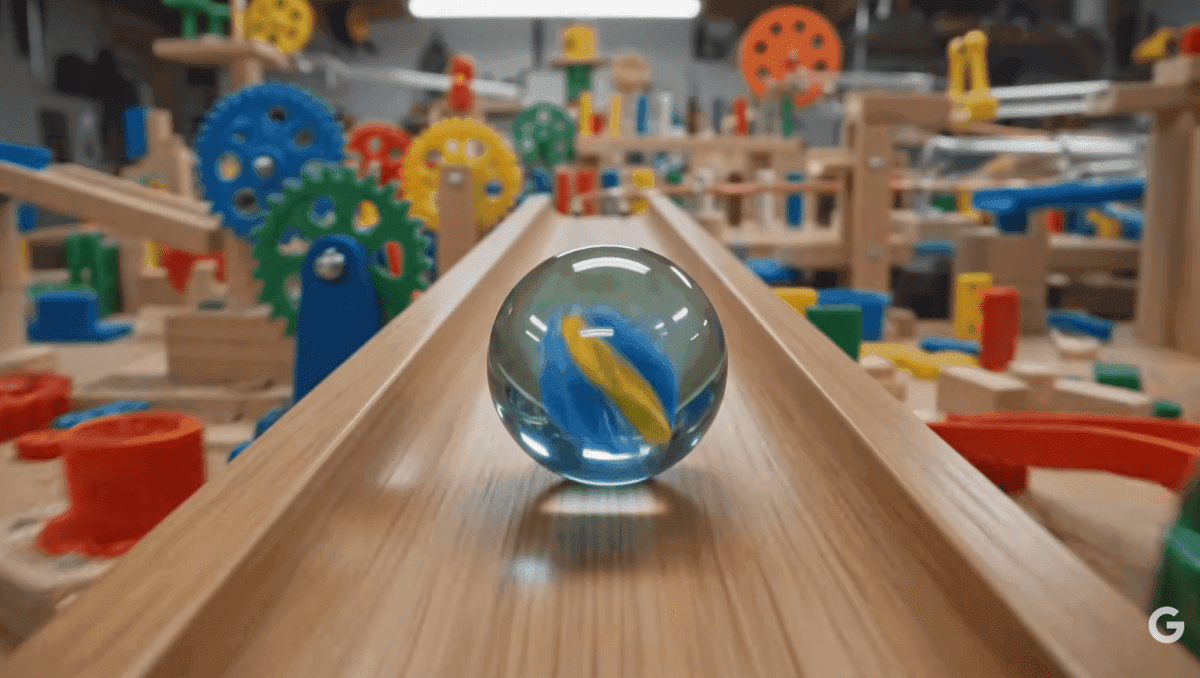
. Google is pitching both models as a pipeline for the generative media ecosystem: developers can use Nano Banana 2 Lite to rapidly generate and iterate on images, then pass those images to Omni Flash to animate them into video2
4
. To showcase this integration, Google launched three demo apps: Omni Product Studio converts static images into what the company calls "cinematic e-commerce videos," Anywhere transports uploaded photos to iconic landmarks and animates them, and Space Lift reimagines interior spaces3
4
.
Source: TechCrunch
Related Stories
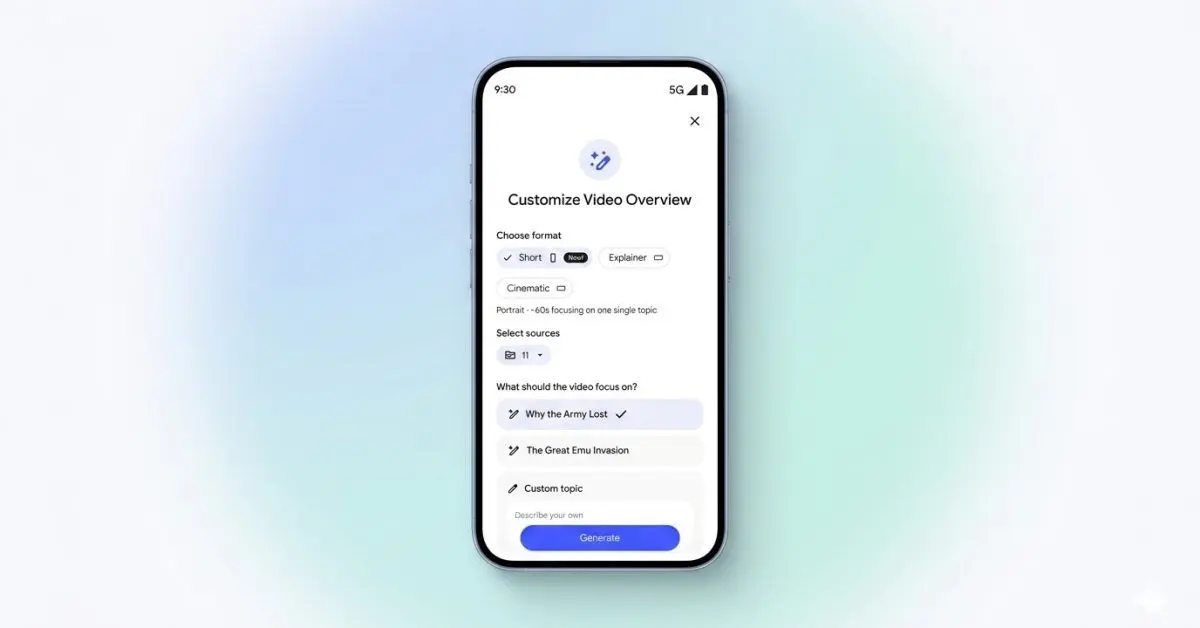
NotebookLM is integrating Nano Banana 2 Lite to power Short Video Overviews, a new format that provides 60-second portrait videos with "narrative explanations and educational animations"
5
. This feature will become available in the coming weeks, extending the model's reach beyond developer workflows into consumer productivity tools5
. The model's capabilities include world knowledge for drafting contextual scenes and data visualizations, character consistency for storyboarding tools and virtual try-ons, and quick text rendering for localized ad variations5
.
Source: 9to5Google
The rapid-fire nature of Nano Banana 2 Lite raises concerns about increased AI slop circulating online, though Google notes all images produced include SynthID watermarks that theoretically label them as AI-generated even after edits
1
. A recent study found that 60 percent of TikTok videos are now classified as AI-generated content4
. Google has leaned heavily into marketing its image tools for advertising and business use rather than consumer creativity, a framing that sidesteps some backlash but not all4
. Google DeepMind's recent $75 million deal with indie studio A24 to develop AI filmmaking tools has drawn significant criticism from fans and creative communities who accuse the studio of undermining the artists it built its reputation championing2
4
. The strategic bet is that making image and video generation fast enough and cheap enough will embed these tools into everyday developer workflows before the debate over their social costs is resolved4
.Summarized by
Navi
[3]
03 Oct 2025•Technology

31 Jan 2025•Technology

07 Nov 2025•Technology

1
Technology

2
Policy and Regulation

3
Policy and Regulation