Google's $10M Spirit Airlines Data Deal Triggers Bipartisan Privacy Concerns Over AI Training


5 Sources
[1]
Lawmakers raise alarm at Google plan to acquire Spirit Airlines data for AI models
WASHINGTON, Oct 8 (Reuters) - More than 120 US lawmakers raised concerns on Thursday about Alphabet's Google unit acquiring defunct carrier Spirit Airlines' internal data for $10 million to train artificial intelligence systems. The lawmakers led by Senator Elizabeth Warren and Representative
[2]
Lawmakers concerned over Google's plan to acquire AI models from Spirit Airlines data
A bipartisan group of dozens of lawmakers led by Rep. Steven Horsford (D-Nev.) and Sen. Elizabeth Warren (D-Mass.) is concerned over Google's plan to acquire Spirit Airlines data to train its AI models. A letter from the group, sent to Google CEO Sundar Pichai and Spirit CEO Dave Davis, took issue
[3]
Lawmakers raise alarm at Google plan to acquire Spirit Airlines data for AI models
More than 120 US lawmakers raised concerns about Google's deal to acquire Spirit Airlines' internal data for artificial intelligence. The data included employee records and communications, prompting requests to limit the transaction's scope. Google stated that it does not seek personal information
[4]
Lawmakers Urge Google and Spirit Airlines to Pause Data Sale | PYMNTS.com
The spokesperson said this after more than 100 U.S. lawmakers called on the CEOs of Spirit Airlines and Google to halt the transfer of information related to former Spirit employees until protections are in place to prevent it from being misused. The lawmakers made this call in a letter addressed
[5]

Spirit Airlines wants to sell its data to Google. Is there a privacy issue?
They lost their paychecks, livelihoods, and health insurance this spring. Now, they may lose their privacy. As out-of-business Spirit Airlines liquidates, the planes and the landing rights aren't the only leftovers for sale. The people overseeing the remaining assets also want to sell employee
Share
Copy Link
Google won a $10 million auction for defunct Spirit Airlines' internal data to train AI systems, acquiring 100 million emails and 500 million Microsoft Teams messages. But over 120 lawmakers led by Elizabeth Warren and Steven Horsford are raising alarms about employee privacy, demanding stronger safeguards before the bankruptcy court approves the November hearing.
Lawmakers Challenge Google's Controversial Data Acquisition
More than 120 US lawmakers raised concerns about Google's plan to acquire Spirit Airlines data for AI models, marking what legislators call "uncharted territory" in employee privacy protection
2
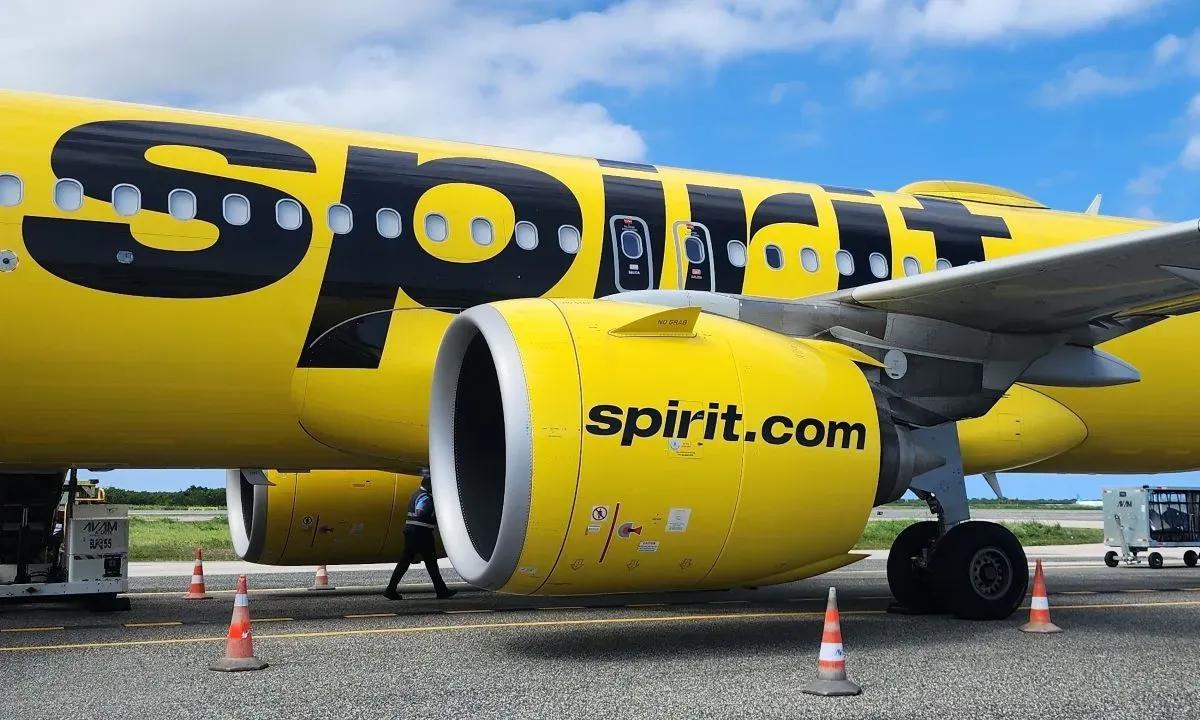
. The bipartisan group, led by Senator Elizabeth Warren and Representative Steven Horsford, sent a letter to Google CEO Sundar Pichai and Spirit CEO Dave Davis challenging the proposed $10 million sale1
. The data sale emerged from Spirit Airlines' bankruptcy liquidation after the carrier halted operations in May3
.
Source: PYMNTS
Massive Scale of Employee Data at Stake
The scope of Google Spirit Airlines data under consideration is staggering. Google won an August auction for approximately 100 million emails, 500 million Microsoft Teams messages, 17 million OneDrive files, 20 million SharePoint items, and 516 code repositories containing 30 million lines of custom software
4
. Beyond digital communications, the acquisition encompasses over 1 million time cards, 148,000 employee tax forms, and over 3 million payroll records5
. This material holds value for AI companies because it represents proprietary "real-world" data that can train AI systems to handle complex business tasks4
.Privacy and Ethical Implications Under Scrutiny
Lawmakers expressed deep concerns about employee privacy protections in the AI era. "We are concerned that conventional de-identification safeguards may not be sufficient to protect employee privacy in the context of modern artificial intelligence," the lawmakers wrote, citing a National Institute of Standards and Technology report stating that AI could potentially re-identify de-identified data
2
. The data sale may include sensitive information about former Spirit employees, such as medical information, accommodation requests, disciplinary files, and compensation details4
. Horsford emphasized that former Spirit employees "did not hand over their information so it could be sold to train a different company's AI"4
.
Source: The Hill
Google Defends De-Identification Protocol
Google maintains it has no interest in acquiring personally identifiable information. "As we've said from the beginning of the process, we are not looking to buy any personal information from Spirit," a Google spokesperson stated
2
. The company confirmed that any data received will be rigorously de-identified by an independent third party before Google accesses it3
. A privacy ombudsman recommended on October 5 that a US bankruptcy judge approve the deal at a hearing, provided that personal information from 97 million Spirit customers is excluded3
.Related Stories

Union Opposition Softens Amid Ongoing Negotiations
Initial resistance from labor organizations has evolved as Spirit excluded more data from the data sale and offered additional privacy protections. Sara Nelson, president of the Association of Flight Attendants-CWA, initially declared "Our data simply is not for sale. We did not and do not consent"
5
. However, following several conversations, the union acknowledged in a September 24 filing that "the parties have made progress"5
. Nelson noted that "the outcome of conditions on this proposed sale to Google carries tremendous implications for workers across the economy"3
.What's at Stake for AI Development and Worker Privacy
This case represents the first time an employer has attempted to sell employee data as an asset in bankruptcy, according to the Electronic Privacy Information Center, which filed to serve as a friend of the court
5
. The controversy highlights growing tension between AI innovation and worker privacy protections. Lawmakers demanded six specific steps, including excluding employee information as much as possible and establishing a de-identification protocol that affected employees agree to2
. The bankruptcy court hearing, postponed multiple times, is now scheduled for November 65
. Meanwhile, Spirit also received a $7.5 million bid from Mercor, an AI data company, as a runner-up offer for the employee data3
. Watch for how this precedent-setting case shapes future data acquisition practices as companies increasingly seek real-world datasets to train AI systems.References
Summarized by

Navi
Related Stories
Google Wins $10M Bid for Spirit Airlines Data as Flight Attendants Union Files Privacy Objection
25 Aug 2026•Technology

Google Acquires Spirit Airlines Data for $10 Million to Train AI Models Amid Privacy Concerns
18 Aug 2026•Technology
micro1 Offers $12.5M for Spirit Aviation Data, Outbidding Google in AI Training Records Battle
05 Sept 2026•Business and Economy

Recent Highlights
1
OpenAI's AI Models Disprove 27-Year Exponential Time Hypothesis, Rendering Decades of Research Obsolete
Science and Research

2
Google DeepMind unveils Genie 4 world model with audio and 2-minute interactive simulations
Technology

3
Microsoft AI Diagnostic Tool Beats Doctors With 83% Accuracy on Complex Medical Cases
Health

Recent Highlights
Today's Top Stories







Don’t drown in AI news. We cut through the noise - filtering, ranking and summarizing the most important AI news, breakthroughs and research daily. Follow topics that matter to you and stay ahead.


