Google's AI Integration in Search Threatens Online News Publishers


3 Sources
[1]
Publishers fear AI summaries are hitting online traffic
When actress Sorcha Cusack left the BBC drama Father Brown in January, it made headlines, including for the newspapers owned by Reach, among them The Mirror, and the Daily Express. But the story did not generate the traction the Reach newspapers would have expected a year ago, or even at the start
[2]
Google's AI Ambitions An â€~Existential Crisis’ For News Online
Amid mounting concerns over its monopoly in online search, Google’s intensified integration of artificial intelligence into how it presents the world's news outlets is prompting a seismic shift in the digital journalism landscape. Major publishers worldwide report plunging traffic and revenue,
[3]
'Existential crisis': how Google's shift to AI has upended the online news model
Media sites are taking action on several fronts as traffic referrals dry up and AI companies plunder their content When the chief executive of the Financial Times suggested at a media conference this summer that rival publishers might consider a "Nato for news" alliance to strengthen negotiations
Share
Copy Link
Google's implementation of AI-powered features in search results is causing significant concern among news publishers. These AI tools are leading to decreased traffic and potential revenue loss for media outlets, sparking debates about the future of digital journalism.
Google's AI Integration Reshapes Digital News Landscape
Google's recent integration of artificial intelligence into its search results has sent shockwaves through the digital journalism industry, potentially threatening the very foundation of online news publishing
1
2
3
. The introduction of AI-powered features such as AI Overviews and AI Mode has led to a significant decline in traffic to news websites, raising concerns about the future viability of digital journalism2
3
.
Source: Gizmodo
Dramatic Traffic Declines and Revenue Concerns
Publishers are reporting alarming drops in traffic from search engines, with some experiencing declines of up to 89%
3
. Jon Slade, CEO of the Financial Times, revealed a "pretty sudden and sustained" decline of 25% to 30% in search-driven traffic to their articles2
3
. This trend is not isolated, as other major publishers, including Reach (owner of The Mirror and Daily Express), have observed similar patterns1
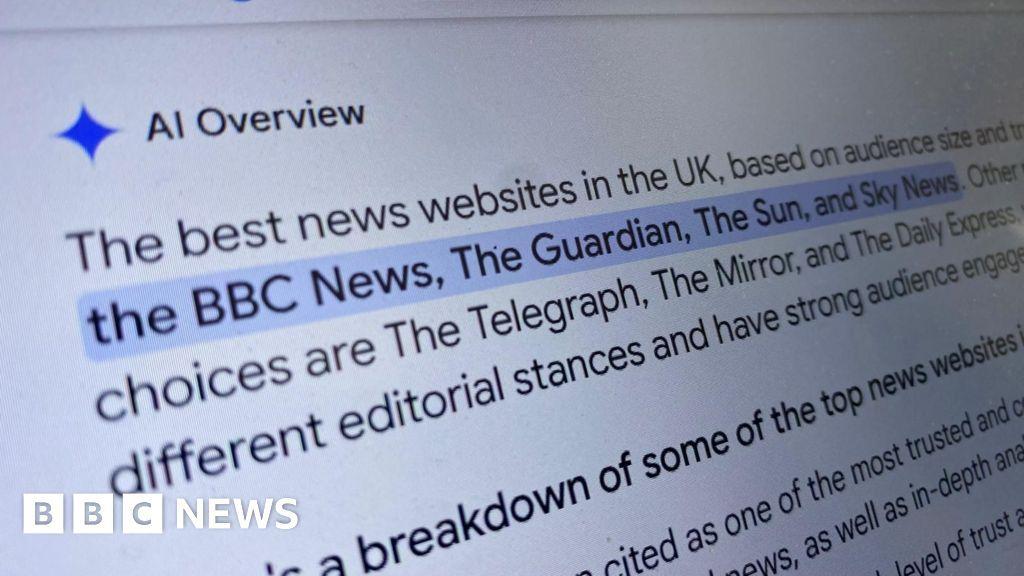
.The primary culprit appears to be Google's AI Overviews, which provide concise summaries at the top of search results, often eliminating the need for users to click through to the original sources
1
2
. This shift in user behavior is causing significant concern among publishers who rely heavily on search-driven traffic for revenue3
.
Source: BBC
Industry-Wide Impact and Calls for Action
The repercussions of this AI-driven change extend beyond individual publishers. The entire news ecosystem is grappling with what some describe as an "existential crisis"
2
3
. Industry leaders and analysts warn that the current trend could undermine the trustworthiness of news ecosystems and threaten the foundation of digital journalism2
.In response, publishers are taking action on multiple fronts:
-
Lobbying for transparency: News organizations, including DMG Media, Guardian Media Group, and the Periodical Publishers Association, are urging the UK's Competition and Markets Authority to mandate Google to provide traffic statistics from AI Overview and AI Mode
3
. -
Exploring alliances: Some industry leaders, like Jon Slade of the Financial Times, have suggested forming a "Nato for news" alliance to strengthen negotiations with AI companies
3
. -
Addressing copyright concerns: Publishers are intensifying efforts to prevent AI companies from scraping protected content without permission, aiming to safeguard the estimated $169 billion sector
2
.
Related Stories



Broader Implications and Future Outlook
The shift towards AI-generated summaries and personalized feeds raises concerns about the creation of "echo chambers" filled with sensationalism and clickbait, potentially compromising the integrity of information
2
. Additionally, the rise of Google Discover as a dominant source of engagement has been criticized for rewarding clickbait-type content at the expense of meaningful journalism2
3
.As the industry grapples with these challenges, many experts believe that regulatory intervention may be inevitable to preserve journalistic diversity and economic viability in the digital age
2
. The ongoing debate over copyright and data rights, coupled with considerations of legislation to regulate AI's use of copyrighted material, underscores the complex landscape that publishers and tech giants must navigate in the coming years2
3
.References
Summarized by

Navi
Related Stories
Recent Highlights



Recent Highlights
Today's Top Stories









Don’t drown in AI news. We cut through the noise - filtering, ranking and summarizing the most important AI news, breakthroughs and research daily. Follow topics that matter to you and stay ahead.


