Google's Potential Self-Breakup: A Bold Strategy Amidst Antitrust Pressures


2 Sources
[1]
What if Google Just Broke Itself Up? A Tech Insider Makes the Case.
David Streitfeld has written about Google since it was a start-up in the early 2000s. Google has lost two important antitrust cases in the past year. Its search business is threatened and its stock is stalled. Federal prosecutors are pushing for it to divest various businesses. Unless the company
[2]
What if Google just broke itself up? A tech insider makes the case.
Google is facing antitrust pressure, with courts urging major divestitures. Analyst Gil Luria suggests a bold self-breakup could unlock $3.7 trillion in value and boost innovation. Historical parallels like AT&T and Microsoft show the risks of resistance. "The likelihood of the Google board
Share
Copy Link
Amidst antitrust challenges, a tech analyst proposes Google voluntarily break itself up, potentially unlocking trillions in value and fostering innovation.
Google's Antitrust Challenges and the Case for Self-Breakup
Google, the tech giant valued at $2 trillion, finds itself at a crossroads as it faces significant antitrust pressure. Having lost two crucial antitrust cases in the past year, the company's search business is under threat, and its stock performance has stalled
1
. As federal prosecutors push for divestiture of various businesses, a bold proposition has emerged: What if Google voluntarily broke itself up?The Analyst's Perspective
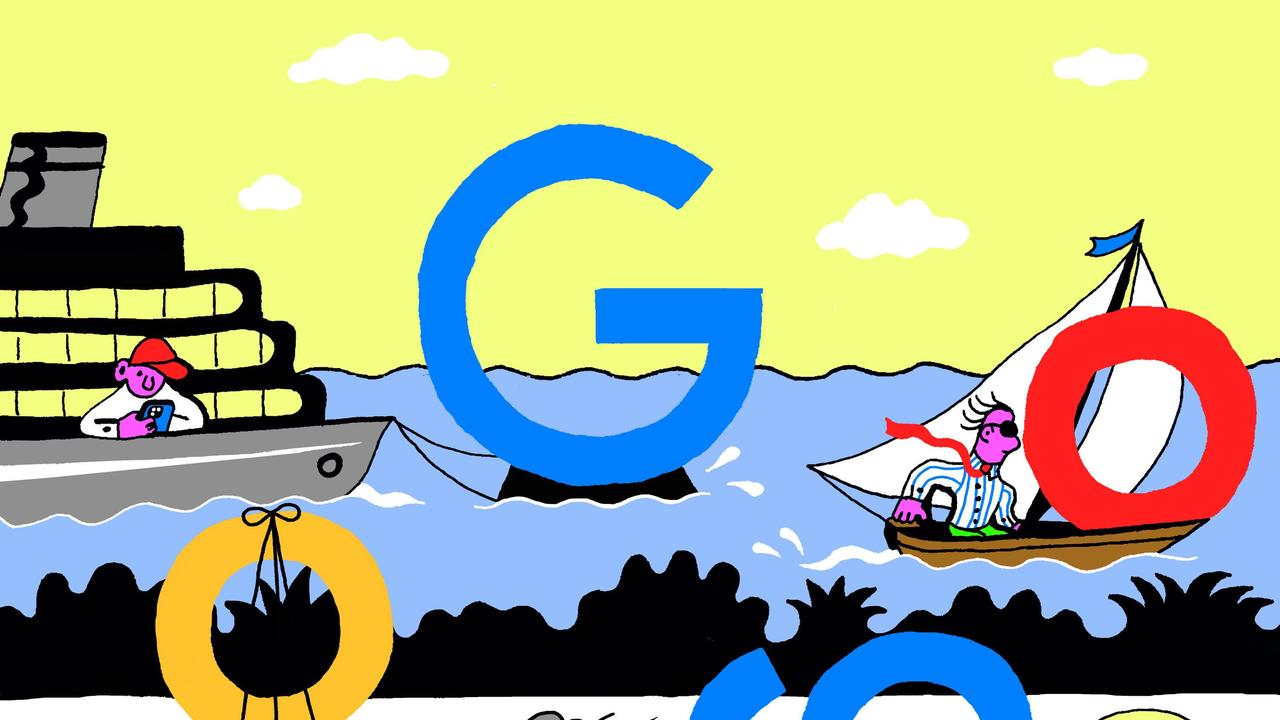
Source: NYT
Gil Luria, a technology analyst with D.Davidson & Co., has put forward a provocative idea. In a research note published on May 12, Luria argued that Google has become a conglomerate, offering an array of products and services with little relation to each other
1
. He suggests that a self-initiated breakup could unlock tremendous value and foster innovation.Potential Value Unlocked
Luria estimates that if Google were to split its various components into independent entities, the combined value could exceed $3.trillion, nearly doubling the company's current valuation
2
. For instance, he argues that Waymo, if publicly traded, might approach Tesla's $1 trillion valuation, given its advanced self-driving technology.The Pressure on Google's Core Business
Google's $2 trillion market valuation is primarily driven by search advertising, which generates over half of its revenues. However, this core business is under increasing pressure as artificial intelligence begins to answer queries more effectively. In April 2025, Google searches in Apple's Safari browser declined for the first time ever, contributing to a 9% drop in Google's share price this year
1
.Legal Battles and Potential Consequences
Google is currently embroiled in two significant antitrust cases. The first, regarding its monopoly on online search, is in the penalty phase, with a decision expected this summer. The second, concerning Google's advertising technology, resulted in a decision against the company in April, with the penalty phase scheduled for later this year
2
.Related Stories


The Case for Self-Breakup
Proponents of the self-breakup strategy argue that it could benefit Google in multiple ways:
- Financial gains: Unlocking hidden value in various divisions.
- Innovation boost: Unleashing engineers to create groundbreaking products.
- Competitive advantage: Preempting court-mandated breakups with a strategic move.
- Political goodwill: Potentially garnering support across the political spectrum.
Historical Precedent and Industry Perspectives

Source: ET
There is a historical precedent for such a move. In the early 1980s, AT&T voluntarily broke itself up to avoid losing an antitrust case against the Justice Department
1
. Some asset managers, like Gene Munster of Deepwater Asset Management, see the logic in a potential Google breakup, suggesting it could realize real value2
.Google's Response and Counter-Arguments
Google has not directly commented on Luria's proposal. However, the company has argued that splitting off Chrome and Android would harm businesses built on these platforms and undermine security
1
. Adam Kovacevich, CEO of the tech-funded Chamber of Progress, contends that Google's size is necessary for tackling major challenges like AI development2
.While Luria acknowledges that the likelihood of Google's board proceeding with a voluntary breakup is low (less than 10%), he believes that this probability increases daily as the company faces mounting pressures
1
. As the tech landscape evolves and regulatory scrutiny intensifies, Google's next moves could reshape the future of Big Tech.References
Summarized by

Navi
Related Stories
Recent Highlights



Recent Highlights
Today's Top Stories



Don’t drown in AI news. We cut through the noise - filtering, ranking and summarizing the most important AI news, breakthroughs and research daily. Follow topics that matter to you and stay ahead.


