Google's Two-Year Sprint to Catch Up in the AI Race: From ChatGPT Shock to Gemini


4 Sources
[1]
Inside Google's Two-Year Frenzy to Catch Up With OpenAI
The search giant should've been first to the chatbot revolution. It wasn't. So it punched back with late nights, layoffs -- and lowering some guardrails. A hundred days. That was how long Google was giving Sissie Hsiao. A hundred days to build a ChatGPT rival. By the time Hsiao took on the
[2]
Google's AI race: A two-year run of crisis and chaos, recapped
When OpenAI released ChatGPT at the end of 2022, Google quickly lost control of the AI space it had helped pioneer. Although Google was the first to develop the transformer architecture that underpins modern large language models, it was OpenAI who raised the bar and ushered in a new era with
[3]
Google's race from behind against OpenAI has 'been like sprinting a marathon'
After OpenAI took the world by storm with the launch of ChatGPT, Google (GOOGL+0.09%) reportedly gave its team working on artificial intelligence 100 days to build a competitor -- fearful of falling behind in a race it had been leading. More than two years later, the company's Gemini AI models are
[4]
A Peek Inside Google's 100-Day AI Sprint: How Gemini Went From Generating Controversial Images To Emerging As A ChatGPT Rival - Alphabet (NASDAQ:GOOG), Alphabet (NASDAQ:GOOGL)
Alphabet Inc.'s GOOG GOOGL Google embarked on a 100-day mission to create a competitor to ChatGPT. The project, led by Sissie Hsiao, aimed to counter the rising popularity of OpenAI's ChatGPT. What Happened: In December 2022, Hsiao, a veteran of over 16 years at Google, was tasked with assembling
Share
Copy Link
A detailed look at Google's intense efforts to regain its position in the AI field following OpenAI's release of ChatGPT, including the development of Bard and Gemini, internal restructuring, and the challenges faced along the way.

Google's AI Wake-Up Call
In late 2022, OpenAI's release of ChatGPT sent shockwaves through the tech industry, catching even AI pioneer Google off guard. Despite having developed the transformer architecture that underpins modern large language models, Google found itself trailing in the public AI race. This prompted a "code red" situation within the company, leading to a frenzied two-year period of restructuring, rapid development, and strategic shifts
1
2
.The 100-Day Sprint
In response to the ChatGPT challenge, Google tasked Sissie Hsiao, a 16-year company veteran, with developing a competitor in just 100 days. Hsiao's team was given the mandate of "quality over speed, but fast," highlighting the urgency of the situation
1
. This sprint resulted in the creation of Bard, Google's first public-facing chatbot, which was brought to life through the efforts of thousands of employees working long hours and with scaled-down security checks2
.Restructuring and Collaboration
Recognizing the need for a more unified approach to AI development, Google made significant organizational changes. The company merged its two world-class AI research teams, DeepMind in London and Google Brain in Mountain View, to create a more powerful collaborative effort. This merger was part of a strategy shift orchestrated by James Manyika, Google's senior vice president of technology and society
1
.The Birth of Gemini
The collaboration between the merged AI teams led to the development of Gemini, a more advanced language model aimed at surpassing ChatGPT. Launched in late 2023, Gemini outperformed ChatGPT in several benchmarks, helping to salvage Google's reputation in the AI field
2
3
.Challenges and Setbacks
Google's journey to reclaim its AI leadership was not without obstacles. Bard faced early criticism for making embarrassing mistakes, including a factual error in a marketing video that affected Alphabet's stock value. The company's AI search feature also came under fire for providing inaccurate and potentially dangerous advice
2
4
.Related Stories
Ongoing Integration and Future Plans
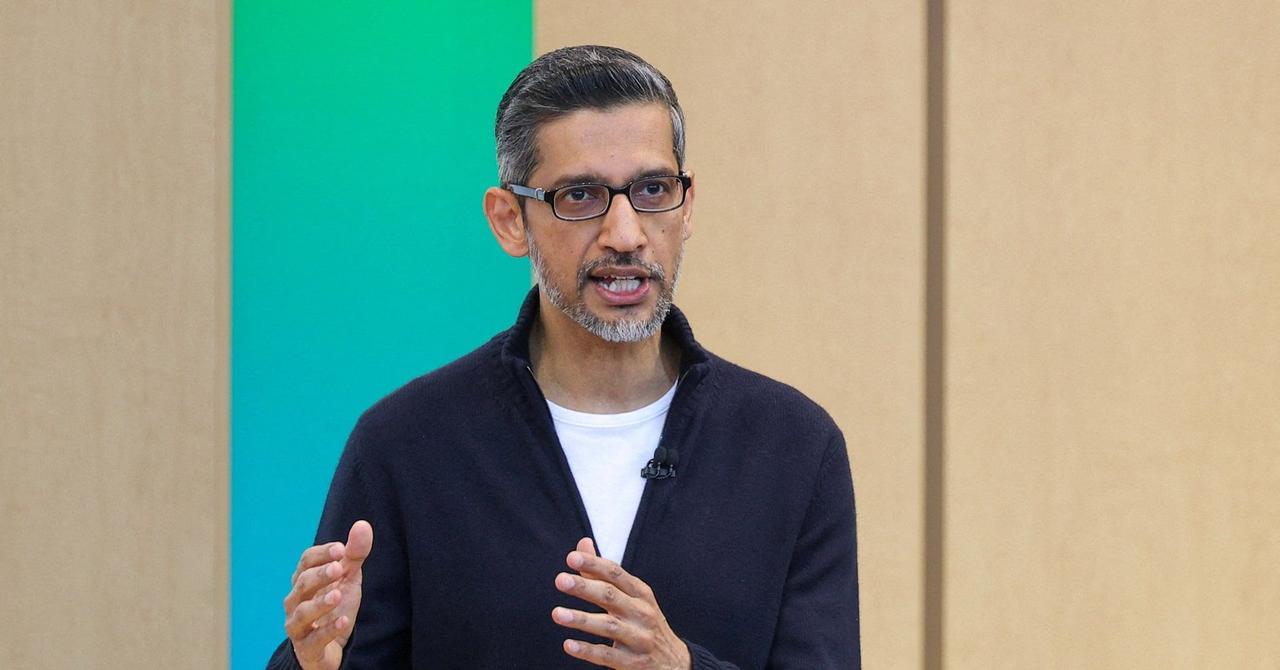
Despite these challenges, Google has been actively integrating Gemini across its ecosystem, from Gmail to Google Maps. The company is also exploring "agentic AI" capabilities, aiming to create more personalized and action-oriented AI assistants
3
. Sundar Pichai, Alphabet's CEO, has expressed confidence in Google's AI leadership, announcing plans to invest $75 billion in capital expenditures to accelerate progress in this field3
.Industry Impact and Competition
Google's intense efforts to catch up in the AI race have had ripple effects across the tech industry. The competition has intensified, with Microsoft integrating ChatGPT into its Bing search engine, further pressuring Google to innovate rapidly
4
. This race has also raised concerns about the potential risks of AI development, with figures like Elon Musk warning about the dangers of "woke AI"4
.Looking Ahead
As Google continues its "marathon sprint" in AI development, the company faces ongoing challenges. These include managing the high costs and energy requirements of AI initiatives, addressing potential antitrust issues related to search advertising revenue, and balancing rapid innovation with responsible AI development
2
3
. The tech giant's ability to navigate these challenges while maintaining its renewed momentum in AI will likely shape the future of the industry and Google's position within it.References
Summarized by

Navi
Related Stories
Google's AI Renaissance: Alphabet Races Toward $4 Trillion Valuation as Gemini 3 Sparks Market Surge
24 Nov 2025•Business and Economy
ChatGPT Dominates AI Market: OpenAI's Quest to Become the Next Google
12 Jun 2025•Technology

ChatGPT Traffic Drops 22% as Gemini Gains Ground in Escalating AI Competition
06 Jan 2026•Business and Economy
Recent Highlights
1
Meta Unveils Muse Wonder Frontier AI Models, Claims Performance Matching OpenAI and Anthropic
Technology

2
IMF Report Warns AI Market Correction Could Spark Global Financial Crisis With $1.4T at Risk
Business and Economy

3
Eight States Sue OpenAI Over ChatGPT Safety Concerns and Unlawful Collection of Children's Data
Policy and Regulation
Recent Highlights
Today's Top Stories










Don’t drown in AI news. We cut through the noise - filtering, ranking and summarizing the most important AI news, breakthroughs and research daily. Follow topics that matter to you and stay ahead.


