3 Sources
[1]
Google wants to release 64 million bacteria-riddled mosquitoes across California and Florida. Here's why scientists are enthusiastic.
Google has applied for an experimental mosquito release permit to deploy millions of non-biting southern house mosquitoes that it has infected with the bacterium Wolbachia pipientis, in an effort to reduce mosquito-borne diseases like West Nile virus. Google wants to release 64 million bacteria-riddled mosquitoes in California and Florida -- but scientists aren't concerned. The Environmental Protection Agency (EPA) is reviewing an application made by the tech giant for an experimental mosquito release permit, which, counterintuitively, could reduce mosquito populations that carry diseases. The release is part of Google's Debug initiative, which aims to deploy millions of non-biting male mosquitoes infected with a bacterium called Wolbachia pipientis -- commonly known as Wolbachia -- into the environment. This bacterium doesn't harm infected males, but it does prevent any uninfected females they mate with from having offspring, thereby slashing mosquito populations over time. In this case, Google is targeting southern house mosquitoes (Culex quinquefasciatus), an invasive species native to tropical and subtropical regions that can spread diseases like West Nile virus and St. Louis encephalitis in humans. The proposal has scientists mostly buzzing with enthusiasm. Karthikeyan Chandrasegaran, an assistant professor at the University of California, Riverside, studies the ecology and behavior of mosquitoes in the context of public health, and told Live Science that using Wolbachia is a "reasonable" mosquito control approach, particularly when compared to the use of broad insecticides. "Wolbachia-based strategies are generally species-specific and do not introduce novel toxins into the environment," Chandrasegaran said. "Importantly, Wolbachia is already widespread in many insect species and is a naturally occurring bacterial symbiont rather than a genetically engineered organism. From that perspective, they are among the more environmentally conservative mosquito control tools currently available." The EPA has deemed Google's request to be of potential regional and national significance, and it will make a final decision whether to grant the permit following a public comment period ending on June 5. After this, the agency may give Google the greenlight to release up to 32 million mosquitoes in California and another 32 million in Florida over two years. However, despite the scale of the proposed releases, Google's approach isn't new and has already been shown to work in another mosquito species. "It is a technique that's been used actively to control mosquito populations since around 2011," Eric Caragata, an assistant professor at the University of Florida who studies Wolbachia for mosquito control, told Live Science. Fighting mosquitoes with mosquitoes Mosquitoes are the deadliest animal on the planet, according to the Centers for Disease Control and Prevention (CDC), killing between 500,000 to more than a million people a year by spreading harmful diseases. Given the blood-suckers are so small, widespread and numerous, reducing them at scale is tricky. Using insecticides can harm the environment and kill other pollinators, and increasingly, mosquitoes are building up a resistance to them. "We have an ongoing battle with both mosquito-borne disease and insecticide resistance," Caragata said. Wolbachia offers a potentially natural solution to these mosquito woes. The bacterium is common in insects but doesn't infect other animals, like humans. Through a process called cytoplasmic incompatibility, the bacterium creates a unique interaction between infected males and uninfected females. In males, Wolbachia modifies the sperm genome in a way that kills embryos produced with that sperm. However, if a female also has Wolbachia and it's in the embryo, then the sperm genome impairment doesn't do any harm. This interaction means that if you release millions of infected males into a population, then the uninfected females will mate with them en masse and be unable to produce viable young. "If a [female] mosquito has Wolbachia, that mosquito can mate and reproduce successfully with both infected and uninfected males," Caragata said. "All of her progeny will then have Wolbachia. However, if you have an uninfected female mosquito and she mates with a Wolbachia-infected male, none of her progeny will hatch." Google is building machines to autonomously rear millions of infected mosquitoes, and then using artificial intelligence (AI) algorithms, sensors and other engineering to separate the males from the females. Researchers have been using sterilized male mosquitoes to reduce populations for decades. Female mosquitoes bite humans because they need the protein and other nutrients found in blood to produce their eggs, but males get all their nutrition from flower nectar and fruit and not humans. So, releasing male mosquitoes theoretically poses no threat to people. Most of the previous bacteria-based attempts have focused on Aedes aegypti mosquitoes, which carry diseases like Zika and dengue. In Singapore, where Google is also working, researchers have been using Wolbachia-infected males to fight dengue. Trials have found that the approach reduces the disease-carrying mosquito population by up to 90% and the subsequent risk of a person contracting dengue by 70%. However, Google's large-scale targeting of southern house mosquitoes is new. More upsides than downsides While there are some unknowns, neither Caragata nor Chandrasegaran expect any major ecosystem disruptions. Lots of animals feed on mosquitoes, but a sudden drop in southern house mosquitoes shouldn't result in lots of animals starving. "Most predators that consume mosquitoes are generalists and feed on a broad range of aquatic and terrestrial insects," Chandrasegaran said. "Consequently, there is little evidence to suggest that local suppression of Culex quinquefasciatus would trigger substantial ecological cascades." Chandrasegaran noted that ecosystems are complex, and so any large-scale intervention should be monitored. One potential consequence could be that reducing one mosquito species creates space for another, but Chandrasegaran thinks there will likely be more upsides than downsides. "From a public health perspective, reducing Culex quinquefasciatus populations could yield meaningful benefits, as this species is an important vector of West Nile virus and several other pathogens," Chandrasegaran said. "If suppression can be achieved safely and sustainably, the public health benefits are likely to outweigh the ecological risks based on our current understanding." In the U.S., West Nile virus is the leading cause of mosquito-borne disease. Around 2,000 people are diagnosed with the virus each year, with likely more infected but undiagnosed, according to the CDC. Most people don't develop symptoms and some experience mild flu-like symptoms; however, in some cases, it can result in severe illness and death. In California, there have been more than 8,000 human cases of the virus and more than 400 deaths since 2003 -- none so far this year. Internationally, C. quinquefasciatus and other Culex mosquitoes also play a major role in spreading Japanese encephalitis virus, which is a problem in Asia. There are an estimated 100,000 annual cases of Japanese encephalitis, for which the fatality rate can be as high as 30%, according to the World Health Organization (WHO). Live Science reached out to Google for comment and was directed to a public statement about the Debug project.
[2]
Google seeks to release 32M lab mosquitoes to fight dengue, Zika
Alphabet's Verily is seeking EPA approval to release 64 million Wolbachia-carrying male mosquitoes in Florida and California to suppress Aedes aegypti populations. Earlier Debug trials achieved up to 95% reductions in biting mosquitoes in Fresno and 70%+ dengue reduction in Singapore. Verily, the health and life sciences subsidiary of Google parent Alphabet, has asked the US Environmental Protection Agency for permission to release up to 64 million lab-bred mosquitoes across Florida and California over two years. The proposal, submitted under the company's Debug initiative, would deploy male Aedes aegypti mosquitoes carrying Wolbachia bacteria into areas where the species transmits dengue fever, Zika virus, yellow fever, and chikungunya. The EPA is reviewing the application under an experimental use permit, with a public comment period running through early June. The approach is elegant in its biology. Wolbachia is a naturally occurring bacterium found in roughly 60% of insect species, but not in Aedes aegypti. When lab-reared males carrying Wolbachia mate with wild females that lack it, the resulting eggs do not develop. The males do not bite, do not transmit disease, and cannot reproduce with each other, making the release self-limiting. Each generation of released males reduces the wild population without introducing permanent genetic changes or synthetic chemicals into the environment. The results so far Debug has been running field trials since 2017. In Fresno, California, the programme achieved reductions in biting female Aedes aegypti populations of 68% in its first year, over 95% in 2018, and 84% in 2019. The results put it among the most effective biotech-driven population control methods tested at scale in the United States. In Singapore, where the government has deployed Wolbachia-based mosquito control as part of its national dengue strategy, releases of sterile males achieved 80% to 90% suppression of Aedes aegypti populations and a more than 70% reduction in dengue cases within six to 12 months. The World Mosquito Program, which operates independently of Verily, has deployed Wolbachia across 14 countries using a different approach that infects both male and female mosquitoes to establish self-sustaining Wolbachia populations in the wild. How Verily scales it The challenge with mosquito releases is not the biology but the logistics. Releasing millions of male mosquitoes requires breeding them at scale, sorting them from females with near-perfect accuracy (releasing females would increase biting), and distributing them across target areas at the right density and timing. Verily is applying its parent company's AI capabilities to each of these steps. The Debug programme uses AI-powered mosquito sorting systems that can separate males from females using computer vision, automated breeding technology that maintains colony health at industrial scale, and specialised release platforms, including drones and ground-based dispensers, that distribute mosquitoes across target zones. The 64 million figure breaks down to 16 million per state per year over the two-year permit period. The debate Not everyone is comfortable with the idea of a tech company releasing tens of millions of insects into the wild. The intersection of AI, biotech, and public health raises questions about corporate involvement in ecological interventions, long-term environmental effects, and community consent. Critics have raised concerns about whether reducing one mosquito species could affect the food chain, whether Wolbachia could transfer to non-target species, and whether corporate-led biological interventions should require stricter oversight than the current EPA permit process provides. Proponents counter that Aedes aegypti is an invasive species in the Americas, not part of the native ecosystem, and that its removal would have minimal ecological impact. The species is responsible for hundreds of millions of dengue infections annually worldwide, with cases rising sharply as climate change expands the mosquito's range into previously temperate regions. AI-driven approaches to biological and medical challenges are producing results that traditional methods have struggled to match. Why it matters for tech Debug is one of the few surviving projects from Verily's original mission to apply technology to life sciences at scale. Alphabet has restructured its health ambitions multiple times, shutting down or spinning off various initiatives. While most of Big Tech's resources flow toward AI infrastructure, Verily's mosquito programme represents a different kind of applied technology: using automation, computer vision, and logistics software to solve a public health problem that kills hundreds of thousands of people each year. If the EPA approves the permit, Florida and California would become the largest US deployment of Wolbachia-based mosquito control to date. The decision is expected after the public comment period closes, with releases potentially beginning in late 2026 or early 2027.
[3]
Debugging: Google requests permission to release 32m mosquitoes in California and Florida
Company asks US government to release army of sterile male mosquitoes to lower number of illness-spreading bugs Google wants to "stop bad bugs with good bugs", and it's not talking about coding. The tech company has asked the US government for permission to release up to 32 million sterilized mosquitoes in California and Florida. As part of its successful "Debug" program, Google is tapping into its tech expertise to raise an army of sterile male mosquitoes to lower the number of illness-spreading bugs. Mosquitoes - the world's deadliest animal - kill more people than any other creature in the world every year by spreading lethal diseases like dengue, West Nile virus, Zika, chikungunya and malaria. A notice from the federal register shows the US Environmental Protection Agency (EPA) is reviewing Google's request to release up to 16 million mosquitoes annually, in Florida and California, over the span of two years. The EPA will decide whether to greenlight Google's request for an experimental use permit after a public comment period, which ends on 5 June. Male mosquitoes don't bite or carry disease. One of the main approaches Google is testing involves rearing male mosquitoes with a naturally occurring bacteria, called wolbachia, which stops them from having offspring with wild female mosquitoes. When an infected male tries to mate with a wild female, her eggs won't hatch; Google explains in a blog post: "the population gets smaller with each generation." While it may sound unusual for big tech to venture into labs and rear bacteria-infected mosquitoes, Google's parent company - Alphabet - is no stranger to science. Verily Health, a health and AI company that began as a "moonshot" project at Google X, has been a key driver behind the Debug program for years. Verily, an Alphabet subsidiary until earlier this year, uses technology and data science to combat diseases and other global health problems. As of December 2024, Google fully acquired Debug - removing it from Verily's portfolio, Verily said in an email to the Guardian. A 2016 blog post for the Debug project notes the program started exploring tech-driven solutions to combating deadly mosquitoes about a decade ago. Google says other ways of attacking mosquitoes haven't done the job: spraying them with pesticides can be toxic and less effective over time, and it's difficult to find, and clear, all the water sources that have become breeding grounds for mosquitoes. Google's approach isn't unique. The company is drawing on a scientific method called the sterile insect technique, which experts have used on a variety of problematic bugs for decades. Eric Caragata, an assistant professor at the University of Florida who specializes in mosquito-microbe interactions, told USA Today that using the wolbachia bacteria for sterilization has been done for about 15 years. For now, Google is focusing their initial efforts on one species of mosquito known as Aedes aegypti, which is responsible for spreading most cases of dengue, Zika, yellow fever and chikungunya. Google's engineers and scientists are using data analytics and sensors to build "automated rearing systems" for the fragile creatures, the company says. Part of the challenge entails using AI-powered computer vision to precisely separate males from females and releasing the males "in the right place and in the right numbers". The Debug project has made some progress in Singapore, the program's first international research and development hub. The company said in an 11 May blogpost, citing the country's national environment agency, that by releasing millions of male wolbachia mosquitoes in Singapore, the country has "achieved 80-90% suppression" of the Aedes aegypti mosquito population and more than 70% reduction in dengue incidents after 6 to 12 months of releases." Google announced in May that it will be expanding the Singapore site. "When we first launched Debug in Singapore, our goal was to advance mosquito production and releases through technology and bring Debug to more communities in Asia, where 70% of the global dengue burden occurs," said Linus Upson, the head of Debug. "Our success in Singapore gives us the confidence to expand.
Share
Copy Link
Google has applied for an EPA permit to release 64 million male mosquitoes infected with Wolbachia bacteria across California and Florida. The Debug project aims to reduce populations of disease-carrying mosquitoes through the sterile insect technique, which has already achieved up to 95% suppression in earlier trials.
The Environmental Protection Agency is reviewing an unusual application from Google: permission to release 64 million bacteria-infected mosquitoes across California and Florida over two years
1
. The Debug project, which Google fully acquired from Verily in December 2024, represents a tech-driven approach to combating mosquito-borne diseases that kill hundreds of thousands of people annually3
. The proposal would deploy 32 million male mosquitoes in each state, targeting Aedes aegypti mosquitoes responsible for spreading dengue, Zika, yellow fever, and chikungunya2
.
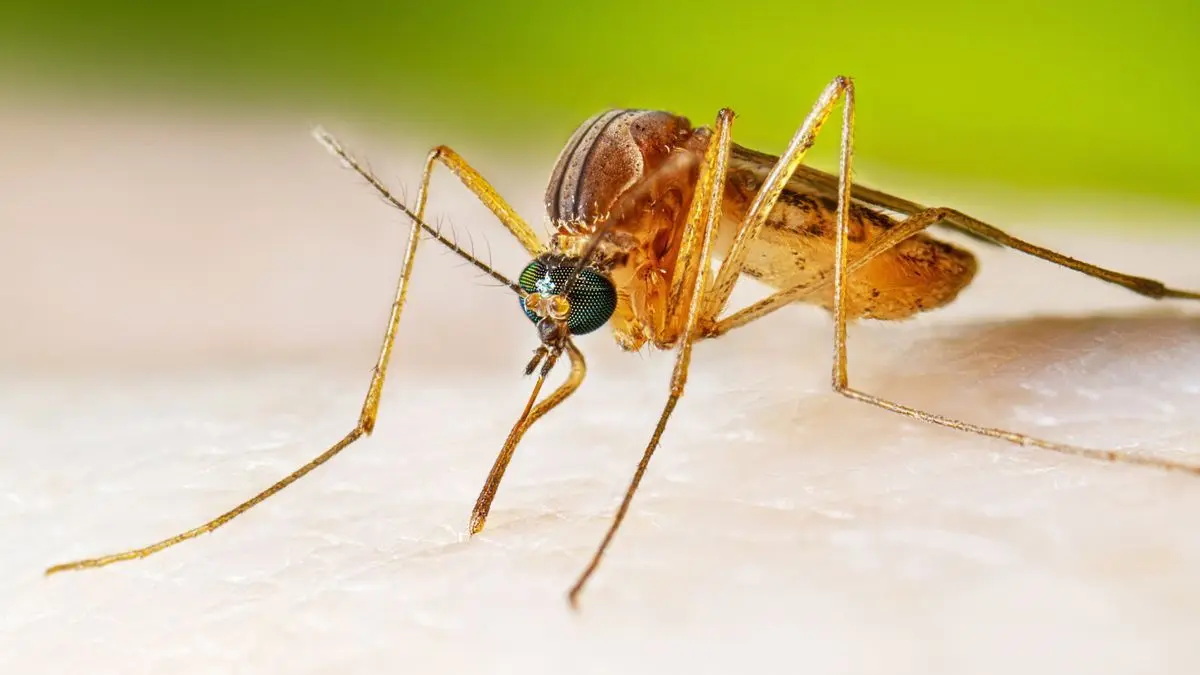
Source: Live Science
The release of lab-bred mosquitoes relies on Wolbachia bacteria, a naturally occurring microbe found in roughly 60% of insect species but not in Aedes aegypti
2
. When infected males mate with wild females lacking the bacterium, the resulting eggs fail to develop through a process called cytoplasmic incompatibility1
. This sterile insect technique offers advantages over traditional pesticides, which harm pollinators and face growing resistance from mosquito populations. Karthikeyan Chandrasegaran, an assistant professor at the University of California, Riverside, describes Wolbachia-based strategies as "species-specific" and environmentally conservative, noting they don't introduce novel toxins1
.Google applies AI capabilities to solve the logistical challenge of breeding millions of mosquitoes while ensuring only males reach the wild. The Debug project uses AI-powered mosquito sorting systems with computer vision to separate males from females with near-perfect accuracy, since releasing females would increase disease transmission
2
. Male mosquitoes don't bite humans, getting their nutrition from flower nectar rather than blood1
. The company has developed automated breeding technology that maintains colony health at industrial scale, along with specialized release platforms including drones and ground-based dispensers2
.The Debug project has been running field trials since 2017, achieving substantial success in Fresno, California. The program reduced biting female Aedes aegypti populations by 68% in its first year, over 95% in 2018, and 84% in 2019
2
. In Singapore, where the government deployed Wolbachia-based mosquito control as part of its national dengue strategy, releases achieved 80% to 90% suppression and a more than 70% reduction in dengue cases within six to 12 months3
. Eric Caragata, an assistant professor at the University of Florida who studies Wolbachia for mosquito control, notes that researchers have been using this technique actively since around 20111
.Related Stories
The EPA has deemed Google's request to be of potential regional and national significance, with a public comment period ending June 5 before making a final decision on EPA approval
1
. Critics have raised concerns about corporate involvement in ecological interventions, questioning whether reducing one mosquito species could affect the food chain and whether the current EPA permit process provides adequate oversight2
. Proponents counter that Aedes aegypti is an invasive species in the Americas, not native to the ecosystem, making its removal unlikely to cause significant environmental effects2
. The approach addresses a critical public health challenge as climate change expands mosquito ranges into previously temperate regions, increasing disease transmission risks.The Debug project represents one of the few surviving initiatives from Verily's original mission to apply technology to life sciences at scale
2
. While Alphabet has restructured its health ambitions multiple times, Google's full acquisition of Debug in December 2024 signals sustained commitment to this public health solution3
. If approved, California and Florida would become the largest US deployment of Wolbachia-based mosquito control to date. The program is also expanding its Singapore site, targeting regions where 70% of the global dengue burden occurs3
. With mosquitoes killing between 500,000 to more than a million people annually by spreading diseases including West Nile virus and malaria, the Debug project demonstrates how automation and data science can address challenges that traditional methods struggle to solve1
.Summarized by
Navi
[1]
[2]
1
Technology

2
Policy and Regulation

3
Technology

News Categories