Google splits eighth-gen TPU into training and inference chips to challenge Nvidia dominance


24 Sources
[1]
Google unveils two new TPUs designed for the "agentic era"
Most of the companies that have fully committed to building AI models are gobbling up every Nvidia AI accelerator they can get, but Google has taken a different approach. Most of its cloud AI infrastructure is based on its line of custom Tensor processing units (TPUs). After announcing the
[2]
Google Cloud launches two new AI chips to compete with Nvidia | TechCrunch
Google Cloud on Wednesday announced that its eighth generation of custom-built AI chips, or tensor processing units (TPUs), will be split in two. One chip, named the TPU 8t, will be geared for model training and another, the TPU 8i, is aimed at inference. Inference is the ongoing usage of models,
[3]
Google dual tracks TPU 8 to conquer training and inference
x86 gets the boot as Google pairs up its TPUs with some Arm-based Axion cores Google unveiled two new in-house AI accelerators at its annual Cloud Next conference in Las Vegas on Wednesday: one designed to speed up training and another aimed at driving down model serving costs. The Chocolate
[4]
Google Cloud Releases New TPU Chip Lineup in Bid to Speed Up AI
Alphabet Inc.'s Google Cloud division unveiled the latest generation of its tensor processing unit, or TPU, a homegrown chip that's designed to make AI computing services faster and more efficient. The new lineup will come in two versions, the company said Wednesday at its Google Cloud Next event.
[5]

Google unveils chips for AI training and inference in latest shot at Nvidia
Google CEO Sundar Pichai gestures during a meeting with France's President Emmanuel Macron on the sidelines of the AI Impact Summit in New Delhi on Feb. 19, 2026. After years of producing chips that can both train artificial intelligence models and handle inference work, Google is separating those
[6]
Google Eyes New Chips to Speed Up AI Results, Challenging Nvidia
In a matter of months, Google's AI chips have become one of the hottest commodities in the tech sector. Leading artificial intelligence developers, including some of the firm's biggest rivals, are stocking up on them. Now, the Alphabet Inc.-owned company aims to build on its momentum with the
[7]

Google launches Ironwood TPU and previews eighth-gen split into training and inference chips at TSMC 2nm
Summary: Google made Ironwood, its seventh-generation TPU, generally available at Cloud Next 2026 while previewing its eighth-generation architecture: TPU 8t (Sunfish), a Broadcom-designed training chip, and TPU 8i (Zebrafish), a MediaTek-designed inference chip, both targeting TSMC 2nm and late
[8]

Google launches TPU 8 chips to speed AI training and cut costs
Google said TPU 8t targets more than 97 percent "goodput," a term used to measure productive compute time instead of idle time caused by failures or bottlenecks. That matters because delays across massive clusters can add days to training schedules for advanced AI systems. The TPU 8i focuses on
[9]
Google assembles four-partner chip supply chain with Broadcom, MediaTek, Marvell to challenge Nvidia in inference
Summary: Google is building the AI industry's most diversified custom chip supply chain, with four design partners (Broadcom, MediaTek, Marvell, Intel) and a roadmap stretching from the Ironwood TPU now shipping in the millions to TPU v8 chips at TSMC 2nm in late 2027. The strategy, detailed ahead
[10]

Google Cloud unveils eighth-generation TPUs built to support an agentic era
* Google unveils next-generation TPUs - splits off into two series, 8t and 8i * 8t superpods can deliver 121 ExaFlops, up from 42.5 last year * 8i delivers 3x more SRAM and increased HBM Google Cloud has announced its eighth-generation Tensor Processing Units (TPUs) designed specifically for the
[11]

Google doesn't pay the Nvidia tax. Its new TPUs explain why.
Every frontier AI lab right now is rationing two things: electricity and compute. Most of them buy their compute for model training from the same supplier, at the steep gross margins that have turned Nvidia into one of the most valuable companies in the world. Google does not. On Tuesday night,
[12]

Google developing inference AI chips to rival Nvidia
Google $GOOGL is developing new chips dedicated to AI inference in partnership with Marvell Technology, positioning Alphabet to more directly compete with Nvidia $NVDA in a semiconductor category driven by surging demand for AI software, according to Bloomberg. After a model is trained, inference
[13]

Google Takes Aim at Nvidia With New Tensor Chips to Power AI Boom - Decrypt
TPU 8i features 3x more on-chip memory to handle the iterative demands of AI agents. Google unveiled two AI processors at its Cloud Next 2026 conference in Las Vegas on Wednesday, marking the company's eighth generation of custom silicon designed to challenge Nvidia's AI chip dominance. The
[14]

Our eighth generation TPUs: two chips for the agentic era
Today at Google Cloud Next, we are introducing the eighth generation of Google's custom Tensor Processor Unit (TPU), coming soon with two distinct, purpose-built architectures for training and inference: TPU 8t and TPU 8i. These two chips are designed to power our custom-built supercomputers, to
[15]

Two new TPUs to power the next wave of AI training and inference at Google - SiliconANGLE
Two new TPUs to power the next wave of AI training and inference at Google Google LLC introduced two new custom silicon chips for artificial intelligence today at Google Cloud Next 2026, unveiling two distinct Tensor Processor Unit architectures built for training and inference: the
[16]

Google Unveils its Eighth-Generation TPU Chips - Phandroid
Google recently announced the launch of its eighth generation custom Tensor Processing Units, the TPU 8t and TPU 8i. Google says that the new chips feature architectures designed to handle the growing demands of frontier model development and agentic workloads. According to Google, the new chips
[17]

Google Unveils New AI Super-Chips To Slash Costs, Rival Nvidia - Alphabet (NASDAQ:GOOGL)
Google Splits AI Chips to Boost Efficiency Google is separating AI training and inference tasks into distinct processors in its eighth-generation Tensor Processing Unit (TPU) lineup. Senior Vice President Amin Vahdat wrote on his blog on Wednesday that, "With the rise of AI agents, we determined
[18]

Google Splits TPUv8 Strategy Into Two Chips, Handing Broadcom Training and MediaTek Inference Duties
Google is preparing two brand new chips under its TPUv8 belt, one for training & one for inference AI workloads. Reports indicate that Google is working on not one, not two, but three chips that will form the basis of its next-gen TPU and AI ventures. We already discussed two of these chips, the
[19]

Google unveils TPU 8t and TPU 8i chips for agentic AI and reasoning workloads
At Google Cloud Next, Google announced its eighth-generation Tensor Processing Units (TPUs), introducing two purpose-built architectures: TPU 8t and TPU 8i. These chips are designed to support large-scale AI workloads, from model training and development to high-volume inference and agent-based
[20]

Google Rolls Out TPU 8t and 8i to Supercharge AI Training Speed
Google introduces TPU 8t and TPU 8i chips to accelerate AI training and real-time inference, boosting performance, reducing latency, and enabling scalable, energy-efficient infrastructure for next-generation agentic artificial intelligence systems worldwide. Google has introduced two new chips in
[21]

Google launches next-generation AI chips to challenge Nvidia
Google is strengthening its semiconductor footprint by unveiling an eighth generation of Tensor Processing Units (TPUs) engineered for artificial intelligence. This evolution introduces a distinction between two processor types: one dedicated to model training and the other to real-world execution.
[22]
Google Bets on New Chips to Boost AI Results, Challenging Nvidia
In a matter of months, Google's AI chips have become one of the hottest commodities in the tech sector. Leading artificial intelligence developers, including some of the firm's biggest rivals, are stocking up on them. Now, the Alphabet (GOOG)-owned company aims to build on its momentum with the
[23]

Google's new TPU 8t and TPU 8i explained: What the 8th-gen chips mean for AI agents
Google has revealed its eighth generation of custom TPUs at Cloud Next 2026, and unlike previous generations, this release is not just one but two different chips. The new TPU 8t and TPU 8i that have been designed specifically for training and inference, respectively. The reason for this is simple
[24]
Google unveils new AI chips to rival Nvidia: Here is what they offer
Google has introduced two new chips to meet increasingly demanding AI workloads. The company has announced its eighth-generation Tensor Processing Units (TPUs), designed to power its custom-built supercomputers. The new chips are TPU 8t and TPU 8i, with each built for a specific purpose. While one
Share
Copy Link
Google unveiled its eighth-generation Tensor Processing Units at Cloud Next, marking a strategic shift by splitting capabilities into two specialized chips. The TPU 8t targets AI model training with 2.8x performance gains, while TPU 8i focuses on inference with 80% better performance per dollar. Both chips ditch x86 for custom Axion ARM CPUs, signaling Google's push for full-stack efficiency in the agentic era.
Google TPU splits into specialized chips for training and inference
Google announced a fundamental shift in its AI hardware strategy at Cloud Next in Las Vegas, unveiling eighth-generation Tensor Processing Units that separate training and inference workloads for the first time
1
. The company introduced the TPU 8t for model training and TPU 8i for inference, positioning these custom-built AI chips as purpose-built solutions for what it calls the "agentic era of AI"1
. This dual-track approach mirrors strategies from Amazon Web Services, which recognized early that specialized AI hardware could eliminate bottlenecks specific to each workload3
. Google claims the TPU 8t delivers up to 2.8x faster AI model training compared to last year's Ironwood TPUs, while the TPU 8i provides 80% better performance per dollar for large language model inference2
.
Source: Wccftech
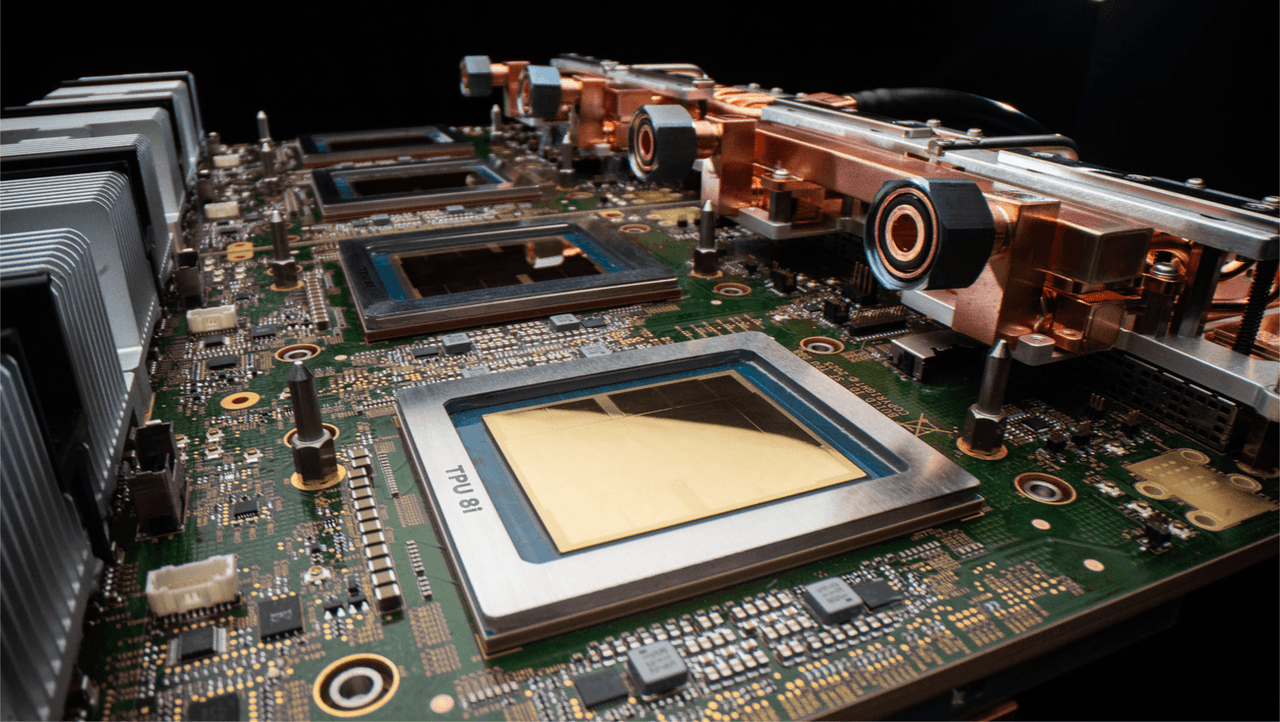
Massive scale defines TPU 8t training capabilities
The TPU 8t for model training represents Google's commitment to reducing frontier model development from months to weeks
1
. Updated server clusters, called "pods," now house 9,600 chips with two petabytes of shared high-bandwidth memory, delivering 121 FP4 EFlops of compute per pod—nearly three times higher than Ironwood's training compute ceiling1
. Each AI accelerator features 216 GB of high-bandwidth memory with 6.5 TB/s of bandwidth, 128 MB of on-chip SRAM, and up to 12.6 petaFLOPS of 4-bit floating point compute3
. Google claims TPU 8t can scale linearly to support up to one million chips in a single logical cluster, using optical-circuit switches to connect up to 9,600 AI accelerators in a unified pod3
. Multiple pods connect via the new Virgo Network in a flat two-tier topology, supporting up to 134,000 TPUs per data center3
.
Source: Google
Efficiency gains target goodpute and power consumption
Google emphasizes a "goodpute" rate of 97 percent for TPU 8t, meaning the chips spend more time actively advancing AI model training rather than waiting or handling faults
1
. Mark Lohmeyer, Google's vice president of compute and AI infrastructure, explained that at frontier training scale, every percentage point can translate into days of active training time3
. The eighth-gen chips offer twice the performance per watt compared to Ironwood, with TPU 8t delivering 124% more performance per watt and TPU 8i providing a 117% gain4
. Google Cloud has also developed a Managed Lustre storage system capable of delivering 10 TB/s of aggregate data directly into accelerator memory3
. Data centers co-designed with TPUs feature integrated networking on a single chip and more efficient pod layouts, reportedly increasing computing power per unit of electricity by six times1
.TPU 8i optimizes inference for agent workloads
The TPU 8i for inference addresses the ongoing usage of models after users submit prompts, a workload fundamentally different from training
2
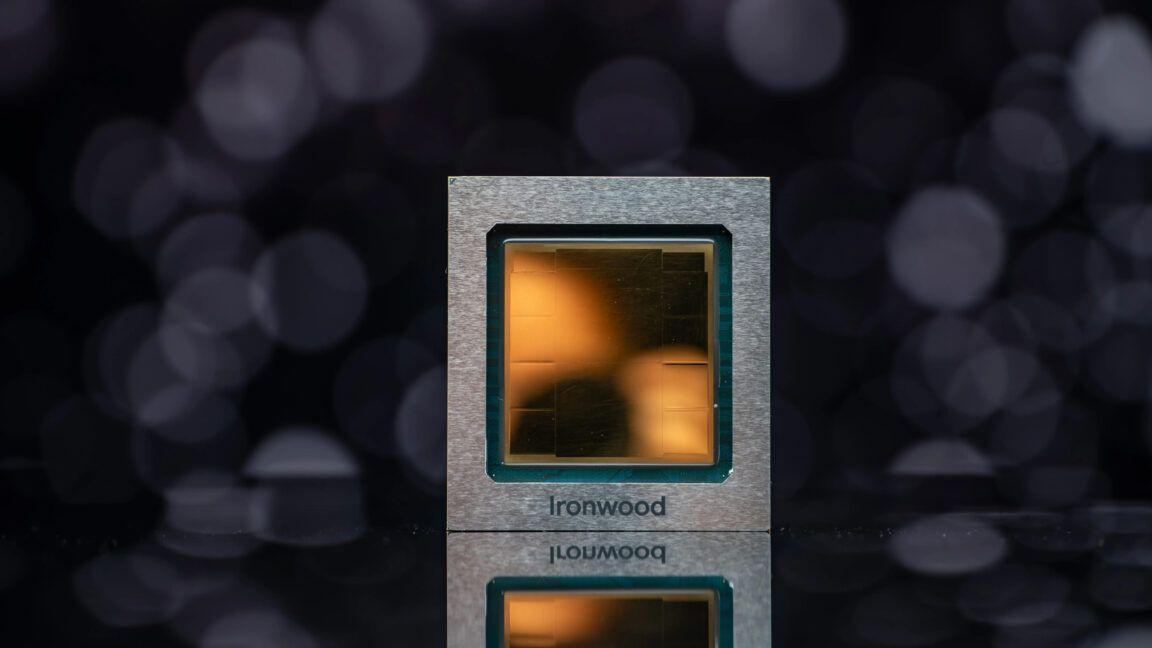
. Google tripled the on-chip SRAM to 384 MB per chip, matching Nvidia's approach with its upcoming Groq 3 LPU hardware5
. This larger cache allows TPU 8i to keep more key-value information on-chip, speeding up models with longer context windows1
. Inference pods now contain 1,152 chips versus just 256 for Ironwood inference clusters, delivering 11.6 EFlops per pod1
. The architecture is designed "to deliver the massive throughput and low latency needed to concurrently run millions of agents cost-effectively," according to Alphabet CEO Sundar Pichai5
. Lohmeyer noted that "the number of transactions is going way up, and the cost per transaction needs to go way down for it to scale" .Related Stories
Axion CPUs replace x86 in full-stack ARM approach
The eighth-gen AI accelerators mark the first from Google to rely solely on its custom Axion ARM CPU host, featuring one CPU for every two TPUs compared to Ironwood's ratio of one x86 CPU servicing four TPU chips
1
. This "full-stack" ARM-based approach allows for greater efficiency, following a similar path to Amazon's integration of Graviton and Trainium 3 earlier this year3
. Google has also adapted its fourth-gen liquid cooling setup to the new chips, using actively controlled valves to adjust water flow based on workload1
. Both new TPUs support frameworks developers already use, including JAX, MaxText, PyTorch, SGLang, and vLLM1
.Market positioning against Nvidia and hyperscalers
Google is not replacing Nvidia entirely, continuing to offer services based on Nvidia chips and promising to deploy the upcoming Vera Rubin chip later this year
2
. The company announced collaboration with Nvidia to engineer computer networking that allows Nvidia-based systems to perform more efficiently in its cloud infrastructure, particularly enhancing the software-based networking tech called Falcon2
. Nvidia's stock price briefly dropped about 1.5 percent after Google's announcement1
. DA Davidson analysts estimated in September that the Google TPU business, coupled with Google DeepMind, would be worth about $900 billion5
. Adoption is ramping up, with Citadel Securities building quantitative research software on TPUs, all 17 U.S. Energy Department national laboratories using AI co-scientist software built on the chips, and Anthropic committing to using multiple gigawatts worth of Google TPUs5
. Both chips will power Google's Gemini-based agents and become generally available later this year1
.
Source: Benzinga
References
Summarized by

Navi
[1]
[3]
Related Stories
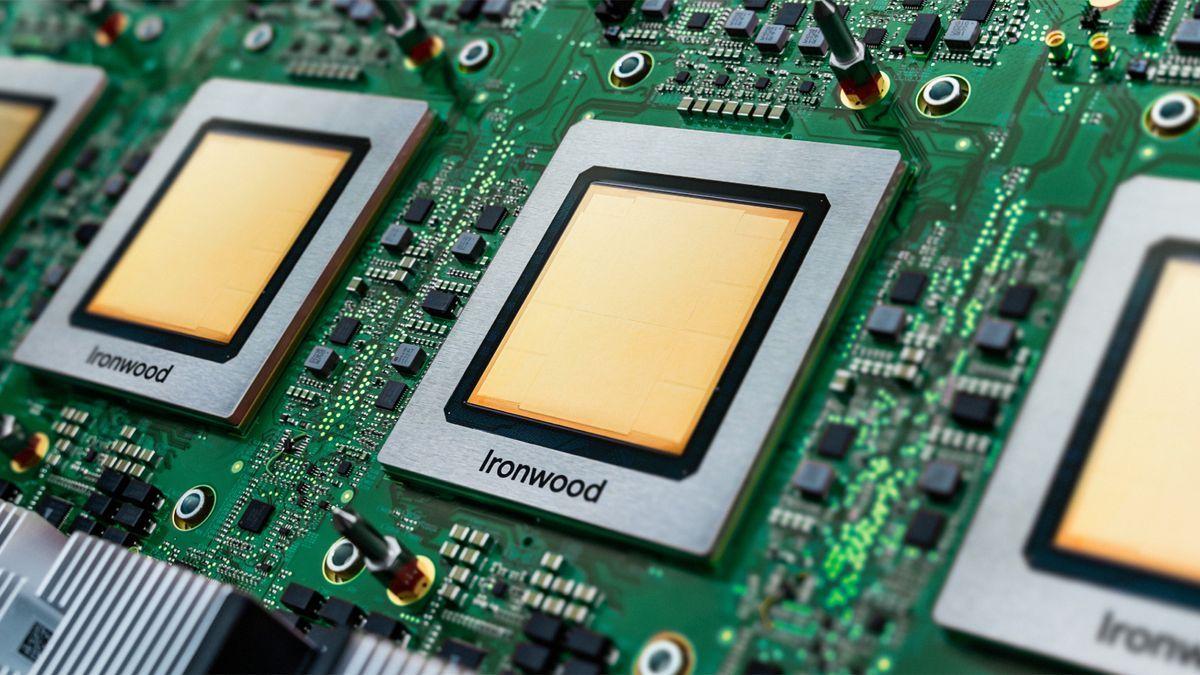
Google Unleashes Ironwood TPU v7: Seventh-Generation AI Chips Challenge Nvidia's Dominance
06 Nov 2025•Technology
Google deploys billions to turn TPU chips into serious challenge against Nvidia's AI dominance
22 Jun 2026•Business and Economy

Google Cloud bets big on AI agents with Gemini Enterprise platform and new chips
22 Apr 2026•Technology

Recent Highlights



Recent Highlights
Today's Top Stories









Don’t drown in AI news. We cut through the noise - filtering, ranking and summarizing the most important AI news, breakthroughs and research daily. Follow topics that matter to you and stay ahead.


