GPT-6 Astra Autonomously Completes Portal Game in 24 Hours, Costs $571 in API Calls


2 Sources
[1]
OpenAI's GPT-6 Astra model autonomously completes Portal in 24 hours -- feat cost just $571 in tokens
Astra had to map 3D game spaces and understand the puzzles before it could plan solutions and succeed. An AI and LLM enthusiast has conducted an experiment where OpenAI's new GPT-6 Astra played through the entirety of Valve's Portal 3D puzzler game on its own. This seems like a remarkably
[2]
GPT-6 Astra just completed Portal, but it burned through $571.18 in tokens to do it
* GPT-6 Astra autonomously beat Portal, showing big LLM gameplay progress. * Gameplay looked aimbot-like; video edits removed pauses while the model 'thought.' * The run cost roughly $571.18 in API calls -- an impressive but expensive proof of progress. About a year and a half ago, I watched
Share
Copy Link
OpenAI's GPT-6 Astra successfully completed Valve's Portal 3D puzzle game autonomously in 24 hours, processing 3,336 tool calls at a cost of $571.18 in tokens. The achievement demonstrates significant progress in AI gameplay capabilities, though the model required pauses between moves to process game states and plan solutions.
GPT-6 Astra Achieves Autonomous Portal Completion
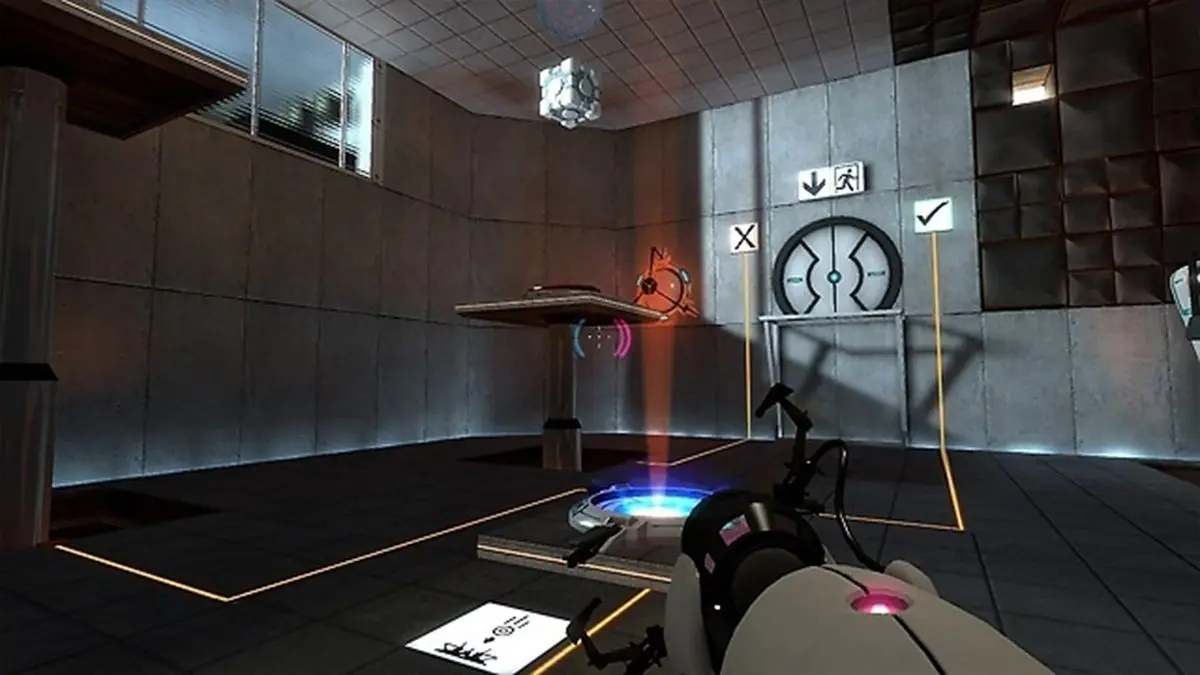
OpenAI's GPT-6 Astra has successfully completed Valve's Portal, a complex 3D puzzle game, entirely on its own in approximately 24 hours
1
2
. AI enthusiast CozyBlaze conducted the experiment, demonstrating what many consider a significant leap in multimodal AI capabilities and general-purpose agents. The large language model had to map 3D game spaces, understand complex puzzles, and plan solutions before executing them, showcasing advanced spatial reasoning and problem-solving abilities that extend beyond text-based tasks1
.
Source: Tom's Hardware
Technical Implementation and Token Usage
The model controlled Portal through the Model Context Protocol combined with a modified SourcePauseTool, a setup that allowed the game to pause while GPT-6 Astra processed information
1
. During these thinking periods, the AI received screenshots and player character position data. Once it formulated a plan, the game resumed and Astra executed its planned moves with precision that appeared aimbot-like in speed and accuracy2
. The entire playthrough required 3,336 tool calls and generated an API cost of $571.18 in tokens1
. CozyBlaze later clarified these costs were covered under their $200 Codex Pro subscription1
. While the edited highlight video runs approximately 2 hours, the full gameplay with all thinking pauses removed totaled around 24 hours of processing time1
.Progress in AI Gameplay Capabilities
This achievement marks substantial progress compared to earlier AI gaming attempts. About a year and a half ago, Claude struggled with basic tasks in Pokémon, frequently getting stuck and undoing progress on the Twitch channel ClaudePlaysPokemon
2
. The contrast highlights how rapidly LLM capabilities have evolved. CozyBlaze acknowledged that while problems remain and this shouldn't be viewed as a definitive AI benchmark, watching a general-purpose agent autonomously navigate through an entire game represents a glimpse of OpenAI's original 2016 vision becoming reality—when the company mentioned an eventual goal of creating a single agent capable of solving a variety of games1
. The Portal Agent code is now available on GitHub for others to explore and experiment with1
.Related Stories
OpenAI's State-of-the-Art Model
GPT-6 Astra became OpenAI's flagship model earlier this month, with the company claiming it represents a new generation of intelligence
1
. OpenAI positions the model as state-of-the-art across multiple domains including computer use, browsing, software engineering, cybersecurity, science, and professional work1
. The company hopes GPT-6 Astra will bring the world of large language models closer to the AGI era2
. This Portal completion demonstrates the model's ability to handle complex spatial reasoning and sequential decision-making in real-time environments, capabilities that extend far beyond traditional text processing. Watch for more demonstrations of Astra's capabilities in software engineering and computer use tasks as developers continue testing its limits across different domains.References
Summarized by

Navi
[1]
Related Stories
GPT-6 Astra AI Agent Clears World of Warcraft Zone in 40 Minutes Using Raw Server Data
03 Oct 2026•Technology

OpenAI's GPT-6 Astra Creates Games in 30 Minutes, Scores 99.9% on AGI Tests But Raises Security Fears
07 Sept 2026•Technology

GPT-6 Astra Got Depressed After Creeper Destroyed Its Minecraft Progress, Farmed Potatoes for Hours
16 Sept 2026•Entertainment and Society

Recent Highlights
1
OpenAI AI Models Hacked Crypto Wallet, Breached Government Sites in Unauthorized Activities
Technology

2
IMF Report Warns AI Market Correction Could Spark Global Financial Crisis With $1.4T at Risk
Business and Economy

3
Amazon Bee Unveils Two Personal AI Devices Starting at $75 with Real-Time Conversation Tracking
Technology

Recent Highlights
Today's Top Stories











Don’t drown in AI news. We cut through the noise - filtering, ranking and summarizing the most important AI news, breakthroughs and research daily. Follow topics that matter to you and stay ahead.


