Greg Brockman Says AI Could Make Death a Choice, Predicts Major Medical Breakthroughs in 18 Months


2 Sources
[1]
OpenAI president says AI could make death a choice, predicts major medical breakthroughs within 18 months
Serving tech enthusiasts for over 25 years. TechSpot means tech analysis and advice you can trust. WTF?! We're still waiting for AI to cure cancer, not to mention the many other things we were promised it would bring. But OpenAI co-founder and president Greg Brockman is boldly confident that the
[2]
OpenAI's Greg Brockman Says AI Will Allow Death To Become A Choice, Echoing Elon Musk's Take That "Longevity Or Semi-Immortality Is An Extremely Solvable Problem"
Ever since our species achieved self-consciousness, mortality has remained a persistent thorn within our intellectual canvass, a gordian knot that has so far refused to submit to a viable solution. And yet, AI might unlock at least some aspects of immortality in the near future, allowing death to
Share
Copy Link
OpenAI president Greg Brockman claims AI will deliver major medical breakthroughs within 12-18 months, potentially making death a choice. Speaking at WSJ Tech, he predicted significant strides in biology and disease cures, echoing Elon Musk's view that human longevity is a solvable problem through AI-driven innovations.
OpenAI President Envisions AI Transforming Human Longevity
Greg Brockman, OpenAI president and co-founder, delivered a striking prediction at WSJ Tech: AI could fundamentally transform human longevity to the point where death becomes a choice
1
. Speaking to the audience, Brockman outlined an ambitious timeline for major medical breakthroughs, suggesting that significant advances in biology and disease cures will materialize within the next 12-18 months2
. His comments position AI in healthcare as the catalyst for addressing humanity's most persistent challenge: mortality itself.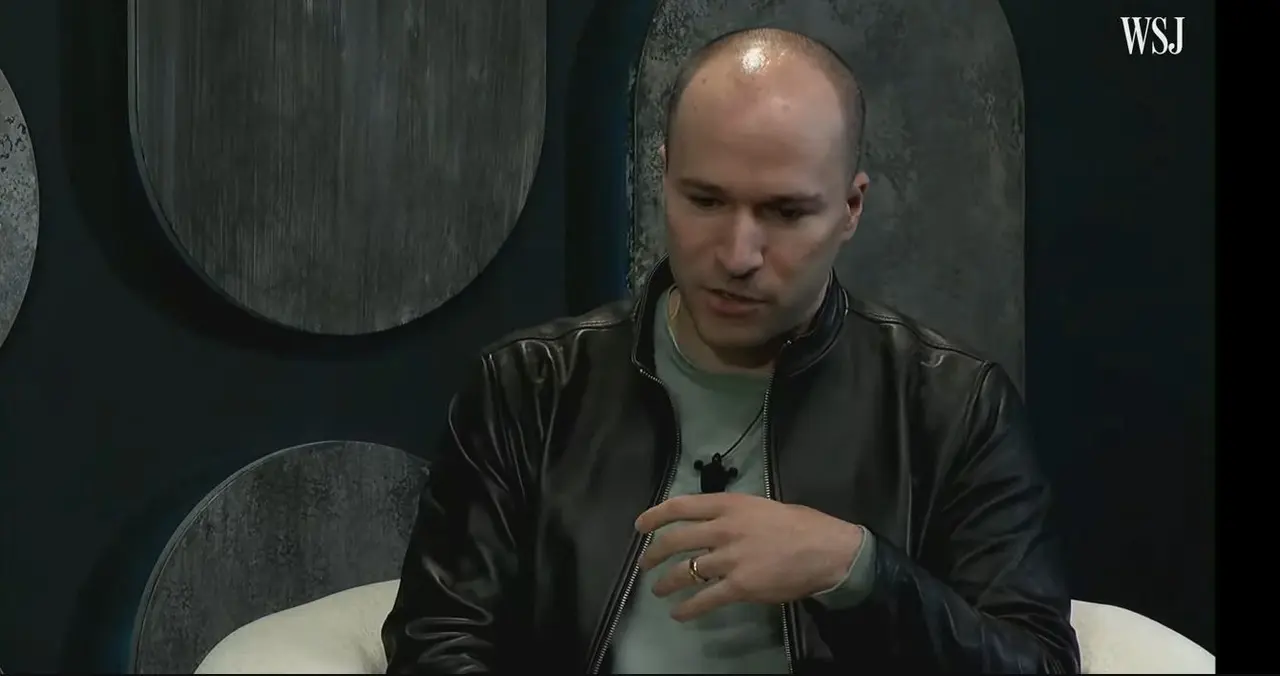
Source: Wccftech
"Having cures for diseases is something that's become also a trope in this field, but I think that you're gonna see real delivery and real significant strides and impacts on biology, health, and curing of diseases over the next 12 months, 18 months," Brockman stated
1
. He added that the question of "death becoming a choice" is now within the realm of possibility, a statement that echoes broader conversations happening among tech leaders about longevity or semi-immortality2
.Elon Musk's Perspective on Longevity Aligns With Brockman's Vision
Brockman's thesis finds reinforcement from Elon Musk, who articulated similar views during a January 2026 interview with Peter Diamandis. Musk argued that longevity or semi-immortality represents "an extremely solvable problem," pointing to the synchronized aging of the human body as evidence of an underlying biological program that could be modified
1
. "Nobody has an old left arm and a young right arm. Why is that? What's keeping them all in sync? You're programmed to die, is the way, you're programmed to die. And so if you change the program, you will live longer," Musk explained2
. More recently, in October, Musk declared that "longevity is coming," further validating Brockman's optimistic outlook2
.This convergence of perspectives from two influential tech figures underscores growing confidence in AI's role in biology. Other voices in the industry share this optimism. Peter Diamandis suggested last year that avoiding fatal incidents until 2030 could allow individuals to reach "longevity escape velocity," where AI and other technologies continuously extend lifespan
1
. Biohacker Bryan Johnson, known for his anti-aging efforts, has similarly positioned AI as a technology that could render no condition incurable1
.AI-Driven Scientific Research Reaches New Capabilities
The technological foundation supporting these predictions has advanced rapidly. AI has evolved from analyzing DNA sequences to writing genetic code generation from scratch using biological LLMs such as Evo and Evo 2
2
. These systems represent a fundamental shift in how biological research operates, moving beyond pattern recognition to active creation of novel genetic material.Autonomous scientific research powered by AI has also reached significant milestones. Multi-agent frameworks like Robin and systems utilizing OpenAI's GPT-Rosalind now execute end-to-end research independently
2
. In peer-reviewed evaluations, these platforms reviewed hundreds of papers, cross-examined deep CRISPR atlases, generated therapeutic hypotheses, and identified novel drug candidates—all validated through physical lab results2
. AI-driven lab robotics now utilize integrated sensors and AI agents to dynamically adjust experimental parameters in real-time, replacing rigid pre-programmed protocols2
.Related Stories

Skepticism and Ethical Implications Surround Bold Predictions
Despite the technical progress, Brockman's timeline for disease cures and extended human longevity faces scrutiny. The promise of major medical breakthroughs within 12-18 months has circulated since ChatGPT's launch, yet concrete results remain elusive
1
. Palantir CTO Shyam Sankar recently highlighted the speculative nature of these beliefs, noting that some AI researchers have taken up smoking because they're convinced AI will cure cancer—a phenomenon he described as "mass psychosis social delusion"1
.
Source: TechSpot
The ethical implications of making death becomes a choice raise profound questions about access, equity, and societal structure. If AI enables radical life extension, who will have access to these treatments? How will healthcare systems adapt? What happens to resource allocation in a world where mortality becomes optional rather than inevitable? These questions remain unanswered as the technology advances, creating a gap between technical capability and societal readiness. Watch for regulatory frameworks addressing AI-driven longevity treatments and debates about equitable access to life-extension technologies in the coming months.
References
Summarized by

Navi
[1]
Related Stories
Anthropic CEO's Bold Claim: AI Could Double Human Lifespan Within a Decade
25 Jan 2025•Technology

Bryan Johnson Says He Would Never Trust His Health to AI Despite Gathering 4.2 Billion Data Points
08 Oct 2026•Health

Google DeepMind CEO Envisions AI Curing All Diseases Within a Decade
22 Apr 2025•Technology

Recent Highlights



Recent Highlights
Today's Top Stories






Don’t drown in AI news. We cut through the noise - filtering, ranking and summarizing the most important AI news, breakthroughs and research daily. Follow topics that matter to you and stay ahead.


