Bryan Johnson Says He Would Never Trust His Health to AI Despite Gathering 4.2 Billion Data Points


2 Sources
[1]
"I would never trust my health to an AI," longevity guru Bryan Johnson says.
Why it matters: Johnson is a successful tech founder, is close to a number of top AI execs and is at the forefront of a movement to prolong and improve health that's grown into an obsession for many in Silicon Valley. That is to say, his perspective on AI and health is tested and well-honed. State
[2]
'Brilliant and dumb': Bryan Johnson, the millionaire who wants to live forever, on why not to trust AI with health
Bryan Johnson warns against relying on artificial intelligence for health advice due to its potential unreliability and common mistakes. With many users turning to AI chatbots for medical questions, health professionals express valid concerns. These bots often lack detailed patient histories,
Share
Copy Link
Tech entrepreneur Bryan Johnson, known for his extreme longevity regimen, warns against trusting AI for health decisions despite its potential. As one in four Americans use AI chatbots for medical advice, experts highlight risks including AI hallucinations, incomplete patient data, and misinformation that could compromise healthcare outcomes.
Bryan Johnson Issues Stark Warning on AI in Healthcare
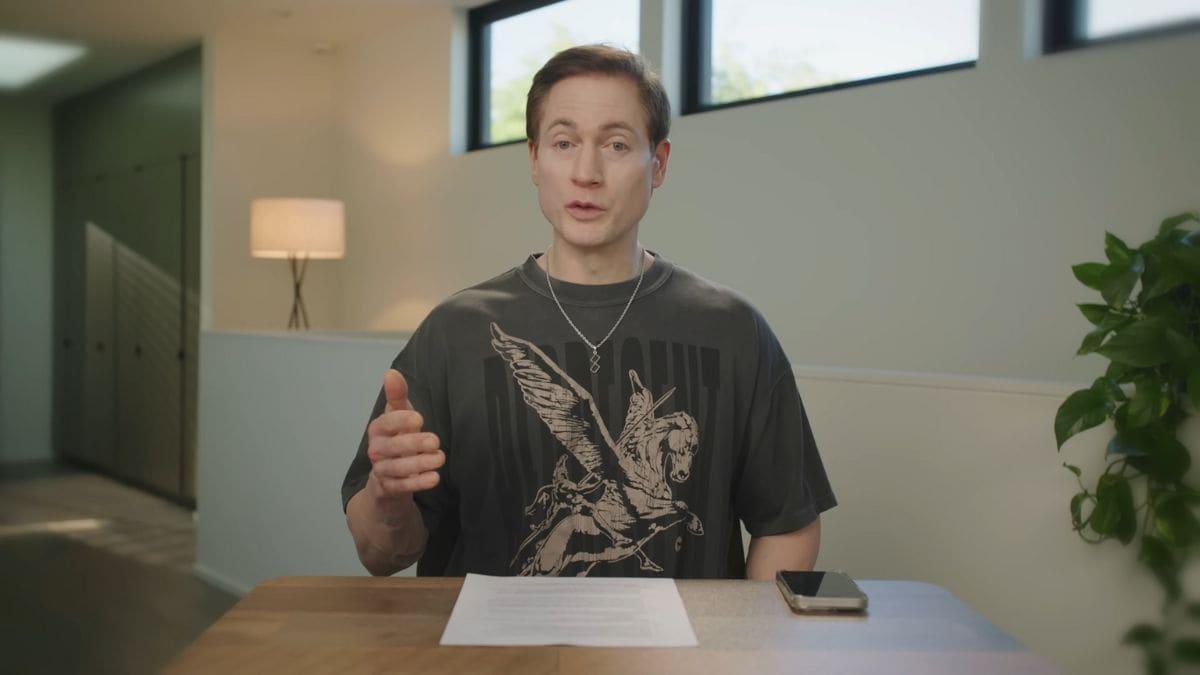
Tech entrepreneur and longevity advocate Bryan Johnson has issued a clear warning about relying on artificial intelligence for health decisions, stating "I would never trust my health to an AI" during an interview with The Axios Show
1
. Johnson, founder of the "Don't Die" movement, explained that despite AI's promise, the technology remains in an unstable phase where systems are "brilliant and dumb" and "make really stupid mistakes all the time"2
.This perspective carries significant weight given Johnson's position at the intersection of technology and longevity research. The anti-aging enthusiast has spent millions developing an extreme health regimen involving 30 daily pills and measuring biomarkers down to extreme minutiae. Over the past five years, he has accumulated 4.2 billion data points on his health, acknowledging that "there's no way any human can master that" and "we've just exceeded the capacity for a human to understand the data"
1
.Growing Reliance on AI Chatbots for Medical Queries
Johnson's caution arrives as AI for health advice becomes increasingly mainstream. A Pew Research Center survey found that approximately one in four Americans have used AI chatbots to diagnose health symptoms
2
. Mayo Clinic reports that nearly eight in 10 US adults turn to the internet for health questions, with more than one in five adults globally consulting AI chatbots like ChatGPT and Gemini directly for medical concerns2
.Despite his warnings about current AI's limitations, Johnson recognizes AI's role in healthcare extends to data interpretation rather than direct medical advice. For someone managing billions of health data points, AI serves as a tool to help make better sense of information that exceeds human processing capacity
1
.AI Hallucinations and Critical Healthcare Risks
Mayo Clinic has identified several critical concerns with AI's role in healthcare. The institution warns that AI hallucinations—instances where systems generate convincing but completely incorrect answers—pose serious risks. These errors occur because AI systems generate responses based on patterns in training data rather than understanding medical facts like human clinicians
2
.Additional limitations include AI's inability to access complete patient histories, conduct physical examinations, or perform medical tests. Small differences in symptom descriptions can lead to dramatically different recommendations. Mayo Clinic cited research showing two people with similar symptoms received different guidance based solely on wording variations, with only one receiving the correct recommendation to seek emergency care
2
.Related Stories

Future Implications and Existential Questions
Johnson's perspective on trust in AI extends beyond healthcare to broader existential risks of AI. During his interview, he addressed concerns from AI researchers warning about potential human extinction, stating "I personally don't think any human knows enough to make an assessment, whether we are headed for utopia, dystopia, or extinction"
1
.Despite current skepticism, Johnson maintains hope that AI could eventually deliver breakthroughs in medicine and longevity. Diagnosed with an incurable autoimmune condition earlier this year, he believes living another 30 years could allow him to see AI cure his disease or slow aging
1
. He's even training AI agents on his brain and personality, remaining "open to continuation in a variety of forms" should his physical body fail, though he strongly prefers continuing in his current form1
.Expert Recommendations for Safe AI Use
Mayo Clinic recommends using AI chatbots for medical queries only for general health education rather than diagnosis. Users should cross-check AI-generated information with reliable medical sources and avoid sharing sensitive personal information. The clinic emphasizes that diagnosing and treating illness remains too complex to leave entirely to machines, highlighting concerns about misinformation, data biases, and AI's tendency to reproduce inaccurate information existing online
2
. Watch how AI's limitations in healthcare evolve as the technology matures and regulatory frameworks develop around medical AI applications.References
Summarized by

Navi
Related Stories
Tech Entrepreneur Bryan Johnson's Ambitious AI-Driven Quest for Immortality
24 Jul 2025•Technology
Anthropic Claude enters healthcare with HIPAA tools, but AI accuracy questions linger
11 Jan 2026•Technology

Anthropic CEO's Bold Claim: AI Could Double Human Lifespan Within a Decade
25 Jan 2025•Technology

Recent Highlights
1
Microsoft and Nvidia Launch Surface Laptop Ultra: A $2,599 AI-Ready PC With RTX Spark Chip
Technology

2
Google Unveils Gemini 4 Argon AI Model, Restricts Access to Trusted Cyber Defenders
Technology

3
OpenAI Releases 722 AI-Generated Math Papers on GitHub, Igniting Fury Among Mathematicians
Science and Research

Recent Highlights
Today's Top Stories










Don’t drown in AI news. We cut through the noise - filtering, ranking and summarizing the most important AI news, breakthroughs and research daily. Follow topics that matter to you and stay ahead.


