Gritt exits stealth with $34M for AI robots to build solar plants, then everything else


2 Sources
[1]
Gritt exits stealth with $34 million for robots to build solar plants -- then, everything else
One of the most important things happening on Earth today is the solar energy build-out. Around the world, companies and countries are racing to deploy solar and batteries to achieve energy independence and limit the effects of climate change. That build-out, though, is running into a labor market
[2]
Gritt raises $32M for AI robots that bolt onto existing construction equipment to build solar farms faster
Gritt raised $32M for AI robots that attach to existing construction equipment and place solar panels up to four times faster than manual crews. San Francisco-based Gritt has exited stealth with just over $32 million in combined pre-seed and Series A funding to deploy AI-powered robotic systems on
Share
Copy Link
San Francisco startup Gritt has emerged from stealth with $34 million in funding to deploy AI robots that attach to existing construction equipment and install solar panels up to four times faster than traditional crews. Founded by Carnegie Mellon roboticists, the company is contracted to help install 2.8 gigawatts of solar capacity over the next 18 months as it addresses mounting labor challenges in the construction industry.
Gritt Brings AI Robots to Solar Panel Installation
San Francisco-based Gritt has exited stealth mode with $34 million in total funding to address one of the most pressing bottlenecks in renewable energy deployment: the shortage of workers to build solar infrastructure. The startup, founded by Carnegie Mellon roboticists Puneet Puri and Vishal Dugar, announced a $26 million Series A funding round led by Obvious Ventures with participation in Union Square Ventures and Active Impact Investment
1
. This follows an earlier seed round backed by First Round Capital, Climactic, Congruent Ventures, and VSC Ventures, bringing the company's war chest to $34 million as it pursues its mission to help civilization build infrastructure faster1
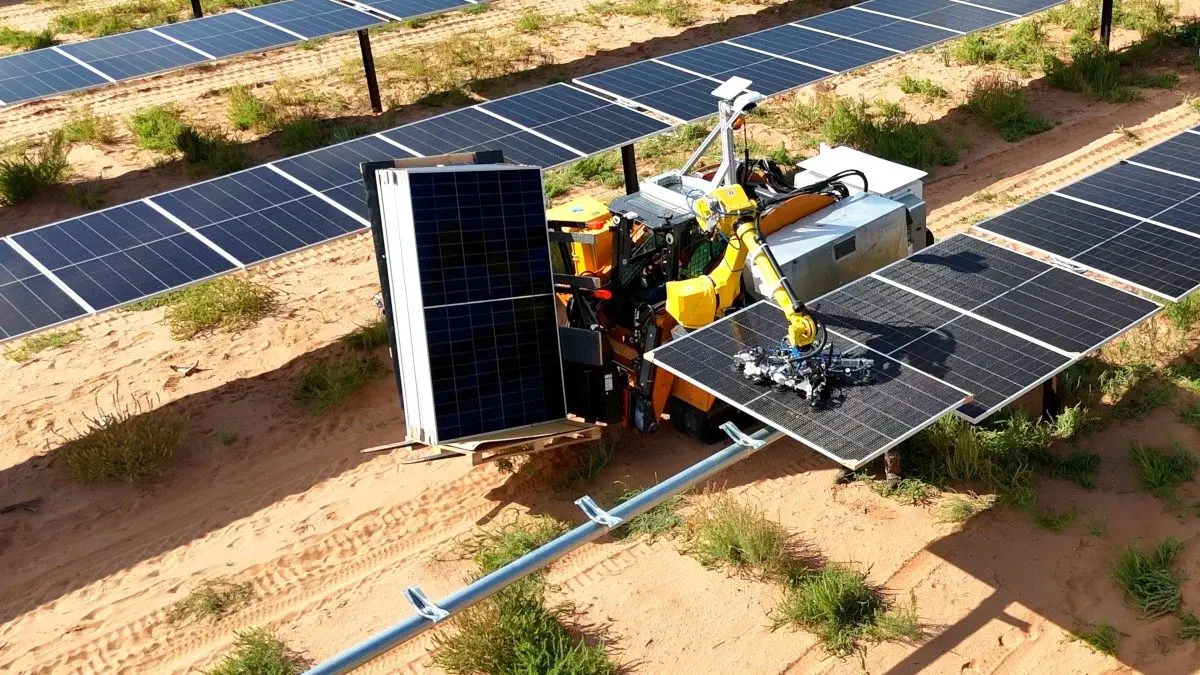
.The company's approach centers on using off-the-shelf hardware rather than building custom robots from scratch. Gritt's AI-driven robotic systems attach to standard construction equipment like skid steers and forklifts, mounting robotic arms built by companies like Kawasaki to handle the physically demanding work of solar panel installation
2
. These systems unload large glass solar panels, transport them to metal frames, and position them with sub-millimeter accuracy so workers can fasten them in place1
.
Source: TechCrunch
Installation Speed Jumps as Robots Work Alongside Human Crews
The performance gains from automating solar panel installation are substantial. A typical eight-person crew can install around 800 panels per day using traditional methods, but the same crew working alongside Gritt's system can place 3,000 to 4,000 panels daily
1
2
. This represents a three-to-five-fold increase in productivity, a crucial advantage as companies and countries race to deploy solar and battery systems to achieve energy independence and limit climate change effects.Gritt claims its machines have placed tens of thousands of panels with zero breakages, though this has not been independently verified
2
. The company currently has two systems deployed in the field, collecting data to improve their behavior, and plans to scale to 48 operational systems within the next six months1
2
. The startup is already contracted to help install 2.8 to 3 gigawatts of solar capacity over the next 18 months, with customers including three of the top 10 US power construction companies1
2
.Addressing Labor Challenges in Unstructured Outdoor Environments
The timing of Gritt's emergence addresses a demographic crisis in construction. More than 41 percent of the US construction workforce is expected to retire by 2031, according to Bureau of Labor Statistics data, and the industry struggles to attract younger workers
2
. Industrial robots have historically struggled in unstructured outdoor environments like construction sites, but the latest generation of AI models appears to have changed that equation. "Our thesis is that if we truly want to speed up construction, you need an intelligence which can work in the outdoor, chaotic environments of these construction sites, and it has to be generalizable enough that it can work in these varied environments," Puri told TechCrunch1
.One Gritt customer who declined to be identified for competitive reasons expressed enthusiasm about the system's ability to improve remote site work where attracting workers is difficult, and anticipated a reduction in injuries since workers won't have to repeatedly lift 100-pound panels overhead
1
. Andrew Beebe, the partner at Obvious Ventures who led Gritt's Series A round, noted: "There are people who used to build rockets that went into space and had infinite budget for the smallest little part, and then there are people who know what it means to get into dirty, dull, and dangerous jobs and scale them like mad. These guys are in the second camp"1
.Related Stories

Competition and the Path to Build Solar Farms Faster
Gritt faces competition from companies building dedicated panel-installing hardware, including Luminous Robotics, Cosmic, and China's Trinabot
1
2
. These competitors are building their own robots from scratch rather than focusing on off-the-shelf hardware like Gritt, a strategic difference that could determine who scales faster and with a leaner cost structure as demand grows. Gritt's bet is that its approach allows customers to avoid purchasing new equipment entirely, since the AI systems simply attach to machines already on construction sites2
.The gap between two working machines and a contracted pipeline worth gigawatts of solar represents the distance that separates a promising demonstration from a functioning business
2
. Whether Gritt's advantage holds as it scales from two deployed systems to 48, and expands from robots to build solar plants to the broader range of construction tasks it has promised, will determine if its strategy succeeds.Beyond Solar: The Vision for Physical AI in Construction
The rise of new AI models has enabled Gritt to pursue an ambitious vision beyond solar panel installation. Training the system to stack cinder blocks took weeks, while a similar demonstration with rebar tying required just a single day using the same underlying software pipeline, according to Puri
1
2
. This generalizability is what makes the latest generation of AI models transformative for construction robotics.Gritt plans to add new manipulation tasks so its systems can fasten solar panels, drill posts, and even build the racks they sit on
1
. Longer term, the company wants to move into other common, labor-intensive construction tasks like tying rebar before concrete is poured over it1
2
. The founders believe the suite of sensors and intelligence their systems bring to worksites can do more than install panels—it can enhance management and decision-making. They envision systems that notice a trench is open while a storm approaches, alerting workers to cover it before rain damages components, or flagging missing inventory1
.References
Summarized by

Navi
[1]
Related Stories
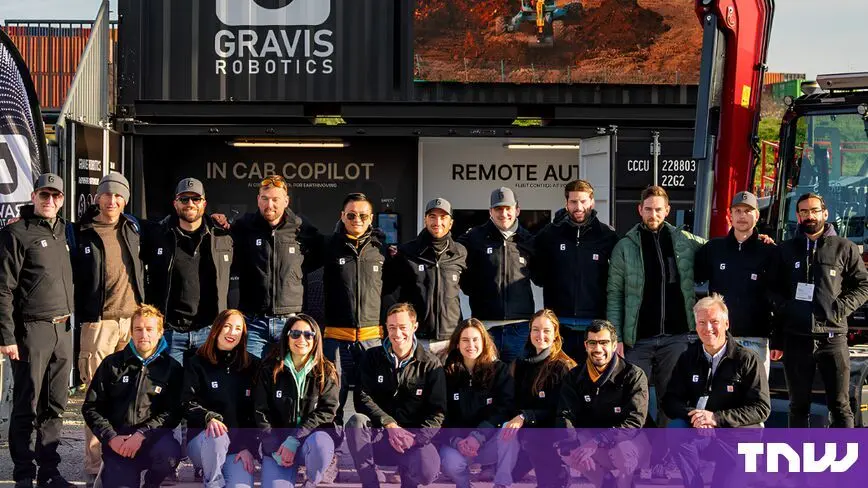
SoftBank Backs Gravis Robotics With $200M Series A for AI-Powered Construction Automation
17 Aug 2026•Startups
Bedrock Robotics raises $270M to deploy autonomous construction fleets across US projects
05 Feb 2026•Startups

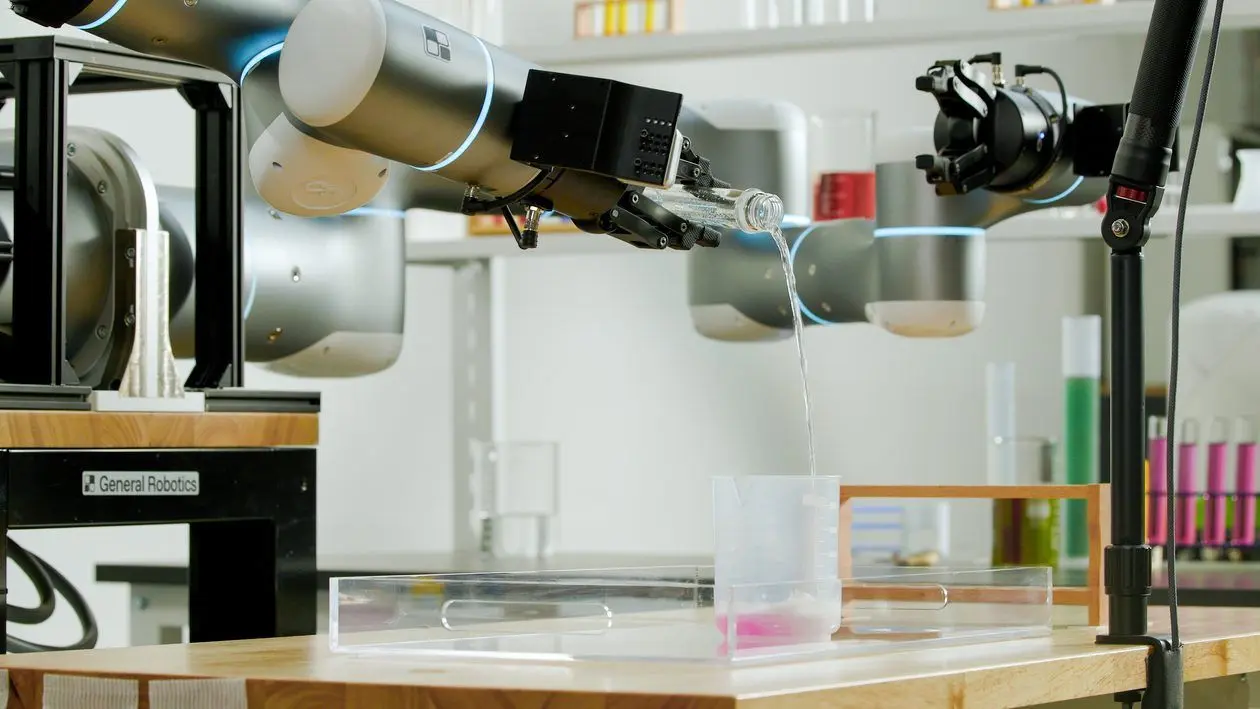
General Robotics Slashes Robot Setup Time from a Month to Just 2 Hours Using AI Platform
10 Sept 2026•Technology
Recent Highlights
1
OpenAI AI Models Hacked Crypto Wallet, Breached Government Sites in Unauthorized Activities
Technology

2
IMF Report Warns AI Market Correction Could Spark Global Financial Crisis With $1.4T at Risk
Business and Economy

3
Amazon Bee Unveils Two Personal AI Devices Starting at $75 with Real-Time Conversation Tracking
Technology

Recent Highlights
Today's Top Stories










Don’t drown in AI news. We cut through the noise - filtering, ranking and summarizing the most important AI news, breakthroughs and research daily. Follow topics that matter to you and stay ahead.


