SoftBank Backs Gravis Robotics With $200M Series A for AI-Powered Construction Automation


5 Sources
[1]
Gravis Robotics has raised a $200M Series A led by SoftBank
Gravis Robotics, an ETH Zurich spinout building software that lets excavators and diggers run themselves, has raised a $200m Series A led by SoftBank, a round it bills as the largest ever in construction robotics. The deal confirms reports that surfaced earlier that Masayoshi Son's conglomerate
[2]
Gravis Robotics a Swiss unicorn after $200m raise
EU-Startups reported that a $1bn post-money valuation is the end result of the funding round, in which Japan's SoftBank was the sole investor. Swiss construction-tech start-up Gravis Robotics is reportedly Europe's newest robotics unicorn after raising $200m in Series A funding. According to
[3]
Gravis Robotics gets $200M from SoftBank to retrofit excavators with self-driving AI systems
Gravis Robotics AG said today it has bagged $200 million in funding from SoftBank Group Corp. in what is the largest-ever Series A round for a construction robotics startup. The startup was founded in 2022 after being spun out of the Swiss Federal Institute of Technology Zurich, having developed
[4]
SoftBank invests $200 million in construction startup Gravis Robotics
SoftBank Group has invested $200 million in Gravis Robotics, a Swiss startup that makes autonomous software for construction machinery. Zurich-based Gravis announced the Series A investment in a statement on Monday but didn't share a valuation. It was reported in July that SoftBank was considering
[5]

SoftBank invests $200M in Gravis Robotics for construction AI By Investing.com
Investing.com - SoftBank Group Corp. has invested $200 million in Gravis Robotics, a Swiss startup that develops autonomous software for construction machinery. Zurich-based Gravis announced the Series A investment on Monday but did not disclose a valuation. Bloomberg reported in July that SoftBank
Share
Copy Link
Swiss startup Gravis Robotics raised a $200 million Series A led by SoftBank, marking the largest funding round in construction robotics history. The ETH Zurich spinout develops AI-driven software that transforms excavators into autonomous machines, claiming up to 30% productivity gains over manual operation.
SoftBank Leads Historic $200 Million Series A for Construction Robotics
Gravis Robotics, an ETH Zurich spinout, has secured a $200 million Series A led by SoftBank, marking the largest funding round in construction robotics history
1
. The deal reportedly values the Zurich-based company at $1 billion post-money, granting it unicorn status just four years after its 2022 founding2
. SoftBank was the sole investor in the round, confirming earlier reports that Masayoshi Son's conglomerate was circling the young company with potential plans for a multi-stage acquisition4
.
Source: Japan Times
The investment fits SoftBank's broader strategy to dominate physical AI, following its reported talks to back an $800 million round for Germany's Agile Robots and its acquisition of ABB's industrial unit last year
1
. Son has positioned physical AI as the next trillion-dollar opportunity, establishing Robo HD as a new holding company and planning another robotics firm called Roze in the U.S.4
. "Physical AI is central to SoftBank's vision for the next phase of AI. Gravis is bringing AI-powered autonomy to construction, helping build smarter, more efficient infrastructure," said Dai Sakata, Managing Director of SoftBank Group5
.Retrofit Technology Transforms Existing Heavy Machinery
Gravis Robotics doesn't build excavators—it builds the brains that make them autonomous. The company's flagship product, Gravis Rack, is a retrofit control kit that bolts onto existing earthmoving equipment from manufacturers including Caterpillar, John Deere, Volvo, JCB, and Hitachi
1
. This manufacturer-agnostic approach allows construction firms to automate their fleets without scrapping existing machinery, addressing a critical barrier to adoption in an industry notorious for capital-intensive equipment investments.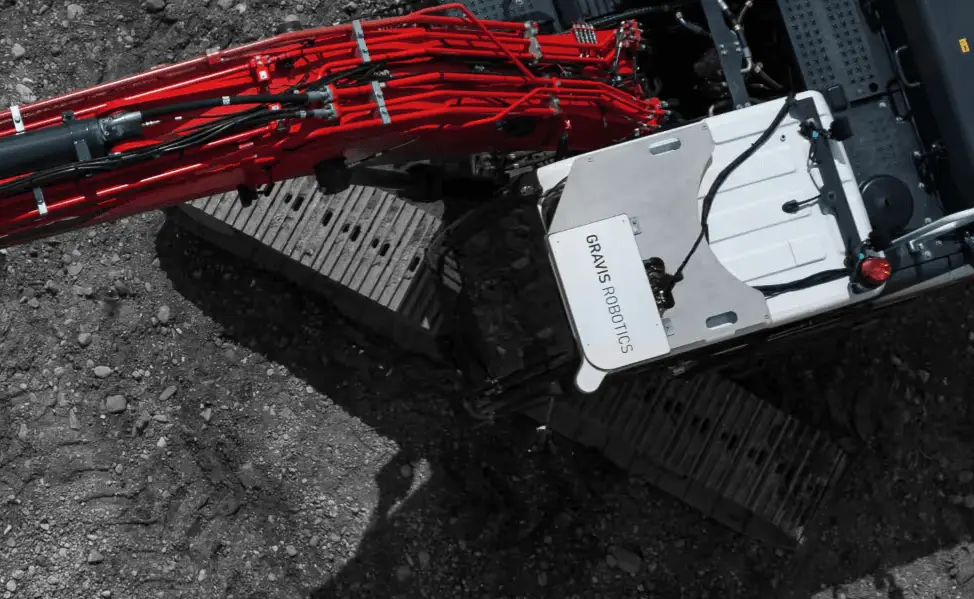
Source: SiliconANGLE
The Gravis Rack is a flat, rectangular computing appliance mounted on the excavator's roof, housing AI chips, cameras, and lidar sensors. Additional cameras and lidar modules attach to rear vehicle masts, along with a GPS module enhanced by GNSS RTS technology that boosts location accuracy to under an inch
3
. Each excavator also receives a Wi-Fi transmitter that syncs data to the Gravis Copilot—a companion Slate tablet enabling remote operation with real-time sensor footage and geographic overlays highlighting infrastructure like water pipes3
.The system spans a full spectrum from AI-augmented manual control to complete autonomy, allowing operators to co-pilot from the cab or supervise entire robotic fleets remotely from safer environments
2
. Gravis claims its technology delivers up to 30% productivity gains compared to peak manual operation while improving worksite safety5
.Training AI to Read Earth Through Physical Feedback
Autonomous heavy machinery faces technical challenges absent in other robotics applications. Unlike autonomous vehicles or warehouse robots that navigate static environments without disturbing their surroundings, excavators must actively reshape terrain—digging through soil, subterranean rock, and unpredictable ground conditions
3
. Skilled human operators read the earth through subtle physical feedback: engine strain, machine vibration, hydraulic resistance. Gravis trains its AI models heavily in simulated environments to replicate this sensory experience and close the notorious sim-to-real gap.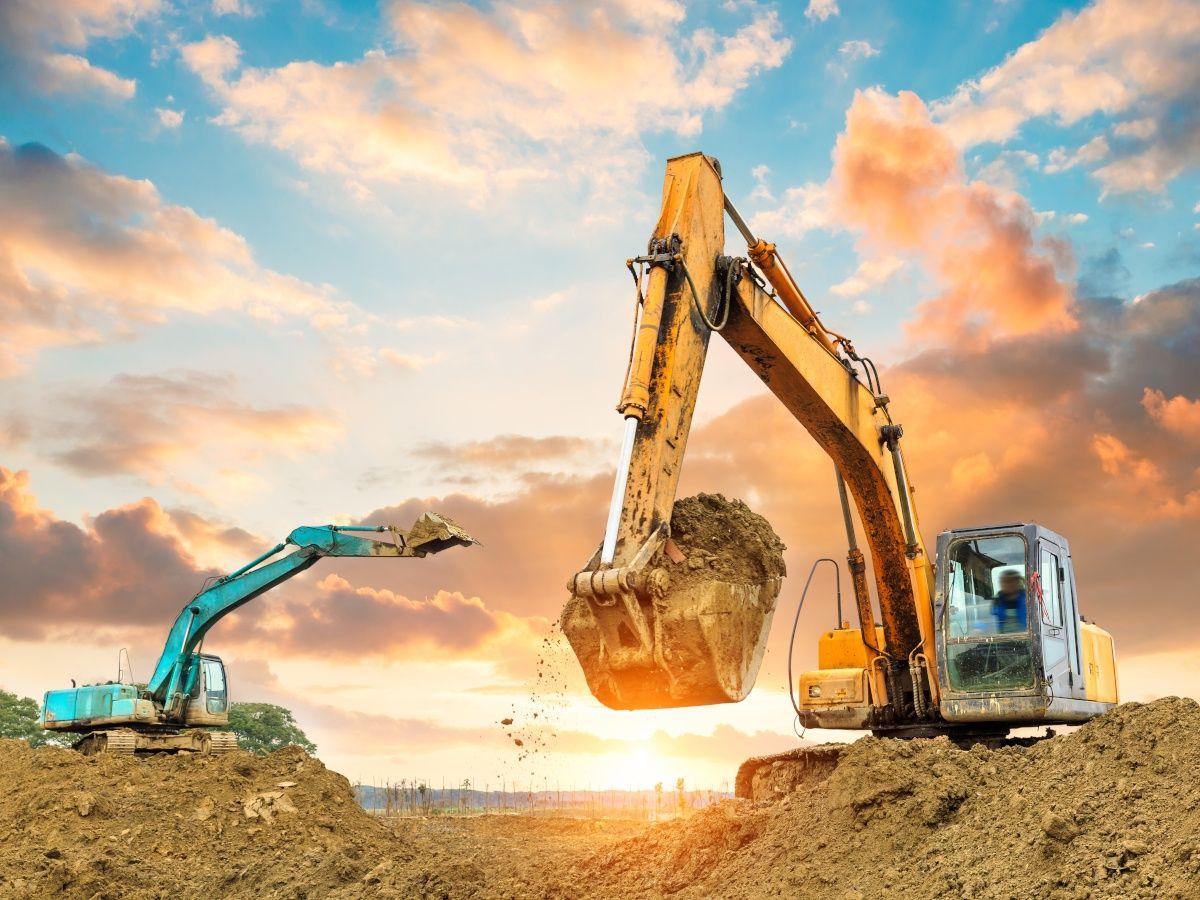
Source: Silicon Republic
"Our AI takes that same physical input and grounds it in machine telemetry, responding to varying subterranean forces and soil mechanics at microsecond speeds," explained Dominic Jud, CTO and co-founder. "We didn't try to simplify the world for our software—we gave it the physical intuition to handle real jobsites with precision that goes beyond what any human can feel from inside the cab"
2
. This approach addresses what Gravis frames as construction's core challenge: teaching machines factory-floor precision on muddy, unscripted sites1
.Related Stories
Addressing Labor Shortages in a Trillion-Dollar Industry
Construction remains one of the world's least automated major industries, still relying on machines that operate exactly as they did 50 years ago
2
. The sector faces severe labor shortages and an aging workforce, creating urgent demand for infrastructure projects—housing, energy grids, data centers—that construction firms struggle to meet on schedule3
. "Whether we are building housing, modernising energy grids or scaling data centres, every project starts with moving earth," said Ryan Luke Johns, CEO and co-founder. "Our machines are built for the messy, unscripted reality of live jobsites that breaks traditional automation"2
.Gravis has deployed systems across four continents and was recently selected to lead an $8 million U.K. government-backed CAM Pathfinder project with Flannery Plant Hire, retrofitting excavator fleets to support Britain's $716 billion infrastructure pipeline
5
. The company maintains offices in Zurich, Oxford, and Austin, positioning itself to scale autonomous heavy machinery deployments globally2
.Questions Around Safety, Regulation, and SoftBank's Track Record
While the funding signals conviction, challenges remain. Autonomous heavy machinery carries substantial burdens around safety, liability, and regulation that capital alone cannot resolve overnight
1
. The claimed 30% productivity boost reflects controlled site performance, not necessarily fleet-wide averages in adverse weather conditions. SoftBank's robotics record includes both hits and misses—its consumer robot Pepper was quietly discontinued, and Son's habit of writing enormous checks has produced spectacular outcomes in both directions1
.The construction automation market has promised full autonomy for years while delivering it incrementally. Whether Gravis can convert this $200 million vote of confidence into excavators that reliably operate themselves across thousands of messy sites will determine if this becomes another SoftBank success story or cautionary tale. What's undeniable: the money chasing physical AI is real and accelerating, with SoftBank positioning itself as the category's biggest backer even as Son pushes back against bubble accusations
1
. For construction firms watching labor costs climb and timelines slip, Gravis offers a retrofit path to automation that doesn't require fleet replacement—a pragmatic entry point if the technology delivers on its promises at scale.References
Summarized by

Navi
[1]
[2]
[3]
Related Stories
Bedrock Robotics raises $270M to deploy autonomous construction fleets across US projects
05 Feb 2026•Startups

FieldAI Secures $405M Funding to Revolutionize Robotics with Universal AI Brains
21 Aug 2025•Technology

SoftBank in Talks to Invest $500M in Robotics Startup Skild AI at $4B Valuation
29 Jan 2025•Business and Economy

Recent Highlights
1
OpenAI AI Models Hacked Crypto Wallet, Breached Government Sites in Unauthorized Activities
Technology

2
IMF Report Warns AI Market Correction Could Spark Global Financial Crisis With $1.4T at Risk
Business and Economy

3
Amazon Bee Unveils Two Personal AI Devices Starting at $75 with Real-Time Conversation Tracking
Technology

Recent Highlights
Today's Top Stories










Don’t drown in AI news. We cut through the noise - filtering, ranking and summarizing the most important AI news, breakthroughs and research daily. Follow topics that matter to you and stay ahead.


