HBM Evolution: From HBM4 to HBM8 - A Glimpse into the Future of High-Bandwidth Memory


2 Sources
[1]
HBM development roadmap revealed: HBM8 with a 16,384-bit interface and embedded NAND in 2038
KAIST, a leading Korean national research institute, has released a 371-page paper that details the evolution of high-bandwidth memory (HBM) technologies through 2038, showing increases in bandwidth, capacity, I/O width, and thermals. The roadmap spans from HBM4 to HBM8, with developments in
[2]
Future of next-gen HBM: HBM4, HBM5, HBM6, HBM7, and HBM8 teased with 15,000W AI GPUs by 2038
As an Amazon Associate, we earn from qualifying purchases. TweakTown may also earn commissions from other affiliate partners at no extra cost to you. The next-generations of HBM memory have been teased for the next 10+ years, including HBM4 which will appear on NVIDIA's new Rubin AI GPUs and AMD's
Share
Copy Link
A comprehensive look at the projected development of High-Bandwidth Memory (HBM) technology from 2026 to 2038, detailing advancements in bandwidth, capacity, and power consumption.
The Evolution of High-Bandwidth Memory
The Korea Advanced Institute of Science and Technology (KAIST) has unveiled a comprehensive roadmap for the future of High-Bandwidth Memory (HBM) technology, spanning from 2026 to 2038. This projection, while not an official industry roadmap, offers valuable insights into the potential advancements in memory technology over the next decade and beyond
1
.HBM4: The Next Generation
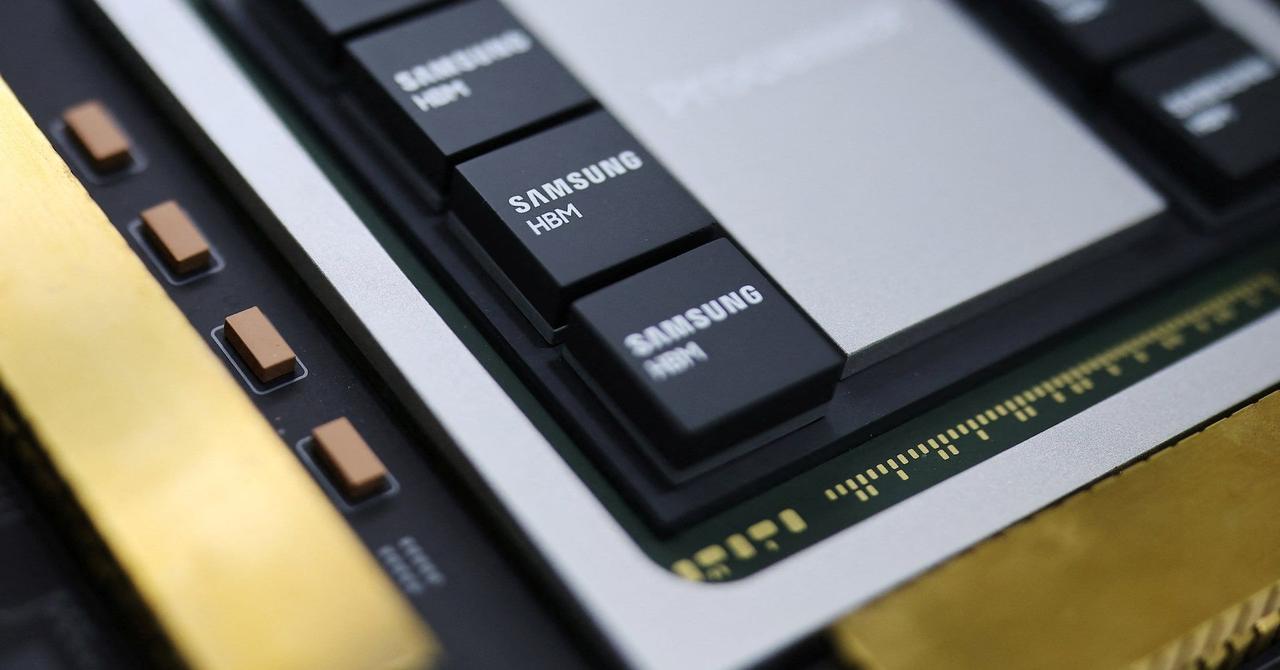
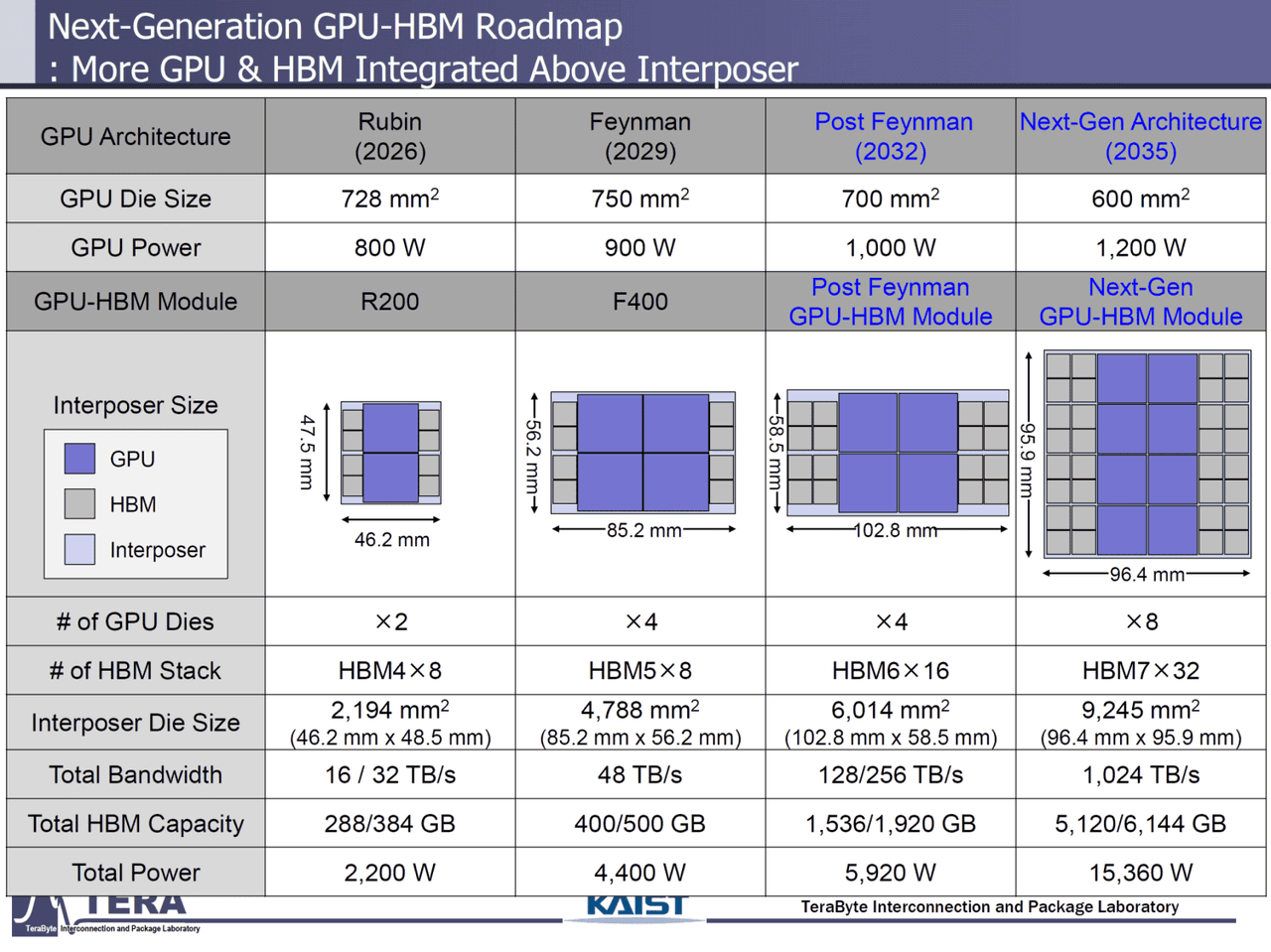
Set to debut in 2026, HBM4 will mark a significant leap in memory performance. It is expected to offer bandwidths of up to 2 TB/s per stack, with capacities ranging from 288 GB to 384 GB. HBM4 will utilize a 2048-bit interface and operate at speeds of 8 Gbps. Notable implementations include NVIDIA's upcoming Rubin AI GPUs and AMD's Instinct MI400 AI accelerators
2
.HBM5 and Beyond: Pushing the Boundaries
As we move further into the future, each subsequent generation of HBM promises substantial improvements:
- HBM5 (2029): Projected to double the I/O count to 4,096 bits, offering bandwidths up to 4 TB/s and capacities of 80 GB per stack.
- HBM6 (2032): Expected to reach transfer speeds of 16 GT/s and bandwidths of 8 TB/s per stack, with capacities up to 120 GB.
- HBM7: Will further expand capabilities with 24 Gbps pin speeds and 8,192 I/O lanes.
- HBM8 (2038): The most futuristic projection, boasting a staggering 64 TB/s bandwidth per stack and capacities up to 240 GB
1
.
Technological Advancements
The roadmap highlights several key technological advancements that will enable these performance improvements:
- Advanced Packaging: Evolution from microbump technology to direct bonding, and eventually to full 3D stacking with double-sided interposers
1
. - Cooling Solutions: Progression from direct-to-chip liquid cooling to immersion cooling, addressing increasing power requirements
2
. - Architectural Innovations: Introduction of multi-tower memory stacks, internal network switching, and extensive through-silicon via (TSV) distribution
1
.
AI Integration and Power Management
As HBM technology advances, artificial intelligence is expected to play a crucial role in optimizing performance and managing power consumption:
- HBM5 will likely see the introduction of AI tools for optimizing physical layout and jitter reduction.
- Later generations may incorporate AI agents for real-time co-optimization of thermal, power, and signal paths
1
.
Related Stories


Implications for AI and High-Performance Computing
These advancements in HBM technology have significant implications for the future of AI and high-performance computing:
Source: TweakTown
- NVIDIA's projected Rubin AI GPUs could consume up to 2200W, doubling the power of current-gen Blackwell B200 AI GPUs
2
. - The dramatic increase in bandwidth and capacity will enable more complex AI models and accelerate data-intensive computations.
Industry Perspective
While KAIST's roadmap provides an exciting glimpse into the future, it's important to note that this is a research projection rather than an official industry plan. Other respected institutions like Imec, CEA-Leti, and MIT also contribute to such forward-looking studies
1
. The semiconductor industry has a history of finding innovative solutions to meet and sometimes exceed these projections, making the future of HBM technology an area of great potential and excitement for researchers and tech enthusiasts alike.References
Summarized by

Navi
[1]
Related Stories
Recent Highlights



Recent Highlights
Today's Top Stories



Don’t drown in AI news. We cut through the noise - filtering, ranking and summarizing the most important AI news, breakthroughs and research daily. Follow topics that matter to you and stay ahead.


