Hetairos AI classifies brain tumors in 12 minutes with 87% accuracy, outperforming specialists


2 Sources
[1]
Hetairos is a histology-based artificial intelligence model for predicting central nervous system tumor methylation subtypes - Nature Cancer
Here, we describe Hetairos, an AI-based model that classifies whole-slide images of H&E-stained FFPE tissue sections into 102 subtypes of CNS tumors. Hetairos was trained and evaluated on 9,606 tumors, comprising more than 11,000 slides from 11 different institutions across four continents.
[2]
New AI system classifies brain tumors with unprecedented accuracy
German Cancer Research Center (Deutsches Krebsforschungszentrum, DKFZ)Jun 10 2026 Experts in Heidelberg have developed an AI system that can classify brain tumors with unprecedented accuracy using standard microscopic tissue sections. Using digitized standard stains, the system identifies more
Share
Copy Link
Researchers at the German Cancer Research Center have developed Hetairos, an AI system that identifies over 100 molecular subtypes of brain tumors using standard microscopic tissue sections. Trained on more than 11,000 slides from 9,606 patients across four continents, the system delivers diagnoses in 12 minutes with 87% accuracy—significantly outperforming experienced neuropathologists in head-to-head testing.
Hetairos AI Transforms Brain Tumor Diagnosis with Speed and Precision
A team led by Moritz Gerstung at the German Cancer Research Center (DKFZ) and Felix Sahm at Heidelberg Medical Faculty has developed Hetairos, a histology-based artificial intelligence model that promises to accelerate CNS tumor classification worldwide
1
. The system analyzes whole-slide images of H&E-stained FFPE tissue sections to identify 102 different molecular subtypes of central nervous system tumors, covering nearly the entire spectrum of the current WHO classification2
.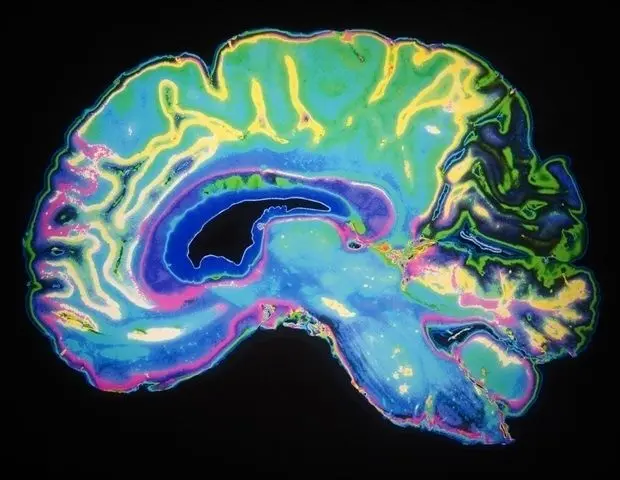
Source: News-Medical
Trained and validated on more more than 11,000 digitized tissue sections from 9,606 patients across 11 medical centers on four continents, Hetairos AI delivers results that could fundamentally change cancer diagnostics
1
2
. The training dataset from the University Hospital Heidelberg included CNS tumors from all age groups, with molecular data annotated to comply with the 2021 WHO classification requirements.Unprecedented Accuracy in Predicting Central Nervous System Tumor Subtypes
When Hetairos makes high-confidence predictions—which occurs in approximately 50 to 70 percent of cases—it achieves an accuracy rate of 87 to 88 percent
2
. This performance level represents a significant advance in AI system classifies brain tumors technology. Even when uncertain, the system narrows down possible diagnoses, helping neuropathologists select appropriate follow-up tests2
.The AI model processes standard microscopic tissue sections by first dividing scanned slides into nonoverlapping areas of approximately 128 × 128 µm, then extracting computational features using the Prov-GigaPath vision transformer model
1
. These 1,536-dimensional features are aggregated into slide-level embeddings that predict each of the 102 tumor subtypes. Hetairos can also incorporate patient age and anatomical tumor location to enhance performance.AI Outperforms Experienced Neuropathologists in Direct Comparison
In a head-to-head assessment, five experienced neuropathologists from international centers evaluated 210 cases using only tissue sections. Hetairos achieved 68 percent accuracy compared to the specialists' average of 30 percent
2
. When considering the three most likely diagnoses, the AI scored 84 percent while specialists reached approximately 50 percent2
."The results show that modern AI systems are now capable of recognizing extremely subtle morphological patterns that are difficult even for experienced specialists to distinguish," says Felix Sahm
2
. The system's ability to identify molecular subtypes from histology alone addresses a critical need, as traditional methylation analysis requires specialized laboratories, expensive equipment, and sufficient genomic material—resources unavailable in many regions2
.Related Stories

Twelve Minutes Instead of Twelve Days for Brain Tumor Diagnosis
In a prospective evaluation involving 210 tumor samples in routine diagnostic settings, Hetairos generated findings in just 12 minutes on standard computer hardware after digitizing the tissue sections
2
. Complete molecular diagnostics using traditional methylation analysis typically takes about 12 days2
. Including preparation and digitization, results could often be available within 24 hours to two days.This speed advantage matters particularly when methylation analysis yields ambiguous results or when insufficient tumor material prevents comprehensive genetic testing
1
. Hetairos can help resolve these difficult cases by providing molecular predictions directly from routine histology. The system also generates prediction maps highlighting image areas most indicative of specific tumor classes, allowing doctors to understand the basis of diagnoses and identify regions suitable for further investigation2
."The study shows that artificial intelligence is capable of deriving molecular information directly from routine tissue sections and thus fundamentally changing cancer diagnostics," notes Darui Jin, one of the lead authors
2
. While rare tumor types still pose challenges for the system, researchers expect performance to improve with larger and more diverse datasets2
.References
Summarized by

Navi
Related Stories
AI Model Revolutionizes Cancer Diagnosis with 99% Accuracy Using Epigenetic Fingerprints
07 Jun 2025•Health

AI models achieve breakthrough accuracy in diagnosing brain tumors from MRI scans
08 Dec 2025•Health
Harvard's AI Tool PICTURE Revolutionizes Brain Cancer Diagnosis During Surgery
29 Sept 2025•Health

Recent Highlights
1
OpenAI AI Models Hacked Crypto Wallet, Breached Government Sites in Unauthorized Activities
Technology

2
IMF Report Warns AI Market Correction Could Spark Global Financial Crisis With $1.4T at Risk
Business and Economy

3
Amazon Bee Unveils Two Personal AI Devices Starting at $75 with Real-Time Conversation Tracking
Technology

Recent Highlights
Today's Top Stories










Don’t drown in AI news. We cut through the noise - filtering, ranking and summarizing the most important AI news, breakthroughs and research daily. Follow topics that matter to you and stay ahead.


