Honeywell Technologies Debuts Forge Cognition AI Platform with Nvidia and Dell for Smart Buildings


3 Sources
[1]
Exclusive: Honeywell Technologies launches a 'brain behind the building' with Nvidia and Dell. Its CTO says humans will run it for now | Fortune
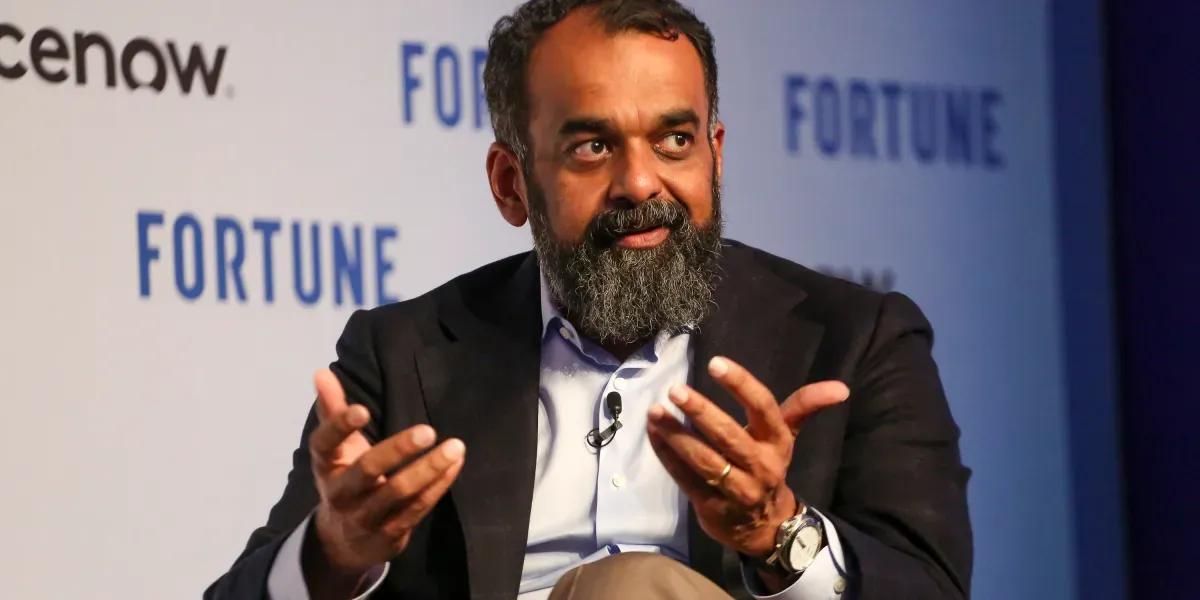
Honeywell Technologies' new AI platform can run in three modes: manual, semi-autonomous and autonomous. The company's chief technology officer hasn't switched on the third. "We have not opened up an autonomy right now," Suresh Venkatarayalu told Fortune in an interview ahead of Wednesday's launch
[2]
Honeywell Technologies Launches Forge Cognition with Nvidia and Dell Technologies, Advancing Physical AI Across Buildings and Industrial Operations
Honeywell Technologies introduced Forge Cognition, a self-contained agentic AI and simulation platform for facility operations?developed with technology from NVIDIA and Dell Technologies?across a range of physical environments, such as buildings, campuses and industrial operations. AI agents and
[3]
Honeywell Rolls Out AI Facility Simulation Platform With Nvidia, Dell
Honeywell Technologies is rolling out a new platform to simulate facility operations using artificial-intelligence agents. The platform, called Forge Cognition, was developed using Nvidia's open-source AI models and Dell Technologies' AI infrastructure, Honeywell said Wednesday. It can simulate
Share
Copy Link
Honeywell Technologies unveiled Forge Cognition, an AI-driven platform developed with Nvidia and Dell that uses AI agents and digital twins to optimize building operations. The platform achieved up to 90% reduction in false alarms and identified 10% potential energy savings during a 90-day pilot at Nvidia Voyager campus, but will operate with human oversight for the next two to three years.
Honeywell Technologies Unveils AI-Driven Platform for Building Operations
Honeywell Technologies launched Forge Cognition, a self-contained agentic AI and simulation platform developed in partnership with Nvidia and Dell Technologies. The AI-driven platform combines AI agents and digital twins to transform how facility operators manage buildings, campuses and industrial operations. Built on Nvidia's open-source AI models and Dell's infrastructure, Forge Cognition aims to improve asset reliability, energy efficiency and occupant comfort across existing systems.
1
2
The platform represents the first major product from the restructured Honeywell Technologies, which spun off its advanced-materials and aerospace businesses over the past year to focus on automation for buildings, factories and process plants. Chief Technology Officer Suresh Venkatarayalu describes it as "a brain behind a building" that adds intelligence to the systems that heat, cool, secure and power facilities.
1
Human-in-the-Loop Approach Despite Autonomous Capabilities
While Forge Cognition can operate in three modes—manual, semi-autonomous and autonomous—Honeywell Technologies has deliberately not activated full autonomy. Suresh Venkatarayalu told Fortune that the company plans to keep humans in the loop for the next two to three years before customers can decide when to enable fully autonomous actions. "For me, I wouldn't deploy these agents without my control system in place," he said. This cautious approach reflects the critical question facing companies deploying AI agents in physical operations: how much control should software have over equipment people depend on daily?
1
The platform currently allows operators to review every decision AI agents make, creating a feedback loop that builds trust over time. Operators can examine each alarm classification and confirm whether they agree with the system's assessment, ensuring transparency in how autonomous actions are coordinated across building automation systems.
1
90-Day Challenge at Nvidia Voyager Campus Delivers Results
The development of Forge Cognition accelerated after a challenge at CES in January. When Nvidia leadership asked Honeywell Technologies to identify a lighthouse customer, CEO Vimal Kapur turned the question around: "Why can't you be my lighthouse customer?" Nvidia accepted, and the companies set a 90-day target to demonstrate results at Nvidia Voyager campus, a roughly 750,000-square-foot headquarters building in Santa Clara.
1
Within 30 days, Suresh Venkatarayalu was pitching Nvidia's operations and real estate team. Scott Ekman, Nvidia's head of operations and real estate, wanted more than a demo—he had specific business objectives. The teams agreed on five performance targets and tracked progress weekly across approximately 900 pieces of equipment. By late April, Honeywell Technologies had enough data to present a three-minute live demonstration to investors.
1
Up to 90% Reduction in False Alarms Through AI Agents
The first target addressed a persistent challenge in building automation: alarm fatigue. Building systems flag everything to err on caution, creating overwhelming noise for operators. At the Nvidia Voyager campus security and access-control system, close to 90% to 95% of alarms were false positives, requiring eight or nine people per shift to clear them. Honeywell Technologies trained Nvidia's open-source Nemotron model on its engineering knowledge to distinguish real alarms from noise, achieving up to a 90% reduction in unnecessary alerts related to the Building Management System.
1
2
Energy Efficiency Gains Through Intelligent System Analysis
The second target focused on energy efficiency. AI agents analyzed Voyager's utility consumption by floor, zone, and peak versus off-peak hours, uncovering inefficiencies in heating system operation. Suresh Venkatarayalu explained they discovered zones running heating at approximately 58 degrees throughout the year without sensing external temperature changes. "Why should I be running the heating system?" he asked. Through more intelligent understanding and optimization of operating conditions, Honeywell Technologies identified close to 10% potential energy savings—a figure representing opportunities the teams have flagged but not yet fully realized.
1
Related Stories
Technical Foundation: Nvidia and Dell Technologies Integration
Forge Cognition leverages Nvidia Omniverse libraries to create physically accurate simulations that help teams model building performance and test operational changes. Operators can interact with a digital replica of facilities like Voyager, drilling down to individual floors, zones or machines. "Can I talk to the building? Can I talk to a physical asset?" Suresh Venkatarayalu asked, describing the platform's conversational interface for infrastructure.
1
2
Dell Technologies provides the critical AI infrastructure through the Dell AI Factory with Nvidia, including Dell PowerEdge XE servers, Dell AI Data Platform data and storage engines, and cyber resiliency solutions. The platform uses Nvidia RTX PRO GPUs and is expanding to accommodate far-edge deployments with Nvidia DGX Spark to accelerate physical AI operations. Dell Services supports Honeywell Technologies in developing, training and operationalizing the AI models that power intelligent physical operations.
2
From "See and Act" to "Think and Learn" in Building Automation
Suresh Venkatarayalu frames the shift as fundamental to how building automation works. Traditional systems could "see and act"—sensors collected data and operators responded. Forge Cognition adds "think" and "learn" capabilities: AI models trained on Honeywell Technologies' decades of domain expertise and installed base of more than 300,000 sites interpret sensor data, while operator feedback continuously improves performance. The platform connects to existing customer deployments, adding AI capabilities without requiring system replacement.
1
2
The AI facility simulation platform combines real-time digital twins with AI agents that discover, contextualize and analyze equipment behavior and relationships between systems. Nvidia Cosmos open models with the Nvidia Metropolis VSS Blueprint enable vision AI agents to understand, search and summarize live or recorded sensor data, expanding how operators monitor and manage facilities.
2
Pilot Deployments Across Global Facilities
Honeywell Technologies is piloting Forge Cognition at multiple high-profile locations beyond the Nvidia Voyager campus. Early deployments include the Fairmont Hotel in Dubai, NEX Mall in Singapore, Vanderbilt University in the United States, and Honeywell's own campuses in Bangalore, India and Richardson, Texas. These pilots provide diverse testing environments across different facility types, climates and operational requirements, demonstrating how the AI-driven platform can adapt to complex facilities worldwide.
2
3
"The physical world demands more than a powerful AI model," Suresh Venkatarayalu said. "It requires AI to understand how systems actually operate and interact—that is where the next breakthrough is happening." This statement captures the platform's ambition: moving beyond theoretical AI capabilities to practical applications that improve how buildings and industrial operations function daily.
3
References
Summarized by

Navi
[2]
[3]
Related Stories
Honeywell and Google Cloud Partner to Revolutionize Industrial Operations with AI
21 Oct 2024•Technology

Honeywell Launches AI Solutions to Boost Efficiency in Energy Sector
04 Oct 2024•Technology

Dell Unveils Comprehensive AI Infrastructure Solutions at Dell Technologies World 2025
20 May 2025•Technology
Recent Highlights
1
OpenAI Drops 722 AI-Generated Math Proofs on Unsolved Problems, Sparking Existential Crisis
Science and Research

2
Meta Unveils Muse Wonder Frontier AI Models, Claims Performance Matching OpenAI and Anthropic
Technology

3
Microsoft and Nvidia Launch Surface Laptop Ultra: A $2,599 AI-Ready PC With RTX Spark Chip
Technology

Recent Highlights
Today's Top Stories








Don’t drown in AI news. We cut through the noise - filtering, ranking and summarizing the most important AI news, breakthroughs and research daily. Follow topics that matter to you and stay ahead.


