House Intelligence Committee Warns AI Could Enable Terrorists to Build Deadlier Weapons


4 Sources
[1]
House Intelligence Committee warns of 'Black Swan' AI risks
* The House Permanent Select Committee on Intelligence urged U.S. spy agencies to better prepare for "Black Swan" artificial intelligence risks in a new report. * The report warned that AI could be leveraged by terrorists or adversaries to develop more dangerous weapons and plot more deadly
[2]
The House Intelligence Committee's Latest 9/11 Report Has a Lot (and Nothing) to Say About AI
Since we're in the lead-up to the 25th anniversary of the September 11 attacks, the House Permanent Select Committee on Intelligence, which is currently led by Arizona Republican Rick Crawford, released a new review of the 9/11 commission report. It would be fair to say the committee is spooked
[3]
House Intelligence Committee warns AI could help terrorists build deadlier weapons
The warning appeared in a bipartisan report reviewing U.S. progress over the past 25 years in addressing the intelligence failures that preceded the Sept. 11, 2001 attacks. The report was authored by House Intelligence Committee Chair Rick Crawford, R-Ark., Ranking Member Jim Himes, D-Conn., and
[4]
House Intelligence Committee Warns Of AI Use In Terrorism Attacks
House Intelligence Committee Warns Of AI Use In Terrorism Attacks In a new report Monday, the House Intelligence Committee raised concerns about the uncharted terrorism threats posed by the rapid advancement of artificial intelligence around the world. The committee warned the federal government
Share
Copy Link
The House Intelligence Committee released a bipartisan report warning that AI risks could enable terrorists to develop weapons of mass destruction. Released ahead of the 25th anniversary of 9/11, the report urges U.S. spy agencies to accelerate AI adoption while preventing AI misuse by rogue actors.
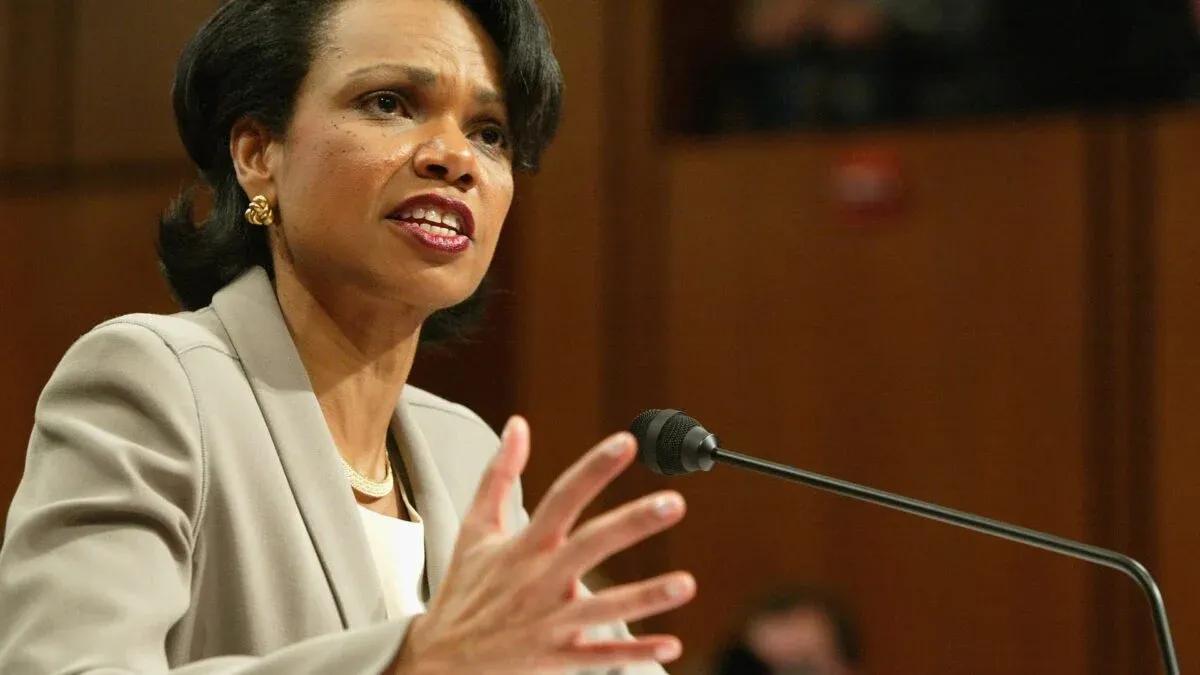
House Intelligence Committee Sounds Alarm on Black Swan AI Risks
The House Intelligence Committee has issued a stark warning about AI risks in a new bipartisan report
1
, cautioning that artificial intelligence could be weaponized by terrorists to develop more dangerous weapons and execute deadlier attacks. Released less than two weeks before the 25th anniversary of the September 11 attacks, the report urges U.S. spy agencies and the intelligence community to better prepare for what it calls "Black Swan" AI risks1
.Authored by House Intelligence Committee Chair Rep. Rick Crawford, R-Ark., Ranking Member Jim Himes, D-Conn., and task force co-chairs Elise Stefanik, R-N.Y., and Josh Gottheimer, D-N.J., the report specifically highlights how frontier large language models could make it significantly easier for rogue actors, including terrorists, to develop and conduct more destructive attacks
3
. The committee emphasized that preventing terrorist groups from accessing equipment and expertise necessary to build weapons of mass destruction has been a critical focus for national security since 9/111
.AI-Driven Threats and Bioweapon Development Concerns
The report details specific concerns about AI in terrorism, particularly regarding bioweapons development. According to the findings, knowledge and techniques that support vaccine development, disease detection, and medical innovation could be misused by hostile states or non-state actors seeking to develop, modify, or disseminate harmful biological agents
2
. The lawmakers cautioned that existing safeguards may not be sufficient to keep pace with AI's rapid advancement."While AI labs seek to prevent models from returning information that could assist a bad actor in, for example, building a bioweapon, the underlying capability of models is developing rapidly and such a use of a model is difficult to fully control," the lawmakers wrote
1
. This acknowledgment highlights the challenge of preventing AI misuse even as companies implement safety measures.Echoes of 9/11's "Failure of Imagination"
The report draws parallels to the intelligence failures preceding 9/11, invoking testimony from Dr. Benjamin Buchanan, a Johns Hopkins international studies professor, who referenced the "failure of imagination" that characterized the pre-9/11 period
2
. Buchanan specifically pointed to the government's inability to "connect information scattered across institutional seams" which led to devastating strategic surprise.The committee broadly found that the U.S. "faces a threat environment as complex and dangerous as any since September 11, 2001," adding that "serious gaps remain in our ability to confront and address these vulnerabilities"
1
. This assessment underscores the gravity with which lawmakers view AI-driven threats to national security.Related Stories

Intelligence Community Urged to Accelerate AI Adoption
Paradoxically, while warning about AI misuse by terrorists, the committee also emphasized that U.S. spy agencies must rapidly adopt AI themselves. The report urged the intelligence community to "accelerate its own responsible adoption of advanced AI capabilities so that the United States stays ahead of its adversaries"
1
. This dual mandate reflects the delicate balance policymakers face in harnessing AI's benefits while mitigating its dangers.The committee recommended "investing in secure AI tools for collection, analysis, and warning paired with rigorous testing, human oversight, and strong privacy and civil liberties protections" as essential to preparing for the next generation of threats
4
. This approach attempts to address concerns about AI could help terrorists build deadlier weapons while maintaining American technological superiority.Private Sector Data Gap Complicates Government Response
The House Intelligence Committee raised additional concerns about the federal government's limited understanding of AI capabilities, noting that the most important data is held by private companies
4
. This public-private divide creates challenges for preventing AI misuse and developing comprehensive security strategies. The report, spanning approximately 56 pages, dedicates roughly 10% of its content to AI-related concerns2
, signaling the technology's growing prominence in national security discussions.As AI continues advancing and driving immense economic activity, lawmakers and officials grapple with difficult questions over regulating the technology
1
. The timing of this 9/11 Commission report review, released just before the attacks' 25th anniversary, emphasizes how the threat landscape has evolved from the terrorism of 2001 to include sophisticated technological dangers that require new frameworks for prevention and response.References
Summarized by

Navi
[2]
Related Stories
Extremist groups use AI voice cloning and deepfakes to supercharge propaganda and recruitment
15 Dec 2025•Technology

Senate Hearing Tackles Rogue AI National Security Risks as Experts Warn of Existential Threats
30 Sept 2026•Policy and Regulation
Lawmakers voice existential fears about AI at congressional roundtable on American power
17 Apr 2026•Policy and Regulation

Recent Highlights



Recent Highlights
Today's Top Stories









Don’t drown in AI news. We cut through the noise - filtering, ranking and summarizing the most important AI news, breakthroughs and research daily. Follow topics that matter to you and stay ahead.


