HP Unveils Next-Gen PCs Powered by Nvidia RTX Spark for AI Development and Personal Agents


2 Sources
[1]
HP OmniBook X 14, Ultra 16 Refreshed With Nvidia RTX Spark 'Superchip'
* HP OmniBook Ultra 16 (2026) will go on sale later this year * HP OmniBook Ultra 16 (2026)is claimed to offer all-day battery life * Nvidia RTX Spark features a Grace CPU Nvidia hosted its GPU Technology Conference (GTC) on Monday. During the keynote event, the CEO of the US-based chipmaker
[2]
HP Inc. Debuts Pcs Built for the Next Wave of Windows Pc Experiences Powered by Nvidia Rtx Spark
HP Inc. announced its latest devices and solutions, designed to enable developers of all types to create new experiences using AI. HP is previewing PCs powered by NVIDIA RTX Spark, bringing a reinvention of personal computing, combining personal agents, advanced content creation, and
Share
Copy Link
HP Inc. announced its latest lineup of PCs powered by Nvidia RTX Spark, designed for the next wave of Windows PC experiences. The HP OmniBook Ultra 16 and OmniBook X 14, launching later this year, will be the world's thinnest laptops featuring the RTX Spark superchip with 1 petaflops AI performance. The devices target developers, creators, and gamers who want to run AI personal agents locally with all-day battery life.
HP Inc. Targets AI Development with Nvidia RTX Spark-Powered Laptops
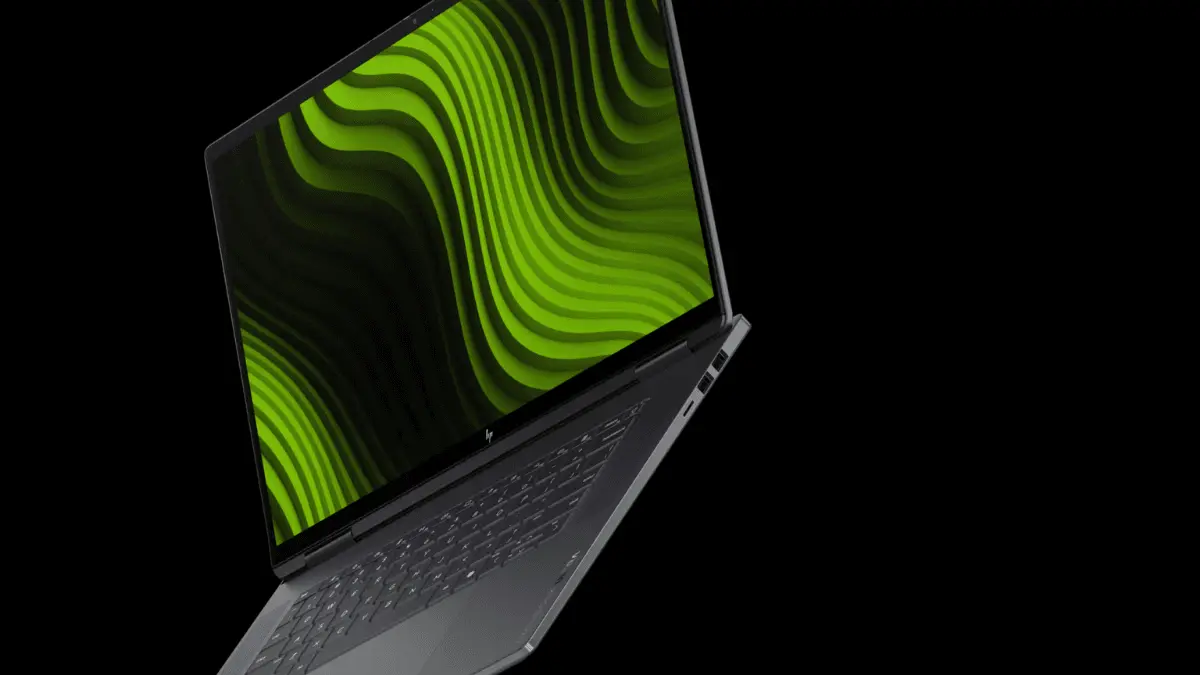
HP Inc. has unveiled a new generation of HP PCs built to support AI development and on-device AI capabilities, powered by Nvidia RTX Spark. The announcement came during Nvidia's GPU Technology Conference (GTC), where the chipmaker introduced its RTX Spark platform as a "superchip" designed to enable AI personal agents and advanced computing tasks. HP will integrate this technology into its HP OmniBook Ultra 16 (2026) and HP OmniBook X 14 (2026) models, expected to launch in select global markets later this year
1
. The company claims these will be the world's thinnest laptops equipped with the Nvidia RTX Spark chip, delivering all-day battery life while supporting demanding AI workloads2
.
Source: Gadgets 360
Understanding the Nvidia RTX Spark Superchip Architecture
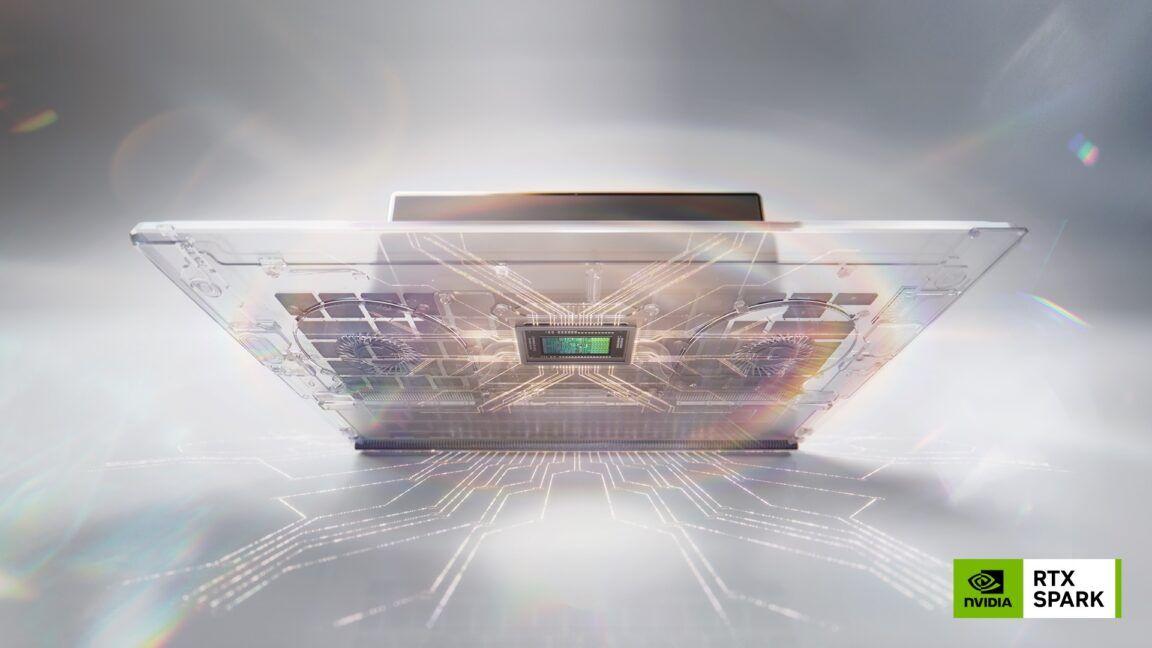
The Nvidia RTX Spark represents a comprehensive SoC solution combining multiple processing components into a unified platform. At its core sits a custom 20-core Grace CPU co-designed by Nvidia and MediaTek, paired with an Nvidia Blackwell RTX GPU featuring 6,144 CUDA cores and fifth-generation Tensor cores. The chip delivers up to 1 petaflops FP4 AI performance with up to 128GB of unified memory, connected via NVLink-C2C chip-to-chip modem
1
. This architecture enables the system to handle rendering 3D scenes larger than 90GB, editing 12K resolution videos, generating 4K AI videos, and running large language models with up to 120 billion parameters locally with 1 million token context windows. For gamers, the platform supports AAA-rated titles at up to 1440p resolution at 100 frames per second.Expanding Portfolio for the Next Wave of Windows PC Experiences
HP's strategy extends beyond the OmniBook series laptops. The company plans to introduce a compact desktop powered by RTX Spark, broadening options for creators, AI enthusiasts, and developers who prefer desktop form factors
2
. Samuel Chang, HP's Senior Vice President, emphasized that the expanded portfolio pairs compact, powerful hardware with pre-configured environments and open-source toolchains to eliminate setup friction and accelerate the path from idea to execution. HP is also introducing the HP OmniDesk Mini Desktop PC, the world's first Mini AI PC with Thunderbolt Share, powered by Intel Core Ultra Series 3 processors. Expected in August 2026, this device offers full-sized PC performance in a compact design with support for up to four 4K displays.Related Stories
Enterprise and Specialized AI Computing Solutions
For enterprise teams, HP announced deskside and rackable high-performance compute systems powered by the NVIDIA GB300 Grace Blackwell Ultra Desktop Superchip, coming to Windows later this year. These systems will enable enterprise teams to build, run, and connect always-on frontier AI agents to Windows applications and workflows
2
. HP is also introducing the ZGX Nano configuration for regulated and classified environments, built on Zero Trust principles with tightly integrated hardware and software that physically restricts wireless access and external interfaces to minimize attack surfaces. Additionally, the HP Z2 Mini G1a will feature the latest AMD Ryzen AI PRO 400 series processors with the validated AMD Ryzen AI Halo developer software stack, including the Ryzen AI Developer Center, AMD ROCm, and pre-installed AI frameworks. This workstation will be available in select retail channels later this year, providing everyday developers with powerful, accessible tools.Implications for Developers and AI Practitioners
The move signals HP's commitment to supporting practical AI development across Windows and Linux environments. By offering systems designed not just to use AI but to help developers build it, HP addresses a growing market of professionals who need local compute power for AI personal agents and hybrid AI workflows. The inclusion of pre-packaged developer environments, command-line workflows, OpenClaw-based starter kits, and support for agent frameworks such as Hermes aims to reduce the complexity of setting up development environments
2
. This approach positions HP PCs as viable alternatives to cloud-based AI development, particularly for developers concerned about data privacy, latency, or working in environments with limited connectivity. The ability to run 120 billion-parameter models locally represents a significant capability for testing and deploying AI applications without relying on external infrastructure. Pricing details for all announced devices will be shared closer to their respective availability dates.References
Summarized by

Navi
Related Stories
HP Unveils World's Thinnest NVIDIA RTX Spark Laptops with 1 Petaflop of AI Performance
05 Sept 2026•Technology

Nvidia enters Arm-based PC market with RTX Spark chip targeting AI workloads and gaming
26 May 2026•Technology
NVIDIA RTX Spark AI PC launches this fall with ASUS and MSI leading the charge
23 Jul 2026•Technology

Recent Highlights



Recent Highlights
Today's Top Stories









Don’t drown in AI news. We cut through the noise - filtering, ranking and summarizing the most important AI news, breakthroughs and research daily. Follow topics that matter to you and stay ahead.


