HPE Spaceborne Computer-4 to Run First LLMs on the Moon Aboard Astrolab FLIP Rover


7 Sources
[1]
Astrolab's upcoming rover will run the first LLMs on the moon
The spacecraft's AI demonstration could enable more autonomy in future space missions. Large language models are set to go lunar. A computer capable of running AI software is one of the payloads aboard Astrolab's FLIP lunar rover, which is slated to head to Earth's celestial companion as early as
[2]
HPE says it will run the first supercomputer benchmarks on the Moon -- GPU-powered fanless Spaceborne Computer-4 is slated to ride a rover to the lunar south pole to test AI and HPC benchmarks
NASA will test coordination of three AI models trained on Earth, ISS, and lunar data. A fanless compute module will head to the Moon for supercomputer benchmarking, AI testing, and additional experimentation by NASA and Deloitte, as detailed in a Hewlett Packard Enterprise (HPE) release. The
[3]
HPE Spaceborne Computer 4 to launch AI straight to the Moon aboard Astrolab's FLIP rover
Mystery silicon and mirrored SSDs set to touch down before year's end Forget space datacenters. Before the end of the year, Hewlett Packard Enterprise (HPE) will have AI running on the Moon. This isn't some exec's loony fantasy either. HPE has been building orbital compute platforms for the
[4]
A supercomputer is about to launch to the moon for the 1st time, aboard a rover named FLIP
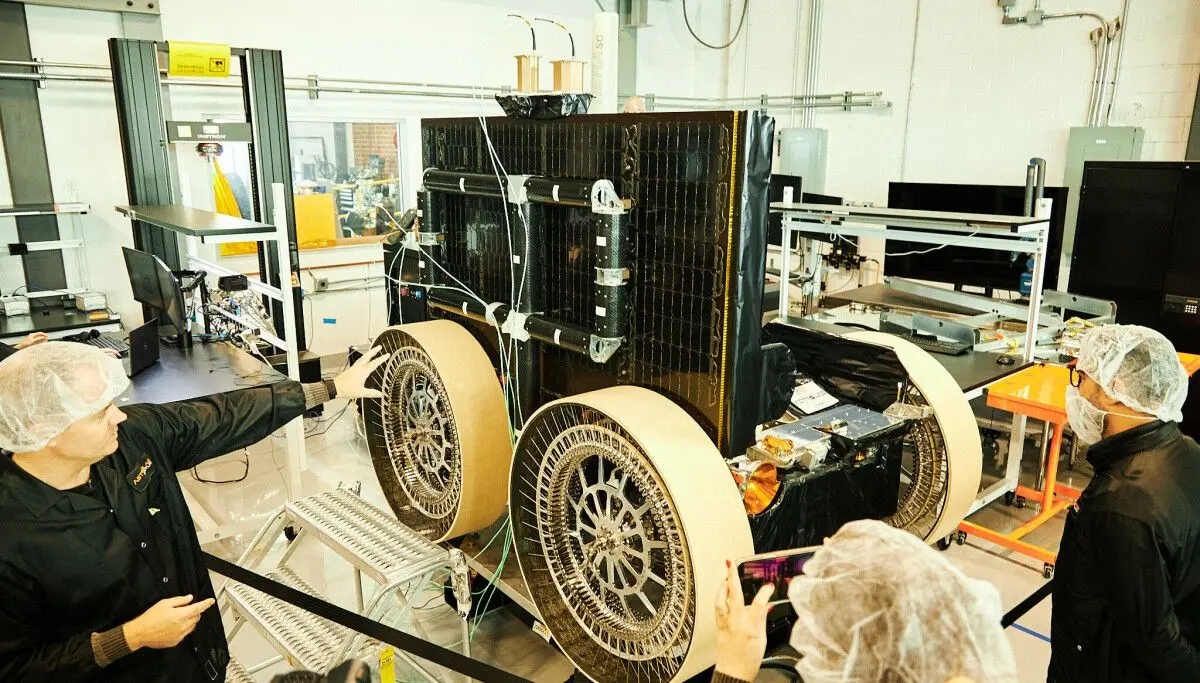
HAWTHORNE, Calif. -- A moon buggy carrying a history-making supercomputer is ready to launch to the lunar surface. And it's taking some inspiration from Mars. Later this year, Astrolab will launch its uncrewed moon rover FLIP to the lunar south pole as part of the Griffin Mission 1, or Griffin-1.
[5]

HPE is sending its most powerful AI compute platforms to the Moon aboard an all-new lunar rover
* HPE is deploying its Spaceborne Computer to the Moon * The system will be hosted on the Astrolab Flex Lunar Innovation Platform (FLIP) lunar rover * Hewlett Packard Enterprise is the enterprise-focused component of the old Hewlett-Packard, and operates out of Texas HPE has emerged as a key
[6]

AI is going to the Moon on a supercomputer, and that supercomputer is riding a rover
HPE's Spaceborne Computer-4 is heading to the Moon's south pole aboard Astrolab's FLIP rover, where it will run AI models and the first lunar HPC tests. Hewlett Packard Enterprise's Spaceborne Computer-4 is about to be put to work somewhere no supercomputer has operated before, and it's catching a
[7]

What HPE's Lunar AI Computing Mission Means for Space Technology
HPE's Spaceborne Computer-4 will fly on Astrolab's FLIP rover to the Moon's south pole in late 2026. It will test AI, GPU, and LiDAR tasks without any help from Earth. The fanless module uses a space radiator to handle heat on a Moon with no air. Planned tests cover language models, image
Share
Copy Link
Hewlett Packard Enterprise is sending its Spaceborne Computer-4 to the lunar south pole aboard Astrolab's FLIP rover in late 2026. The mission will demonstrate the first large language models on the moon, enabling AI-driven autonomy for future space exploration. The 480-kilogram rover will test high-performance computing in extreme lunar conditions as part of NASA's Commercial Lunar Payload Services program.
First Large Language Models on the Moon Set for Late 2026 Launch
Hewlett Packard Enterprise is preparing to send its Spaceborne Computer-4 to the lunar surface aboard Astrolab's FLIP rover, marking a significant milestone in space exploration. The mission, scheduled for launch in late 2026 under NASA's Commercial Lunar Payload Services program, will demonstrate the first large language models on the moon and run high-performance computing benchmarks in one of the solar system's most challenging environments
1
2
. The 480-kilogram Astrolab FLIP rover will carry 20 scientific payloads to the lunar south pole, where it must survive temperatures swinging between 80 degrees Celsius in sunlit areas and minus 200 degrees Celsius in shaded regions1
.
Source: MIT Tech Review
HPE Spaceborne Computer-4 Brings Edge Computing to Lunar Exploration
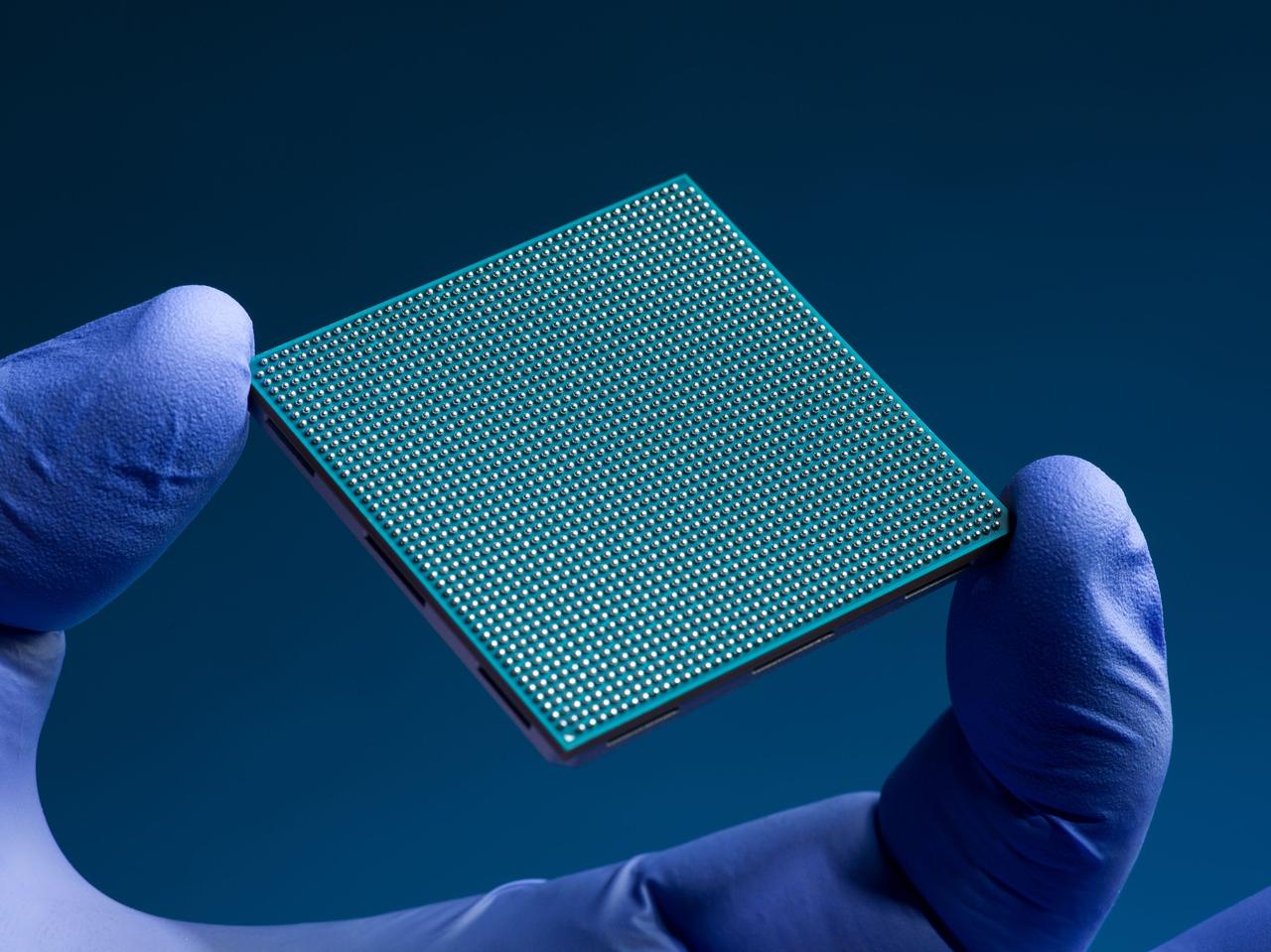
The HPE Spaceborne Computer-4 represents a dramatic evolution from the computing power currently available on planetary rovers. While NASA's Mars rovers Curiosity and Perseverance rely on space-hardened computers comparable to late 1990s laptops, the Spaceborne Computer-4 features a high-performance 64-bit CPU combined with a GPU and 1TB of mirrored Kioxia storage across two SSDs
1
3
. The lightweight, fanless system measures approximately 5x10 inches and about 1 inch thick, designed specifically for edge computing in space2
5
.
Source: The Register
AI-Driven Autonomy Addresses Communication Delays in Space Missions
The deployment of LLMs and edge AI on the lunar surface directly addresses a critical challenge in space exploration: communication delays. Mark Fernandez, HPE's chief scientist and principal investigator, explained that time delays can reach up to 20 minutes on Mars, and even on the moon, operators work with stale data. "The Soviets lost two rovers in the past because of operator errors caused by the time delay," Fernandez noted
1
. The Spaceborne Computer-4 will analyze data from onboard cameras and LiDAR processing systems to enable autonomous navigation and distill insights locally, reducing the amount of information requiring transmission to Earth1
.HPC Benchmarks and Machine Learning Applications on the Lunar Surface
The mission will run what HPE calls the first supercomputer benchmarks on the moon, including High Performance LINPACK and High Performance Conjugate Gradients tests
2
. NASA will test its Federated Learning for Unbounded and Intelligent Decentralization (FLUID) AI neural network, coordinating three distinct models trained on data from Earth, the moon, and the International Space Station2
. The system will also run retrieval-augmented generation for searching and interpreting onboard documents, and machine learning algorithms will process camera and LiDAR data for mapping, navigation, and terrain analysis2
4
.Related Stories

Extreme Lunar Conditions Test Software-Based Radiation Protection
Operating high-performance computing on the lunar surface presents unprecedented challenges. The FLIP rover must survive at least 150 hours of frigid lunar night and endure cosmic radiation far more intense than what systems experience on the International Space Station
1
. Rather than spending years developing specialized space-hardened hardware, HPE uses software that monitors the system and detects upsets caused by charged cosmic particles. When radiation spikes, the software can lower the computer's power and speed to protect the electronics1
. The system relies largely on off-the-shelf components, including standard Kioxia BG6 M.2 drives protected by software RAID 13
.Mission Timeline and Implications for Future Lunar Exploration
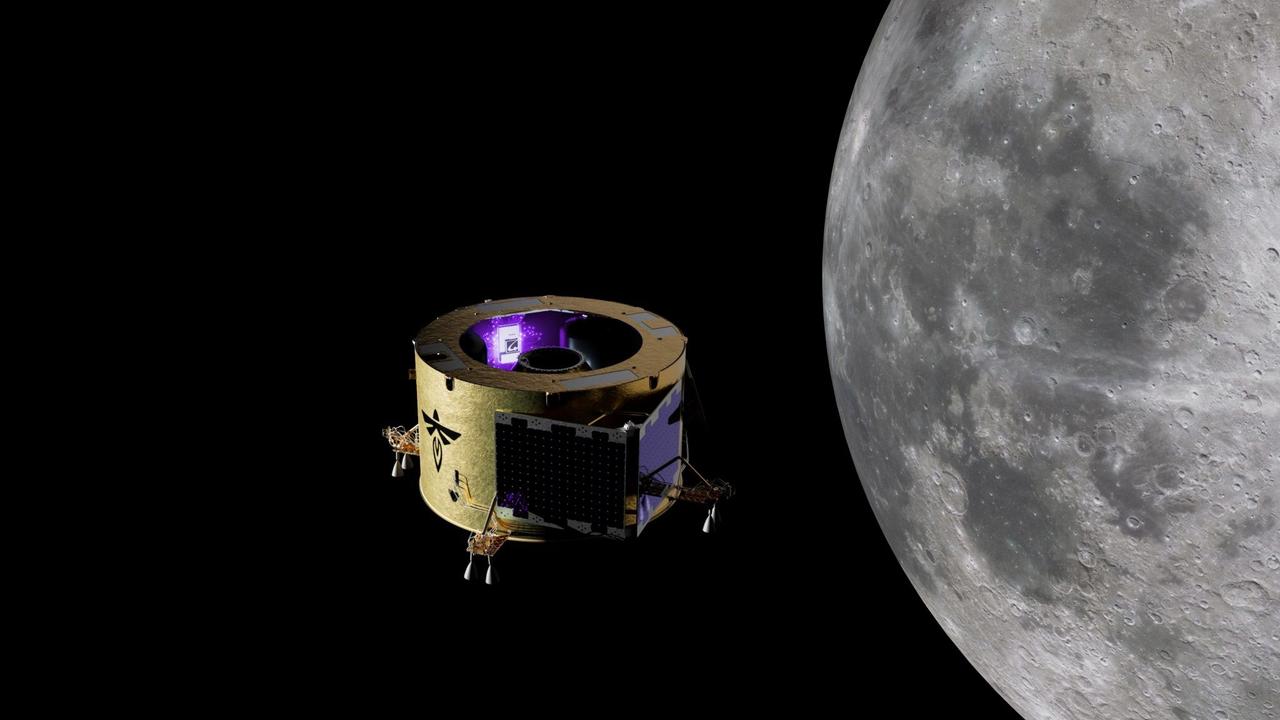
The mission will launch from NASA's Kennedy Space Center on a SpaceX Falcon Heavy rocket in the fourth quarter of 2026, with the Voyager Technologies Griffin-1 lander delivering the Astrolab FLIP rover to the lunar south pole several days later
2
5
. The rover is designed to operate for one lunar day, approximately 14 Earth days, before attempting to survive the night through hibernation2
. NASA has contracted Astrolab for future vehicles that will transport Artemis astronauts across the moon's surface, making this mission critical for demonstrating autonomous navigation capabilities1
. Deloitte will also test its Silent Shield cyber intrusion detection system with near-real-time predictive analytics during the mission2
. As Scott Wiest, HPE's vice president and global sales chief technologist, stated, "The next chapter of lunar exploration will depend on the ability to turn data into insights at the point of discovery"2
.References
Summarized by

Navi
[1]
[3]
Related Stories
Firefly Aerospace Partners With Starcloud to Demonstrate AI Computing in Lunar Orbit by 2028
30 Sept 2026•Technology
NASA's next-gen space processor shows 500x performance leap in early testing for autonomous missions
12 May 2026•Technology
SpaceX and AMD race to deploy AI in space as orbital data centers tackle Earth's energy crisis
28 Apr 2026•Technology

Recent Highlights
1
Anthropic AI Development Doubles Speed as Self-Improving Systems Near Breakthrough
Technology

2
Google's AI Policy Forces Schools to Accept AI Overviews or Lose Search Access Entirely
Technology

3
Jensen Huang Scandal: Nvidia CEO's Alleged Relationship with Chinese Spy Threatens US AI Dominance
Policy and Regulation
Recent Highlights
Today's Top Stories





Don’t drown in AI news. We cut through the noise - filtering, ranking and summarizing the most important AI news, breakthroughs and research daily. Follow topics that matter to you and stay ahead.


