Firefly Aerospace Partners With Starcloud to Demonstrate AI Computing in Lunar Orbit by 2028


6 Sources
[1]
Starcloud's AI computing payload will get a ride to lunar orbit on Firefly's space vehicle
Redmond, Wash.-based Starcloud has signed up to send its artificial intelligence data-processing hardware into lunar orbit on a Firefly Aerospace spacecraft. Starcloud's payload, known as SC-1L, will fly on Firefly's Elytra orbital vehicle during a NASA-supported mission that's scheduled for
[2]
High-tech computing to be tested in lunar orbit for future data centers
A new commercial payload agreement will demonstrate advanced AI computing capabilities in lunar orbit. Starcloud revealed that its computing payload, designated SC-1L, will fly onboard Firefly's Elytra orbital vehicle to validate the core capabilities of a future data center around the Moon that
[3]
Firefly Aerospace Stock Rises on Deal to Demonstrate AI Computing Around the Moon - Firefly Aerospace (NA
Firefly Aerospace Inc. (NASDAQ:FLY) shares are trading higher Wednesday after the company announced a new commercial payload agreement with Starcloud to demonstrate advanced AI computing capabilities in lunar orbit. * Firefly stock is among today's top performers. Why is FLY stock up
[4]
Firefly Aerospace stock rises on Starcloud AI computing deal By Investing.com
Investing.com -- Firefly Aerospace Inc (NASDAQ:FLY) shares climbed 5.3% Wednesday after the company announced a commercial payload agreement with Starcloud to demonstrate AI computing capabilities in lunar orbit. Starcloud's SC-1L computing payload will fly aboard Firefly's Elytra orbital vehicle
[5]
Firefly signs deal with Starcloud for lunar AI computing demo By Investing.com
CEDAR PARK, Texas - Firefly Aerospace (NASDAQ:FLY) announced Tuesday a commercial payload agreement with Starcloud to demonstrate AI computing capabilities in lunar orbit. Starcloud's SC-1L computing payload will operate aboard Firefly's Elytra orbital vehicle to validate capabilities for a
[6]

An American company will launch an AI server into lunar orbit, this is the incredible mission
Starcloud's SC-1L will test lunar-orbit data-center hardware in 2028 Starcloud has committed to sending its artificial intelligence data-processing hardware to lunar orbit aboard a Firefly Aerospace spacecraft. Starcloud's payload, known as SC-1L, will fly aboard Firefly's Elytra orbital vehicle
Share
Copy Link
Firefly Aerospace and Starcloud announced a commercial payload agreement to test AI computing capabilities in lunar orbit. Starcloud's SC-1L processor will fly aboard Firefly's Elytra orbital vehicle during a 2028 mission, processing data from the Moon and transmitting it to Earth. This marks the first extension of proven low Earth orbit AI technology to lunar orbit.
Firefly Aerospace Signs Commercial Payload Agreement With Starcloud
Firefly Aerospace has announced a commercial payload agreement with Redmond, Washington-based Starcloud to demonstrate AI computing capabilities in lunar orbit
1
2
. Starcloud's computing payload, designated SC-1L, will fly aboard Firefly's Elytra orbital vehicle to validate core capabilities for future lunar data centers that can support lunar surface and orbital infrastructure3
4
. Firefly Aerospace stock rose 5.47% following the announcement, reflecting investor confidence in the expanding commercial space sector3
.
Source: Benzinga
AI Computing Demonstration Scheduled for Firefly's Third Lunar Mission
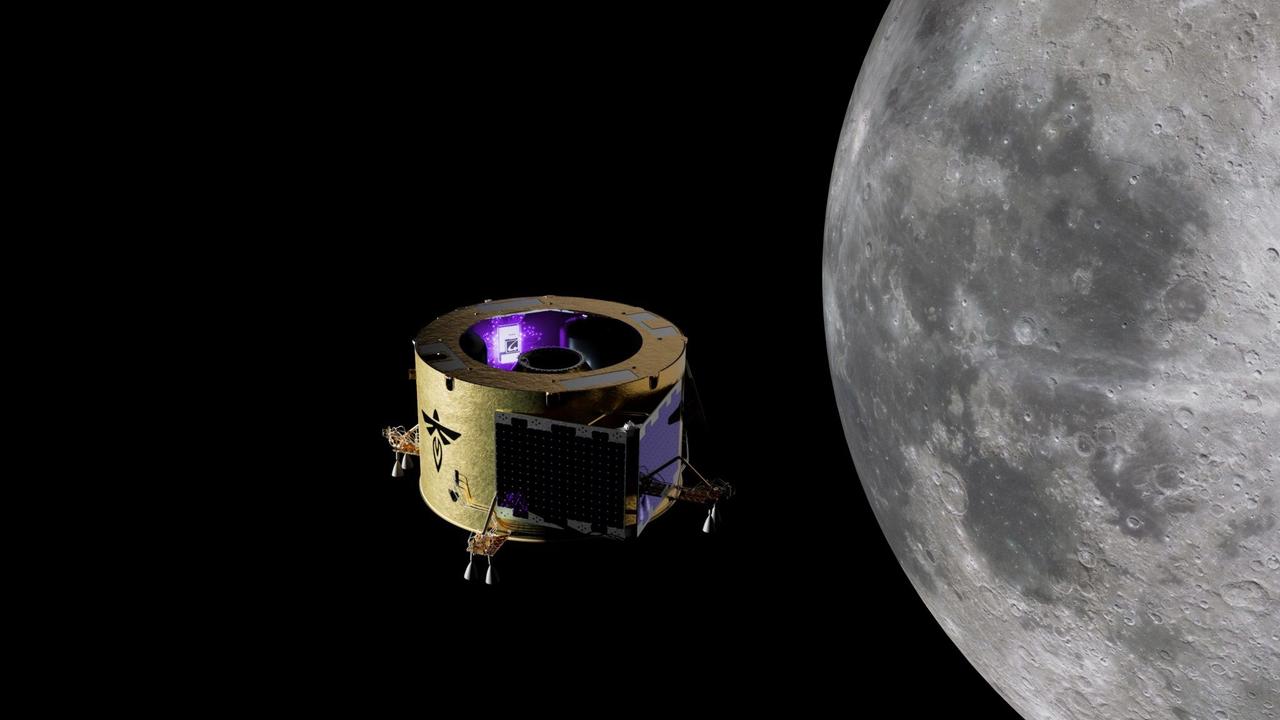
Starcloud is being onboarded to Firefly's third lunar mission, targeted to launch no earlier than 2028
1
5
. The Elytra orbital vehicle will first serve as the transfer vehicle and communications relay for Firefly's Blue Ghost lander, which will land on the Moon's Gruithuisen Domes as part of NASA's Commercial Lunar Payload Services initiative2
4
. Following completion of the Blue Ghost mission, Elytra will remain in lunar orbit for five years to enable customer payload and imaging operations, including Starcloud's AI computing demonstration1
2
.SC-1L Payload to Process Data From Solux Vision System
Once integrated on the Elytra orbital vehicle, the SC-1L payload will ingest data from Firefly's onboard Solux vision system, perform high-power AI computing on orbit, and rapidly transmit the processed data back to Earth
2
4
. The Solux vision system, formerly known as Sol3, enables spacecraft to autonomously navigate, land, and track their orientation in space environments where Global Navigation Satellite Systems and GPS are unavailable2
5
. "By pairing Starcloud's AI computing payload with our Elytra vehicle and Solux vision system, we're demonstrating how data can be captured, processed, and delivered from lunar orbit, laying the groundwork for the computing infrastructure future lunar operations will depend on," said Ray Allensworth, Vice President of Spacecraft at Firefly Aerospace2
.
Source: GeekWire
Starcloud Extends Proven Low Earth Orbit Technology to Lunar Orbit
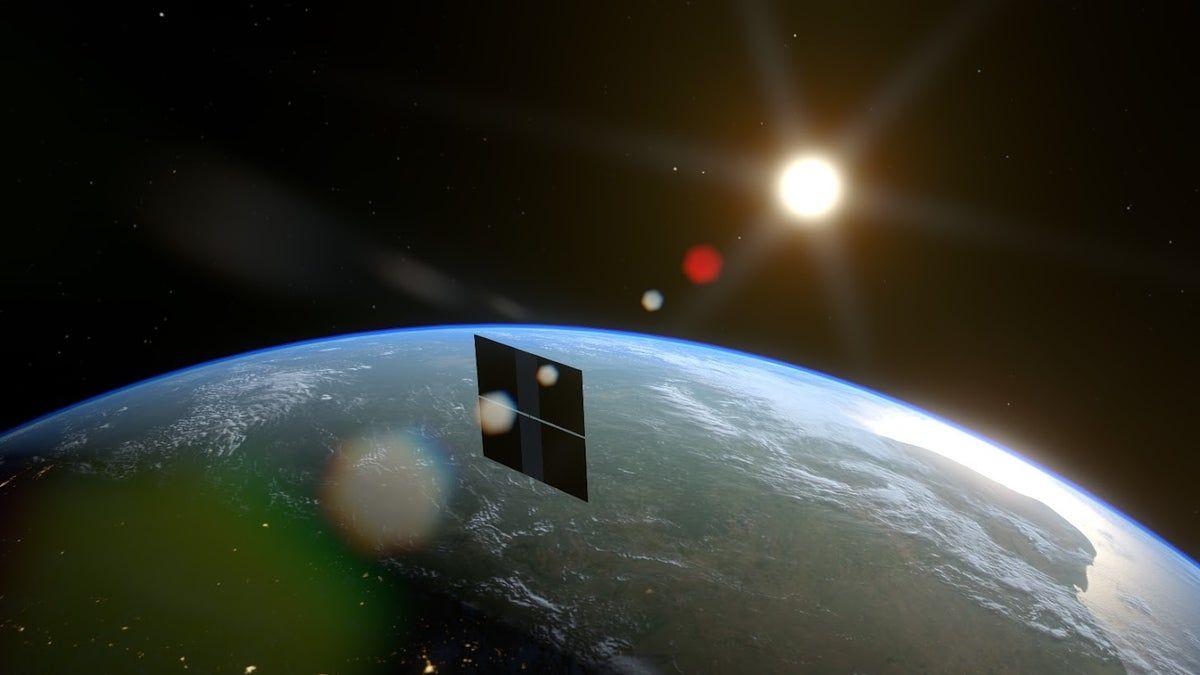
Starcloud made its mark in low Earth orbit last year with Starcloud-1, a satellite equipped with an NVIDIA H100 chip that successfully trained a large language model called NanoGPT, marking a first for orbital computing
1
. "We successfully validated our ability to run and train AI models on enterprise grade GPUs in low Earth orbit, and now we're taking this proven technology to lunar orbit," said Ezra Feilden, Cofounder and CTO at Starcloud3
5
. The AI computing demonstration builds directly on Starcloud's recent success in low Earth orbit, extending those capabilities into lunar orbit for the first time3
4
.Related Stories
Building Infrastructure for Permanent Lunar Presence
"Space is the future of data centers, and the Moon is the next frontier for that vision," Feilden stated
1
2
. The demonstration aims to prove the ability to process massive volumes of data right where it's generated to support the growing lunar infrastructure beyond Earth2
4
. In August, Starcloud reported raising $250 million in funding to support the creation of a constellation of AI data-center satellites in low Earth orbit, powered by NVIDIA's Space-1 Vera Rubin Module1
. Starcloud has filed an application with the Federal Communications Commission to operate as many as 88,000 satellites as orbital data centers1
.Firefly Expands Lunar Operations With Multiple Elytra Vehicles
This will be the second Elytra vehicle Firefly deploys to lunar orbit, following the launch of Blue Ghost Mission 2, targeted for no earlier than 2027
2
5
. Each Elytra vehicle is designed to remain in lunar orbit for up to five years, enabling more rapid revisit times of the lunar surface for government and commercial customers2
4
. Elytra will also carry high-resolution telescopes to enable Firefly's Ocula lunar imaging service, which provides advanced lunar surface mapping, mineral detection, and reconnaissance2
5
. Firefly recently announced a collaboration with NVIDIA to process data on orbit for Ocula using NVIDIA's Jetson module1
3
.References
Summarized by

Navi
[1]
[2]
[3]
Related Stories
HPE Spaceborne Computer-4 to Run First AI on the Moon Aboard Astrolab FLIP Rover in Late 2026
20 Oct 2026•Technology

Google Announces Project Suncatcher: Ambitious Plan for AI Data Centers in Space
04 Nov 2025•Technology

Starcloud Raises $250M for Orbital Data Centers as Launch Options Tighten and Nvidia Joins
21 Aug 2026•Startups

Recent Highlights



Recent Highlights
Today's Top Stories






Don’t drown in AI news. We cut through the noise - filtering, ranking and summarizing the most important AI news, breakthroughs and research daily. Follow topics that matter to you and stay ahead.


