NASA's next-gen space processor shows 500x performance leap in early testing for autonomous missions


5 Sources
[1]
Hello Universe: NASA's Next-Gen Space Processor Undergoes Testing - NASA
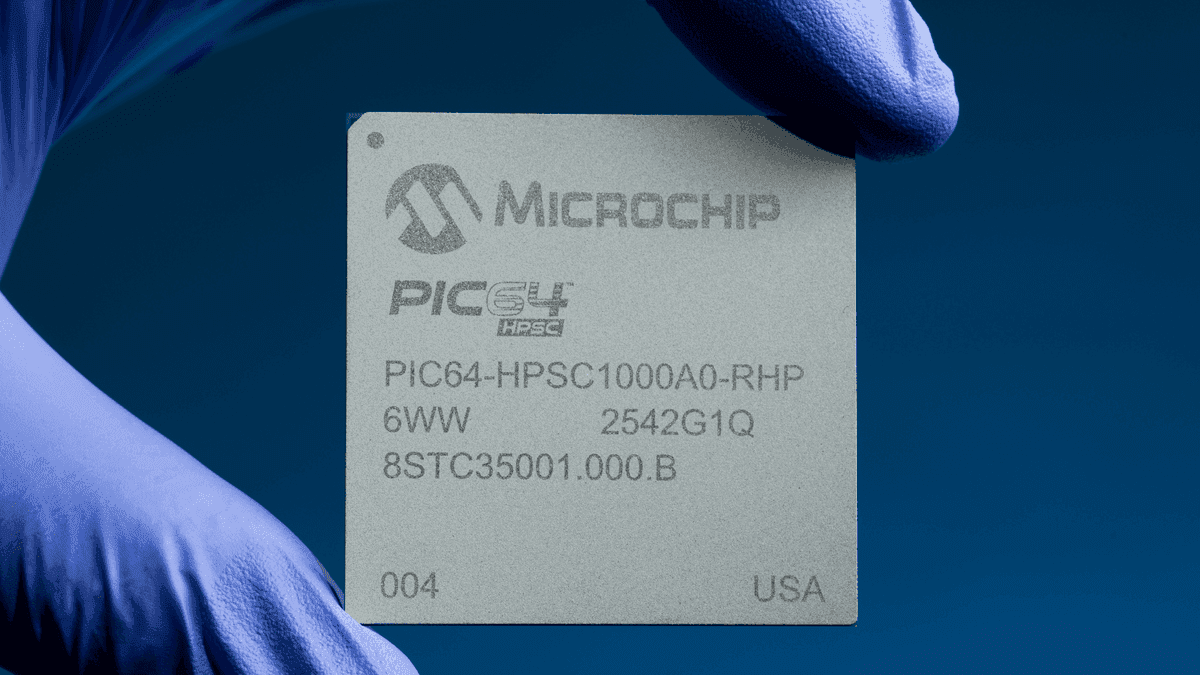
Small enough to fit in the palm of a hand, NASA's High Performance Spaceflight Computing processor packs the power of a full system-on-a-chip. This next-generation processor is made to survive deep space while delivering a massive leap in computational speed compared to current spacecraft
[2]
NASA partners with Microchip to build next-generation spaceflight chips with 100x the power of current offerings -- chip designed to withstand radiation for extended missions on the Moon and Mars
NASA has announced that it has just partnered with Microchip Technology Inc. to build next-generation chips that will power its spacecraft. This project, dubbed High-Performance Spaceflight Computing, aims to build a system-on-a-chip (SoC) that will deliver 100 times the computing capacity of
[3]
NASA's Next-Gen Processor Is 500 Times More Powerful Than Current Space Chips
NASA is testing a chip that could significantly enhance the computing power of upcoming missions, allowing spacecraft to respond in real time should something go wrong rather than wait for commands from ground control on Earth. NASA’s High Performance Spaceflight Computing project began testing
[4]
Deep space missions may soon rely on autonomous NASA computers
NASA's next-generation spacecraft chip delivers massive computing power * NASA developed autonomous spacecraft processors with dramatically higher computing performance levels * New radiation-hardened chip delivers hundreds of times greater processing capability * Deep-space communication delays
[5]

NASA's powerful new chip could let spacecraft think independently
Space missions still rely on computer chips that were designed years ago. They are dependable and can survive radiation, freezing cold, and violent launches. But the computer chips are also slow by modern standards. That creates a serious problem as spacecraft travel farther from Earth and collect
Share
Copy Link
NASA's High Performance Spaceflight Computing project has begun testing a radiation-hardened chip that delivers up to 500 times the performance of current spaceflight processors. Developed with Microchip Technology Inc., the system-on-a-chip will enable autonomous spacecraft to make real-time decisions on missions to the Moon, Mars, and beyond—eliminating delays from waiting for Earth-based commands.
NASA Space Processor Achieves Breakthrough Performance in Early Tests
NASA's High Performance Spaceflight Computing project has reached a significant milestone, with early testing revealing that its next-generation spaceflight chips operate at 500 times the performance of radiation-hardened processors currently in use
1
. The radiation-hardened chip, developed through a commercial partnership between NASA's Jet Propulsion Laboratory and Microchip Technology Inc., began testing in February at JPL's Southern California facility1
. In a symbolic gesture marking the start of testing, engineers sent an email with the subject line "Hello Universe"—a nod to the classic test message used in early computer development1
.
Source: Tom's Hardware
The compact system-on-a-chip fits in the palm of a hand yet includes all key components of a computer: central processing units, computational offloads, advanced networking units, memory, and input/output interfaces
1
. While the original goal targeted providing up to 100 times more powerful computational capacity than current spaceflight computers, initial results show the processor exceeding expectations dramatically3
.Enabling Autonomous Spacecraft for Deep Space Missions
The drive toward next-generation spaceflight chips stems from a critical limitation: communication delays that make real-time human control impractical for missions to the Moon and Mars
4
. Signals from Mars can take anywhere from 5 to 20 minutes to reach Earth, depending on planetary positions, while missions farther out face even longer delays5
. This technology will enable autonomous spacecraft to respond in real time to complex situations and environments where human input isn't possible1
."Building on the legacy of previous space processors, this new multicore system is fault-tolerant, flexible, and extremely high-performing," said Eugene Schwanbeck, program element manager in NASA's Game Changing Development program at Langley Research Center
1
. The processor will allow spacecraft to analyze data immediately instead of waiting for instructions from mission control, enabling rovers to identify important rock samples independently or react to hazards without human input5
.The chip's support for artificial intelligence marks a particularly important advancement. AI systems require substantial computing power that spacecraft have traditionally lacked due to radiation concerns
5
. This capability will help deep space missions analyze, store, and transmit troves of data to Earth, accelerating the rate of scientific discoveries1
.Rigorous Testing for Extreme Space Environments
JPL engineers are subjecting the processor to punishing conditions that replicate the harsh realities of spaceflight. "We are putting these new chips through the wringer by carrying out radiation, thermal, and shock tests while also evaluating their performance through a rigorous functional test campaign," said Jim Butler, High Performance Space Computing project manager at JPL
1
.The processor must endure electromagnetic radiation and extreme temperature swings, both of which can degrade electronics
1
. High-energy particles from the Sun and interstellar space can cause errors that send spacecraft into "safe mode," where nonessential operations shut down until mission operators resolve the issue1
. Testing also addresses unique challenges associated with landing on planetary bodies, using high-fidelity landing scenarios from real NASA missions that typically require power-intensive hardware to process huge volumes of landing-sensor data1
.Testing that began in February will continue for several months before the chip receives flight certification
3
. Results so far indicate the processor is working as designed, demonstrating the fault-tolerance and reliability essential for missions millions or billions of miles from the nearest repair technician1
.Related Stories

Dual Versions Address Different Mission Profiles
Microchip Technology Inc., headquartered in Chandler, Arizona, is producing the chip in two configurations to serve different operational environments
2
. A radiation-hardened version targets geosynchronous, deep-space, and long-duration missions—primarily supporting missions to the Moon and Mars—while a radiation-tolerant version serves low Earth orbit satellites and commercial applications2
.The system-on-a-chip combines both computing and networking capabilities on a single device, reducing cost and complexity while enabling better power efficiency
2
. Critically, the architecture offers scalability, allowing operators to turn off unnecessary functions to conserve energy—a feature NASA has employed on distant spacecraft like the nearly 50-year-old Voyager 12
.The chips can also scale as multiple units connected via advanced Ethernet, providing massive computing power for autonomous operations like determining rover traverse speeds or analyzing images independently
2
. Samples have already been provided to early access partners in the broader defense and commercial aerospace industry1
.Applications Beyond Space Exploration
Once certified for spaceflight, NASA will incorporate the chip into computing hardware for Earth orbiters, rovers exploring planetary surfaces, crewed habitats, and deep space missions
3
. But the technology's impact may extend far beyond space exploration. Microchip will adapt the processor for Earth-based industries including aviation and automotive manufacturing1
. NASA envisions potential commercial applications in drones, energy grids, medical equipment, communication services, artificial intelligence, and data transmission2
.This pattern of space technology finding terrestrial uses follows a well-established tradition. Camera phones, CAT scans, LEDs, water purification systems, wireless headphones, and memory foam all trace their origins to space exploration, according to NASA's Jet Propulsion Laboratory
2
. The partnership between NASA and Microchip focuses on advancing reliability, power efficiency, scalability, and security rather than simply pursuing raw computing power2
."This is an exciting time for us to be working on hardware that will enable NASA's next giant leaps," said Butler
1
. The project is managed by the Space Technology Mission Directorate's Game Changing Development program based at NASA Langley1
. As testing continues through the coming months, the processor represents a shift toward spacecraft that can think independently, analyze real-time data processing needs, and operate with minimal Earth intervention—capabilities essential for humanity's expansion across the solar system.References
Summarized by

Navi
Related Stories
SpaceX and AMD race to deploy AI in space as orbital data centers tackle Earth's energy crisis
28 Apr 2026•Technology

NASA's Dynamic Targeting: AI Empowers Satellites to Make Autonomous Decisions in Space
26 Jul 2025•Technology

Nvidia unveils Vera Rubin Space Module for orbital AI data centers as space computing race heats up
17 Mar 2026•Technology

Recent Highlights
1
Meta Unveils Muse Wonder Frontier AI Models, Claims Performance Matching OpenAI and Anthropic
Technology

2
IMF Report Warns AI Market Correction Could Spark Global Financial Crisis With $1.4T at Risk
Business and Economy

3
OpenAI Releases 722 AI-Generated Math Solutions, Triggering Existential Crisis in Mathematics
Technology

Recent Highlights
Today's Top Stories







Don’t drown in AI news. We cut through the noise - filtering, ranking and summarizing the most important AI news, breakthroughs and research daily. Follow topics that matter to you and stay ahead.


