2 Sources
[1]
HTC's New Smart Glasses Offer a Few Imperfect Fixes for the Pervert Problem
Privacy and smart glasses should go hand in hand, and with the $499 Vive Eagle AI, HTC seems to realize that. It's clear the company wants to avoid the "pervert glasses" stigma that Meta's smart glasses have earned, and it's taking notable steps toward that end, though the built-in camera remains on the Vive Eagle AI. I'm currently testing them, and a full review is coming, but for now, here's what I see with HTC's "privacy-first approach." Addressing and Anonymizing AI Like all AI glasses, the Vive Eagle has built-in voice-activated AI. Interface functions, like activating different features, are handled by HTC's Vive AI, and HTC says your data will not be used to train its AI. Frankly, I think all AI data training should be opt-in, not the opt-out-and-good-luck-finding-out-how-because-we-won't-tell-you approach of a lot of AI systems. Including AI systems you weren't interacting with in the first place, like Twitch. If you want general information beyond the glasses' core functions, the Vive Eagle supports Google Gemini and OpenAI's GPT. They're much larger systems that have basically scraped the entire internet for training data, and will certainly use your interactions as well. Considering how much Google is tied to our internet footprints, there's a reasonable concern that every Gemini-related thing you do with the glasses will be linked to your Google profile. However, HTC says LLM requests through the glasses will be de-identified. The company pointedly says it makes it "harder" to build a profile, but not impossible. Sadly, that's the current reality we live in, and no privacy or security feature is completely bulletproof. Welcome to the data economy. The Vive Eagle is also ISO 27001 and ISO 27701 compliant, which means it meets international standards for securing personal data and ensuring some level of user-side privacy control. The Camera Problem The Vive Eagle has a built-in 12MP camera that lets you take photos and 3K video, and provides translations in 96 different languages. A camera is always handy to have, but it's also the main reason "pervert glasses" has become a common phrase. Creeps, stalkers, and general jerks use camera-equipped smart glasses to surreptitiously record and harass people. To address the problem, HTC added extra privacy and security features to the Vive Eagle. First, its recording light uses multiple sensors to ensure it's always visible when the camera is recording. It will adjust its brightness based on ambient light to be easily seen, and the camera won't work if the light is obscured in any way. A recording light that you can't disable has become standard on major smart glasses with cameras, including Meta's, but I'm skeptical that it can't be circumvented in some way. Second, the camera will not record unless the glasses are being physically worn. This means someone can't take the glasses off and set them to capture from a hidden position. There could also be a workaround there, but it's another good step. Third, the camera will turn off if anyone nearby says "stop filming." That's kind of brilliant in its simplicity. If you know you're being recorded, you can stop it. Again, in theory. The fourth feature is less an anti-pervert-glasses fix and more about general user security improvements. Photos and videos taken on the Vive Eagle stay on the glasses' on-board 32GB storage until you manually transfer them to your phone or another device, and that data can't be accessed if you pair the glasses with a different device. When combined with the ISO 27001 and ISO 27701 certifications, anything you capture on the glasses should be safe from other people. Privacy, Security, and Uncertainty It's good that HTC is up-front and highlighting its privacy and security measures on the Vive Eagle. They aren't remotely guaranteed, since no information security measure is, but it's a start. Still, in an ideal world, we wouldn't have to worry about this at all. Security to prevent individuals from stealing your data is one thing. Preventing unauthorized system access by bad actors has been a vital part of information security for as long as information has existed. Thieves will always exist, so we find ways to deal with the threats. But the concerns about AI glasses go beyond those bad actors to the devices' own manufacturers, service providers, and users. The Vive Eagle doesn't anonymize your AI prompts to keep some random hacker from tracking you; it does that to keep Google and OpenAI from tracking you. HTC comes out and says Vive AI won't use your data for training, even though every major AI firm is using it for training, whether you like it or not. The glasses don't have a "stop filming" kill switch to keep your photos and videos out of others' hands; they have it to keep you from being a creep or stalker with them. These privacy and security features aren't simply necessary to protect us from criminals. They're necessary to protect us from the very services we rely on, and from ourselves (or at least other people using the exact same devices). HTC seems to be doing what it can with the Vive Eagle (besides removing the camera entirely), but the fact that these actions need to be taken in the first place? Well, that really sucks.
[2]
Smart glasses are getting creepy -- so HTC just added a kill switch for bystanders
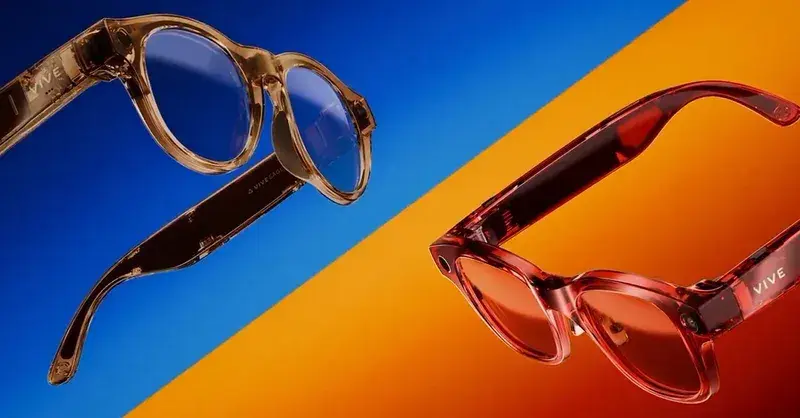
Sara Heritage is a tech and gaming journalist, who's currently making her way up to Master Ball rank in Pokemon Champions. Bylines in IGN, GAMINGbible, The Gamer and more. You can usually find her tinkering with tech, or restoring old consoles, always with one of her 3 cats nearby. Come and talk with her over on Twitter @SHeritageJourno. * VIVE Eagle is privacy-first: LED alerts, multi-sensor blocking, voice "Stop filming", and no recording when unworn. * Hands-free AI: live translation (90+ languages) and meeting notes; use OpenAI or Gemini. Requests deidentified, not used to train. * Starts at $499, ships Sept 3 in EU/NA/AU; 12MP 3K stabilized video, ZEISS lenses, 6h use, 50% charge in 10 min. HTC has just launched the VIVE Eagle, a direct response to the privacy concerns associated with Meta's AI glasses. The new AI-powered smart glasses promise all the hands-free features one would expect -- such as AI assistance, POV capture, and live translation -- without making you or anyone around you unwitting surveillance subjects. Here's what the VIVE Eagle can do Privacy-first AI smart glasses come with important safeguards HTC has placed a strong focus on privacy with the VIVE Eagle, incorporating safety measures that guard both the wearer and those nearby -- this is a direct reaction to the criticism that Meta has received for not adequately protecting the privacy of people who are not directly involved. VIVE Eagle takes a privacy-first approach for you and the people around you. When filming or taking a photo, a notification LED illuminates or pulses. The LED even automatically adjusts its brightness in different conditions to ensure it's always visible. A multi-sensor approach means VIVE Eagle will not film if the notification LED is obscured, damaged or compromised. Similarly, VIVE Eagle cannot record if the glasses are not being worn. What's more, a setting can be enabled so if people nearby don't want to be filmed they can say, "Stop filming" and VIVE Eagle will stop recording. However, these glasses are not solely concerned with privacy; they are also fitted with a sharp 12MP camera that can record 3K video with electronic stabilization, ensuring that your video looks smooth whether you are moving or standing still. The VIVE AI system provides real-time translation (available in over 90 languages), automatically generates meeting notes, and includes hands-free support, making the glasses useful for travel, work, and daily life. Users can use either the OpenAI or Google Gemini AI models, and each request is de-identified to avoid profiling and isn't used to build data sets on you. For style-conscious buyers, VIVE Eagle offers premium ZEISS lenses in a variety of options: clear blue light blocking, sun lenses with Category 3 UV400 protection, and photochromic adaptive lenses. Frames are available in both square and pantos shapes, and each comes in multiple colors including black, coffee, berry, navy, and brown. A major point for me is that there are prescription lens options and fast installation, which make them suitable for everyday use if you're as blind as I am. Disappointingly, there's no information available on how much this will cost to install in them. You also won't need to charge your glasses for ages, prescription or not, since HTC's fast-charging technology lets the battery reach 50% in just 10 minutes, offering up to 6 hours of active use, with an optional Power Boost battery pack for full-day outings. VIVE Eagle can now be ordered starting at $499 / £429 / €469 and will be available in various styles and colours from 3 September in Europe, North America, and Australia. The optional Power Boost battery accessory costs $49 / £45 / €49. All purchases come with two years of VIVE AI Plus free of charge. VIVE AI Plus provides enhanced AI features, priority customer support, extra storage for photos and videos, and regular updates with the latest capabilities, adding even more value to the glasses.
Share
Copy Link
HTC unveiled its VIVE Eagle AI smart glasses with privacy-focused measures including a stop filming voice command that lets bystanders halt recording. The $499 device features LED alerts for recording, voice-activated AI, and live translation in over 90 languages. Available September 3 in Europe, North America, and Australia, the glasses aim to counter criticism faced by Meta's smart glasses over surveillance concerns.
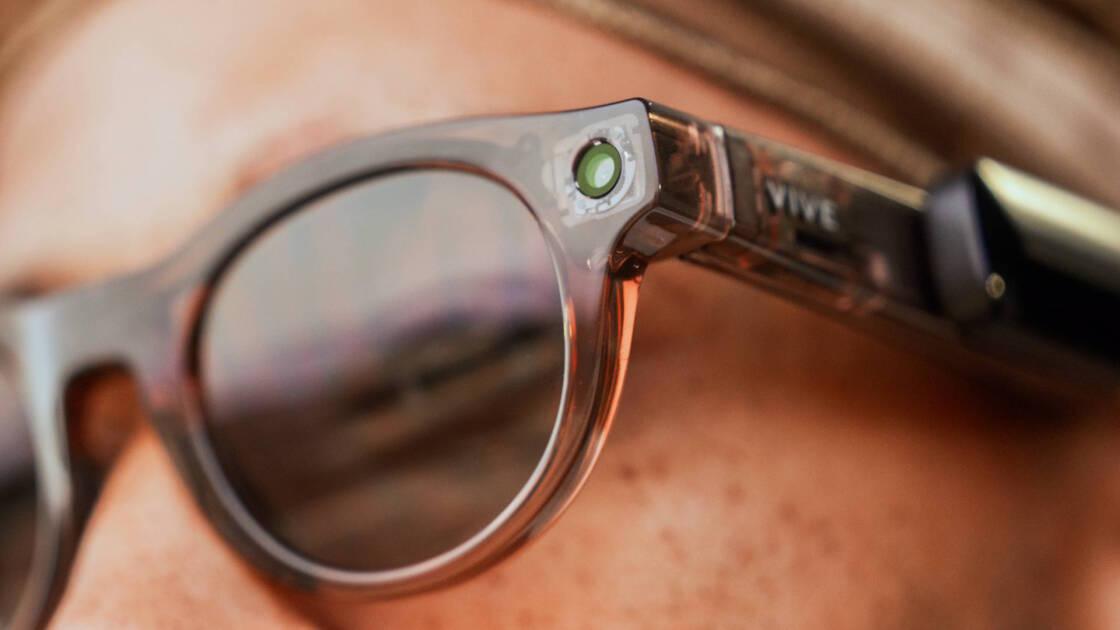
HTC launched the VIVE Eagle AI smart glasses at $499, positioning them as a privacy-focused alternative to Meta's controversial wearables
1
2
. The company is taking direct aim at the "pervert glasses" stigma that has plagued camera-equipped smart glasses, implementing several safeguards designed to protect both wearers and bystanders from unauthorized surveillance.The standout privacy feature is a stop filming voice command that allows anyone nearby to halt recording by simply saying "stop filming"
2
. This hands-free AI capability gives bystanders direct control over whether they're being recorded, addressing a major criticism of existing smart glasses. The glasses also refuse to record unless physically worn, preventing users from placing them in hidden positions for covert surveillance1
.The VIVE Eagle AI smart glasses feature a notification LED that illuminates during POV capture, automatically adjusting brightness based on ambient lighting conditions to remain visible
2
. A multi-sensor system ensures the 12MP camera won't function if the LED is obscured, damaged, or compromised in any way2
. While recording lights have become standard on major smart glasses including Meta's, HTC's implementation goes further with sensor-based enforcement rather than relying solely on user compliance1
.HTC promises that interactions with its voice-activated AI won't be used for training, a significant departure from most AI systems
1
. When users access Google Gemini and OpenAI's GPT through the glasses, requests are de-identified to make building user profiles harder, though HTC acknowledges this isn't completely bulletproof1
2
. The device is ISO 27001 and ISO 27701 compliant, meeting international standards for securing personal data1
. Photos and videos stay on the glasses' 32GB storage until manually transferred and can't be accessed when paired with different devices1
.Related Stories

Beyond privacy-focused measures, the VIVE Eagle delivers practical functionality with live translation across over 90 languages, automatic meeting notes, and hands-free support for daily tasks
2
. The 12MP camera captures 3K video with electronic stabilization2
. Premium ZEISS lenses come in multiple options including blue light blocking, UV400 sun lenses, and photochromic adaptive lenses, with prescription lens compatibility2
. Fast-charging technology delivers 50% battery in 10 minutes, with up to 6 hours of active use2
.The HTC smart glasses ship September 3 in Europe, North America, and Australia, with frames available in square and pantos shapes across multiple colors including black, coffee, berry, navy, and brown
2
. An optional Power Boost battery accessory costs $492
. All purchases include two years of VIVE AI Plus, providing enhanced AI features, priority support, extra storage, and regular updates2
. While no security measure is completely guaranteed, HTC's approach represents a notable shift toward addressing the privacy concerns that have plagued camera-equipped wearables, though questions remain about potential workarounds to these safeguards1
.Summarized by
Navi
14 Aug 2025•Technology

26 Jul 2026•Technology

08 Jul 2026•Technology