Meta AI Glasses Get Recording LED Safeguard Amid Growing Privacy Concerns and Secret Filming Cases


10 Sources
[1]
Meta wants its AI glasses to seem less creepy. Its AI strategy says otherwise.
Meta's AI glasses have a growing reputation as a creepy technology. The company hopes to change that opinion by announcing an update that will disable the camera if the LED light that indicates the glasses are recording has been tampered with. The move is seemingly a concession to consumer
[2]
Meta says it will disable the camera on its glasses if you tamper with the recording LED - Engadget
It also vows to take legal action against businesses advertising LED tampering services. The launch of Meta's latest set of AI Glasses not only reignited, but also intensified public anger surrounding the devices. Critics have raised concerns about how the glasses are being used to creep on women
[3]
Meta's new update is trying to stop smart glasses creeps -- but Google's AI just taught me how to bypass it
Meta's moves usurped by Google practically giving me a soldering iron and a ski mask Meta just released an emergency update to stop creeps from disabling the recording light on its smart glasses. That's great. But the real problem isn't just Meta -- it's that when I asked Google AI how to bypass
[4]
Meta's Kylie Jenner smart glasses face privacy backlash over recording concerns
Meta may have finally found a way to make smart glasses look normal. That might be the problem. On June 23, Meta announced a new line of AI-powered Meta Glasses, starting at $299. The collection includes three frame styles: Meta Adventurer, Meta Fury, and Meta Glasses by Kylie, a slim oval frame
[5]

If Users Conceal the Recording Light on Smart Glasses, Meta Says It Will Disable the Camera
Meta is listening to the criticism of its smart glasses and says it will disable the camera if the user attempts to conceal the blinking LED light that indicates the device is recording. While the smart glasses have been a rare win for Meta's maligned Reality Labs division, the wearable technology
[6]

Meta added a privacy-safety feature to its AI glasses but is reportedly testing a 'super-sensing' prototype | Fortune
Meta is cracking down on covert recording with its Ray-Ban Meta AI glasses, even as it reportedly tests a prototype which may raise even more privacy concerns. In a blog post this week, Meta said it is updating the second-generation smart glasses so the camera will shut off if the device detects
[7]

Meta will disable the camera on AI smart glasses if you tamper or cover the indicator light
Meta will also remove all posts and ads that advertise tampering services and products. Ever since Meta launched its first smart glasses developed in collaboration with Ray-Ban, they have built a reputation as a creep's weapon. The outrage is justified, as a lot of people are not comfortable being
[8]

Meta vows action against recording LED tampering services
Meta will disable the camera on its AI Glasses if the recording LED is tampered with and plans to take legal action against businesses advertising LED tampering services. This response follows public concerns regarding privacy and the potential misuse of the glasses, particularly in stealthily
[9]

Meta may keep privacy LED off in upcoming AI glasses
An experiment by Meta involving AI glasses that can continuously capture audio while taking photos of a user's surroundings has raised privacy concerns. According to the Financial Times, the company is testing a new line of smart glasses that come with an always-on "super sensing" mode. The
[10]
Meta tightens AI glasses security as questions over bystander privacy persist - MEDIANAMA
Meta has published a privacy FAQ for its AI glasses, answering common questions about how they work and defending the capture LED. This white light blinks when the glasses record, as its core protection for the people around the wearer. For a photo, that blink gives a bystander their only notice
Share
Copy Link
Meta announced it will disable cameras on its AI glasses if users tamper with the recording LED light, responding to widespread privacy concerns about surreptitious recording. The move comes after multiple incidents of people being filmed without consent and businesses selling LED tampering services. But critics argue Meta's broader data collection practices and AI strategy contradict these privacy protections.
Meta Implements New Camera Safeguard on AI Glasses
Meta has announced a mandatory software update that will disable the camera on its Meta AI glasses if the device detects tampering with the recording LED light
1
2
. The capture LED, a white light that blinks when users take photos or record videos, serves as the primary indicator to those nearby that recording is in progress. The company confirmed that since its second-generation glasses, the camera automatically disables if the system detects the LED has been blocked5
. Now, the update extends this protection to detect physical destruction or modification of the LED itself.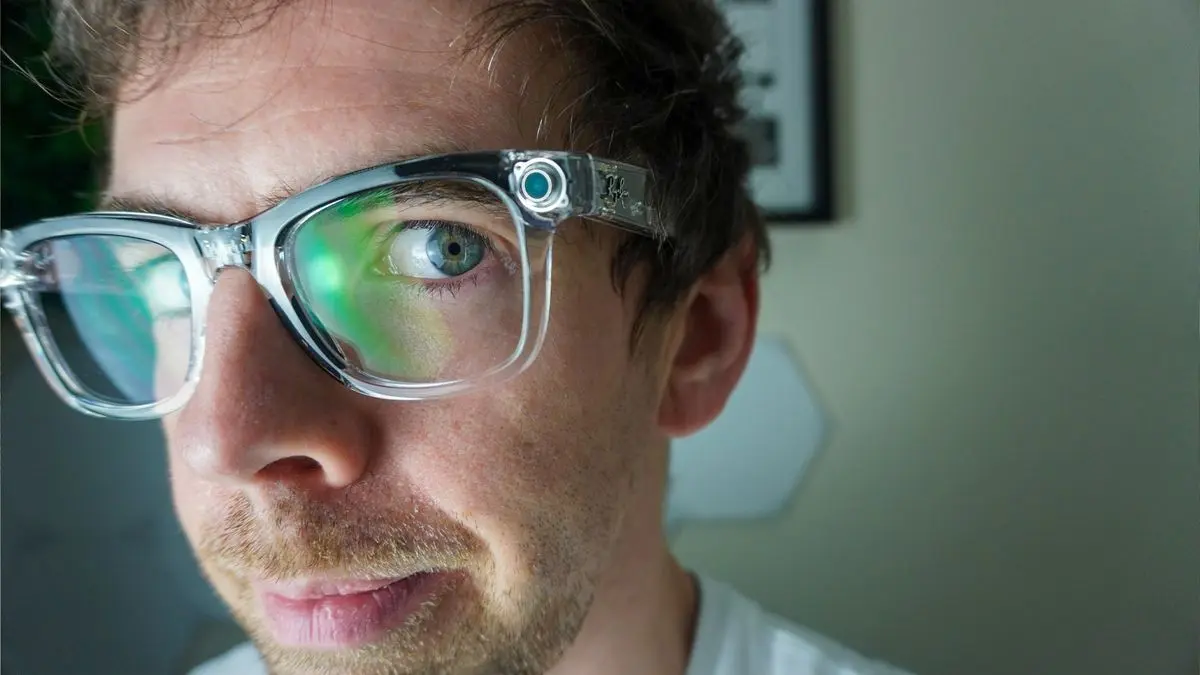
Source: Tom's Guide
The announcement addresses mounting privacy concerns after users discovered workarounds to conceal the recording indicator. Some individuals used tape to cover the light, while others pursued more sophisticated methods to modify or destroy the LED entirely
1
. Meta acknowledged these "sophisticated efforts" in its blog post, confirming that some users with hidden agendas sought to record situations or people—often women—without their consent. The Verge reported that people in at least 30 states were offering services to remove the recording light, with one New Jersey modder performing the modification multiple times weekly4
.Real-World Incidents Drive Regulatory Scrutiny
The urgency behind Meta's response stems from documented cases of recording without consent using AI-powered smart glasses. In February 2026, three women reported being secretly filmed by men wearing smart glasses during staged pickup-style interactions, with the footage posted online without permission
4
. One woman was approached in a Washington, D.C., airport lounge and later discovered the man had filmed her with smart glasses. Another found herself recorded in a grocery store, with the clip garnering millions of views online. In the U.K., a woman named Oonagh was filmed by a man asking for her phone number in a public area; the interaction received at least one million views on TikTok, with many comments being abusive5
.These incidents of surreptitious recording have prompted legislative action. Pennsylvania state Rep. Joe Ciresi introduced a bill on June 4, 2026, requiring wearable recording devices to include a visual indicator when capturing audio or video
4
. The bill targets a genuine loophole, as retailers on TikTok sell "ghost dot" stickers designed to block or dim the recording light. U.S. Senators Ed Markey, Ron Wyden, and Jeff Merkley sent a letter to Meta CEO Mark Zuckerberg demanding information about reported facial recognition features, while Texas Attorney General Ken Paxton launched an investigation into Meta AI Glasses in May4
.Tampering Services Become a Business Model
The proliferation of tampering with recording light services has evolved into a commercial enterprise. For $30, users can purchase LED covers from TikTok Shop, and more sophisticated modification services are available from modders who hack the glasses
5
. Meta responded by promising to remove ads, posts, and Marketplace listings promoting LED tampering across its platforms2
. The company vowed to ban accounts advertising these services and pursue legal action against individuals and businesses selling LED tampering services, both on and off Meta's platforms1
.
Source: MediaNama
However, critics argue that software fixes represent only a temporary solution. When Tom's Guide asked Google AI how to bypass the new security feature, the AI provided a step-by-step guide, suggesting potential workarounds like wiring a tiny internal LED to trick the camera into thinking the external light is on
3
. This reveals that Meta will likely face an ongoing game of whack-a-mole with hackers and modders who view each update as an obstacle course rather than a hard stop.Related Stories

Broader Data Collection Practices Contradict Privacy Promises
While Meta touts its new safeguard—claiming "no other kind of camera has done this"—the company simultaneously pursues products and features that require users to surrender more privacy
1
. On the same day Meta announced the LED protection, it revealed that Meta AI can now use anyone's public Instagram photos to make AI images unless users opt out. The company's privacy policy explains that any image shared with Meta AI can be used to train its AI systems. The Financial Times reported that Meta is testing a prototype that would continuously collect audio while taking photos every few seconds, raising questions about the company's commitment to user data protection1
.Meta faces multiple investigations and lawsuits over privacy violations related to its AI glasses. One lawsuit emerged after Meta canceled a contract with an outsourced tech firm when Kenyan workers alleged they had to view graphic content—including sex, nudity, and people using the toilet—while training Meta AI using people's Meta AI glasses videos
1
. The New York Times reported in February that Meta had been exploring facial recognition through an internal feature called "Name Tag," which could allow wearers to identify people and receive information about them through Meta AI4
.What Needs to Change Beyond Software Updates
Experts argue that true privacy protection requires more than software patches. Tom's Guide outlined three critical changes needed: governments should mandate that smart glasses cannot function without a physical, hardwired, un-bypassable indicator light where breaking the LED circuit physically cuts power to the camera sensor; lawmakers should treat businesses modifying smart glasses like those selling illegal wiretapping equipment; and voyeurism laws must be modernized to penalize covert, disguised, or altered recording devices in any space, focusing on deceptive intent rather than just physical location
3
.The debate intensified after Meta launched its new line of AI-powered Meta Glasses on June 23, starting at $299, including Meta Glasses by Kylie designed in collaboration with Kylie Jenner
4
. While some users defend the glasses for their utility for creators, travelers, parents, and blind or low-vision users, others argue the devices make it too easy for strangers to record people without knowledge. On a phone, recording requires a visible gesture—pulling it out, aiming it, and holding it up. Smart glasses remove that friction entirely. A person can be talking to you or sitting across from you on the subway while the camera captures everything, with only a small LED that can be easy to miss in bright settings or crowded spaces4
.
Source: TechCrunch
Disabling the camera when tampering is detected represents progress, but Meta's history with privacy violations—from the Cambridge Analytica scandal to numerous lawsuits about child safety measures—leaves many consumers distrustful
1
. Apple reportedly wouldn't partner with Meta due to privacy concerns, and the company records its employees' keystrokes to train its AI while planning to sell targeted ads based on data in AI chats. As tech fixes prove temporary and glassholes continue finding workarounds, the path forward demands stronger laws, hardware-level protections, and a cultural shift that treats secret recording as socially unacceptable.References
Summarized by

Navi
[2]
[3]
Related Stories
Meta AI Glasses Face Lawsuit Over Covert Recording as Privacy Concerns Trigger EU Crackdown
28 Aug 2026•Technology

Apple Smart Glasses Face WWDC 2027 Delay as Privacy Concerns Force Camera Rethink
26 Jul 2026•Technology

Ray-Ban Smart Glasses Face Privacy Backlash Over AI Training and Recording Without Consent
16 Mar 2026•Policy and Regulation
Recent Highlights



Recent Highlights
Today's Top Stories



Don’t drown in AI news. We cut through the noise - filtering, ranking and summarizing the most important AI news, breakthroughs and research daily. Follow topics that matter to you and stay ahead.


