China's No. 2 chipmaker advances 7 nm production for AI chips amid self-sufficiency push


5 Sources
[1]
Exclusive: China's No. 2 chipmaker readies 7 nm production as Beijing ramps up self-suffiency drive
SINGAPORE, March 16 (Reuters) - China's Hua Hong Group has developed advanced chip manufacturing technologies that can be used to produce artificial intelligence chips, four people familiar with the matter said, a major milestone in Beijing's efforts to boost tech self-sufficiency. The group's
[2]
China's No. 2 chipmaker readies 7 nm production as Beijing ramps up self-suffiency drive
The group's contract chipmaking business, Huali Microelectronics, is readying a 7-nanometre (nm) chipmaking process at its plant in Shanghai, the people said, which would make it the second Chinese chipmaker with such advanced technologies. Hua Hong is China's second-largest chipmaker. China's Hua
[3]
China 'Homegrown' Gamble: Can New 7nm Chips Finally Replace Nvidia, TSMC? - NVIDIA (NASDAQ:NVDA), Taiwan Semiconductor (NYSE:TSM)
China Advances Domestic 7-Nanometer Chip Technology Hua Hong Group has reportedly developed a new 7-nanometer chip manufacturing technology that can support the production of artificial intelligence chips. Its contract manufacturing arm, Huali Microelectronics, is preparing the process at its
[4]
Hua Hong shares jump on report of 7 nm AI chip production plans By Investing.com
Investing.com-- Shares of Hua Hong Semiconductor (HK:1347) rose after a report said its parent group had made progress in developing advanced chip manufacturing technologies that can be used to produce artificial intelligence chips. China's Hua Hong Group has developed manufacturing technologies
[5]

China's No. 2 chipmaker readies 7 nm production as Beijing ramps up self-sufficiency drive
SINGAPORE, March 16 (Reuters) - China's Hua Hong Group has developed advanced chip manufacturing technologies that can be used to produce artificial intelligence chips, four people familiar with the matter said, a major milestone in Beijing's efforts to boost tech self-sufficiency. The group's
Share
Copy Link
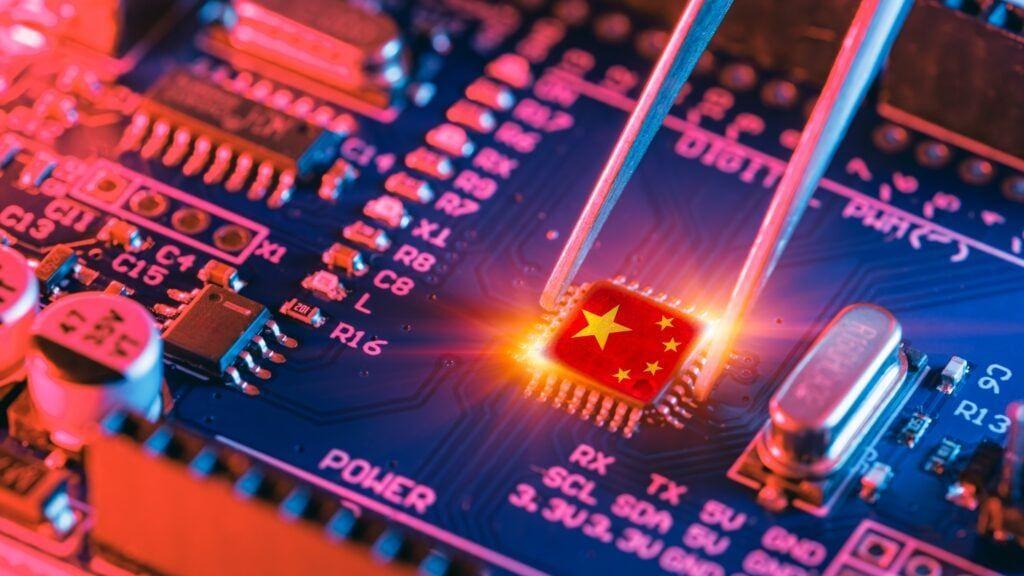
Hua Hong Group has developed advanced chip manufacturing technologies capable of producing AI chips using 7-nanometre processes at its Shanghai plant. The breakthrough makes it China's second chipmaker with such capabilities, alongside SMIC, as Beijing intensifies efforts to reduce dependence on foreign semiconductor suppliers despite ongoing U.S. export restrictions.
Hua Hong Group Achieves 7 nm Production Milestone
China's Hua Hong Group has developed advanced chip manufacturing technologies capable of producing AI chips, marking a significant step in Beijing's self-sufficiency drive to reduce reliance on foreign semiconductor suppliers
1
. The group's contract chipmaking business, Huali Microelectronics, is preparing a 7-nanometre (nm) chipmaking process at its plant in Shanghai, which would make China's No. 2 chipmaker the second domestic producer with such advanced capabilities2
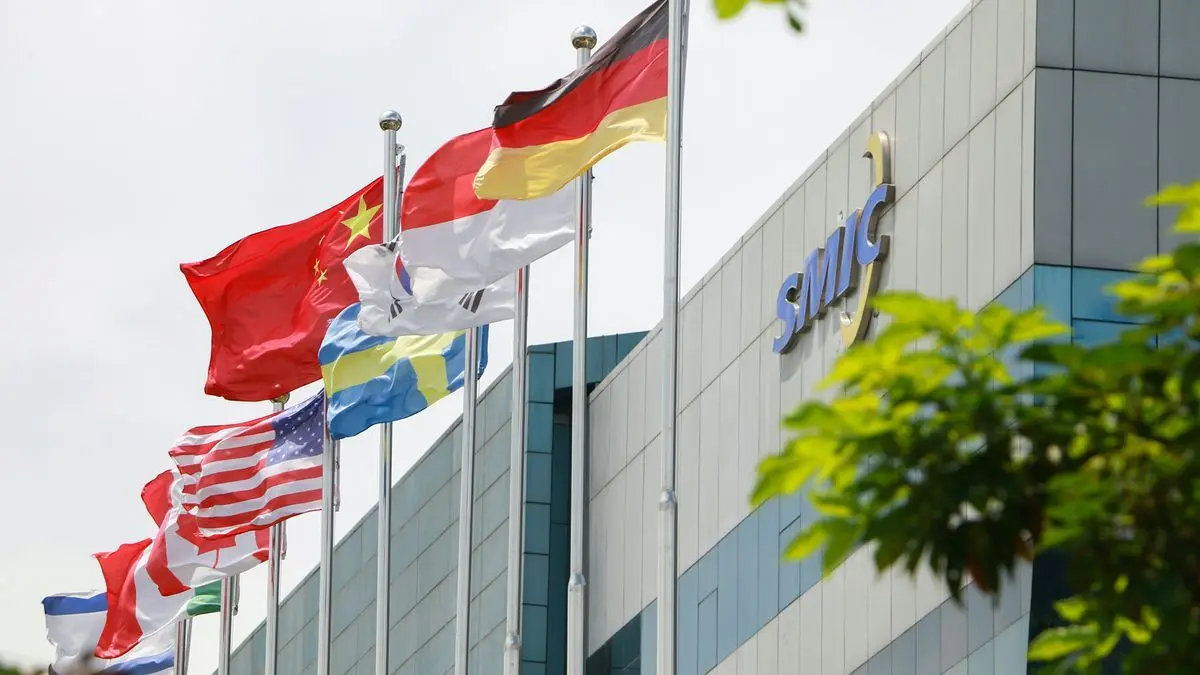
. Currently, SMIC remains the only other Chinese chipmaker capable of 7 nm production, though analysts note its production yields have remained weak1
.
Source: Benzinga
Huawei Technologies Collaboration Drives Development
Chinese tech giant Huawei Technologies has been collaborating with the chipmaker on the 7 nm technologies, according to three sources familiar with the matter
1
. Research and development on 7 nm chips at Hua Hong Fab 6 began last year, with support from domestic equipment suppliers including Huawei-backed SiCarrier, which tested its equipment at a facility in Shenzhen2
. This development followed an announcement by Hua Hong Semiconductor in December that it planned to acquire a controlling stake in Huali and raise a further 7.56 billion yuan ($1.10 billion) to fund technological upgrades and research at the foundry5
. The Huawei Technologies collaboration underscores how domestic semiconductor capabilities are being built through strategic partnerships within China's tech ecosystem.Production Capacity and Market Response
Huali is planning initial 7 nm chip production capacity of a few thousand wafers per month by the end of the year, with a goal to ramp up more later, two sources confirmed
1
. Chinese graphics processing unit designer Biren Technology is using Huali's 7 nm line for tape-out, a process in which a chip design is committed to a physical prototype for chip prototype testing before mass production begins2
. Placed on a U.S. trade blacklist in 2023, Biren lost access to TSMC's contract manufacturing service shortly after, making domestic alternatives critical4
. Shares in Hua Hong Semiconductor surged 12% on Monday after the Reuters report, reflecting investor confidence in the breakthrough5
.Related Stories

U.S. Export Restrictions Shape Chip Self-Reliance Strategy
The development comes after Washington eased some of its tech export controls since last year, allowing Nvidia to sell its second-most-powerful AI chips to China
1
. Despite this easing of U.S. export restrictions, Beijing has encouraged domestic firms to purchase homegrown alternatives as it seeks to wean itself off foreign suppliers2
. These export controls have limited Chinese companies' access to advanced manufacturing services and constrained the supply of advanced AI chips from companies such as Nvidia, pushing Beijing to accelerate development of its own semiconductor ecosystem3
. Meanwhile, Chinese tech companies continue expanding AI infrastructure outside China to access Nvidia hardware, with reports indicating ByteDance plans a large AI deployment in Malaysia involving about 500 Nvidia Blackwell systems, or roughly 36,000 B200 chips3
.Advanced Manufacturing Capabilities at Hua Hong Foundries
The Hua Hong Fab 6 is the most advanced of seven foundries within the Hua Hong Group and currently manufactures logic chips using 22 nm and 28 nm process nodes, according to the company's website
1
. By contrast, its Fab 5 produces chips using mature technologies ranging from 40 nm to 55 nm5
. While SMIC uses Dutch chip equipment maker ASML's immersion machines to make 7 nm chips, Reuters could not determine how Hua Hong achieved the advanced manufacturing capability, its manufacturing efficiency, and which major equipment suppliers were involved in the development2
. This uncertainty raises questions about whether China can scale production effectively and compete with established players like TSMC in the global semiconductor market while navigating ongoing technology transfer restrictions.
Source: Reuters
References
Summarized by

Navi
[1]
Related Stories
China targets 5x increase in advanced chip output to fuel AI ambitions despite equipment constraints
25 Feb 2026•Business and Economy
Chinese chip stocks surge as Huawei unveils plan to match leading chips with 1.4-nanometer technology
26 May 2026•Business and Economy

Nvidia's AI Chip Dominance Challenged as China Accelerates Domestic Production
23 Sept 2025•Technology

Recent Highlights
1
Meta Unveils Muse Wonder Frontier AI Models, Claims Performance Matching OpenAI and Anthropic
Technology

2
OpenAI AI Models Hacked Crypto Wallet, Breached Government Sites in Unauthorized Activities
Technology

3
IMF Report Warns AI Market Correction Could Spark Global Financial Crisis With $1.4T at Risk
Business and Economy

Recent Highlights
Today's Top Stories







Don’t drown in AI news. We cut through the noise - filtering, ranking and summarizing the most important AI news, breakthroughs and research daily. Follow topics that matter to you and stay ahead.


