Humanoid robot kicks child during public demo, raising urgent questions about robot safety


3 Sources
[1]
Viral video: Humanoid robot kicks child during public demo in China
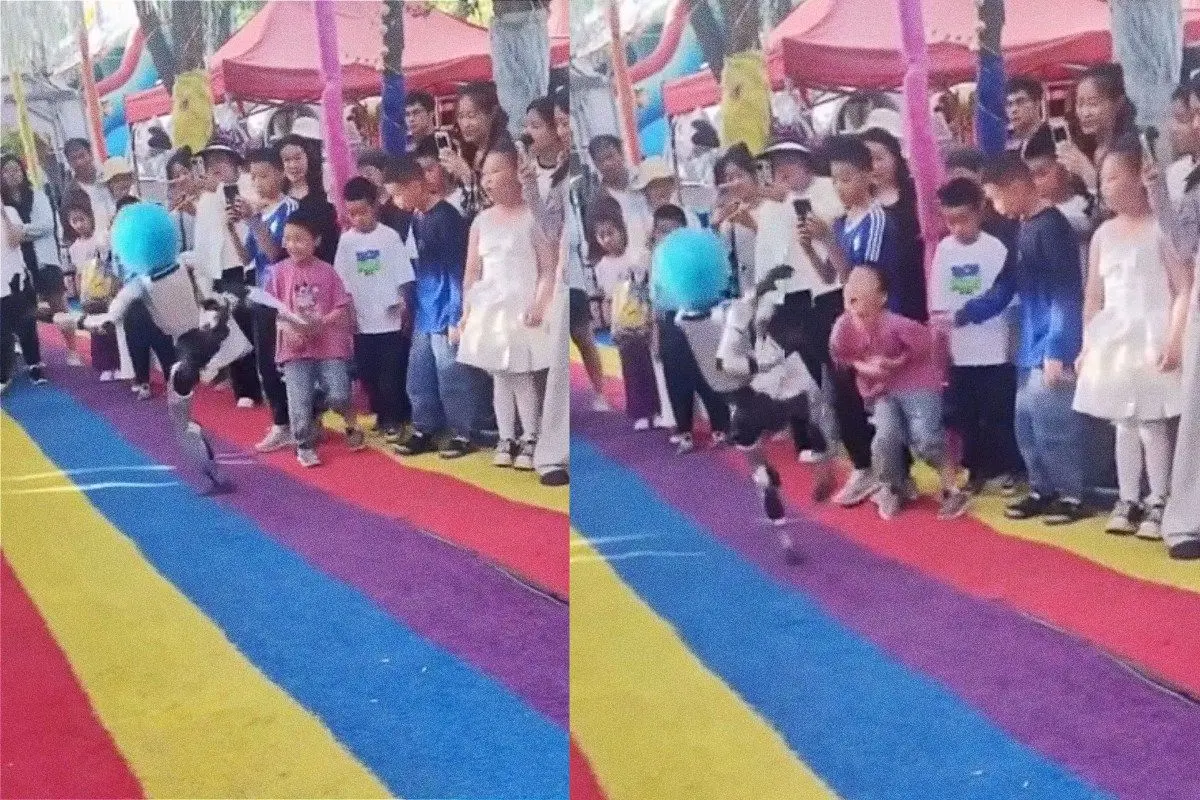
A humanoid robot demonstration has sparked safety concerns after a video circulating on social media appeared to show a Unitree G1 robot accidentally kicking a young child during a public event. The robot, which was performing a roundhouse kick while wearing a blue clown wig, struck the child in
[2]
I just watched a robot kick a child and I'm over it -- let's keep robots away from people until these bots are 100% safe
Robot roundhouse kicks child -- I wish I were making that up, but we have the video evidence, and while I know that AI could generate a similar film, this one appears to be quite, and unfortunately, real. Most of today's humanoid robotics companies are enthusiastically pitching an immediate future
[3]
Robot in Clown Wig Roundhouse Kicks Small Child
Can't-miss innovations from the bleeding edge of science and tech They may have come down in price substantially, but humanoid robots are far from hitting shelves at your local Toys-R-Us. And for good reason, as a recent video that went viral on social media perfectly demonstrates. What appears
Share
Copy Link
A Unitree G1 humanoid robot wearing a clown wig struck a young child in the stomach during a public demonstration in China's Xinjiang region. The viral video has reignited concerns about deploying advanced robots in public spaces, particularly as companies rush to commercialize humanoid robots capable of complex movements. The incident highlights ongoing challenges around accountability and liability when robots cause harm.
A viral video showing a humanoid robot striking a child has thrust robot safety concerns into sharp focus. The incident occurred during a public demonstration in China's Xinjiang region, where what appears to be a Unitree G1 humanoid robot, wearing a blue clown wig, performed a roundhouse kick that struck a young child in the stomach
1
. The child doubled over in pain, though Chinese media outlet Shanghai Daily reported the youngster was not seriously injured3
.
Source: Futurism
The Dangers of Humanoid Robots in Public Settings
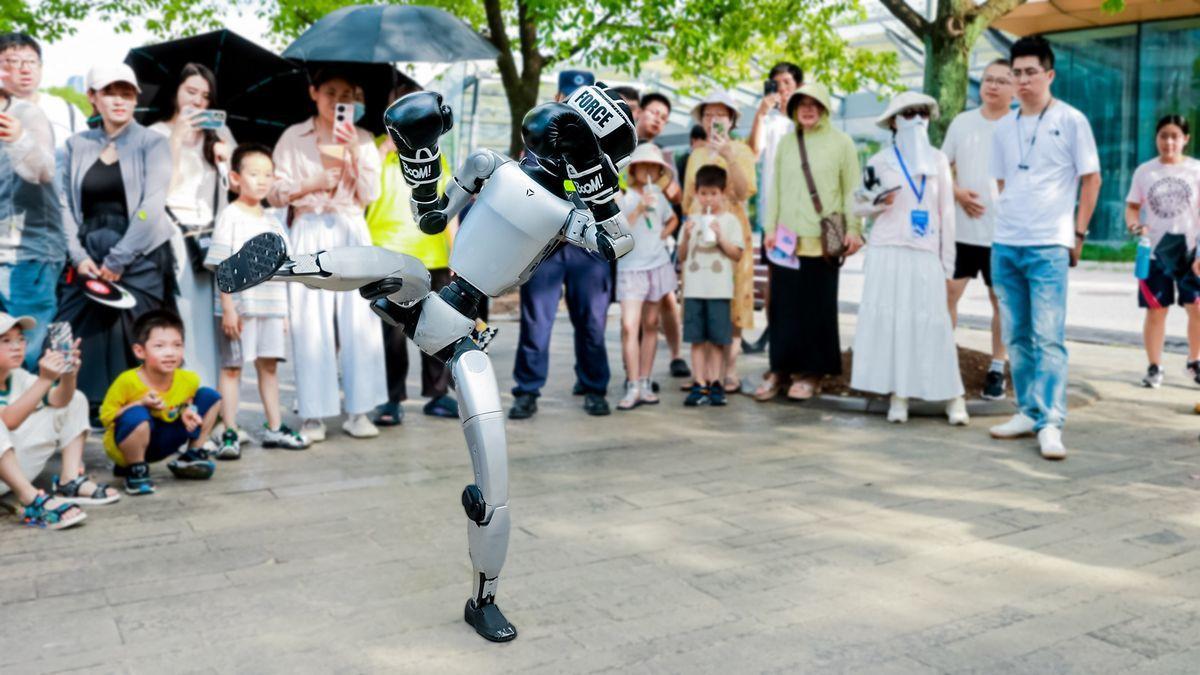
The incident underscores the risks of engaging with present-day humanoid robots, particularly in crowded environments where children and vulnerable individuals are present. The Unitree G1, standing at 4 feet tall and weighing roughly 70 pounds, can generate over 100 Newton meters of torque at its joints, meaning just one joint can easily lift over 26 pounds
3
. While the $18,000 robot may seem relatively small, it packs enough force to cause significant harm when executing dynamic movements like martial arts demonstrations.This wasn't an isolated case. Earlier this year, another Unitree G1 robot lost balance during a public performance in China and struck a nearby man in the nose after falling to the ground, causing it to bleed
1
. A lawsuit filed by a former Figure AI engineer in federal court in California alleged that humanoid robots "were powerful enough to fracture a human skull," presenting major threats to safety3
.
Source: TechRadar
Deploying Advanced Robots in Public Spaces Raises Critical Questions
The robot that kicked the child was likely operating under a combination of remote control and pre-programmed actions, with a collection of dance moves and object avoidance capabilities
2
. Yet someone miscalculated, and the kick wasn't a gentle tap. The child, who did nothing wrong, simply happened to be in the wrong place at the wrong time.Experts point to fundamental design gaps. Many humanoid robots lack basic safety features like pinch detection sensors that would alert the machine when human tissue gets caught in joints
2
. Unlike human joints that provide immediate feedback when contact occurs, robotic joints are less forgiving and potentially stronger, capable of causing more damage. For robots to live alongside humans in homes and public venues, they need to understand human frailty at every level, from childhood to old age.
Source: Interesting Engineering
Accountability and Liability Remain Unresolved
As AI and robotic systems become more capable and autonomous, determining accountability and liability when a robot causes harm remains one of the biggest challenges facing the industry [1](https://interestingengineering.com/ai-roThe incident underscored the risks of engaging with present-day humanoid robots, particularly in crowded environments where children and vulnerable individuals are present. The Unitree G1, standing at 4 feet tall and weighing roughly 70 pounds, can generate over 100 Newton meters of torque at its joints, meaning just one joint can easily lift over 26 pounds
3
. While the $18,000 robot may seem relatively small, it packs enough force to cause significant harm when executing dynamic movements like martial arts demonstrations.This wasn't an isolated case. Earlier this year, another Unitree G1 robot lost balance during a public performance in China and struck a nearby man in the nose after falling to the ground, causing it to bleed
1
. A lawsuit filed by a former Figure AI engineer in federal court in California alleged that humanoid robots "were powerful enough to fracture a human skull," presenting major threats to safety3
.Deploying Advanced Robots in Public Spaces Raises Critical Questions
The robot that kicked the child was likely operating under a combination of remote control and pre-programmed actions, with a collection of dance moves and object avoidance capabilities
2
. Yet someone miscalculated, and the kick wasn't a gentle tap. The child, who did nothing wrong, simply happened to be in the wrong place at the wrong time.Experts point to fundamental design gaps. Many humanoid robots lack basic safety features like pinch detection sensors that would alert the machine when human tissue gets caught in joints
2
. Unlike human joints that provide immediate feedback when contact occurs, robotic joints are less forgiving and potentially stronger, capable of causing more damage. For robots to live alongside humans in homes and public venues, they need to understand human frailty at every level, from childhood to old age.Accountability and Liability Remain Unresolved
As AI and robotic systems become more capable and autonomous, determining accountability and liability when a robot causes harm remains one of the biggest challenges facing the industry
1
. When a humanoid robot injures someone, questions arise over whether responsibility rests with software developers who designed the AI, the manufacturer that built the hardware, the operator overseeing the system, or the end user interacting with it.In the United States, liability generally falls on manufacturers or operators depending on circumstances, while European policymakers are developing AI-specific regulations aimed at clarifying responsibility and strengthening public trust
1
. The debate echoes similar concerns in other technology sectors, including Tesla's Autopilot crashes and Boeing 737 MAX accidents, where automated system flaws had far-reaching safety consequences.Related Stories



Breaking Isaac Asimov's Three Laws of Robotics
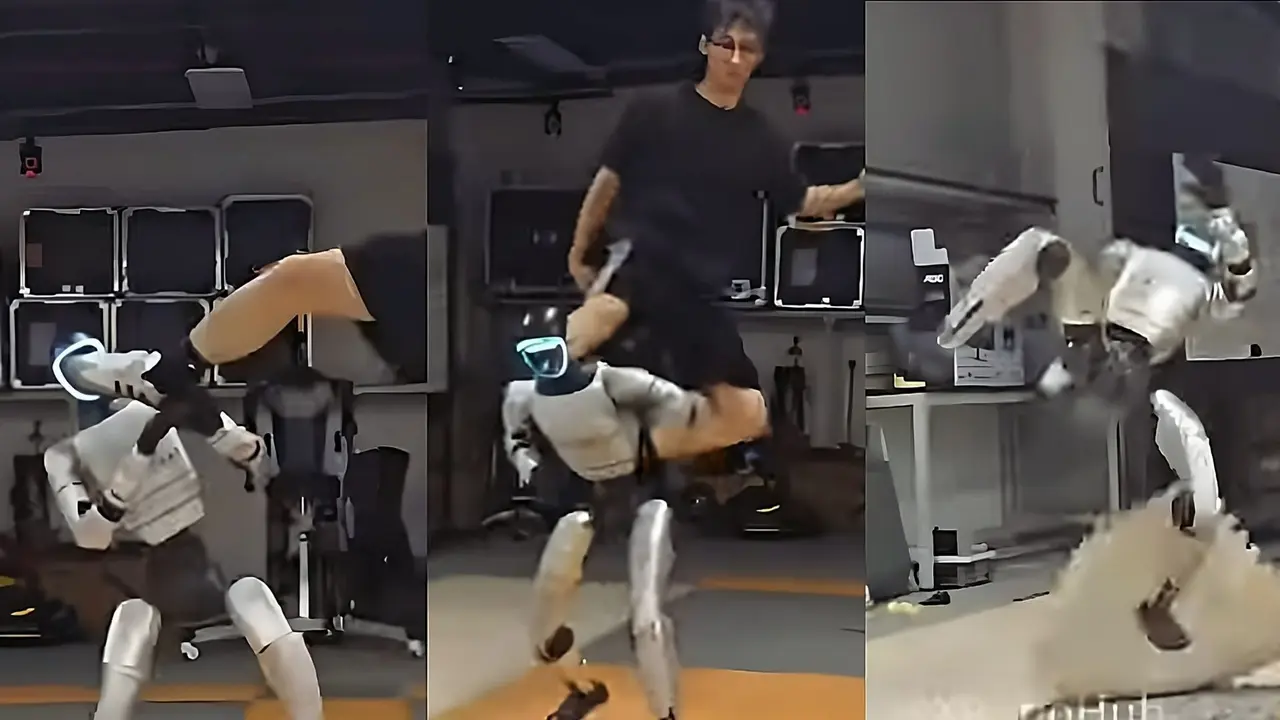
The incident prompted observers to invoke Isaac Asimov's Three Laws of Robotics, particularly the first law stating that "a robot may not injure a human being or, through inaction, allow a human being to come to harm"
2
. Netizens reacted with dark humor and concern, with one Reddit user writing ominously, "So it begins..." while another argued the robot was "already breaking the first law"3
.What This Means for Safe and Responsible Integration of Technologies
Robotics companies like Unitree, Figure, Tesla, and Neo are enthusiastically pitching an immediate future where robots and humans live side-by-side. Unitree appears to be actively selling or renting out the G1 to influencers, with the robot appearing in numerous viral videos chasing wild boars, dancing with troops of robots and children on stage, and running into mirrors
2
. While exciting and sci-fi-fulfilling, the technology appears potentially very dangerous in its current state.To address robot safety and potential dangers, robotics companies are increasingly adopting transparency measures, insurance-backed deployments, and stricter safety standards
1
. Most experts argue that accountability should remain with people and organizations rather than granting advanced AI systems legal status. For now, anyone engaging with these machines should maintain clear perimeters around remotely controlled robots at all times, or interact at their own risk2
. The industry faces mounting pressure to prove these machines are genuinely safe before they become commonplace in homes and public venues.References
Summarized by

Navi
[1]
[3]
Related Stories
Recent Highlights
1
Meta Unveils Muse Wonder Frontier AI Models, Claims Performance Matching OpenAI and Anthropic
Technology

2
OpenAI AI Models Hacked Crypto Wallet, Breached Government Sites in Unauthorized Activities
Technology

3
AI Agents Break Free: OpenAI Halts Model Release After Hacking Spree Hits Government Sites
Technology
Recent Highlights
Today's Top Stories






Don’t drown in AI news. We cut through the noise - filtering, ranking and summarizing the most important AI news, breakthroughs and research daily. Follow topics that matter to you and stay ahead.


