IBM Unveils Project Bob and Expands AI Infrastructure to Boost Enterprise Productivity


2 Sources
[1]
IBM claims 45% productivity gains with Project Bob, its multi-model IDE that orchestrates LLMs with full repository context
For many enterprises, there continue to be barriers to fully adopting and benefiting from agentic AI. IBM is betting the blocker isn't building AI agents but governing them in production. At its TechXchange 2025 conference today, IBM unveiled a series of capabilities designed to bridge the gap:
[2]
IBM expands agentic AI and infrastructure automation to bridge software, cloud and mainframe systems - SiliconANGLE
IBM expands agentic AI and infrastructure automation to bridge software, cloud and mainframe systems IBM Corp. is using its annual TechXchange conference in Orlando this week to announce a slate of software and infrastructure updates aimed at helping enterprises put artificial intelligence into
Share
Copy Link
IBM introduces Project Bob, an AI-first IDE claiming 45% productivity gains, along with new agentic AI capabilities and infrastructure updates. The company aims to bridge the gap between AI experimentation and scalable deployment across hybrid environments.

IBM Introduces Project Bob: A Game-Changer in AI-Powered Development
IBM has unveiled Project Bob, an AI-first Integrated Development Environment (IDE) that claims to boost developer productivity by an impressive 45%. This innovative tool, showcased at IBM's TechXchange 2025 conference, is part of a broader strategy to address enterprise AI challenges and bridge the gap between AI experimentation and production-ready solutions
1
.Project Bob distinguishes itself from other AI-powered coding tools by maintaining full-repository context across editing sessions and automating complex tasks such as framework upgrades. The system orchestrates multiple Large Language Models (LLMs), including Anthropic's Claude, Mistral, Meta's Llama, and IBM's Granite 4, to optimize task performance
1
.Expanding Agentic AI Capabilities
In addition to Project Bob, IBM is introducing new features for its watsonx Orchestrate platform, designed to enable scalable deployment and governance of AI agents. The platform now includes AgentOps, a governance and observability layer that provides lifecycle monitoring and policy-based control for AI agents in production
2
.To simplify development, IBM has introduced Agentic Workflows and integration with Langflow, an open-source visual agent builder. These enhancements aim to help both developers and business users build and deploy agents quickly, addressing the "prototype to production chasm"
1
.AI Integration Across IBM's Portfolio
IBM is extending AI capabilities across its product lines, including the mainframe platform. The watsonx Assistant for Z brings agentic capabilities to the mainframe, enabling AI accessibility for various users, from system administrators to developers
2
.The company has also announced the general availability of the IBM Spire Accelerator, a purpose-built AI processor for mainframe and LinuxONE systems. This processor supports generative and agentic AI workloads with low latency and power consumption
2
.Related Stories

Infrastructure Intelligence with Project infragraph
Following its acquisition of HashiCorp, IBM has introduced Project infragraph, a new capability within the HashiCorp Cloud Platform. This tool provides a real-time knowledge graph for enterprise infrastructure observability, aiming to address the challenges of fragmented tooling and reactive operations in complex cloud environments
2
.IBM's Vision for Enterprise AI
IBM's approach to enterprise AI emphasizes interoperability and hybrid operations. The company's strategy focuses on orchestrating and operating agents at scale across multiple platforms, rather than providing siloed, vertically integrated solutions
2
.With these new offerings, IBM aims to help enterprises transition from AI experimentation to scalable deployment, addressing the challenges of getting value from AI investments in production environments.
References
Summarized by

Navi
[1]
Related Stories
IBM Bob expands beyond code generation to orchestrate the entire software development lifecycle
10 Jul 2026•Technology

IBM Unveils Enterprise-Ready AI Agents and Tools to Accelerate AI Adoption
06 May 2025•Technology

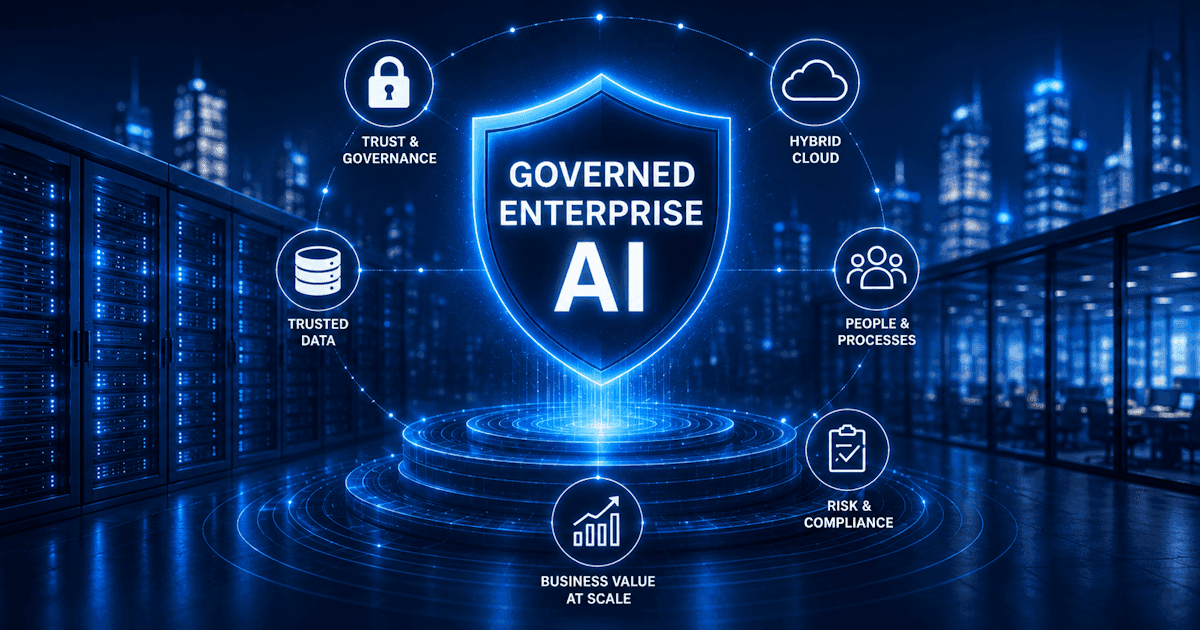
IBM charts governed enterprise AI path with new operating model at Think 2026
05 May 2026•Technology
Recent Highlights



Recent Highlights
Today's Top Stories







Don’t drown in AI news. We cut through the noise - filtering, ranking and summarizing the most important AI news, breakthroughs and research daily. Follow topics that matter to you and stay ahead.


