India could become world's AI skill capital if AI literacy doubles to 60% by 2030, says IBM


2 Sources
[1]
India can become world's AI skill capital if AI literacy doubles by 2030: IBM India MD - The Economic Times
India could emerge as the global "skill capital" for artificial intelligence (AI) if the country significantly expands its AI-literate workforce by 2030, according to IBM India & South Asia Managing Director Sandip Patel. Speaking to on the sidelines of the launch of the joint IBM-IndiaAI report
[2]
IBM-IndiaAI Study Projects AI to Drive a $500 Billion Economic Surge by 2030
India is entering a defining phase in its economic transformation as artificial intelligence (AI) is set to move beyond experimentation to become a foundational force powering national growth, according to a new study by the IBM Institute for Business Value and IndiaAI. The research reveals that AI
Share
Copy Link
India could emerge as the global AI skill capital if AI literacy doubles from 30% to 60% by 2030, according to IBM India MD Sandip Patel. A new IBM-IndiaAI report reveals AI could contribute over $500 billion to India's economy by 2030, but challenges in data readiness, governance, and skills gap threaten to slow AI adoption across enterprises.
India AI Poised to Transform Economic Landscape
India stands at a critical juncture in its artificial intelligence journey, with the potential to emerge as the world's AI skill capital if the country can significantly expand its AI-literate workforce by 2030. According to Sandip Patel, Managing Director of IBM India & South Asia, India's addressable workforce of approximately 600 million workers includes about 200 million who are already AI literate, representing roughly 30% of the total workforce
1
. This foundation positions India uniquely in the global AI landscape, but the real opportunity lies in doubling that figure.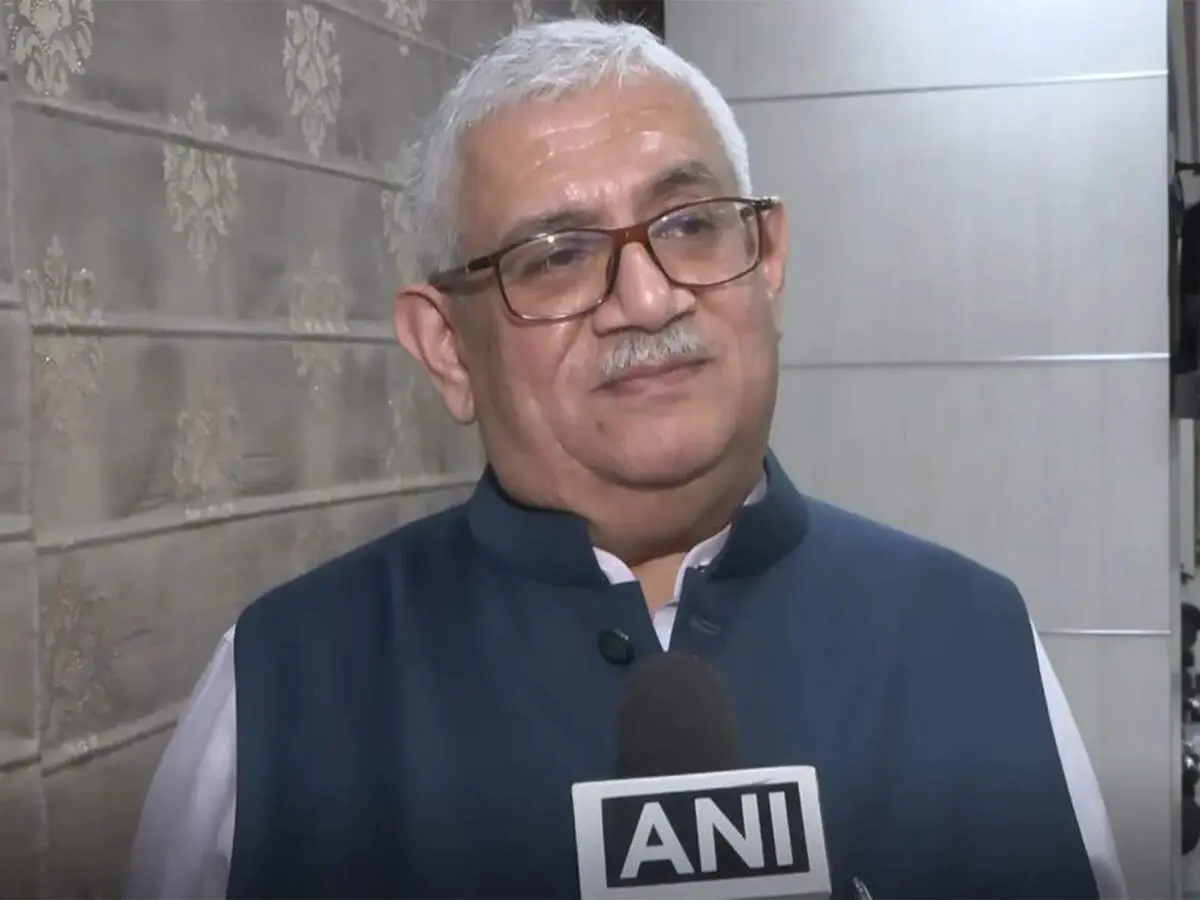
Source: ET
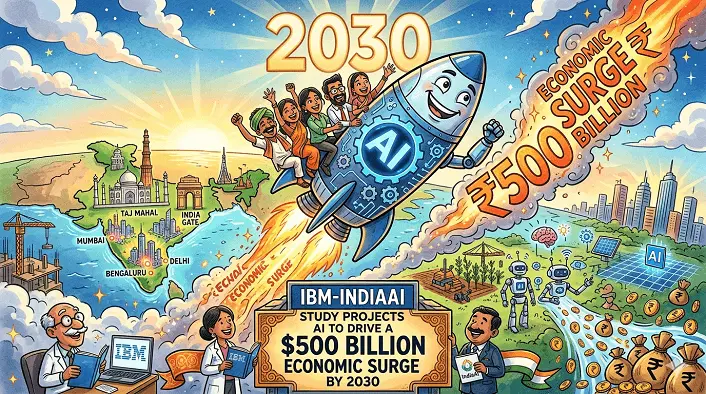
"If you can increase that to 60%, almost 60% by 2030, we will become a very formidable power in India with an AI-literate workforce," Patel stated during the launch of the joint IBM-IndiaAI report titled "From promise to power: How AI is redefining India's economic future" . The research, conducted by the IBM Institute for Business Value and IndiaAI, projects that AI could contribute more than $500 billion to India's economy by 2030, with four in five business leaders believing AI investments will directly influence India's GDP growth
2
.
Source: CXOToday
India's AI Potential Hinges on Massive Talent Expansion
The economic contribution of AI to India hinges on addressing a widening skills gap that threatens to undermine India's AI potential. While 30% of India's workforce currently possesses AI literacy, the study indicates this figure must rise to nearly 57% by 2030 to meet business requirements
2
. This translates to a total AI talent need of more than 350 million workers by the end of the decade, highlighting the pressure to fundamentally rethink education models, career pathways, and skill development strategies.Shri S Krishnan, Secretary of the Ministry of Electronics & Information Technology (MeitY), emphasized India's evolving role in the global AI conversation: "India is no longer just participating in the global AI conversation, we are helping shape it. Our vision is clear. AI must evolve as an extension of our people's aspirations, driving inclusive growth and national progress"
2
. Initiatives like IndiaAI FutureSkills are responding by embedding AI fluency into education and corporate training, with data and AI labs expanding across Tier 2 and Tier 3 cities to broaden access to AI skill development nationwide.Challenges in AI Adoption Create Execution Gap
Despite the optimism surrounding India AI, significant challenges in AI adoption are preventing enterprises from scaling beyond pilot projects. The study reveals that 72% of surveyed organizations acknowledge they are behind global peers in AI adoption, with only 15% currently scaling AI through significant cross-functional investments while the remaining 85% remain in pilot-stage AI initiatives
2
.Data readiness emerges as a primary obstacle, with 57% of respondents citing uneven data quality as a major barrier
2
. "A lot of organisations don't have data ready that can actually enable them to scale AI," Patel explained1
. Additionally, 77% of respondents point to the lack of accessible, affordable, and secure cloud infrastructure as a critical barrier to AI readiness, suggesting that India's ability to scale AI depends less on model sophistication and more on foundational technical infrastructure2
.Governance and trust issues further complicate AI adoption. Organizations struggle with trusting AI outcomes and establishing responsible AI governance frameworks
1
. For regulated sectors and public systems, a sovereign AI foundation is becoming a strategic necessity, with 74% of surveyed executives saying control over where data resides is essential2
.Related Stories

Job Transformation Rather Than Elimination
Addressing concerns about AI-driven job losses, Patel emphasized that technological changes historically transform work rather than eliminate it entirely. "AI is both creating productivity improvements, which is changing the complexion of jobs, but it's also creating new skill sets that people have to adapt and learn, which then creates newer jobs," he noted
1
. This perspective on job transformation suggests that AI adoption will require continuous learning and adaptation from India's workforce, but also presents opportunities for productivity gains that can fuel business growth.The study points to a need for leadership-level AI understanding within organizations. Patel stressed that executives and managers must fully appreciate how to use AI to drive value and embed AI within business processes to truly unleash its potential
1
. With 73% of leaders expecting India to emerge as a leading global AI nation by 2030, the convergence of ambition and execution will determine whether India can translate its AI potential into sustained economic impact and establish itself as the world's AI skill capital.References
Summarized by

Navi
Related Stories
India's AI ambitions hinge on re-skilling 200 million workers into 350 million by 2030
25 May 2026•Business and Economy

India at the Forefront of Digital Renaissance: IBM India MD Highlights Responsible AI Adoption
24 Sept 2024

AI in India: Only 4% Jobs at Risk as Investment Triples to $4.1 Billion, Says World Bank
06 Oct 2026•Business and Economy
Recent Highlights
1
Microsoft and Nvidia Launch Surface Laptop Ultra: A $2,599 AI-Ready PC With RTX Spark Chip
Technology

2
Google Unveils Gemini 4 Argon AI Model, Restricts Access to Trusted Cyber Defenders
Technology

3
OpenAI Releases 722 AI-Generated Math Papers on GitHub, Igniting Fury Among Mathematicians
Science and Research

Recent Highlights
Today's Top Stories






Don’t drown in AI news. We cut through the noise - filtering, ranking and summarizing the most important AI news, breakthroughs and research daily. Follow topics that matter to you and stay ahead.


