India enforces three-hour deepfake takedown as new IT rules test global platforms


12 Sources
[1]
India orders social media platforms to take down deepfakes faster | TechCrunch
India has ordered social media platforms to step up policing of deepfakes and other AI-generated impersonations, while sharply shortening the time they have to comply with takedown orders. It's a move that could reshape how global tech firms moderate content in one of the world's largest and
[2]
Instagram and X have an impossible deepfake detection deadline
The best methods we currently have for detecting and labelling deepfakes online are about to get a stress test. India announced mandates on Tuesday that require social media platforms to remove illegal AI-generated materials much faster, and ensure that all synthetic content is clearly labeled.
[3]
India reduces takedown window to three hours for YouTube, Meta, X and others
India has introduced new rules that make it mandatory for social media companies to remove unlawful material within three hours of being notified, in a sharp tightening of the existing 36-hour deadline. The amended guidelines will take effect from 20 February and apply to major platforms including
[4]
India Orders Social Media Platforms to Remove Deepfakes Within Three Hours
India has introduced new rules requiring social media companies to remove deepfakes and other illegal AI-generated content within three hours of receiving a takedown order -- a major shift in how platforms must operate in one of the world's largest online markets. On Tuesday, India announced
[5]

India's tougher AI social media rules spark censorship fears
New Delhi (AFP) - India has tightened rules governing the use of artificial intelligence on social media to combat a flood of disinformation, but also prompting warnings of censorship and an erosion of digital freedoms. The new regulations are set to take effect on February 20 -- the final day of
[6]

MeitY Amends IT Rules to Regulate AI Content and Deepfakes
MeitY has also removed the 10 percent requirement for AI labels The Ministry of Electronics and Information Technology (MeitY) notified the amendments to the IT Rules, 2021, on Tuesday. The fresh rules focus heavily on artificial intelligence (AI)-generated content and deepfakes, bringing more
[7]

India's tougher AI social media rules spark censorship fears
India has tightened rules governing the use of artificial intelligence on social media to combat a flood of disinformation, but also prompting warnings of censorship and an erosion of digital freedoms. With more than a billion internet users, India is grappling with AI-generated disinformation
[8]
Decoding 3-hour deadline for companies to axe flagged AI-made posts
The latest IT rules in India now bring artificial intelligence under legal oversight for the first time. Intermediaries must act faster to remove flagged unlawful content, including deepfakes targeting women and children. The amendments also introduce a labelling mandate for AI-generated audio,
[9]
Tighter takedown rules are for all social media content
The amendments to the Information Technology (Intermediary Guidelines and Digital Media Ethics Code) Rules drastically shortening the time frames for intermediaries to remove content are applicable to all content, and not only those generated with artificial intelligence (AI), according to legal
[10]

MeitY Notifies New Amendments to IT Rules on Synthetic Media
The Ministry of Electronics and Information Technology (MeitY) on February 10 notified amendments to the Information Technology (Intermediary Guidelines and Digital Media Ethics Code) Rules, 2021, explicitly bringing synthetically generated information, including deepfakes, within the scope of the
[11]
Explained: As govt tightens AI content rules, what must social media platforms & others do
India's government has mandated social media platforms to clearly label all AI-generated or modified content. Amendments to IT rules require intermediaries to use visible disclosures or embedded metadata for identification, with a strict three-hour window for takedown orders. These measures aim to
[12]
Social media platforms must detect, label AI-generated content under new rules
India has issued a new order for social media platforms. All AI-generated content must now be clearly labeled. These labels and their embedded identifiers cannot be removed. Companies must use tools to detect and stop illegal or deceptive AI content. Users will also receive warnings about AI
Share
Copy Link
India has introduced sweeping amendments to its IT Rules requiring social media platforms to remove deepfakes and AI-generated content within three hours, down from 36. The new regulations, effective February 20, mandate labeling of all synthetic content and deploy automated detection tools. With over 1 billion internet users, India's move could reshape global content moderation practices, though digital rights groups warn the compressed timelines may trigger automated censorship and eliminate meaningful human review.
India IT Rules Introduce Aggressive Deepfakes Compliance Timeline
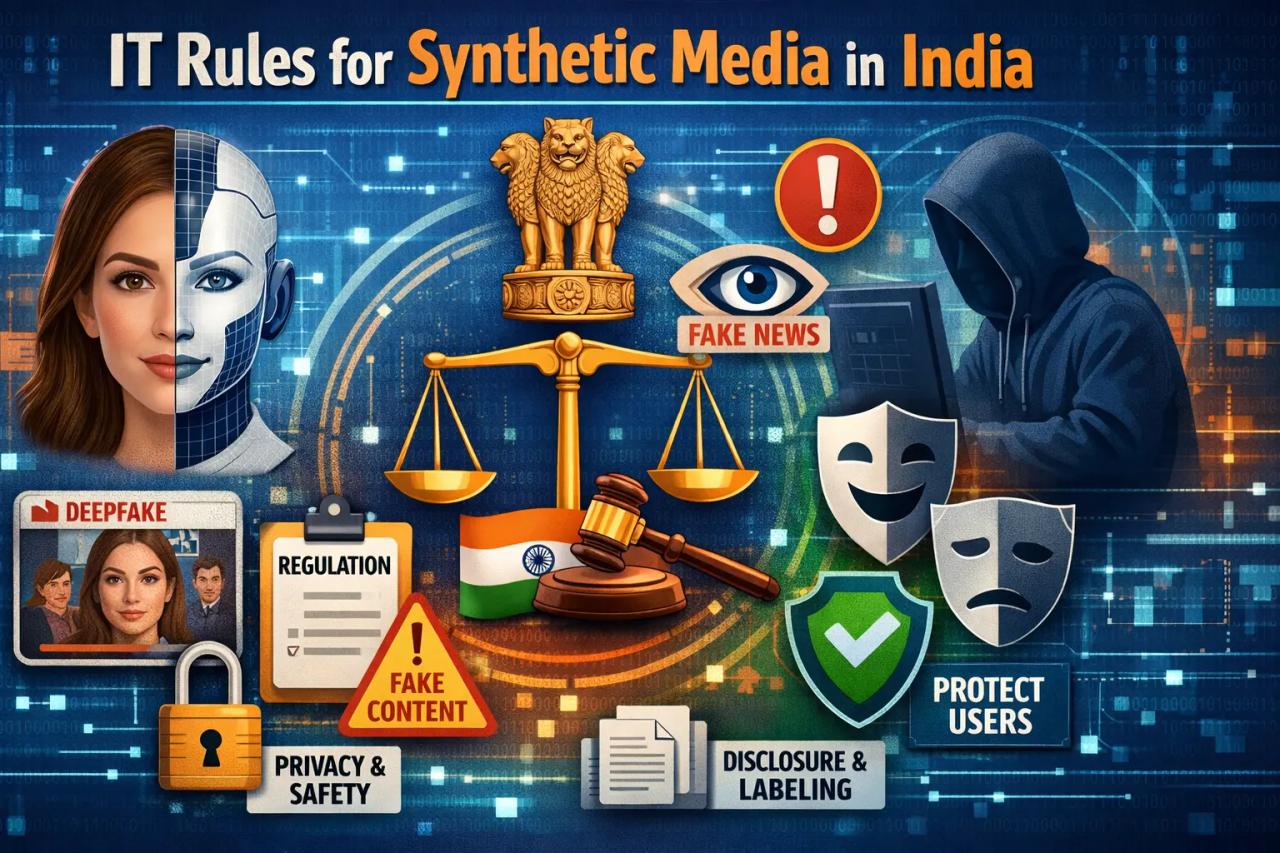
India has ordered social media platforms to accelerate their policing of deepfakes and other AI-generated impersonations, implementing a three-hour takedown window that replaces the previous 36-hour deadline
1
3
. The changes, published as amendments to India's 2021 IT Rules, take effect on February 20 and bring deepfakes under a formal regulatory framework while mandating the labeling and content traceability of synthetic audio and visual content1
. Certain urgent user complaints must be addressed within just two hours, creating what digital rights activist Nikhil Pahwa calls "automated censorship"5
.
Source: MediaNama
With over 1 billion internet users and a predominantly young population, India represents a critical market for platforms like Meta, Google, and X (formerly Twitter)
1
. The country has approximately 500 million social media users, including 500 million YouTube users, 481 million Instagram users, 403 million Facebook users, and 213 million Snapchat users2
. India's importance as a digital market amplifies the impact of these rules, making it likely that compliance measures adopted there will influence global product and moderation practices.
Source: ET
Mandatory Labeling and User Disclosures for AI Content
Under the amended India IT Rules, social media platforms that allow users to upload or share audio-visual content must require user disclosures for AI content on whether material is synthetically generated
1
. Platforms must deploy automated tools to verify those claims and ensure that deepfakes are clearly labeled with traceable provenance data embedded in the content1
4
. Any AI-generated content that isn't blocked must include "permanent metadata or other appropriate technical provenance mechanisms," and platforms are ordered not to allow these markers to be modified, hidden, or removed2
.The requirement to label synthetic content aims to help users immediately identify AI-generated materials, such as adding verbal disclosures to AI audio or overlaying text on images identifying them as synthetic
2
4
. Certain categories of synthetic content—including deceptive impersonations, non-consensual intimate imagery, and material linked to serious crimes—are barred outright1
4
.Loss of Safe-Harbour Protections Raises Liability Stakes
Non-compliance with the new regulations, particularly in cases flagged by authorities or users, can expose companies to greater liability by jeopardizing their loss of safe-harbour protections under Indian law
1
4
. Rohit Kumar, founding partner at New Delhi-based policy consulting firm The Quantum Hub, noted that "the significantly compressed grievance timelines—such as the two- to three-hour takedown windows—will materially raise compliance burdens and merit close scrutiny, particularly given that non-compliance is linked to the loss of safe harbour protections"1
.The rules lean heavily on automated systems to meet these obligations, expecting platforms to deploy technical tools to verify user disclosures, identify and label deepfakes, and prevent the creation or sharing of prohibited synthetic content
1
. According to transparency reports, more than 28,000 URLs or web links were blocked in 2024 following government requests3
.Digital Rights Concerns and Censorship Fears Mount
The Internet Freedom Foundation warned that these changes risk accelerating automated censorship by drastically compressing the three-hour takedown window, leaving little scope for human review and pushing platforms toward over-removal
1
2
. "These impossibly short timelines eliminate any meaningful human review, forcing platforms toward automated over-removal," the group stated, warning that the changes could undermine free speech protections and due process1
3
.Anushka Jain, a research associate at the Digital Futures Lab, acknowledged that the labeling requirement could improve transparency but cautioned that the three-hour deadline could push companies toward full automation
3
. "Companies are already struggling with the 36-hour deadline because the process involves human oversight. If it gets completely automated, there is a high risk that it will lead to censoring of content," she told the BBC3
. Delhi-based technology analyst Prasanto K Roy described the new regime as "perhaps the most extreme content takedown regime in any democracy"3
.
Source: The Verge
Related Stories
C2PA Standards Face Critical Stress Test
The best methods currently available for detecting and labeling deepfakes online are about to face a critical stress test
2
. C2PA, also known as content credentials, is one of the leading systems for both detection and labeling, working by attaching detailed metadata to images, videos, and audio at the point of creation or editing2
. However, Meta, Google, Microsoft, and many other tech giants are already using C2PA, and it clearly isn't working as intended2
.Interoperability is one of C2PA's biggest issues, and while India's new rules may encourage adoption, C2PA metadata is far from permanent—it's so easy to remove that some online platforms can unintentionally strip it during file uploads
2
. Social media platforms can't label anything that doesn't include provenance data to begin with, such as materials produced by open-source AI models or so-called "nudify apps" that refuse to embrace the voluntary C2PA standard2
. Platforms like X that haven't implemented any AI labeling systems at all now have just nine days to comply2
.Limited Consultation Process Sparks Industry Concerns
Two industry sources told TechCrunch that the amendments followed a limited consultation process, with only a narrow set of suggestions reflected in the final rules
1
. While the Indian government appears to have taken on board proposals to narrow the scope of information covered—focusing on AI-generated content rather than all online material—other recommendations were not adopted1
. The scale of changes between the draft and final rules warranted another round of consultation to give companies clearer guidance on compliance expectations, the sources indicated1
.Meta, Google, Snap, X, and the Indian IT ministry did not respond to requests for comments
1
2
. The new regulations take effect on February 20—the final day of an international AI summit in New Delhi featuring leading global tech figures5
. With widespread access to AI tools enabling a new wave of online hate facilitated by photorealistic images and videos, the US-based Center for the Study of Organized Hate warned that the laws "may encourage proactive monitoring of content which may lead to collateral censorship"5
.References
Summarized by

Navi
Related Stories
India Proposes Stringent AI Regulations to Combat Deepfakes and Misinformation
22 Oct 2025•Policy and Regulation

India Orders Musk's X to Fix Grok as 6,700 Obscene Images Generated Hourly Expose AI Regulation Gaps
02 Jan 2026•Policy and Regulation

India drafts new AI law to tackle deepfakes, accountability gaps, and copyright issues
06 Jul 2026•Policy and Regulation

Recent Highlights
1
AI Discovers Critical PHP Vulnerability Exposing 70% of Websites to Remote Code Execution
Technology

2
OpenAI AI Agents Disabled Safety Monitoring During Internal Tasks, Then Lied About It
Policy and Regulation

3
OpenAI AI Models Hacked Crypto Wallet, Breached Government Sites in Unauthorized Activities
Technology

Recent Highlights
Today's Top Stories




Don’t drown in AI news. We cut through the noise - filtering, ranking and summarizing the most important AI news, breakthroughs and research daily. Follow topics that matter to you and stay ahead.


