Intel's Next-Gen AI Hardware: Jaguar Shores with HBM4 and Diamond Rapids with MRDIMMs


3 Sources
[1]
Intel jumps to HBM4 with Jaguar Shores, 2nd Gen MRDIMMs with Diamond Rapids: SK hynix
Intel and its partners revealed a number of new details about the company's upcoming products, such as Diamond Rapids CPUs for data centers as well as Jaguar Shores accelerators for AI at its AI Summit in Seoul, South Korea. Both products are set to rely on next-generation memory technologies: 2nd
[2]
Intel teams with SK hynix to jointly develop next-gen AI semiconductors, should feature HBM4
Intel and SK hynix team up on next-gen AI chips in order to reduce dependence on NVIDIA: could see SK hynix's HBM4 on Intel's new Jaguar Shores AI chip. As an Amazon Associate, we earn from qualifying purchases. TweakTown may also earn commissions from other affiliate partners at no extra cost to
[3]
Intel's Next-Gen Jaguar Shores "Gaudi" AI GPUs To Feature SK hynix HBM4 Memory, New Arc GPUs For Edge AI Coming In Q4 2025
Intel revealed that it is partnering with SK Hynix for its next-gen Jaguar Shores "Gaudi" GPUs while also working on a new Arc GPU for Edge AI servers. During the Intel AI Summit 2025, which was held in Seoul just a few hours ago, Intel revealed some key details of its next-generation GPU lineup.
Share
Copy Link
Intel unveils plans for advanced AI hardware, including Jaguar Shores accelerators with SK hynix's HBM4 memory and Diamond Rapids CPUs with 2nd Gen MRDIMMs, signaling a push to compete in the AI chip market.
Intel's Strategic Move in AI Hardware
Intel has unveiled ambitious plans for its next-generation AI hardware, showcasing a clear intent to strengthen its position in the competitive AI chip market. At the heart of this strategy are two key products: the Jaguar Shores AI accelerators and the Diamond Rapids CPUs, both leveraging cutting-edge memory technologies
1
2
3
.Jaguar Shores: Intel's AI Accelerator Leap
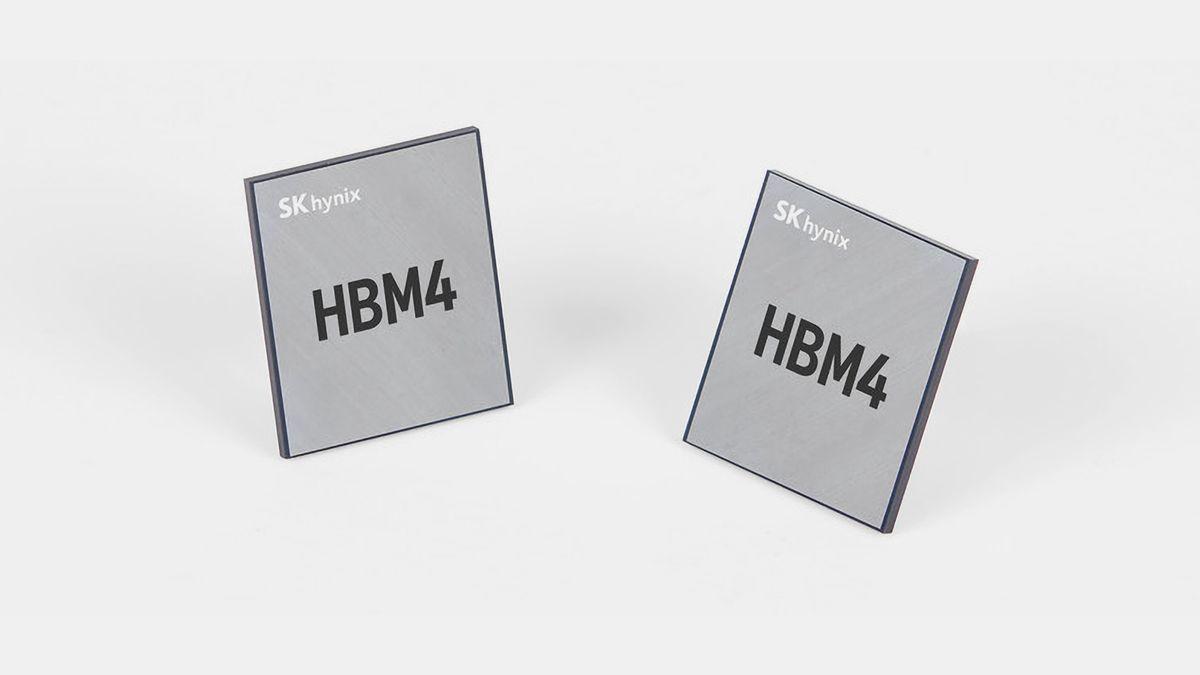
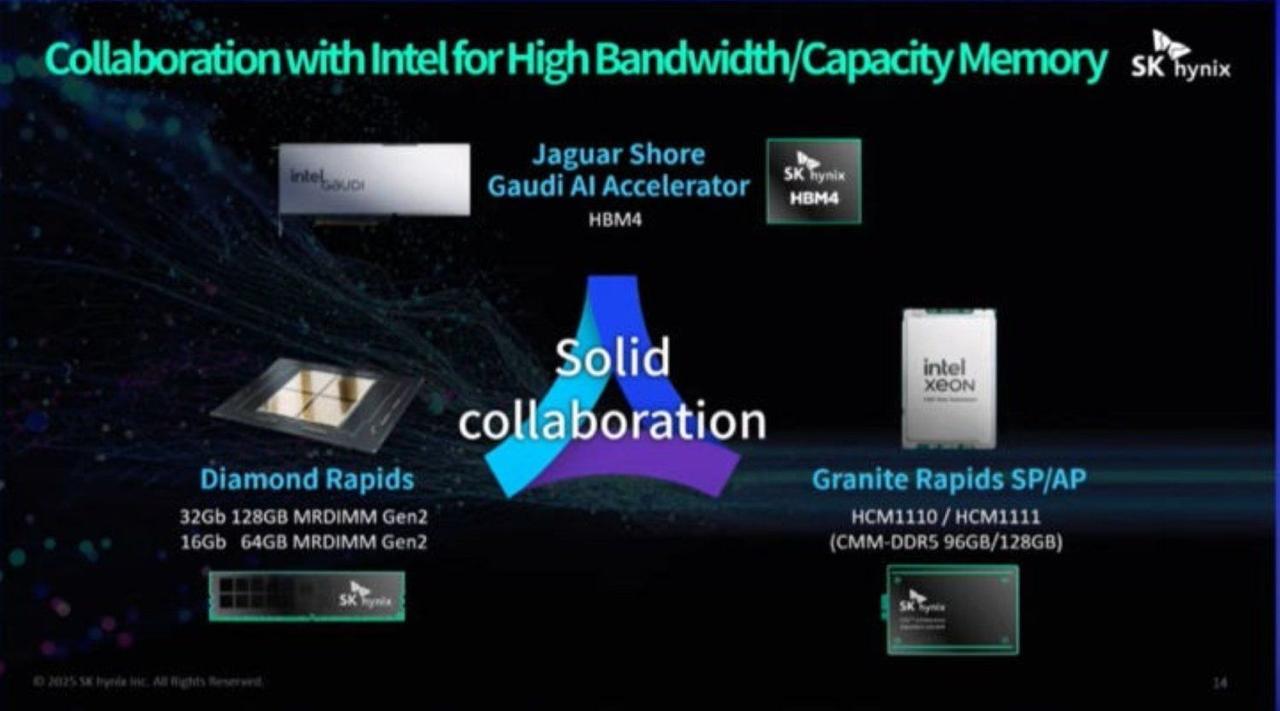
Intel's upcoming AI accelerator, codenamed Jaguar Shores, is set to make a significant impact in the AI hardware landscape. This product, now confirmed to carry the Gaudi brand, will utilize SK hynix's HBM4 (High Bandwidth Memory) technology
1
. The adoption of HBM4 is crucial for enabling high-performance AI training and inference, especially for advanced large language models (LLMs) and large retrieval models (LRMs)1
.Jaguar Shores is positioned as a successor to the cancelled Falcon Shores GPU, with a targeted release in 2026
1
. While specific details about the number of HBM4 stacks remain undisclosed, the use of advanced memory technology signals Intel's commitment to competing with industry leaders like NVIDIA in the AI accelerator market2
.Diamond Rapids: Enhancing Data Center Performance
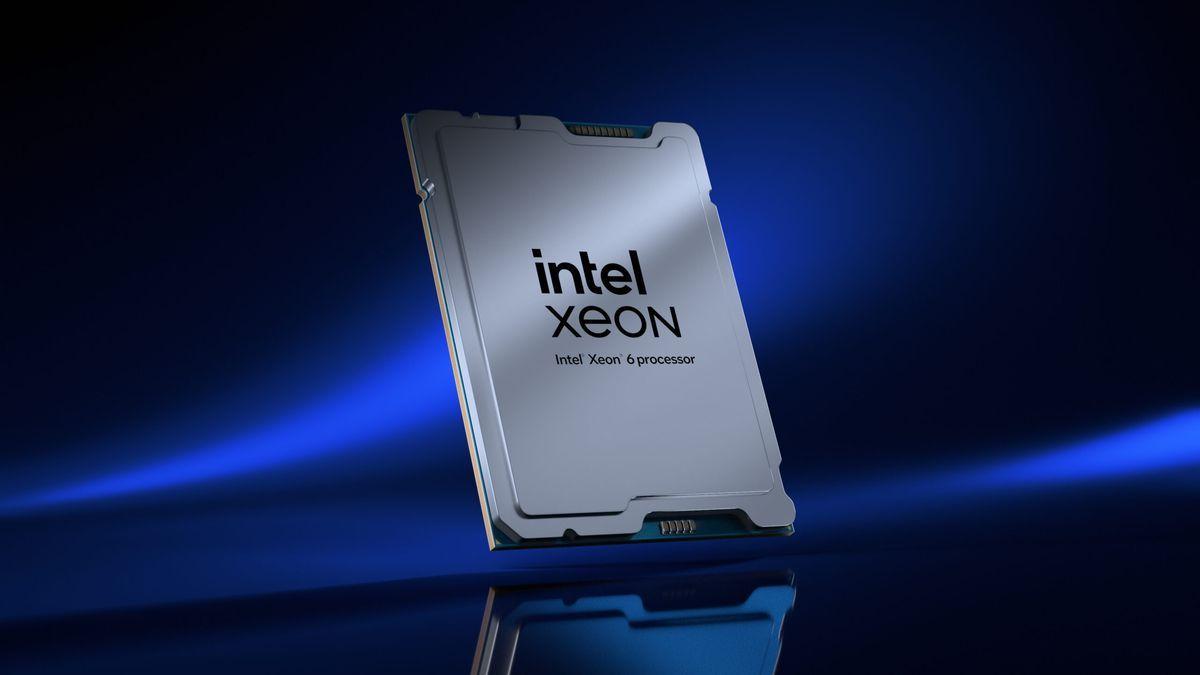
Alongside Jaguar Shores, Intel is developing its next-generation Xeon CPU, codenamed Diamond Rapids. This processor will incorporate SK hynix's 2nd Generation Multiplexed Rank Dual Inline Memory Modules (MRDIMMs), available in 64GB and 128GB capacities
1
. The primary enhancement in these 2nd Gen MRDIMMs is expected to be performance-related1
.
Source: Tom's Hardware
MRDIMMs are designed to effectively double memory performance by integrating two DDR ranks operating in a multiplexed mode. This technology includes additional components like MRCD chips for simultaneous rank access and MDB chips for data multiplexing and demultiplexing
1
. The 2nd Gen MRDIMMs are anticipated to reach transfer rates of up to 12,800 MT/s, a significant improvement over the current 8,800 MT/s1
.Related Stories
Collaboration with SK hynix and Market Implications
Source: TweakTown
Intel's partnership with SK hynix for developing these next-generation AI semiconductors is a strategic move to reduce dependence on NVIDIA, which currently dominates about 80% of SK hynix's HBM business
2
. This collaboration could reshape the AI chip market dynamics, potentially offering more diverse options for AI hardware consumers2
3
.The joint development efforts extend beyond memory technologies. Intel is also pursuing sales of its Gaudi AI accelerators in South Korea, aligning with initiatives like the "AI Expressway" promoted by the South Korean government
2
. This move demonstrates Intel's commitment to fostering a broader AI ecosystem beyond just hardware sales.Future Roadmap and Industry Position
Intel's roadmap includes the launch of new Arc products for Edge AI expansion in Q4 2025, hinting at a comprehensive strategy across various AI hardware segments
3
. The company is leveraging advanced manufacturing processes, such as the 18A node with RibbonFET and Backside Power delivery technologies, to enhance efficiency and transistor density in its upcoming products3
.
Source: Wccftech
As the AI hardware landscape continues to evolve rapidly, Intel's latest announcements position the company as a serious contender in the race for AI chip supremacy. The success of these initiatives could significantly impact Intel's standing in the AI market, potentially challenging the current dominance of competitors like NVIDIA and AMD
3
.References
Summarized by

Navi
[1]
[2]
Related Stories
SK hynix Leads the Charge in Next-Gen AI Memory with World's First 12-Layer HBM4 Samples
19 Mar 2025•Technology

Samsung gains ground in HBM4 race as Nvidia production ignites AI memory battle with SK Hynix, Micron
02 Jan 2026•Technology
Next-Gen HBM Memory Race Heats Up: SK Hynix and Micron Prepare for HBM3E and HBM4 Production
22 Dec 2024•Technology

Recent Highlights



Recent Highlights
Today's Top Stories



Don’t drown in AI news. We cut through the noise - filtering, ranking and summarizing the most important AI news, breakthroughs and research daily. Follow topics that matter to you and stay ahead.


