Intel Phases Out 16x MSAA Support on Xe3 GPUs, Embracing AI-Driven Upscaling Technologies


2 Sources
[1]
Intel will retire rarely-used 16x MSAA support on Xe3 GPUs -- AI upscalers like XeSS, FSR, and DLSS provide better, more efficient results
Intel has begun phasing out 16x MSAA support in its upcoming Xe3 graphics,. As revealed by engineer Kenneth Graunke in a recent Mesa driver commit, "16x MSAA isn't supported at all on certain Xe3 variants, and on its way out on the rest. Most vendors choose not to support it, and many apps offer
[2]
Intel to End 16x MSAA Support on Xe3 GPUs in Favor of AI Upscaling
Intel is making a notable change to its upcoming Xe3 graphics cards by removing support for 16x multi-sample anti-aliasing (MSAA). If you've been gaming for a long time, you might remember when MSAA was the gold standard for getting rid of jagged edges. Back then, the idea was simple: sample each
Share
Copy Link
Intel is retiring 16x MSAA support on its upcoming Xe3 GPUs, signaling a shift towards more efficient AI-powered upscaling techniques like XeSS, FSR, and DLSS.
Intel's Strategic Shift in Anti-Aliasing Technology
Intel has announced a significant change in its graphics technology strategy, phasing out support for 16x Multi-Sample Anti-Aliasing (MSAA) on its upcoming Xe3 GPUs. This decision, revealed by Intel engineer Kenneth Graunke in a recent Mesa driver commit, marks a clear transition from traditional anti-aliasing methods to more advanced, AI-driven upscaling technologies
1
.
Source: Tom's Hardware
The Decline of MSAA
MSAA, once the gold standard for edge smoothing in computer graphics, has been losing relevance in modern gaming environments. The technique, which samples each pixel multiple times to produce smoother lines, comes with a significant performance cost, especially at higher settings like 16x MSAA
2
.Intel's decision aligns with industry trends, as many GPU manufacturers have already discontinued support for ultra-high MSAA levels. Going forward, Intel GPUs will only support 2x, 4x, and 8x MSAA, simplifying driver maintenance and encouraging developers to adopt more modern upscaling pipelines
1
.The Rise of AI-Powered Upscaling
The void left by high-level MSAA is being filled by AI-driven upscaling technologies that offer superior results with less performance impact. These include:
- Intel's XeSS (Xe Super Sampling)
- AMD's FSR (FidelityFX Super Resolution)
- NVIDIA's DLSS (Deep Learning Super Sampling)
These technologies combine anti-aliasing with resolution upscaling and image reconstruction, providing cleaner edges, reduced flickering, and improved detail while often boosting frame rates
2
.Advantages of Modern Upscaling Techniques
AI-powered upscaling methods offer several advantages over traditional MSAA:
- Better Performance: They typically have a lower performance impact, often increasing frame rates in upscaling modes
1
. - Improved Visual Quality: These techniques can handle complex effects like transparencies and shader-based visuals more effectively than MSAA
2
. - Flexibility: Many of these solutions, like Intel's XeSS, work across different GPU brands, offering developers a vendor-agnostic solution
1
. - Additional Features: Some upscalers include frame generation capabilities, further enhancing gaming performance and smoothness
2
.
Related Stories

Impact on Game Development
This shift is likely to influence game engine architects and developers. It may prompt them to optimize around hybrid anti-aliasing strategies, focus on motion clarity, and preserve performance headroom for advanced features like real-time ray tracing or VR workloads
1
.Future of Anti-Aliasing in Gaming
Intel's decision to retire 16x MSAA support on Xe3 GPUs reflects a broader industry trend towards more intelligent, adaptive anti-aliasing methods. As gaming technology continues to evolve, we can expect to see further advancements in AI-driven graphics solutions that prioritize both visual quality and performance efficiency
1
2
.References
Summarized by

Navi
[1]
Related Stories
Intel brings XeSS 3.0 frame generation to older Arc GPUs, but keeps code proprietary
11 Mar 2026•Technology
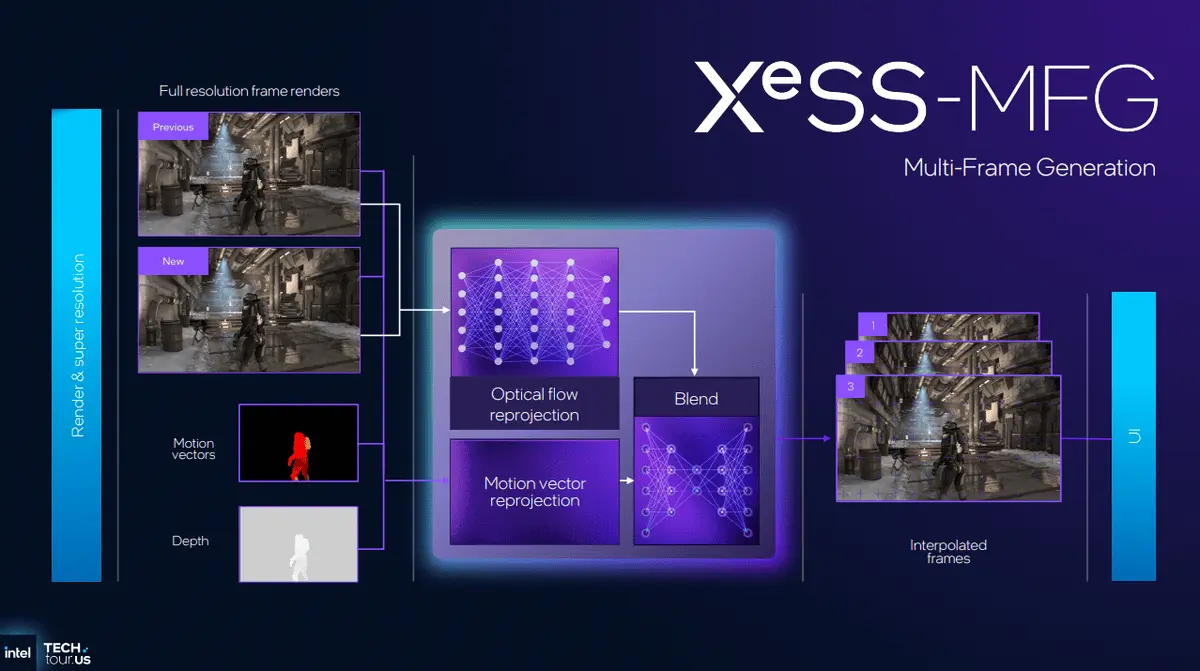
Intel Unveils XeSS 3 with Multi-Frame Generation: A Game-Changer in AI-Powered Graphics
09 Oct 2025•Technology

Intel Unveils XeSS 2: A Major Leap in AI-Driven Gaming Performance
04 Dec 2024•Technology

Recent Highlights



Recent Highlights
Today's Top Stories









Don’t drown in AI news. We cut through the noise - filtering, ranking and summarizing the most important AI news, breakthroughs and research daily. Follow topics that matter to you and stay ahead.


