Intel Unveils XeSS 2: A Major Leap in AI-Driven Gaming Performance


5 Sources
[1]
Intel unleashes XeSS 2 for Arc GPUs with huge changes to speed up PC games, borrowing a few pages from Nvidia's DLSS playbook
Intel has just unveiled new Battlemage desktop GPUs, and alongside those graphics cards comes a fresh version of XeSS, its upscaling tech to rival Nvidia DLSS and AMD FSR. Yes, XeSS 2 is here, and Intel is making some big changes with the technology in this sequel. In fact, XeSS 2 is being split
[2]
Intel announces XeSS 2 with new Frame Generation and Low Latency tech
TL;DR: Intel XeSS 2, an AI-driven technology, enhances gaming performance by combining Super Resolution, Frame Generation, and Low Latency. It significantly boosts FPS and reduces latency, as demonstrated in F1 24. XeSS 2 requires game integration, with initial support in titles like Assassin's
[3]
Intel XeSS 2 arrives alongside new Battlemage GPUs with frame generation and low-latency mode
Serving tech enthusiasts for over 25 years. TechSpot means tech analysis and advice you can trust. Launching alongside new Intel Battlemage GPUs today is XeSS 2, the next version of XeSS that adds frame generation and a low-latency mode, very similar to what we've seen from Nvidia with DLSS 3
[4]
Intel just stole a page from Nvidia's DLSS playbook
Intel is giving its XeSS upscaling tech a huge makeover. The aptly-named XeSS 2 steals -- or borrows, if we're being generous -- a page from Nvidia's DLSS 3, which has been a staple feature of some of the best graphics cards you can buy. XeSS 2 comes packed with super resolution like the original
[5]

Intel XeSS2 Official: Brings Frame Generation For 3.9x Perf & Low Latency Mode For Smoother Gaming, First Titles Announced
Intel XeSS2 is now official, bringing frame generation support along with Low Latency modes across a wide variety of launch titles. XeSS Reaches Over 150+ Game Support & Battlemage Debuts With XeSS2, Delivering Frame-Generation & Low-Latency Mode Support In Games In addition to today's Battlemage
Share
Copy Link
Intel introduces XeSS 2, a significant upgrade to its AI-powered upscaling technology, featuring frame generation and low latency modes, rivaling NVIDIA's DLSS 3 and AMD's FSR 3.

Intel Introduces XeSS 2 with Frame Generation and Low Latency Technology
Intel has unveiled XeSS 2, a significant upgrade to its AI-powered upscaling technology for gaming. This new version introduces frame generation and low latency features, positioning it as a direct competitor to NVIDIA's DLSS 3 and AMD's FSR 3
1
2
3
.Key Features of XeSS 2
XeSS 2 combines three core technologies:
- XeSS Super Resolution: The existing AI upscaling technology.
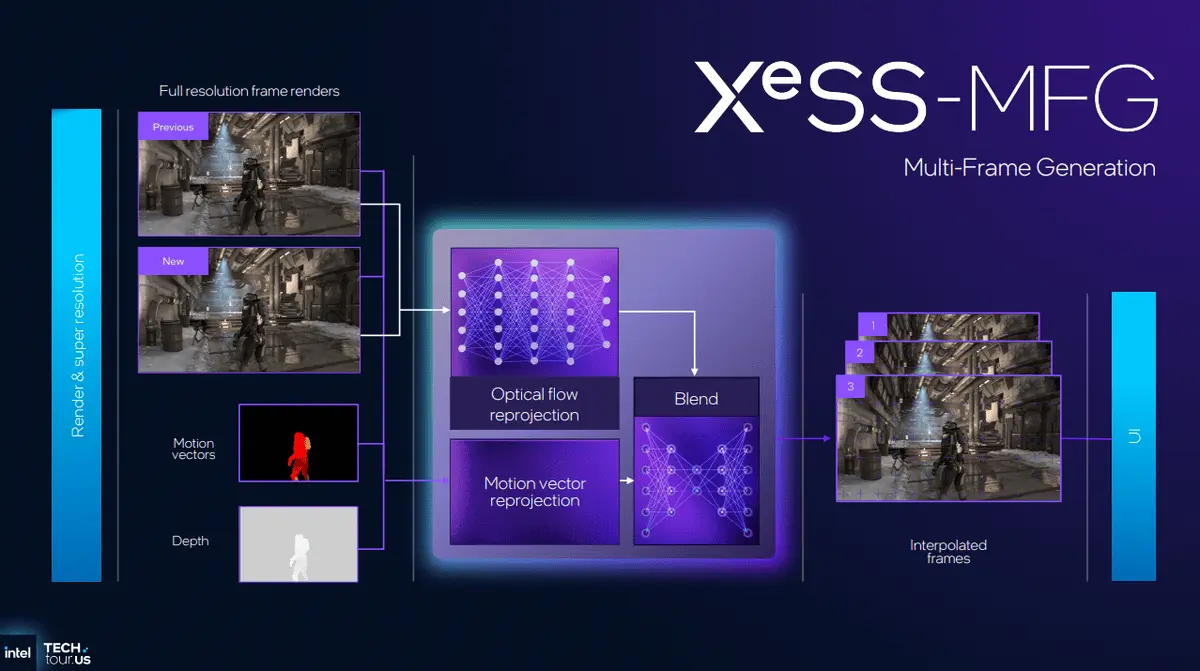
- XeSS-FG Frame Generation: A new feature that uses AI-powered 'Optical Flow Reprojection' to create additional frames.
- XeLL (Xe Low Latency): A technology designed to reduce system latency and improve responsiveness
2
4
.
Performance Improvements
Intel claims substantial performance gains with XeSS 2. In F1 24, for example, the Intel Arc B580 GPU saw an increase from 48 FPS at native 1440p Ultra settings to 152 FPS with XeSS 2, while reducing overall latency from 57ms to 28ms
2
. The company reports up to 3.9x performance uplift in Ultra Performance mode at 1440p Ultra settings5
.Hardware Requirements and Compatibility
XeSS 2 frame generation requires Intel hardware with XMX AI Engines, limiting it to Alchemist and Battlemage GPUs, including integrated graphics in future chips like Lunar Lake
3
4
. This restriction contrasts with the original XeSS, which supported some AMD and NVIDIA GPUs1
.Game Support and Adoption
Intel has announced initial support for XeSS 2 in several upcoming titles, including:
- Assassin's Creed Shadows
- Harry Potter Quidditch Champions
- RoboCop Rogue City
- Like a Dragon: Pirate Yakuza in Hawaii
- Dying Light 2
- F1 24
- Marvel Rivals
2
4
5
Related Stories
Comparison to Competitors
XeSS 2 closely mirrors NVIDIA's DLSS 3 approach, combining upscaling, frame generation, and low latency technologies. However, Intel's solution works on both current and previous generation Arc GPUs, unlike DLSS 3's frame generation, which is limited to RTX 4000 series cards
1
3
.Intel Graphics Software
Alongside XeSS 2, Intel is launching a new control panel called 'Intel Graphics Software'. This all-in-one hub offers features such as driver updates, game optimization, performance monitoring, and overclocking controls
1
3
.Industry Implications
The introduction of XeSS 2 demonstrates Intel's commitment to competing in the high-performance gaming GPU market. By achieving feature parity with NVIDIA and AMD's offerings, Intel is positioning itself as a serious contender in AI-driven gaming technologies
5
. This development could potentially influence future GPU purchases and game development practices, as upscaling technologies become increasingly crucial for achieving smooth frame rates at high resolutions.References
Summarized by

Navi
[3]
[4]
Related Stories
Intel's XeSS 2 AI-Powered Graphics Technology Expands to More Games, Boosting Performance and Reducing Latency
07 May 2025•Technology

Intel Unveils XeSS 3 with Multi-Frame Generation: A Game-Changer in AI-Powered Graphics
09 Oct 2025•Technology

Intel brings XeSS 3.0 frame generation to older Arc GPUs, but keeps code proprietary
11 Mar 2026•Technology
Recent Highlights



Recent Highlights
Today's Top Stories













Don’t drown in AI news. We cut through the noise - filtering, ranking and summarizing the most important AI news, breakthroughs and research daily. Follow topics that matter to you and stay ahead.


