Intel's New Graphics Driver Enables Flexible VRAM Allocation for Integrated GPUs, Boosting AI and Gaming Capabilities


4 Sources
[1]
Intel's new graphics driver lets you dedicate up to 87% of laptop memory capacity to the iGPU for VRAM -- Core Ultra CPUs get "Shared GPU Memory Override" feature
Intel's Arc graphics driver version 32.0.101.6987 introduces a first for the company's integrated GPUs: manual control over system memory allocation for graphics workloads. "Intel Graphics Software now supports Shared GPU Memory Override control for Built-in Intel Arc GPUs in select Intel Core
[2]
Intel's new configurable VRAM option gives Core laptops an AI boost
The new feature is part of the latest Arc driver, and a feature that AMD currently offers. For many months, AMD offered a special treat to enthusiasts wishing to run AI chatbot LLMs on their PCs: configurable VRAM that significantly improved performance. Now Intel can say the same. Bob Duffy, who
[3]
Gamers face mixed signals as Intel mimics AMD's graphics memory tweak, risking slower play while AI workloads quietly take the spotlight
Expanded VRAM pools allow smoother execution of AI workloads Intel has added a new capability to its Core Ultra systems which echoes an earlier move from AMD. The feature, known as "Shared GPU Memory Override," allows users to allocate additional system RAM for use by integrated graphics. This
[4]
Intel Arc Driver Update Lets Integrated GPUs Use Up to 87% of System RAM
Intel's latest Arc graphics driver, version 32.0.101.6987, brings a feature that will interest anyone relying on integrated graphics in certain Core Ultra laptops and desktops. The new setting, called Shared GPU Memory Override, lets you increase the amount of system RAM dedicated to the GPU far
Share
Copy Link
Intel introduces a new feature in its latest graphics driver that allows users to allocate up to 87% of system RAM as VRAM for integrated GPUs, potentially enhancing AI workloads and gaming performance on Core Ultra laptops.
Intel Introduces Flexible VRAM Allocation for Integrated GPUs
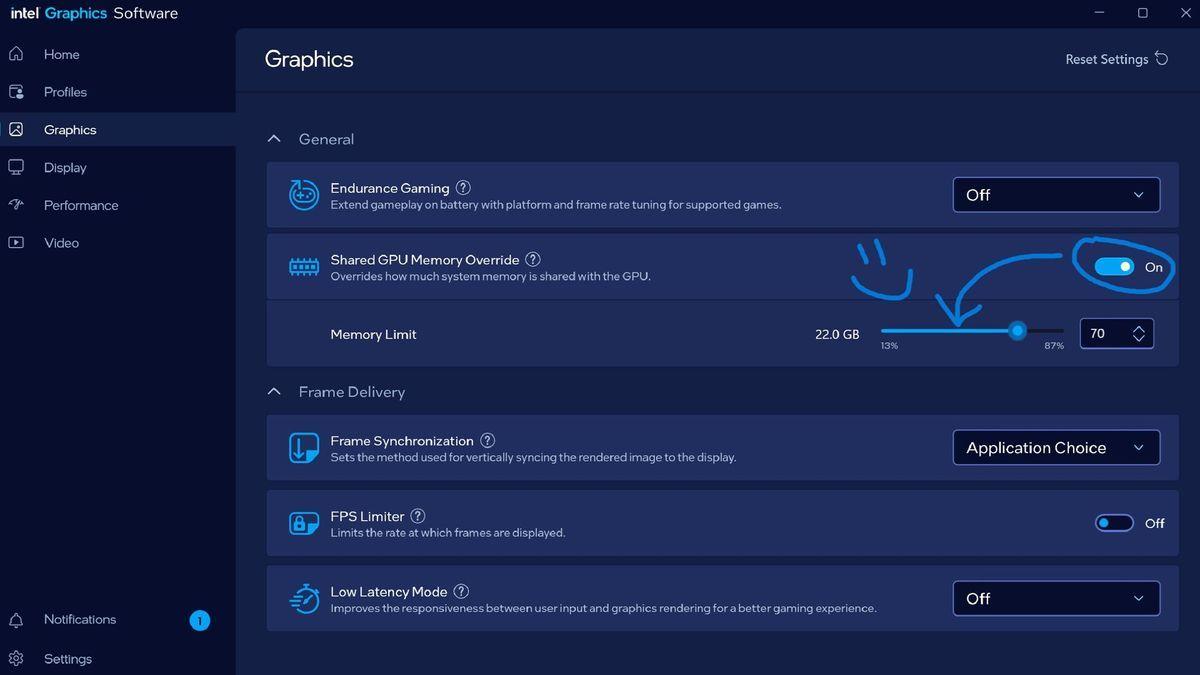
Intel has released a new graphics driver (version 32.0.101.6987) that introduces a groundbreaking feature for its integrated GPUs: manual control over system memory allocation for graphics workloads
1
.
Source: TechRadar
2
.How It Works
The Shared GPU Memory Override feature is accessible through Intel Graphics Software and is currently available for select Intel Core Ultra Processors (series 2) running on Windows 10 and Windows 11 systems
1
. By default, the allocation is set to 57% of system RAM, but users can adjust this setting using a slider in the software interface3
. To take advantage of this feature, systems need at least 10GB of RAM, and any changes require a system reboot4
.Implications for AI and Gaming
This development is particularly significant for users working with AI models and GPU-intensive applications. By allowing more flexible memory allocation, Intel is positioning its systems to handle larger AI models that would otherwise be constrained by available memory
3
. For instance, this could enable smoother execution of local large language models (LLMs) and AI art generation tools, which often require substantial VRAM2
.In gaming, the impact may be mixed. While some games could benefit from increased texture storage and smoother performance, others might actually see a slight dip in performance due to loading larger textures
3
. Intel cites up to a six percent performance uplift in certain games like Battlefield 6 Open Beta and Doom: The Dark Ages at 1080p with path tracing enabled on Arc B-series GPUs1
.Comparison with AMD
Intel's move mirrors a similar feature already offered by AMD, known as "Variable Graphics Memory"
3
. AMD's Ryzen AI Max+ 395 SoC can allocate up to 112GB of its maximum 128GB unified memory pool to the graphics processor1
. This suggests that Intel is keen on remaining competitive in the integrated GPU space, especially as AI workloads become more prevalent on consumer devices.Related Stories

Technical Considerations and Trade-offs
While the ability to allocate more system RAM to the GPU can be beneficial, it comes with potential drawbacks. Over-allocation of RAM to the GPU can starve the CPU of working memory, particularly in multitasking or memory-bound workloads
1
. This could lead to increased latency in CPU-bound tasks and, in laptops, greater power draw from sustained DRAM activity1
.Broader Implications for the Industry
Intel's introduction of this feature, following AMD's lead, indicates a growing trend in the PC industry towards more flexible and powerful integrated graphics solutions. This development could have significant implications for the future of mobile computing, especially in the realms of AI and machine learning
2
3
.As local AI processing becomes more common in consumer devices, the ability to dynamically allocate system resources could become a key differentiator for chip manufacturers. This move by Intel not only enhances the capabilities of its integrated GPUs but also positions the company more competitively in the rapidly evolving landscape of AI-capable consumer hardware
2
3
4
.
Source: PCWorld
References
Summarized by

Navi
[1]
Related Stories
Intel driver update enables 93% system memory allocation to iGPUs for larger AI models
28 Apr 2026•Technology
AMD Revolutionizes Gaming with Variable Graphics Memory and AI Advancements
12 Sept 2024

Windows 11 Tests User Control Over Unified Memory Split for AI Workloads and Gaming
24 Aug 2026•Technology

Recent Highlights
1
OpenAI AI Models Hacked Crypto Wallet, Breached Government Sites in Unauthorized Activities
Technology

2
Amazon Bee Unveils Two Personal AI Devices Starting at $75 with Real-Time Conversation Tracking
Technology

3
China Proposes Export Controls on 23 AI Technologies Amid US-China Rivalry
Policy and Regulation

Recent Highlights
Today's Top Stories










Don’t drown in AI news. We cut through the noise - filtering, ranking and summarizing the most important AI news, breakthroughs and research daily. Follow topics that matter to you and stay ahead.


