Intel driver update enables 93% system memory allocation to iGPUs for larger AI models


2 Sources
[1]
New Intel driver lets you dedicate 93% of system memory to the iGPU for VRAM, enabling support for larger AI models
TL;DR: Intel's new driver for Arc Pro GPUs increases integrated GPU memory allocation to 93% of system RAM, enabling larger LLM inference on select models like Arc Pro B390 and B370. This supports running substantial AI models on affordable hardware, though performance depends on memory bandwidth
[2]
Intel's Latest Drivers Let's Users Allocate Up To 93% of System Memory To Arc iGPUs For Wider AI LLM Support
Intel now gives users the ability to allocate up to 93% of system memory to Arc iGPUs, enabling wider AI LLM support. Intel has dropped a new HotFix driver for Arc Pro Graphics, 302.0.101.8517 - Q1.26 R2, which lets users allocate even more system memory to the GPU, ideal for running larger AI
Share
Copy Link
Intel released a new driver for Arc Pro GPUs that allows users to allocate up to 93% of system RAM to integrated GPUs, up from the previous 87% limit. This memory allocation breakthrough enables users to run substantially larger Large Language Models on affordable hardware without hitting memory capacity constraints.
Intel Pushes Memory Allocation Boundaries for AI Workloads
Intel has released driver version 32.0.101.8517 for Arc Pro GPUs, introducing a significant capability that allows users to dedicate up to 93% system memory allocation to the integrated GPU
1
2
. This represents a notable increase from the previous 87% limit that Intel established last year with its "Shared GPU Memory Override" feature for Core Ultra Series 2 processors1
. The driver release specifically targets Arc Pro GPUs including the Arc Pro B390 and Arc Pro B370, while also supporting discrete Arc Pro A and B-series cards from the Battlemage and Alchemist lineups1
2
.
Source: Wccftech
Enabling Larger AI Model Support on Accessible Hardware
The expanded system memory to iGPU allocation directly addresses one of the primary bottlenecks in running AI models locally: VRAM capacity. Traditional memory partitioning typically limits a GPU to 50% of system RAM, creating significant constraints for LLM inference tasks
1
. With this Intel driver update, a system equipped with 32GB of RAM can now allocate 30GB to the GPU, providing sufficient memory to run models like Qwen 2.5 32B at 4-bit quantization with a comfortable context window1
2
. Workstations with 64GB of RAM gain even more capability, able to handle heavyweight Large Language Models like Llama 3 70B while maintaining enough headroom for the KV cache and system stability1
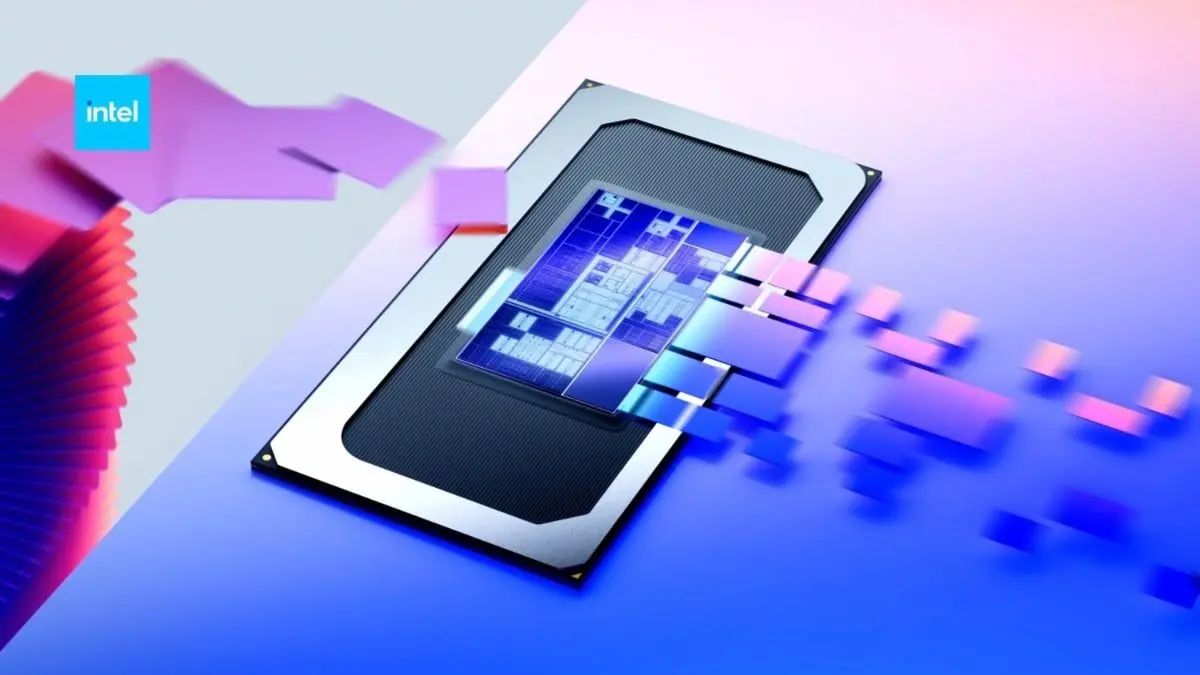
.
Source: TweakTown
Related Stories

Competitive Landscape and Performance Considerations
Intel's approach positions the company aggressively against AMD in the AI inference space. While AMD's Ryzen AI chips currently allow up to 87% memory allocation, AMD's Variable Graphics Memory (VGM) technology in high-end configurations like Strix Halo can allocate 96GB from a 128GB pool to the iGPU
1
2
. On AI MAX+ platforms, users can allocate a massive 112GB of memory to the GPU while running 128GB of system memory2
. However, memory capacity alone doesn't determine performance. Intel's Core Ultra Series 3 (Panther Lake) chips feature fast LPDDR5X-9600 memory delivering bandwidth around 150 GB/s, while AMD's Strix Halo achieves 256 GB/s through its 256-bit memory bus1
. Apple Silicon maintains an advantage with the M5 Max offering 614 GB/s memory bandwidth, though Intel and AMD are competing on flexibility and affordability through technologies like LPCAMM21
. Apple's Unified Memory Architecture eliminates traditional partitioning entirely, allowing the entire memory pool to be natively accessible to both CPU and GPU simultaneously1
.References
Summarized by

Navi
[1]
Related Stories
Intel's New Graphics Driver Enables Flexible VRAM Allocation for Integrated GPUs, Boosting AI and Gaming Capabilities
16 Aug 2025•Technology

Intel Arc Pro B70 GPU brings 32GB VRAM to AI inference at half the price of Nvidia's rival
25 Mar 2026•Technology
Intel GPU D-Series Targets AI Inference With Record 480GB Memory in Air-Cooled Design
13 Oct 2026•Technology
Recent Highlights
1
OpenAI AI Models Hacked Crypto Wallet, Breached Government Sites in Unauthorized Activities
Technology

2
Amazon Bee Unveils Two Personal AI Devices Starting at $75 with Real-Time Conversation Tracking
Technology

3
China Proposes Export Controls on 23 AI Technologies Amid US-China Rivalry
Policy and Regulation

Recent Highlights
Today's Top Stories










Don’t drown in AI news. We cut through the noise - filtering, ranking and summarizing the most important AI news, breakthroughs and research daily. Follow topics that matter to you and stay ahead.


