Jensen Huang Defends AI Model Distillation as Competition, Contradicting White House Theft Claims


3 Sources
[1]
Jensen Huang says AI distillation is 'competition.' Scott Bessent has called it 'theft'
* Nvidia CEO Jensen Huang rejected the characterization of AI model distillation as "theft," telling CNBC that training or learning from competitors' products is "competition." * U.S. officials have accused Chinese AI companies of using distillation -- training models on the outputs of other
[2]
Jensen Huang says AI distillation is competition, not theft
Treasury Secretary Scott Bessent threatened sanctions in July against companies using distillation to extract capability from U.S.-built AI models Nvidia $NVDA CEO Jensen Huang pushed back against the White House's characterization of AI model distillation as theft on Monday, saying the practice
[3]
Huang doubles down on Chinese AI as Bessent threatens sanctions
Industries eventually have to decide where learning ends and stealing begins. Musicians sample old records. Drugmakers wait for a patent to expire, then sell the generic. Automakers buy a rival's newest model on launch day and take it apart in a garage, one bolt at a time. Nobody loses sleep over
Share
Copy Link
Nvidia CEO Jensen Huang publicly rejected characterizations of AI model distillation as theft, calling it competition instead. His stance directly contradicts Treasury Secretary Scott Bessent, who threatened sanctions against overseas companies using distillation to extract capabilities from U.S.-built AI models.
Jensen Huang Challenges White House Position on AI Model Distillation
Nvidia CEO Jensen Huang has publicly rejected the characterization of AI model distillation as theft, directly contradicting the White House's position on a practice that has become a major flashpoint in US-China AI competition. Speaking on CNBC's Squawk Box on Monday, September 28, Huang stated unequivocally that AI distillation is competition, not robbery.
1
The practice involves training models on the outputs of other models, and U.S. officials have accused Chinese AI companies of using this technique to extract capabilities from U.S.-built systems.2
Treasury Secretary Scott Bessent Threatens Sanctions Against Chinese AI Models
Treasury Secretary Scott Bessent labeled AI distillation as theft in July and warned that overseas companies using distillation to siphon capability from U.S.-built models could face sanctions.
1
Bessent told Fox Business that officials had found traces of U.S. models inside Chinese ones, stating "we have the ability to sanction them because of this theft."3
The dispute stopped being a war of words on September 8, when three U.S. agencies escalated their allegations against Chinese AI developers.Industrial-Scale Knowledge Distillation Campaigns Target U.S. AI Systems
The U.S. Cybersecurity and Infrastructure Security Agency, along with the National Security Agency and Federal Bureau of Investigation, accused six China-based developers of conducting industrial-scale knowledge distillation campaigns that violated U.S. companies' terms of use.
1
The joint advisory named Alibaba, which develops the Qwen family of models, and DeepSeek among the companies allegedly pulling billions of tokens from U.S. frontier models since at least late 2024.3
Anthropic separately disclosed that it had identified both companies as having carried out what it termed illicit distillation.2
Nvidia CEO Defends AI Distillation is Competition, Not Theft
Huang argued that companies are allowed to test competitors' products extensively, noting that Nvidia's own products are sometimes stripped down to bones as rivals attempt to understand how they work. "I'd really prefer they didn't," he acknowledged, "but, you know, frankly, competition makes everything better."
1
He offered what he framed as a straightforward solution for companies opposed to the practice: "If you don't like people to use your products, all you have to do is know your customers, and disable the service."2
Related Stories
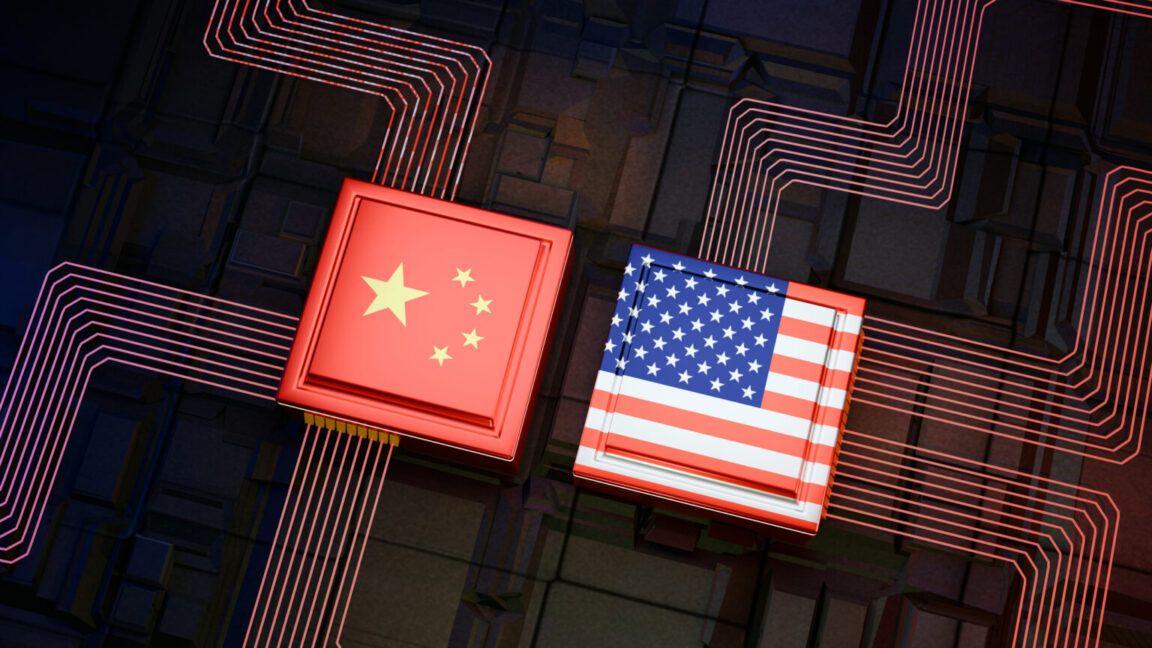
US-China AI Competition Escalates Over Intellectual Property Concerns
The distillation dispute has become one of the sharpest points of friction in the broader US-China AI competition. China's Commerce Ministry rejected the allegations on September 9, saying they lacked evidentiary and legal basis.
3
Beijing has warned it would answer new restrictions tied to distillation with resolute countermeasures, creating potential antitrust exposure for American companies operating in China.3
Huang's stance on AI regulation remains consistent with his broader position that market forces are sufficient to keep AI companies in check and that no new laws or AI regulation are needed.2
What This Means for the Future of AI Development
The disagreement between Jensen Huang and Treasury Secretary Scott Bessent reveals fundamental questions about how AI development should proceed globally. Bessent told Congress last week that President Donald Trump is completely aligned with Huang on AI, and the two men have appeared together in public at least six times since the start of Trump's second term.
2
However, Huang's defense of distillation as legitimate competition suggests potential policy tensions ahead. Nvidia has been guiding with zero China data center compute revenue baked in, as export curbs wiped out the company's share of China's AI chip market.3
Watch for further developments in sanctions against Chinese AI models and how U.S. companies balance intellectual property protection with competitive innovation in an increasingly fragmented global AI landscape.References
Summarized by

Navi
[3]
Related Stories
AI Model Distillation Ignites Debate as Y Combinator's Garry Tan Challenges Industry Concerns
12 Sept 2026•Policy and Regulation

Moonshot AI's Kimi K3 challenges US rivals as Chinese AI closes the performance gap
16 Jul 2026•Technology
Nvidia CEO Urges AI Export Rule Revision Amid Global Competition and China's AI Advancements
01 May 2025•Technology
Recent Highlights



Recent Highlights
Today's Top Stories



Don’t drown in AI news. We cut through the noise - filtering, ranking and summarizing the most important AI news, breakthroughs and research daily. Follow topics that matter to you and stay ahead.


