Jensen Huang proposes AI tokens worth half of base salary as new engineer compensation model


8 Sources
[1]
Are AI tokens the new signing bonus or just a cost of doing business? | TechCrunch
This week, a topic that has been boomeranging around Silicon Valley bounced into the spotlight: AI tokens as compensation. The idea is straightforward enough -- rather than giving engineers only salary, equity, and bonuses, companies would also hand them a budget of AI tokens, the computational
[2]
Jensen Huang says Nvidia engineers should use AI tokens worth half their annual salary every year to be fully productive -- compares not using AI to using paper and pencil for designing chips
Nvidia CEO Jensen Huang said that he'll be deeply alarmed if an engineer getting paid $500,000 a year does not consume at $250,000 worth of AI tokens to get their job done. The leather-clad chief of the world's most valuable AI company said this during an episode of the All-In Podcast shot on the
[3]
Nvidia's Huang pitches AI tokens on top of salary as agents reshape how humans work
Nvidia CEO Jensen Huang delivers the keynote address at the GTC AI Conference in San Jose, California, on March 18, 2025. The perks of working in Silicon Valley have long included high salaries. Now, some engineers may be offered a new incentive: artificial intelligence tokens. Nvidia CEO Jensen
[4]
Microsoft exec Charles Lamanna on how AI is creating an expensive new request from job candidates
Work perks are taking on new meaning in the AI boom. Speaking at GeekWire's Agents of Transformation event in Seattle on Tuesday, Microsoft EVP Charles Lamanna talked about a job candidate who said they would come aboard as long as their team was given a certain dollar amount of AI tokens -- the
[5]

Nvidia CEO Jensen Huang says engineers may get half salary in AI tokens, what they are
Nvidia's Jensen Huang proposes annual token budgets for engineers. This new compensation model could become a key recruitment tool in Silicon Valley. Tokens, units of text for AI, are becoming a measure of productivity. Rising token costs are driving this shift. AI compute is emerging as a fourth
[6]

Nvidia CEO Jensen Huang Predicts AI Tokens Will Become a Standard Job Perk | PYMNTS.com
By completing this form, you agree to receive marketing communications from PYMNTS and to the sharing of your information with our sponsor, if applicable, in accordance with our Privacy Policy and Terms and Conditions. Huang said Monday (March 16) during his keynote address at the Nvidia GTC AI
[7]

Fewer jobs, token pay. Does it add up?
Jensen Huang's assertion that tokens will become the currency of the AI economy may sound like an enticing idea but the reality is much more complex Nvidia's co-founder and CEO Jensen Huang has laid out a grand vision. He wants to generate as much as $1 trillion in annual revenue by 2027 from AI
[8]

Every engineer will have 100 AI agents: Jensen Huang on future of work
Engineers will evolve into orchestrators of hundreds of AI agents at work There are many ways to measure the productivity of an engineer that earns $500,000 or ₹2.3 crore per year. NVIDIA's Jensen Huang, in his inimitable style and theatrical bluntness, has proposed a new one - token burn. "That
Share
Copy Link
Nvidia CEO Jensen Huang suggests engineers should receive AI tokens worth up to half their annual salary as part of their compensation package. The proposal positions tokens as a recruiting tool in Silicon Valley, where companies are adopting computational budgets as a fourth pillar of engineer compensation alongside salary, equity, and bonuses. But questions remain about whether this benefits engineers or primarily serves company interests.
Jensen Huang Introduces AI Tokens as Fourth Compensation Pillar
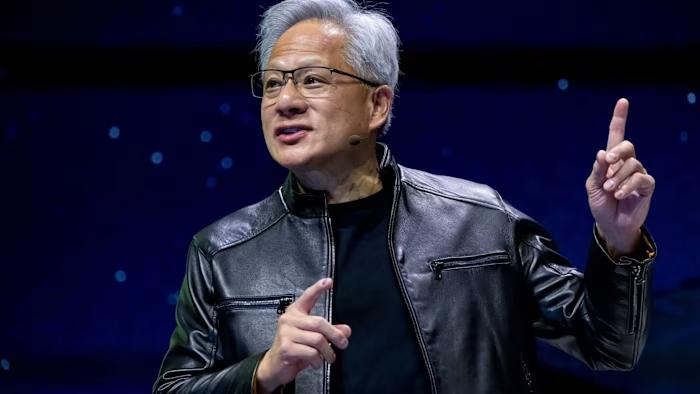
Nvidia CEO Jensen Huang has proposed a new compensation model that could reshape how Silicon Valley pays its engineers. Speaking at the company's annual GPU Technology Conference, Huang suggested that engineers earning a few hundred thousand dollars annually should receive additional compensation in AI tokens worth roughly half their base salary
2
. For a software engineer or AI researcher making $500,000 a year, that translates to $250,000 in tokens2
. The Nvidia chief called AI tokens as compensation a recruiting tool for engineers and predicted it would become standard practice3
.
Source: Digit
AI tokens are computational units that power interactions with systems like ChatGPT, Claude, and Gemini. These small units of text measure computing usage, with longer or more complex tasks consuming more tokens
5
. The pitch centers on productivity multipliers—Huang believes engineers with access to more compute become significantly more productive, justifying the investment3
.Silicon Valley Companies Adopt Token Budgets as Job Perk
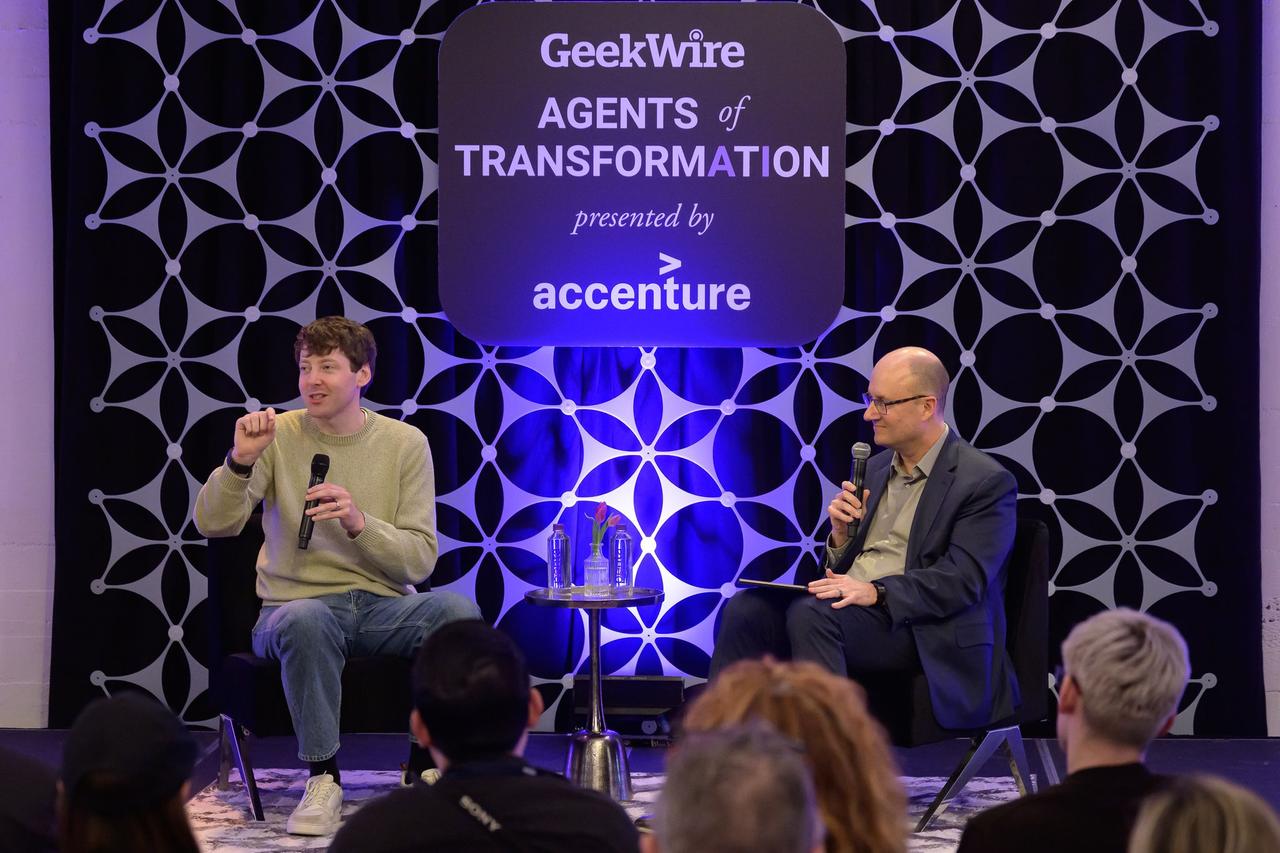
The concept is already gaining traction beyond Nvidia. Microsoft executive Charles Lamanna revealed at GeekWire's Agents of Transformation event that a job candidate requested their team receive a specific dollar amount of AI tokens as a condition of employment
4
. Lamanna suggested candidates might request $100 to hundreds of dollars in token costs per day at the upper limit4
. If a fully loaded engineer costs $500,000 annually and requests $100,000 worth of tokens that make them three times as efficient, Lamanna argued it's beneficial for everyone involved4
.
Source: GeekWire
Venture capitalist Tomasz Tunguz of Theory Ventures was discussing this trend in mid-February, describing inference costs as a fourth component to engineering compensation alongside salary, bonuses, and equity
1
. Using data from Levels.fyi, Tunguz calculated that a top-quartile software engineer earning $375,000 plus $100,000 in tokens would have fully loaded compensation of $475,000—meaning roughly one dollar in five is now compute1
.Agentic AI Drives Explosive Token Consumption
The shift toward AI tokens as compensation accelerated with the rise of agentic AI systems. The release of OpenClaw in late January, an open-source AI assistant designed to run continuously and spawn sub-agents, intensified the conversation considerably
1
. These AI agents don't just respond to prompts but take sequences of actions autonomously over time, consuming massive amounts of tokens. Where someone writing an essay might use 10,000 tokens in an afternoon, an engineer running a swarm of agents can burn through millions in a day automatically1
.The New York Times reported that engineers at companies including Meta and OpenAI are competing on internal leaderboards tracking token consumption in a trend called "tokenmaxxing"
1
. One Ericsson engineer in Stockholm told the Times he likely spends more on Claude than he earns in base salary, though his employer covers the cost1
. Companies like Zapier and Kumo AI are monitoring token consumption to identify inefficiencies and high-performing engineers5
.Related Stories

Questions About Job Security and Real Value
While generous token budgets may seem like a straightforward win, the new compensation model raises concerns about the future of work and engineer job security. A large AI compute allowance comes with large expectations—if a company funds compute equivalent to a second engineer's worth of work, the implicit pressure is to produce at twice the rate or more
1
. When token spend per employee approaches or exceeds that employee's salary, the financial logic of headcount starts to shift for CFOs1
.Jamaal Glenn, a Stanford MBA and former VC turned financial services CFO, points out that what appears as a job perk may actually inflate the apparent value of a compensation package without increasing cash or equity—the elements that compound for employees over time
1
. Token budgets for engineers don't vest, appreciate, or carry forward into future offer negotiations the way base salary or equity grants do1
. If companies normalize tokens as pay, they may find it easier to keep cash compensation flat while pointing to growing compute allowances as evidence of investment in their people1
.Huang compared not using AI inference power to chip designers saying they'll use paper and pencil instead of CAD tools
2
. He envisions every engineer working alongside a hundred agents in the talent market of tomorrow2
. Whether this vision benefits engineers as much as it does companies remains an open question that most engineers don't yet have enough information to answer1
.
Source: ET
References
Summarized by

Navi
[4]
Related Stories
AI Tokens Become Employee Performance Metric, But Experts Question if Volume Equals Value
20 Mar 2026•Business and Economy
Enterprise AI costs explode as token pricing sends bills from $200 to $20,000 per month
17 Jun 2026•Business and Economy

AI costs spiral out of control as enterprises grapple with token consumption paradox
21 Jul 2026•Business and Economy
Recent Highlights



Recent Highlights
Today's Top Stories









Don’t drown in AI news. We cut through the noise - filtering, ranking and summarizing the most important AI news, breakthroughs and research daily. Follow topics that matter to you and stay ahead.


