Jensen Huang says AI infrastructure buildout will create more jobs for skilled trades workers


20 Sources
[1]
Nvidia CEO expects AI to create more jobs for construction workers, electricians, plumbers, and many others
But human-AI collaboration will likely lift certain industries to new levels. Artificial intelligence is expected to reshape the labor market by eliminating white-collar positions that do not require a lot of creativity or experience, but at the same time increase demand for blue-collar employees
[2]
Future AI jobs will come with a hardhat and boots: tech CEOs
Jensen Huang and Alex Karp talk up trade skills as AI datacenters multiply, while Satya Nadella says the real test comes later The leaders of the AI world descended on Davos, Switzerland, this week for the World Economic Forum, where they took turns lobbing their best guesses about what the next
[3]
Nvidia CEO Says AI Will Create Jobs For Electricians and Plumbers
The technology will require a significant infrastructure buildout with trillions of dollars in new investment, according to Huang. As artificial intelligence threatens to upend job markets in countries around the world, Nvidia Corp. Chief Executive Officer Jensen Huang brushed off longer term
[4]
Nvidia CEO Jensen Huang says AI won't be the job killer everyone fears. Here's why
Nvidia CEO Jensen Huang said Wednesday that artificial intelligence will lead to more jobs, not fewer. In an interview with BlackRock CEO Larry Fink at the World Economic Forum in Davos, Switzerland, Jensen methodically explained how AI differs from other technological innovations of the past and
[5]

Nvidia CEO Says the AI Boom Will Lead to More Jobs for Plumbers
Worried about your job? Well, 'largest infrastructure buildout in human history' will require more plumbers, Huang says. While tech billionaire Elon Musk argues that advances in AI and robotics will render saving for retirement irrelevant, claiming that automation will lead to lower costs and
[6]

"Largest Infrastructure Buildout In Human History": Jensen Huang on AI's "Five-Layer Cake" at Davos
From skilled trades to startups, AI's rapid expansion is the beginning of the next massive computing platform shift, and for the world's workforce a move from tasks to purpose. At a packed mainstage session at the annual meeting of the World Economic Forum in Davos, Switzerland, Huang described
[7]

'This is the single largest infrastructure buildout in human history. Get involved': Nvidia CEO Jensen Huang says AI and robotics offers 'once in a lifetime' opportunity
* Jensen Huang and Satya Nadella have ruled out fear of an AI bubble * AI and robotics touch every industry, not just the tech sector * New jobs could be created, but upskilling and adapting is a must Nvidia CEO Jensen Huang has asserted that humanity is seeing one of the biggest revolutions in
[8]

At Davos, NVIDIA, Microsoft CEOs deny AI bubble
In Jan. 2026, the gap between the haves and the have-nots could hardly be more stark -- even in AI world. On the have-not side, there's OpenAI CEO Sam Altman. Long the hype man for imminent digital superintelligence (aka AGI), Altman backtracked and said we're in an AI bubble last year. He's made
[9]

Jensen Huang says AI bubble fears are dwarfed by 'the largest infrastructure buildout in human history' | Fortune
Speaking in conversation with BlackRock CEO Larry Fink, the interim co-chair of the World Economic Forum, Huang detailed an industrial transformation that extends far beyond software code, reshaping global labor markets and driving unprecedented demand for skilled tradespeople. While much of the
[10]

Nvidia CEO's Davos message: The AI boom is a data center boom
Davos loves a story that sounds like inevitability. Jensen Huang showed up on the main stage with one that sounds like cold, hard concrete. The Nvidia $NVDA CEO called AI "the largest infrastructure buildout in human history," then built an argument sturdy enough for the room he was in: executives
[11]

What Bubble? Nvidia CEO Says AI Needs Trillions More in Investments - Decrypt
Huang defended AI spending at Davos, claiming that energy, chips, and data centers need continued expansion. Jensen Huang wants you to know the AI industry isn't a bubble -- despite looking like a bubble. At the World Economic Forum in Davos this week, the Nvidia CEO told BlackRock's Larry Fink
[12]

Jensen Huang talks AI's insatiable appetite for GPUs at the World Economic Forum: 'spot price of GPU rentals is going up, not just the latest generation, but two generation old GPUs'
Jensen Huang has well and truly escaped gaming obscurity these days. The Nvidia CEO just took the stage at the World Economic Forum to talk about AI demand, bubbles, and the impact that artificial intelligence has on the job market now and into the future. Of course, being the man in charge of
[13]

Nvidia's Jensen Huang Says This Is the Best Way for Normal People to Get a High-Paying Job in AI
According to recently released LinkedIn data, four out of five of the fastest-growing jobs in the U.S. are all technical positions related to AI like AI engineers, strategists, and researchers. Does that mean that if you want to take advantage of the current AI boom, you need to have advanced AI
[14]

A.I.'s Data Center Rush Will Create Six-Figure Trade Jobs, Jensen Huang Predicts
The A.I. race is creating a global hiring surge for blue-collar workers. Much has been said about A.I.'s potential to replace jobs. But Nvidia CEO Jensen Huang is more concerned about A.I. creating a labor shortage -- at least in the short term. As tech companies race to build data centers across
[15]

Nvidia boss sees 'trillions' in AI spending ahead
The infrastructure to develop and power generative artificial intelligence models will require further "trillions" of dollars in investment, the head of top AI chipmaker Nvidia said Wednesday. Nvidia boss Jensen Huang spoke at the World Economic Forum in Davos, where AI boosterism has been
[16]
Jensen Huang's Next AI Prediction? A Blue-Collar Jobs Boom
Huang believes AI is driving what he calls the "largest infrastructure buildout in human history," which "is going to create a lot of jobs," according to Fox. "It's wonderful that the jobs are related to tradecraft, and we're going to have plumbers and electricians and construction and
[17]

Nvidia CEO Says AI Drives Demand for Energy, Infrastructure and Workers | PYMNTS.com
Speaking at the World Economic Forum in Davos, Switzerland, Huang said the demand for Nvidia GPUs, measured by the spot price of renting them, continues to rise due to the number of AI companies being created and the number of other companies shifting their research and development budgets toward
[18]

Nvidia CEO discusses AI bubble, infrastructure buildout at Davos
Nvidia (NVDA) CEO Jensen Huang said AI has started the largest infrastructure buildout in human history, and more energy, land, and skilled workers are needed, as he discussed the breakthrough technology with BlackRock's (BLK) CEO Larry Fink AI is prompting the largest infrastructure buildout
[19]

Nvidia's Huang: AI boom will create six-figure trade jobs By Investing.com
Investing.com -- Nvidia CEO Jensen Huang emphasized that the artificial intelligence boom will create high-paying trade jobs while speaking at the World Economic Forum in Davos on Wednesday. "This is the largest infrastructure build-out in human history that's going to create a lot of jobs," Huang
[20]

Jensen Huang: AI will create wealth for plumbers, builders, factory workers, here's how
AI data centers drive demand for plumbers electricians builders workers At the World Economic Forum in Davos this week, NVIDIA CEO Jensen Huang delivered a refreshingly optimistic take on AI's future impact on jobs, one that flips the usual narrative of automation-driven unemployment. Speaking in
Share
Copy Link
Nvidia CEO Jensen Huang argued at the World Economic Forum that AI will drive demand for plumbers, electricians, and construction workers as the industry undertakes what he calls the largest infrastructure buildout in human history. While AI threatens white-collar displacement, Huang says trade workers could earn six-figure salaries building chip factories and data centers needed to power the AI boom.
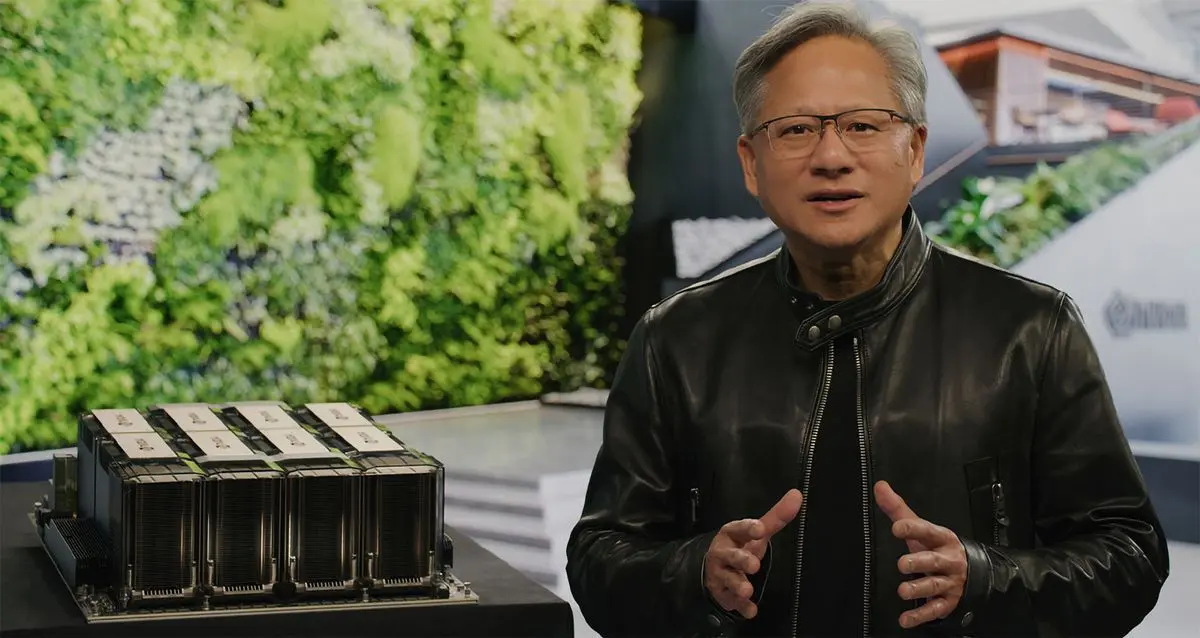
Jensen Huang Predicts AI Jobs Surge in Skilled Trades
Nvidia CEO Jensen Huang made a striking prediction at the World Economic Forum in Davos, Switzerland: artificial intelligence will create more jobs than it destroys, particularly for workers in skilled trades. Speaking with BlackRock CEO Larry Fink, Huang described the AI boom as driving what he termed the "largest infrastructure buildout in human history," one that will require massive numbers of plumbers and electricians, construction workers, steel workers, and network technicians
1
. The infrastructure buildout spans energy, data centers, and chip factories, creating demand across multiple sectors."We are going to have plumbers, electricians, construction and steel workers, network technicians, and people who install and fit out the equipment," Huang explained during the conversation
1
. He noted that in the United States, salaries for these roles have nearly doubled, with workers building chip factories or AI factories commanding six-figure salaries3
. "Everybody should be able to make a great living. You don't need to have a PhD in computer science to do so," Huang emphasized3
.White-Collar Displacement vs Blue-Collar Demand
While Huang's optimism about job creation focuses on skilled trades, concerns about white-collar displacement remain prominent. Anthropic CEO Dario Amodei warned of a potential "white-collar bloodbath" that could eliminate up to 50% of entry-level office jobs
1
. Amodei noted that Anthropic's Claude AI has become particularly effective at coding tasks, which could displace junior software developers and portions of more senior software engineering work3
. "We're entering a world where the junior-level software engineers -- maybe many of the tasks of the more senior-level software engineers -- are starting to be done most of the way by AI systems," Amodei said in an interview at Bloomberg House in Davos3
.Despite these warnings, Amodei believes the long-term gains from AI will outweigh the damage, though he acknowledges that high unemployment and underemployment remain serious risks over the next five years
1
. A report from minority staff for the US Senate Committee on Health, Education, Labor, and Pensions warned that AI and automation could put up to 97 million American jobs at risk over the next decade2
.The Platform Shift and Economic Growth Potential
Huang framed AI as a platform shift comparable to personal computers, the internet, smartphones, and the cloud—infrastructure that enables applications used in daily life
4
. He described AI as a "five-layer cake" with energy at the bottom, followed by chips, cloud infrastructure, AI models, and applications at the top. The real economic growth and benefits will materialize as industries adopt AI applications, but building the foundational layers requires substantial capital expenditure and labor4
.Microsoft CEO Satya Nadella, also speaking at the World Economic Forum, distinguished between jobs created by one-time capital expenditure and the future of AI diffusion across industries. "This is a technology that will build on the rails of cloud and mobile, diffuse faster, and bend the productivity curve, and bring local surplus and economic growth all around the world," Nadella said
2
. He emphasized that demand will only persist if AI produces tangible benefits: "Demand all over the world will only be there if there is a local surplus" in health outcomes, education, public sector efficiency, and private sector competitiveness2
.AI Bubble Concerns and GPU Demand
Addressing speculation about an AI bubble, Huang argued that the investment levels are justified and not indicative of a bubble. He pointed to a key metric: despite millions of Nvidia GPUs now deployed in cloud environments, spot prices for GPU rentals continue to rise, not just for the latest generation but even for two-generation-old chips
2
. "One good test on the AI bubble is to recognize that Nvidia has now millions of Nvidia GPUs in every cloud. We're everywhere and if you try to rent an Nvidia GPU these days, it's so incredibly hard," Huang noted2
.Huang explained that AI spending differs from previous bubbles because it cuts across nearly every vertical rather than being confined to a single market
2
. Tech firms have committed to spend a combined $500 billion in data center leases in the coming years, and Nvidia is on track to generate almost $200 billion in data center chip sales for 20253
. Nadella echoed this sentiment, stating that a telltale sign of a bubble would be if discussions focused solely on tech firms rather than AI's impact across industries2
.Related Stories
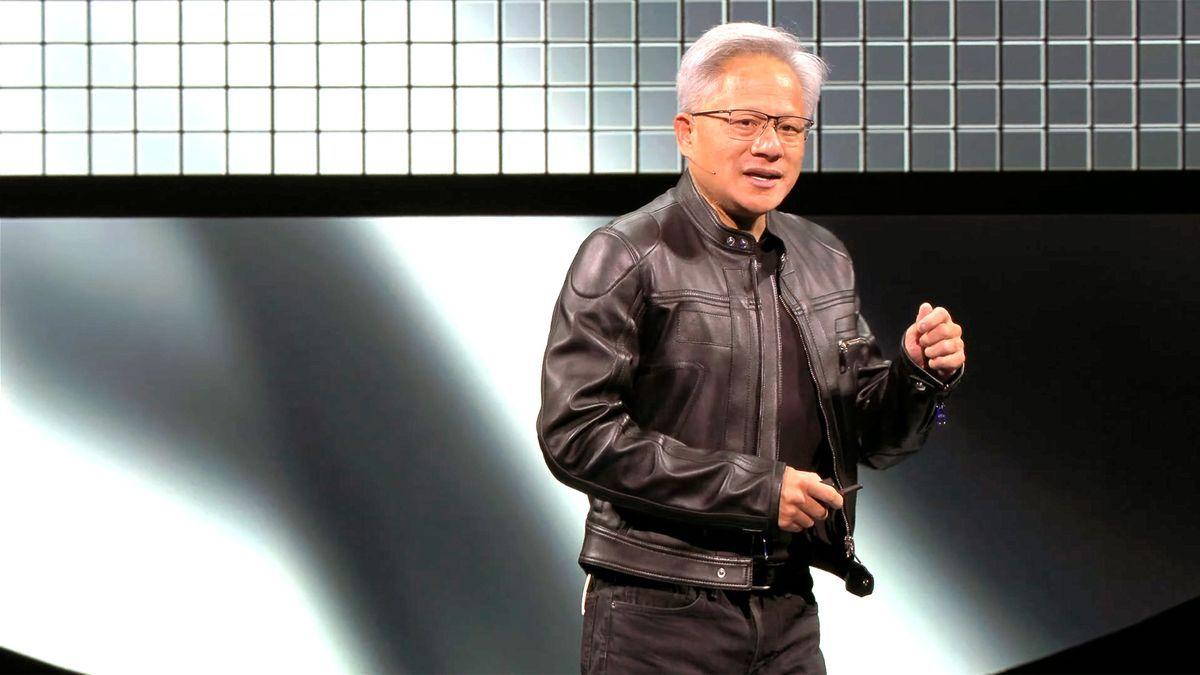
Radiology Example Shows Human-AI Collaboration
To illustrate how AI can enhance rather than replace human workers, Huang pointed to radiology, a field many predicted would be automated away. Ten years ago, computer vision capabilities made radiology seem vulnerable to automation. Today, AI has permeated every aspect of radiology, yet the number of radiologists has actually increased
1
. "The fact that they are able to study scans now infinitely fast allows them to spend more time with patients diagnosing their disease, interacting with the patients, interacting with other clinicians," Huang explained1
. As hospitals can see more patients, revenues increase, driving demand for more radiologists4
.This example demonstrates what Huang calls the difference between purpose and task. The purpose of a radiologist is to diagnose patients and provide care; reading scans is merely a task that supports that purpose. By automating tasks through automation, AI enables professionals to focus on their core purpose
4
. Bristol Myers Squibb recently announced it will work with Microsoft's AI-powered radiology platform to develop imaging algorithms for early lung cancer detection, illustrating how AI and human expertise combine to improve outcomes4
.What to Watch in the Future of AI Employment
The short-term outlook appears favorable for skilled trades as the infrastructure buildout accelerates, but the longer-term implications for white-collar workers remain uncertain. Observers should monitor whether AI-driven productivity gains translate into job creation or displacement across different sectors. The next five years will be critical in determining whether Amodei's warnings about underemployment materialize or whether Huang's vision of expanded opportunities prevails. Countries investing in AI infrastructure as a national priority—treating it like roads and energy—may see different employment outcomes than those that lag behind
5
. As Nadella emphasized, the ultimate test will be whether AI generates measurable surplus in health, education, and economic competitiveness, maintaining social permission to continue consuming scarce resources like energy2
.References
Summarized by

Navi
[1]
[2]
Related Stories
Jensen Huang Challenges Bill Gates on AI Jobs: Predicts Massive Growth in Skilled Trades
28 Aug 2026•Policy and Regulation
AI's Impact on the Job Market: CEOs Predict Boom in Skilled Trades Amid White-Collar Uncertainty
03 Oct 2025•Business and Economy
Jensen Huang Warns AI Leaders Against Fearmongering as Nvidia Pushes Optimistic Vision
16 Mar 2026•Technology

Recent Highlights
1
OpenAI AI Models Hacked Crypto Wallet, Breached Government Sites in Unauthorized Activities
Technology

2
IMF Report Warns AI Market Correction Could Spark Global Financial Crisis With $1.4T at Risk
Business and Economy

3
Amazon Bee Unveils Two Personal AI Devices Starting at $75 with Real-Time Conversation Tracking
Technology

Recent Highlights
Today's Top Stories











Don’t drown in AI news. We cut through the noise - filtering, ranking and summarizing the most important AI news, breakthroughs and research daily. Follow topics that matter to you and stay ahead.


