Jensen Huang tells companies to skip ROI demands and let AI innovation run wild


2 Sources
[1]
'Let a thousand flowers bloom': Jensen Huang says demanding ROI from AI is like forcing a child to make a business plan for a hobby | Fortune
There's a number haunting the artificial intelligence (AI) space: 95%. As in, 95% of generative AI pilots are failing, according to MIT's influential, arguably overblown research study in August 2025. When Fortune's Diane Brady spoke with PwC Global Chairman Mohamed Kande roughly six months later,
[2]
For God's sake, do it! The AI worldview according to CEO Jensen Huang - out of control innovation, the non-death of software, and leaving Moore's Law behind us in a world of abundance
Recent days have seen a lot of speculation around the relationship between OpenAI and NVIDIA, a relationship that many commentators have long regarded as dangerously co-dependent, at least on the part of the former. To recap, back in September last year it was revealed that NVIDIA was set to
Share
Copy Link
Nvidia CEO Jensen Huang challenged conventional business wisdom at the Cisco AI Summit, urging leaders to abandon immediate ROI expectations for AI projects. Comparing corporate innovation to parenting, he advocated for messy experimentation over rigid control, arguing that demanding proof of financial success before trying new AI tools stifles creativity just like asking a child to justify a hobby with a business plan.
Nvidia CEO Challenges Traditional AI Adoption Strategies
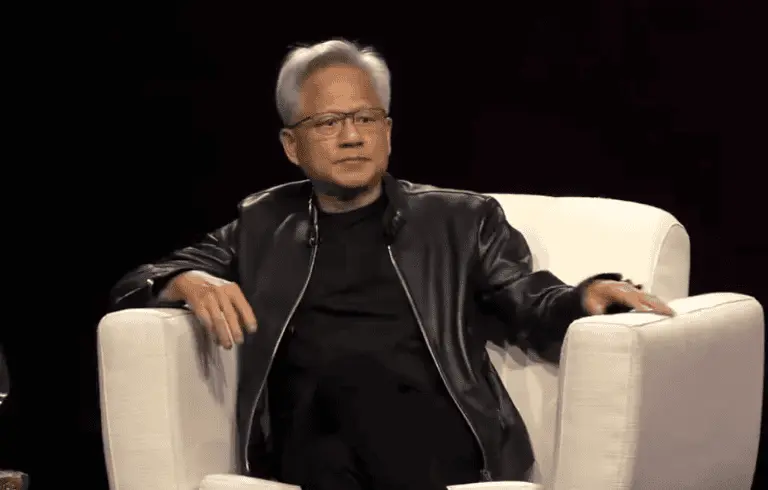
Nvidia CEO Jensen Huang delivered a provocative message to enterprise leaders struggling with artificial intelligence (AI) adoption: stop obsessing over immediate returns and embrace chaotic experimentation. Speaking at the Cisco AI Summit with Cisco CEO Chuck Robbins, Jensen Huang dismissed the conventional fixation on return on investment (ROI), declaring "I wouldn't go there" when asked about demonstrating early financial success from AI innovation
1
.
Source: diginomica
This philosophy arrives as companies grapple with disappointing AI adoption results. MIT research from August 2025 found 95% of generative AI pilots were failing, while PwC Global Chairman Mohamed Kande reported that 56% of CEOs surveyed were getting "nothing" from their efforts
1
. Rather than demanding proof before investment, Huang advocates what he calls "let a thousand flowers bloom"—an approach that prioritizes abundance and messy experimentation over spreadsheet rigor.Comparing Corporate Innovation to Parenting
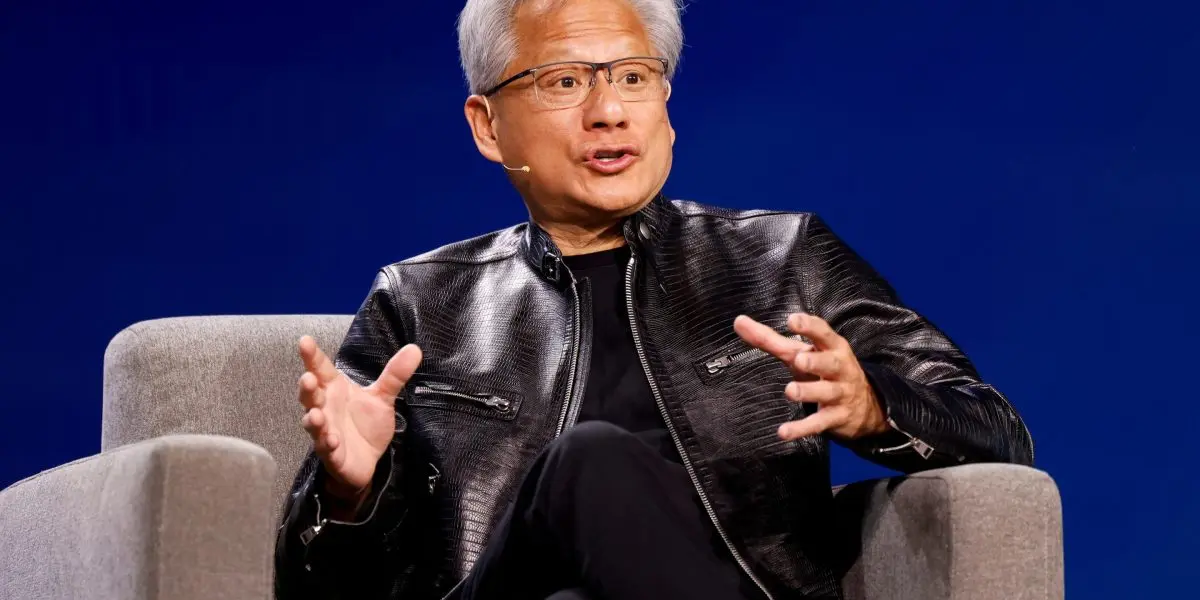
The Nvidia CEO Jensen Huang drew an unexpected parallel between raising children and managing AI projects. "I want the same thing for my company that I want for my kids: go explore life," he explained, noting that parents never demand business plans from children exploring hobbies
1
. This philosophy extends throughout Nvidia, where the number of AI projects has become what Huang cheerfully describes as "out of control"2
.
Source: Fortune
"Innovation is not always [being] in control," Huang stated at the Cisco AI Summit. "If you want to be in control, first of all, you ought to seek therapy. But second, it's an illusion. You're not in control"
2
. He emphasized that leaders must seek to influence their companies rather than control them, allowing employees to experiment with various platforms including Anthropic, Codex, and Gemini. When teams request to try new AI tools, Huang says "Yes" first, then asks "Why?"—reversing the traditional approval process.The Risk Management Logic Behind Out-of-Control Innovation
While advocating for experimentation, Huang acknowledged the strategic timing required. "Let a thousand flowers bloom" serves as risk management through diversification, preventing companies from "putting all your wood behind one arrow" too early when winning tools remain unclear
1
. Though this creates "a messy garden," it allows organizations to discover what works before committing significant resources2
.The abundance of intelligence fundamentally changes what's possible, according to Huang. He contrasted current AI capabilities with Moore's Law, which delivered 100 times improvement every decade. "Where are we now? One million times every 10 years," he noted, describing Moore's Law as "snails [pace]" compared to modern acceleration
2
. This shift requires leaders to reimagine constraints: "What would I do different if something that used to take a year now takes real time?"Related Stories

Building Tactile Understanding Through Infrastructure
Despite his relaxed stance on ROI, Huang stressed the necessity of hands-on learning. He urged leaders not to rely solely on cloud rentals, comparing it to understanding cars: "Lift the hood, change the oil, understand all the components"
1
. Companies must build some infrastructure on-premise to grasp how AI components work, particularly regarding data privacy and intellectual property.Huang identified questions—not answers—as the most valuable IP. "The most valuable IP to me is not my answers... they're my questions," he explained, noting that answers become commodities while smart questions remain irreplaceable
1
. This emphasis on domain expertise reflects the reinvention of computing from explicit programming to what Huang calls "implicit programming," where users state intent and AI determines solutions. In this paradigm, "typing is a commodity" while the true value lies in the expertise required to guide AI systems1
.Firms like KPMG are already implementing structured AI training frameworks, teaching employees to "think, prompt, check" when working with AI tools
1
. As companies navigate this transition, Huang's message suggests success depends less on controlling outcomes and more on creating environments where employees can safely explore AI's possibilities across countless projects.References
Summarized by

Navi
Related Stories
Jensen Huang Says AI Labs That Can't Control Their Systems Should Shut Down, Dismisses Doomsday Claims
19 Sept 2026•Policy and Regulation

Jensen Huang Warns AI Leaders Against Fearmongering as Nvidia Pushes Optimistic Vision
16 Mar 2026•Technology

Moonshot AI's Kimi K3 challenges US rivals as Chinese AI closes the performance gap
16 Jul 2026•Technology
Recent Highlights



Recent Highlights
Today's Top Stories



Don’t drown in AI news. We cut through the noise - filtering, ranking and summarizing the most important AI news, breakthroughs and research daily. Follow topics that matter to you and stay ahead.


