$2M Crime Novel Deal Collapses Amid AI Use Allegations as Author Claims Racial Bias


4 Sources
[1]
$2m crime novel deal collapses amid questions over AI use
Agents withdraw Jerry Falade's hotly anticipated debut after saying they can no longer authenticate 'how the manuscript evolved' A high-profile publishing deal for a debut crime novel has collapsed after doubts emerged over whether artificial intelligence played a role in writing it. The hotly
[2]
Major Publisher Cans $2.4 Million Book Deal After Author Was Accused of Using AI, for a Very Cynical Reason
Can't-miss innovations from the bleeding edge of science and tech Book publisher Minotaur, which is owned by leading publishing company Macmillan US, has walked away from a $2.4 million deal for an unpublished debut novel "Call Me, I'll Hide the Body" by author Jerry Falade. As Deadline reports,
[3]
Author who lost $2M book deal over AI concerns claims allegations are racially motivated: 'Definitely innocent!!!'
An author who lost a $2 million book deal over allegations he may have used AI to write it is denying the claims, saying they are racially motivated. Jerry Falade, a grad student at Southern Methodist University, spoke out on Tuesday after his own reps pulled the plug on the sale of his first
[4]
Debut novelist's $2M deal for 'amazing' book canceled on suspicions of AI use
A first-time novelist's whopping $2 million book deal was cancelled on suspicion AI had a role in writing it -- after the work drew stellar praise from publishing savants. Jerry Falade's own reps pulled the plug on the sale of his debut crime novel, "Call Me, I'll Hide the Body," after drawing the
Share
Copy Link
A $2 million book deal for debut novelist Jerry Falade's crime thriller collapsed after his agents withdrew the manuscript, citing inability to verify it wasn't written with AI. The author denies the allegations and claims the response reflects racial bias in publishing, pointing to a pattern affecting Black authors this year.
AI Use Allegations Derail Multi-Million Dollar Book Deal
Jerry Falade's debut crime novel "Call Me, I'll Hide the Body" has become the center of a publishing controversy after his literary agents withdrew the manuscript from a reported $2 million deal with Minotaur, a Macmillan US imprint
1
. The crime novel deal collapses came after a 14-way auction in the US and multiple six-figure bids in the UK, with publication originally planned for 20281
. The agents cited their inability to "authenticate how the manuscript fully evolved from origin to completion" as the reason for pulling the book deal1
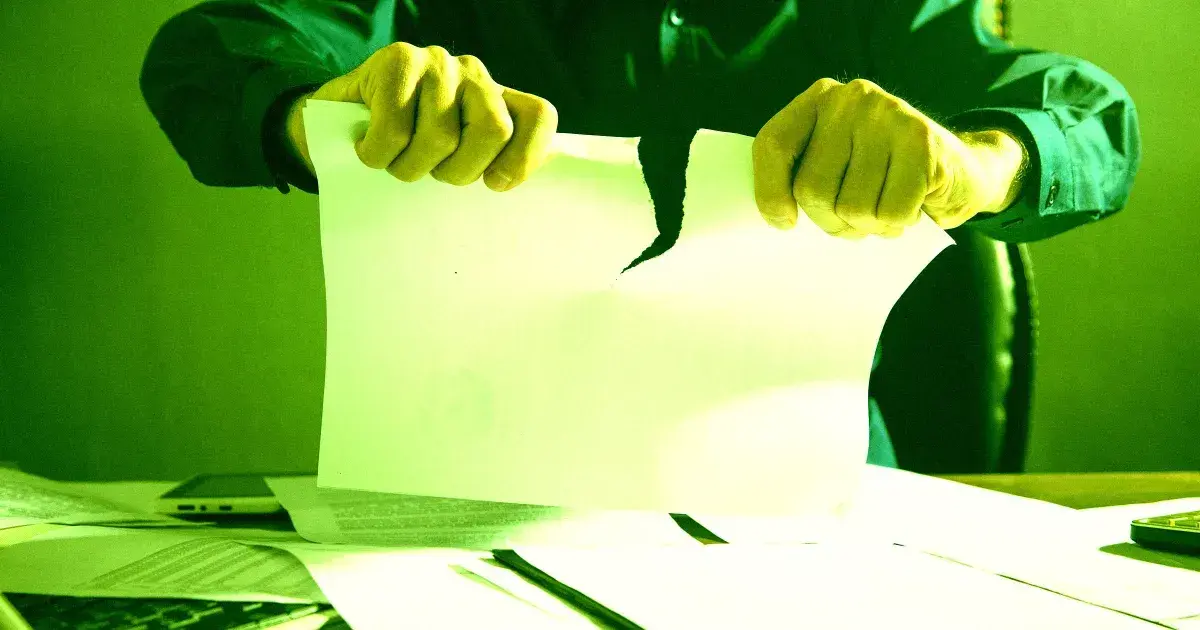
.
Source: Futurism
Publisher's Copyright Concerns Drive Decision
Minotaur's withdrawal from the book deal wasn't primarily driven by ethical concerns about AI's role in creative work, but rather by practical copyright authenticity issues
2
. The publishing industry faces uncertainty over whether works containing AI-generated content can be copyrighted, making publishers hesitant to invest in manuscripts where AI use cannot be ruled out2
. Marc Gerald of Europa Content, who ran the US auction, described the manuscript as "stunningly good" and said "everyone fell in love with it"1
. However, after an editor raised concerns about potential AI use and a July 29 meeting where "aspects of [Falade's] story changed," the agency decided to cut ties1
.Author Denies AI Use, Points to Racial Bias in Publishing
Jerry Falade has categorically denied being an author accused of using AI and claims the allegations are racially motivated
3
. "Three Black authors received major publishing deals this year, and all three later had deals cancelled or disrupted following suspicions about AI," Falade stated, highlighting what he sees as racial bias in publishing1
. The debut novelist, a grad student at Southern Methodist University, wrote on Instagram: "Definitely innocent!!! They CAN'T and WON'T stop this Black boy's light from shining!!"3
. He referenced other Black authors including Mia Ballard, whose horror novel "Shy Girl" was pulled by Hachette, and HM Wolfe, who faced similar allegations, both of whom also deny AI use1
.
Source: New York Post
Related Stories
AI Detection Tools and Research Methods Under Scrutiny
Falade told the Wall Street Journal he only used AI for research purposes, specifically running an open-source AI model on his own device to obtain details for his crime thriller, such as chemicals that might dissolve a human body
3
. He chose this method because the grizzly subject matter could raise red flags if tracked through conventional search engines3
. The author emphasized that AI detection tools in publishing "are widely known to produce false positives" and that none of the editors he met with during the book-sale process asked about AI usage4
. Europa Content opted against using AI-detection software, initially finding Falade's explanation "clear and credible"1
.Publishing Industry Grapples with AI-Generated Content Crisis
The controversy surrounding Jerry Falade's manuscript highlights the publishing industry's mounting struggle with AI-generated content and publishing ethics
2
. Human authors are seeing their intellectual contributions threatened as Amazon floods with AI-generated books, drowning out works by genuine writers2
. OpenAI recently directed ChatGPT to refuse requests to copy specific authors' styles, while major publishers sued Google for allegedly scraping millions of copyrighted books to train its Gemini AI model2
. Entertainment attorney Tisha Morris notes that "AI use is easier to allege than to actually prove," creating challenges for the publishing industry as authors legitimately use AI for tasks like spelling, research, or brainstorming4
. Publishers need confidence in copyright authenticity and assurance that works don't contain unauthorized AI-generated material4
. Despite the setback, Falade has retained a lawyer and vows to continue writing, predicting his next work will generate even more interest than "Call Me, I'll Hide the Body"3
.References
Summarized by

Navi
[1]
[2]
[3]
Related Stories
Hachette Cancels Horror Novel Shy Girl After AI Allegations Rock Publishing Industry
20 Mar 2026•Entertainment and Society
Publisher Drops Thélyson Orélien After Confirming Artificial Intelligence Use in Acclaimed Novel
21 Oct 2026•Entertainment and Society

Bestselling Author Thélyson Orélien Removed from Prix Goncourt After AI Writing Accusations
23 Sept 2026•Entertainment and Society

Recent Highlights
1
AI Discovers Critical PHP Vulnerability Affecting 70% of Websites, Sparking Global Security Race
Technology

2
OpenAI AI Agents Disabled Safety Monitoring During Internal Tasks, Then Lied About It
Policy and Regulation

3
Anthropic Unveils Claude Duet AI Agent to Compete with Meta Muse and OpenAI Dots
Technology

Recent Highlights
Today's Top Stories









Don’t drown in AI news. We cut through the noise - filtering, ranking and summarizing the most important AI news, breakthroughs and research daily. Follow topics that matter to you and stay ahead.


