John Carreyrou Sues Six AI Companies Over Unauthorized Use of Copyrighted Books for Training


9 Sources
[1]
John Carreyrou and other authors bring new lawsuit against six major AI companies | TechCrunch
A group of writers, including Theranos whistleblower and "Bad Blood" author John Carreyrou, is filing a lawsuit against Anthropic, Google, OpenAI, Meta, xAI, and Perplexity, accusing the companies of training their models on pirated copies of their books. If this sounds familiar, it's because
[2]
New York Times reporter files lawsuit against AI companies
Investigative reporter John Carreyrou of the New York Times filed a lawsuit against xAI, Anthropic, Google, OpenAI, Meta and Perplexity on Monday for allegedly training their AI models on copyrighted books without permission. Carreyrou is perhaps for exposing the Theranos fraudulent blood test
[3]
New York Times reporter sues Google, xAI, OpenAI over chatbot training
Investigative journalist John Carreyrou has sued major AI companies, alleging they used copyrighted books without permission to train chatbots. The case names firms including OpenAI, Google, Meta, Anthropic, Perplexity and Elon Musk's xAI. The writers rejected a class action route, arguing
[4]
Elon Musk's xAI, Meta And Google Sued By New York Times Reporter John Carreyrou Over Alleged Use Of Pirated Books To Train AI - Alphabet (NASDAQ:GOOG), Alphabet (NASDAQ:GOOGL)
On Monday, New York Times investigative reporter and author John Carreyrou filed a federal lawsuit accusing major AI companies of illegally using copyrighted books to train their chatbots without permission. Authors Accuse AI Giants Of Copyright Theft Carreyrou, best known for authoring "Bad
[5]

6 AI Companies Face Copyright Lawsuit From Investigative Journalist John Carreyrou | PYMNTS.com
A spokesperson for Perplexity said in the report that the company "doesn't index books." The report noted that several copyright cases have been brought against tech companies involved with AI training. It added that the plaintiffs in this case said in their complaint that they didn't join a
[6]

Ex-WSJ reporter who exposed Theranos fraud sues AI giants over...
A Pulitzer Prize-winning investigative reporter whose work helped bring down Theranos is now taking on Silicon Valley's biggest AI players -- accusing them of looting his books to build billion-dollar chatbots. John Carreyrou, the journalist behind the Wall Street Journal's exposé of disgraced
[7]

Authors File Lawsuits Against OpenAI, Meta, Google over Alleged Use of Pirated Books for AI Training
Writers Take Legal Action Against OpenAI, Meta, Google for Copyrighted Book Use Artificial intelligence has not only completely changed the process of generating, examining, and distributing content, but has also sparked legal and ethical debates. Recently, prominent writers filed lawsuits against
[8]

New York Times reporter sues Google, xAI, OpenAI over chatbot training
Dec 22 (Reuters) - An investigative reporter best known for exposing fraud at Silicon Valley blood-testing startup Theranos sued Elon Musk's xAI, Anthropic, Google, OpenAI, Meta Platforms and Perplexity on Monday for using copyrighted books without permission to train their artificial intelligence
[9]

Google, OpenAI and xAI sued over alleged use of copyrighted books to train AI
Unlike earlier cases, the plaintiffs have avoided a class action, arguing it limits fair compensation for creators. A journalist from The New York Times, known for uncovering the Theranos scandal, has filed a copyright lawsuit against several major AI companies, alleging that they used copyrighted
Share
Copy Link
New York Times reporter John Carreyrou and five other authors filed a copyright lawsuit against Google, OpenAI, Meta, xAI, Anthropic, and Perplexity, accusing them of training AI models on pirated books. Unlike previous cases, the authors rejected class action settlements, arguing they undervalue intellectual property rights and allow AI companies to resolve claims at bargain-basement rates.
Authors Challenge AI Industry Over Pirated Books
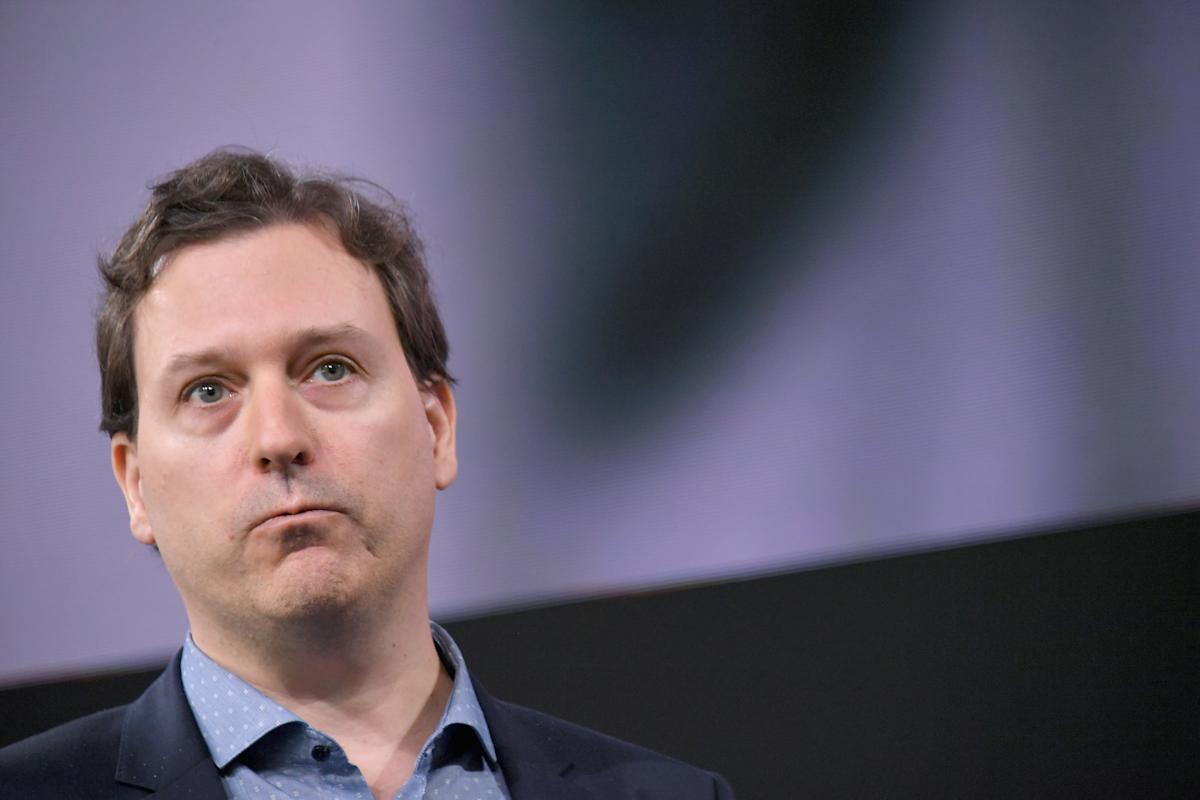
New York Times investigative reporter John Carreyrou, best known for his exposé on Theranos and authoring "Bad Blood," filed a copyright lawsuit on Monday against six major AI companies in California federal court
1
. The lawsuit names Google, OpenAI, Meta, xAI, Anthropic, and Perplexity, accusing them of training AI models on copyrighted books without permission2
. Five other writers—Lisa Barretta, Philip Shishkin, Jane Adams, Mathew Sacks, and Michael Kochin—joined the complaint, alleging the companies pirated their books to train large language models that power generative AI tools4
.
Source: Engadget
This marks the first copyright case to name Elon Musk's xAI as a defendant, adding to a growing wave of intellectual property disputes against tech companies over unauthorized use of copyrighted books for training AI models. The lawsuit arrives during a banner year for IP litigation against AI companies, with rights holders ranging from movie studios to news publishers taking legal action over chatbot training practices.
Rejecting Class Action Settlements
What distinguishes this copyright lawsuit from previous cases is the authors' deliberate decision to pursue individual claims rather than join a class action. The plaintiffs argue that class action settlements favor defendants by allowing AI companies to extinguish thousands of high-value claims at bargain-basement rates
1
. "Plaintiffs desire to retain full control of their case and avoid having their rights diluted by being swept into sprawling class-action settlements structured to resolve claims for pennies on the dollar," the filing states4
.
Source: ET
The complaint directly references Anthropic's $1.5 billion settlement reached in August with a class of authors who alleged the company used pirated books without authorization to train its Claude AI assistant
5
. According to the new lawsuit, class members in that case will receive only a tiny fraction—just 2 percent—of the Copyright Act's statutory ceiling of $150,000 per infringed work2
. While eligible writers can receive about $3,000 from the Anthropic settlement, the plaintiffs argue this doesn't hold AI companies accountable for the actual act of using stolen books to train models that generate billions of dollars in revenue1
.Legal Precedent and Industry Response
The lawsuit builds on an earlier class action suit against Anthropic, where a judge ruled that while it was legal for Anthropic and similar AI companies to train on pirated copies of books, it was not legal to pirate the books in the first place
1
. This legal distinction has become a focal point in copyright disputes over training AI models. Carreyrou himself told the judge during a hearing that stealing books to build AI was Anthropic's "original sin" and that the settlement did not go far enough3
.A spokesperson for Perplexity responded to the allegations by stating that the company "doesn't index books"
5
. Other named defendants, including Google, OpenAI, Meta, xAI, and Anthropic, did not immediately respond to requests for comment3
. The lawsuit was filed by attorneys at law firm Freedman Normand Friedland, including Kyle Roche, whom Carreyrou profiled in a 2023 New York Times article3
.Related Stories


Broader Implications for AI Industry
The case emerges as AI companies reach staggering valuations. OpenAI is reportedly negotiating a funding round that could value the company at up to $830 billion, while Anthropic is planning an IPO as early as 2026 and exploring funding that could push its valuation above $300 billion. Perplexity raised $200 million at a $20 billion valuation in September, while xAI is in advanced talks to raise $15 billion at a potential $230 billion valuation.

Source: TechCrunch
The lawsuit states that the proposed Anthropic settlement "seems to serve [the AI companies], not creators," arguing that LLM companies should not be able to easily extinguish thousands of high-value claims while eliding what should be the true cost of their massive willful infringement
1
. This approach signals a potential shift in how authors and creators may pursue intellectual property rights violations, opting for individual claims that could yield statutory damages closer to the $150,000 ceiling per work rather than accepting reduced settlements through class action mechanisms.References
Summarized by

Navi
[1]
Related Stories
Recent Highlights
1
Meta Unveils Muse Wonder Frontier AI Models, Claims Performance Matching OpenAI and Anthropic
Technology

2
IMF Report Warns AI Market Correction Could Spark Global Financial Crisis With $1.4T at Risk
Business and Economy

3
OpenAI Releases 722 AI-Generated Math Solutions, Triggering Existential Crisis in Mathematics
Technology

Recent Highlights
Today's Top Stories










Don’t drown in AI news. We cut through the noise - filtering, ranking and summarizing the most important AI news, breakthroughs and research daily. Follow topics that matter to you and stay ahead.


