John Ternus Becomes Apple CEO as Company Confronts AI Challenges and Memory Crisis


20 Sources
[1]
Apple's new CEO, John Ternus, takes over from Tim Cook after 15 years
Apple's new CEO John Ternus takes the helm of the iconic tech giant on Tuesday, ending Tim Cook's 15-year tenure during which the company's value skyrocket to $4.6 trillion thanks to the iPhone's enormous popularity. The transition to a new CEO comes at a pivotal time for Apple. Artificial
[2]
Apple enters John Ternus era as AI challenges and memory crunch intensify
* Tuesday is John Ternus' first day at the helm of Apple, following Tim Cook's 15-year run as CEO. * Ternus takes over as Apple confronts major challenges due to soaring memory costs and the company's precarious position in AI. * "The company is in a new environment. It's going to have to keep
[3]
John Ternus starts his first day as Apple CEO with a foldable iPhone on deck and a long list of problems to solve
Serving tech enthusiasts for over 25 years. TechSpot means tech analysis and advice you can trust. The big picture: Apple is entering its fall product cycle with a foldable iPhone, a voice-aware smart display, and an updated Siri platform positioned as core parts of its artificial intelligence
[4]
Who is John Ternus, Apple's new CEO?
Tim Cook, left, stepped down as Apple CEO to make way for John Ternus. (Brittany Hosea-Small/AFP/Getty Images) Apple's new chief executive, John Ternus, officially took the reins of the $4.7 trillion iPhone maker on Tuesday to replace Tim Cook, the company's longtime leader who oversaw the
[5]

John Ternus is the perfect CEO for this Apple era
What can we expect going forward? Tim Cook was effusive in his praise of Ternus, writing in his final message to employees as CEO, "I will miss leading you and being with you for every step, even as I take enormous comfort in handing the helm to someone as brilliant and wonderful and capable as
[6]

Tim Cook's legacy hinges on Apple's AI bet
Why it matters: In the short term, the move could save substantial sums compared with building and operating a frontier-model business of its own, but it's left Apple dependent on Google for some of its most important AI capabilities. Driving the news: As John Ternus officially takes over today as
[7]

Tim Cook was the best Apple CEO for his time -- John Ternus' tenure will be defined by AI
From the Apple Watch to global growth and services, Cook built an Apple for the 21st century By almost any measure, Tim Cook has been one of the best tech CEOs ever. He diversified product lines, launched new lines of business, expanded across the globe, and grew Apple's overall market value
[8]

Apple's new era: Can John Ternus's low-key style survive the AI revolution? | Fortune
In late July, current and former Apple product developers gathered for a reunion at the company's Cupertino, Calif. headquarters. As evening fell and guests sipped drinks and ate hors d'oeuvres, John Ternus slipped into the Observatory building, an event space embedded into a meadow with a large
[9]

John Ternus takes over as Apple enters era of AI, foldable phones
San Francisco (United States) (AFP) - John Ternus took over as Apple's chief executive on Tuesday, inheriting a company that towers over the smartphone market but trails its rivals in artificial intelligence. One of his biggest challenges will be balancing the company's dependence on China while
[10]

Who is the man set to lead Apple into the world of AI?
John Ternus takes over as Apple's chief executive on Tuesday, inheriting a company that towers over the smartphone market but trails its rivals in artificial intelligence. One of his biggest challenges will be balancing the company's dependence on China while parrying acute political pressure from
[11]
John Ternus to lead Apple into the age of AI
San Francisco (United States) (AFP) - John Ternus takes over as Apple's chief executive on Tuesday, inheriting a company that towers over the smartphone market but trails its rivals in artificial intelligence. One of his biggest challenges will be balancing the company's dependence on China while
[12]

New Apple CEO John Ternus takes over from Tim Cook, ending 15-year tenure
Apple's new CEO John Ternus takes the helm of the iconic tech giant on Tuesday, ending Tim Cook's 15-year tenure during which the company's value skyrocketed to $4.6 trillion thanks to the iPhone's enormous popularity. The transition to a new CEO comes at a pivotal time for Apple. Artificial
[13]

Apple's new CEO, John Ternus, takes over from Tim Cook after 15 years
The transition to a new CEO comes at a pivotal time for Apple. Artificial intelligence has unleashed the greatest upheaval within the industry since Steve Jobs unveiled the first iPhone in 2007. Apple has gotten off to a rough start in AI after stumbling in its efforts to deliver new features built
[14]
John Ternus: John Ternus to lead Apple into the age of AI
John Ternus takes over as Apple's chief executive on Tuesday, inheriting a company that towers over the smartphone market but trails its rivals in artificial intelligence. Ives expects the new chief executive to lean into what he knows. John Ternus takes over as Apple's chief executive on Tuesday,
[15]

Apple's New CEO Inherits an AI Strategy Built on Outsiders | PYMNTS.com
Tim Cook will become executive chairman the same day, continuing to manage Apple's relationships with the governments and policies globally while Ternus, a 24-year Apple veteran who most recently ran hardware engineering, takes the CEO title, Apple said in its announcement. It is Apple's first CEO
[16]

Apple's new CEO inherits a fortune and an AI question
There is an old idea in business that the hardest number to measure is the money you never spent. A disaster avoided produces no press release. A bad deal declined shows up nowhere on the income statement. The executive who says no to the expensive thing gets punished immediately and vindicated
[17]

John Ternus Takes Apple Helm: AI Race Tests New CEO
Ternus assumed leadership after rising from Apple's design team to hardware engineering chief. His promotion positioned hardware innovation as a key route for Apple to strengthen its AI position. The leadership change placed Ternus at the center of China supply chain risks and US political
[18]

Apple's Tim Cook wraps up 15-year tenure as CEO; John Ternus readies for top job during challenging time
Apple treated Tim Cook to a farewell tour as he wrapped up his 15-year tenure as CEO on Monday and passed the reins to successor John Ternus - who faces challenges ranging from a troubled AI rollout to a worldwide memory crunch that's forced it to hike prices. Cook and Ternus, the 51-year-old head
[19]

John Ternus takes office with plenty of challenges ahead at Apple
The transition announced in the spring is now official. On September 1, John Ternus formally takes the helm at Apple after nearly fifteen years of Tim Cook's reign. It is a major handoff for the Cupertino company, as its new leader inherits a far larger organization than the one entrusted to his
[20]

Apple New CEO John Ternus: Why fixing Siri and AI is his most urgent task
Tim Cook has officially handed the reins of the company to John Ternus after serving as captain of the ship for 15 long years. However, along with the title of CEO, Ternus has also inherited an AI crisis. Apple wasted almost three years trying to improve Siri, during which Google, OpenAI, and
Share
Copy Link
John Ternus officially took over as Apple CEO on September 1, 2026, ending Tim Cook's 15-year tenure that saw the company reach $4.7 trillion in value. The new Apple CEO inherits major challenges including AI strategy struggles, soaring memory costs forcing price increases, and fierce competition from Meta and OpenAI in the generative AI boom.
Apple's New CEO John Ternus Begins Leadership Amid Industry Upheaval
John Ternus officially became Apple CEO on September 1, 2026, succeeding Tim Cook after his 15-year tenure that transformed the company into a $4.7 trillion tech giant
1
2
. The Apple leadership transition comes at a critical moment as artificial intelligence reshapes the technology landscape more dramatically than any development since Steve Jobs unveiled the first iPhone in 20071
. Tim Cook will remain with the company as executive chairman, focusing on relationships with policymakers around the world2
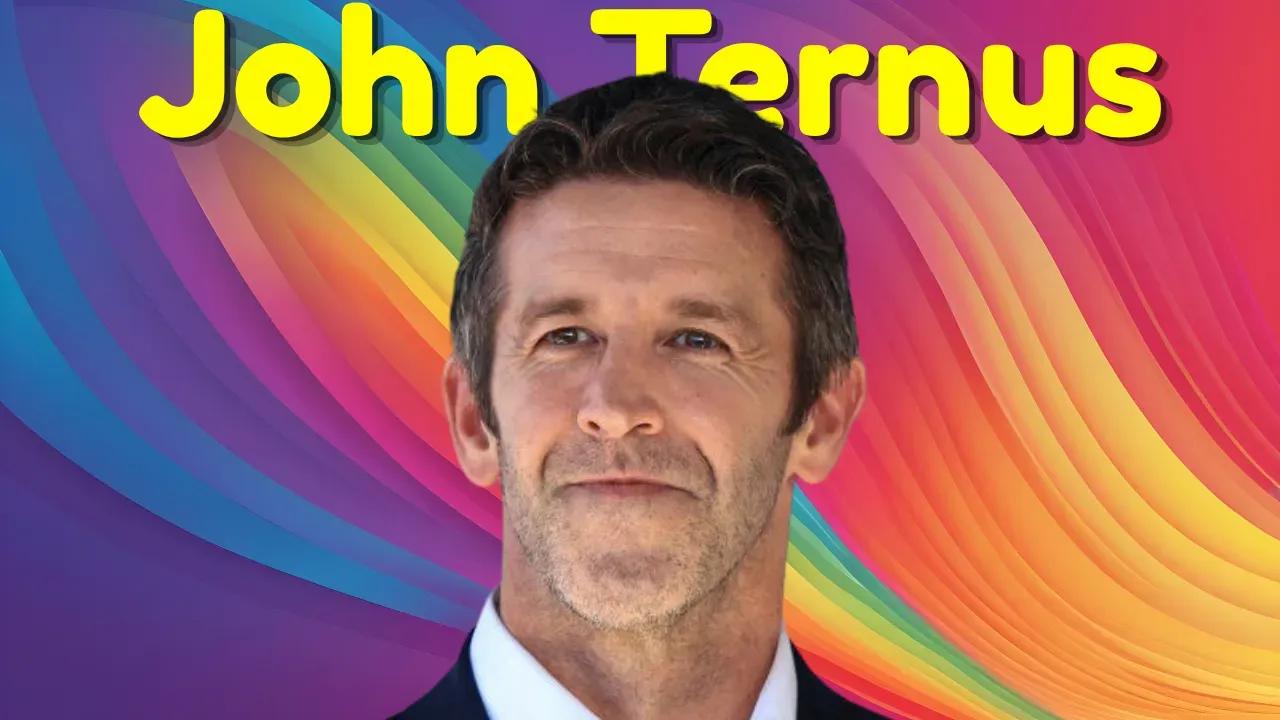
. The 51-year-old Ternus joined Apple in 2001 and has spent 25 years at the company, rising through hardware engineering to oversee products including the Apple Watch, AirPods, and Vision Pro1
5
.
Source: Digit
AI Challenges Dominate Apple's Strategic Priorities
Apple's AI strategy faces significant hurdles that will test the new Apple CEO immediately. The company stumbled in delivering promised AI features nearly two years ago, getting off to a rough start compared to rivals
1
. Siri, despite pioneering the intelligent digital assistant concept, is widely seen as lagging behind the power of chatbots like OpenAI's ChatGPT4
. In 2024, Apple ran an advertisement claiming Siri could access far-reaching context across apps, but pulled it after an advertising watchdog pointed out the technology couldn't actually perform those tasks4
. The Apple Intelligence features that did launch proved unreliable, with the company shutting some down after incidents where news alert summaries made false assertions4
. Recognizing these limitations, Apple announced a deal in January to have Google Gemini models power new AI features, a significant concession that its homegrown technology was lacking4
.Memory Crisis Forces Price Increases Across Product Lines
John Ternus inherits a company grappling with soaring memory costs driven by insatiable demand for AI chips and servers
2
. In June, Apple announced price increases on MacBooks and iPads due to the memory crunch, marking a significant shift in the company's pricing strategy2
4
. The latest iPhones, expected at the September 9 launch event, are anticipated to cost $100 to $200 more than previous models according to analysts4
. The supply shortage for memory and components shows few signs of abating, signaling that gadgets may be permanently more expensive, fundamentally changing demand patterns and competition2
. Tim Cook told the Wall Street Journal shortly before the MacBook and iPad price announcements that Apple would have to pass higher costs on to customers2
.
Source: PYMNTS
Foldable iPhone and AI-Focused Products Define New Product Strategy
The foldable iPhone represents one of the most closely watched products in Apple's upcoming rollout, continuing a multiyear redesign of the company's most important device
3
. This follows last year's thinner Air model and precedes a glass-focused iPhone planned for the product line's 20th anniversary in 20273
. Ternus will headline the September 9 iPhone launch at Apple's Cupertino, California headquarters, his first major public test as Apple CEO1
2
. Beyond phones, Apple is developing AI-integrated products including a voice-aware smart display, camera-equipped AirPods, smart glasses, a home security product, a robotic-arm display, and a wearable camera pendant3
. The company has repeatedly delayed its camera-equipped AirPods and flagship home display because of shortcomings in AI features3
.Vision Pro Struggles and Mixed Reality Uncertainty
The Vision Pro virtual reality headset, released in 2024 with a $3,500 price tag, has struggled commercially despite hopes it would make virtual and augmented reality mainstream
4
. Ternus reportedly had concerns about whether its weight and price would allow it to become a mass-market product3
. Apple recently cut jobs tied to Vision Pro work, particularly in gaming and immersive-video content, while also reducing roles across security, audio engineering, Siri integration, testing, and the operating system that will be shared with future glasses3
. The company still plans to introduce non-augmented-reality smart glasses, code-named N50, next year, but Ternus is open to scaling back Apple's work in head-worn computing if the category does not gain traction3
. An updated Vision Pro, code-named N224, is slated for possible release as early as late 20283
.Related Stories

Competition Intensifies as Rivals Advance in AI and Hardware
The generative AI boom has pushed companies like OpenAI and SpaceX to explore new computing devices, while Meta and Google advance their efforts in smart glasses, raising questions about whether smartphones will someday be replaced
2
. Unlike peers Meta and Google, Apple has not pivoted as aggressively to making its own AI products4
. In July, Apple claimed in a lawsuit alleging that OpenAI stole trade secrets that over 400 of its former employees now worked for OpenAI, though OpenAI has denied the allegations4
. The company has reorganized leadership for both its AI work and Siri after struggling to advance with internally developed technology alone3
. Apple began rebuilding the models behind Siri using Google's Gemini technology, a decision that unsettled members of Apple's large language model group and contributed to departures, including the unit's leader3
.Hardware Engineering Background Shapes Leadership Approach
Ternus is regarded inside Apple as a leader who can move between broad product planning and the technical details of a device, a skill Tim Cook highlighted when announcing the succession
3
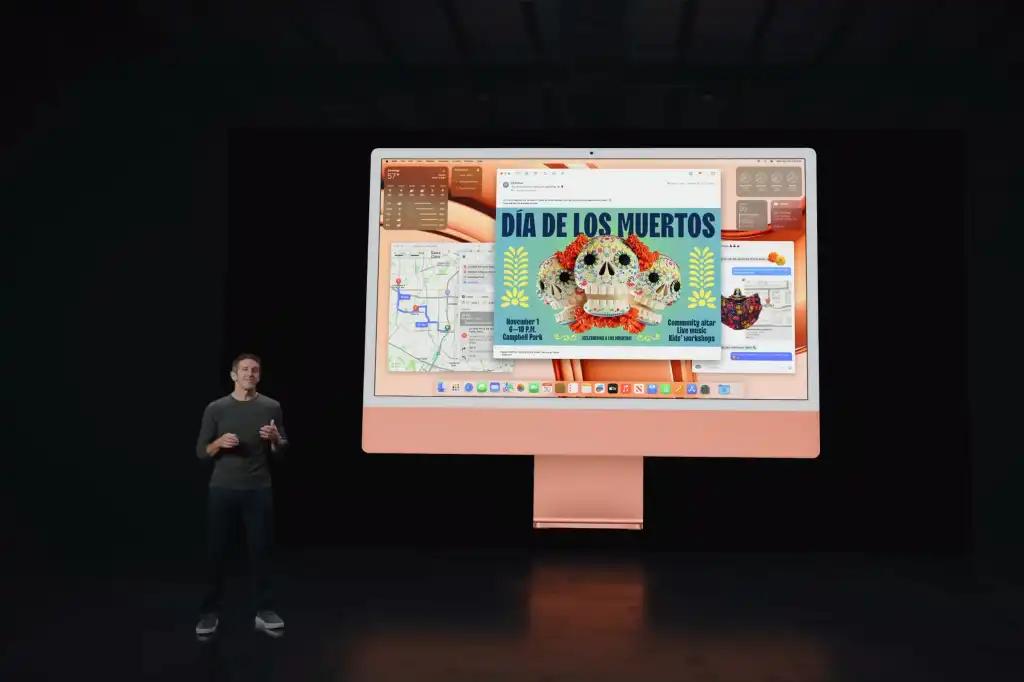
. His hardware engineering expertise includes overseeing Apple's transition away from Intel processors toward Apple silicon, where he took to the stage and conducted interviews to promote the new chips5
. Before leaving the chief hardware role, he introduced an internal platform intended to speed product development, improve testing, and strengthen device reliability using AI as an engineering tool3
. Ternus has argued to Wall Street analysts that the iPhone will remain central to customers' lives and Apple's AI strategy, despite persistent industry speculation about whether phones could eventually be displaced by glasses or other AI hardware3
. Kathy Gersch, CEO of consulting firm Kotter, noted that Ternus is tasked with convincing shareholders, employees and customers that he can lead the company into the future: "What worked for Tim Cook is not going to be the same that works for John Ternus. The company is in a new environment. It's going to have to keep evolving and competing"2
.
Source: Macworld
Navigating Supply Chain and Political Relationships
Beyond product decisions, John Ternus faces challenges that will force him to step outside his comfort zone in hardware engineering, including navigating supply chain questions and relationships with figures such as President Donald Trump
1
. Tim Cook cultivated ties with Trump as he navigated the company through business challenges, including Trump's trade and tariff war targeting countries in Asia, where Apple has extensive manufacturing operations through its supply chain1
. Cook is widely expected to help the company maintain a good relationship with Trump after shifting to his new role as executive chairman1
4
. Apple's stock is up about 17% so far in 2026, outpacing most of its mega-cap peers2
. At 51, Ternus is one of the youngest members of Apple's senior leadership team, taking over at almost the exact same age as Tim Cook was when he became Apple CEO in 20115
. If successful, Ternus could lead Apple for the next decade and a half or more5
.
Source: Washington Post
References
Summarized by

Navi
[4]
Related Stories
John Ternus takes over Apple as CEO: Hardware focus may define the company's AI strategy
21 Apr 2026•Business and Economy

John Ternus Opens Up About Apple CEO Role, AI Strategy, and iPhone Duo in First Major Interview
22 Sept 2026•Technology
Apple's Leadership Dilemma: Calls for Tim Cook's Replacement Amid AI Concerns
15 Jul 2025•Business and Economy

Recent Highlights
1
Microsoft and Nvidia Launch Surface Laptop Ultra: A $2,599 AI-Ready PC With RTX Spark Chip
Technology

2
Meta Muse AI Agent Surges to 6.6M Downloads Despite Privacy and Security Controversies
Technology
3
Scientists Build AI Model That Reconstructs Images From Brain Scans in Record Time
Science and Research

Recent Highlights
Today's Top Stories









Don’t drown in AI news. We cut through the noise - filtering, ranking and summarizing the most important AI news, breakthroughs and research daily. Follow topics that matter to you and stay ahead.


