3 Sources
[1]
Kevin O'Leary claims Chinese propaganda is to blame for anti-datacenter backlash, 'hundreds of millions of dollars' being spent to kill US dominance in AI -- industry proponents and Trump administration reinforce claims of foreign interference
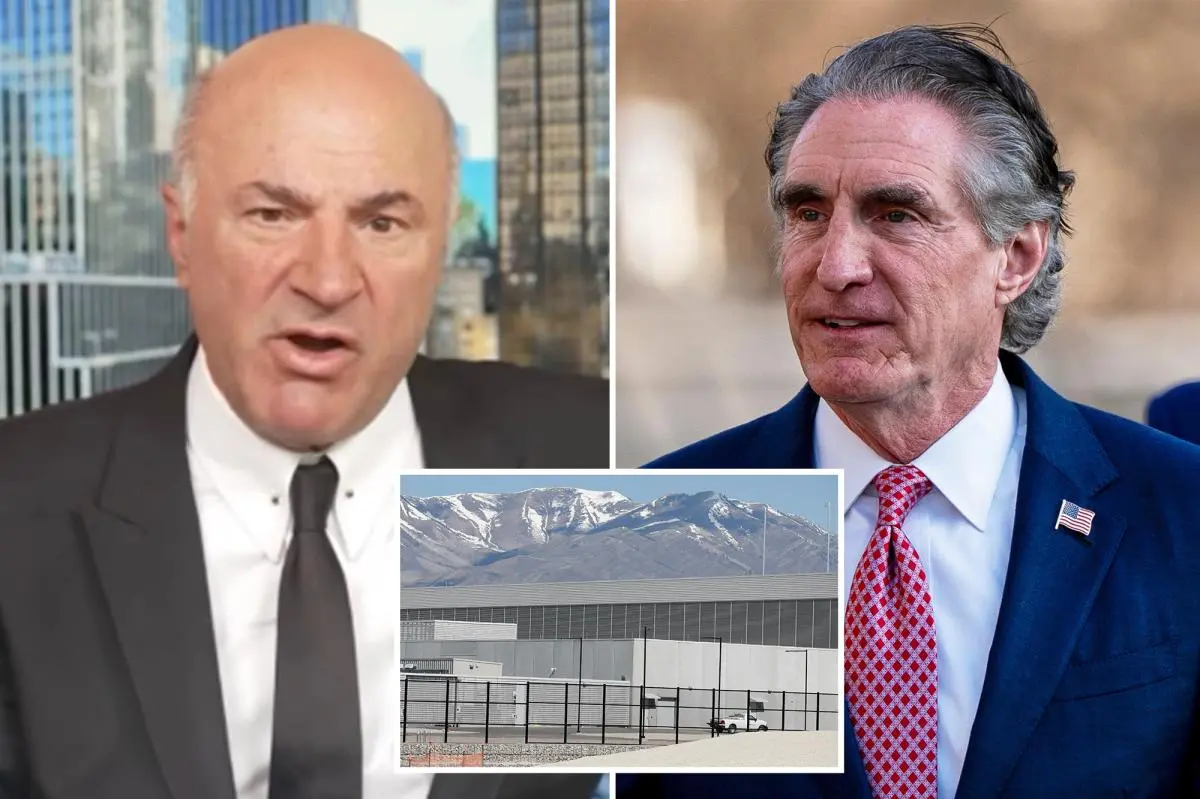
Just because you're paranoid doesn't mean they're not after you. To say that data centers are becoming unpopular would be the understatement of the decade. Cities, states, and countries are racing to impose strong restrictions on new buildouts, when they're not banning them altogether. Predictably, Utah residents are up in arms about Shark Tank billionaire investor Kevin O'Leary's new $100-billion, 40,000-acre data center. There's a twist, though: O'Leary, the Trump administration, and pro-industry groups claim the opposition is driven by Chinese propaganda, as detailed in an exposé at The Washington Post. O'Leary, or "Mr. Wonderful," as he's known to friends, made this statement for the first time in a May 10 interview with Fox News, further expanding it across subsequent TV interviews and X posts. He added claims that "hundreds of millions of dollars" coming in from China make up the effort, often funneled through other nations to reach paid protesters, which, in the case of Utah, were allegedly 90% bussed in. The Post report also notes that some U.S. officials have expressed similar views, such as Interior Secretary Doug Burgum, who has stated that "[opposition is] not organic and local. Some of this is foreign source dark money coming in," adding later on that "any place that's trying to build data centers is getting bombarded with foreign-directed propaganda." As of this writing, neither O'Leary nor Burgum has provided verifiable evidence for these claims. Interestingly enough, O'Leary also believes that regular power plant projects are also being targeted by foreign astroturfing. These allegations have been met with skepticism from various parts, and are a particularly difficult sell when datacenters often rocket power prices in their surrounding areas, drain the pool of potable water, and might even emit infrasonic vibrations. The public is also becoming increasingly aware of AI-driven component shortages, thanks to the rising prices of laptops, desktops, phones, and other electronics -- as well as the rising costs of repairing them. And, of course, the hundreds of thousands, if not millions, of job cuts thanks to the newfound focus on automation, as well as the worsening quality of many services due to the usage of AI bots rather than humans. Even some parties that support the notion of Chinese interference are aware of the particular optics around this situation. According to The Post, Ryan Fedasiuk of the American Enterprise Institute says the inference issue is real, but also cautions "that China isn't the reason AI buildouts are unpopular in the United States." Likewise, the Bitcoin Policy Institute issued a report where it states there's a "foreign influence campaign against American AI," but also that "Americans do have serious concerns that need to be heard." Having said that, as sung in the grunge days, "just because you're paranoid, doesn't mean they're not after you." Both the U.S. and China are effectively in an A.I. arms race, pushing government policies that generally favor big tech companies -- at least until the financial grim reaper comes. Therefore, however outlandish O'Leary's claims might appear at first glance, it's usually a safe assumption that any superpower will always be meddling with the others' efforts, and attempting to kneecap A.I. development is as good a target as any. Follow Tom's Hardware on Google News, or add us as a preferred source, to get our latest news, analysis, & reviews in your feeds.
[2]
Amid data center protests, a billionaire and the Trump administration see a foreign plot
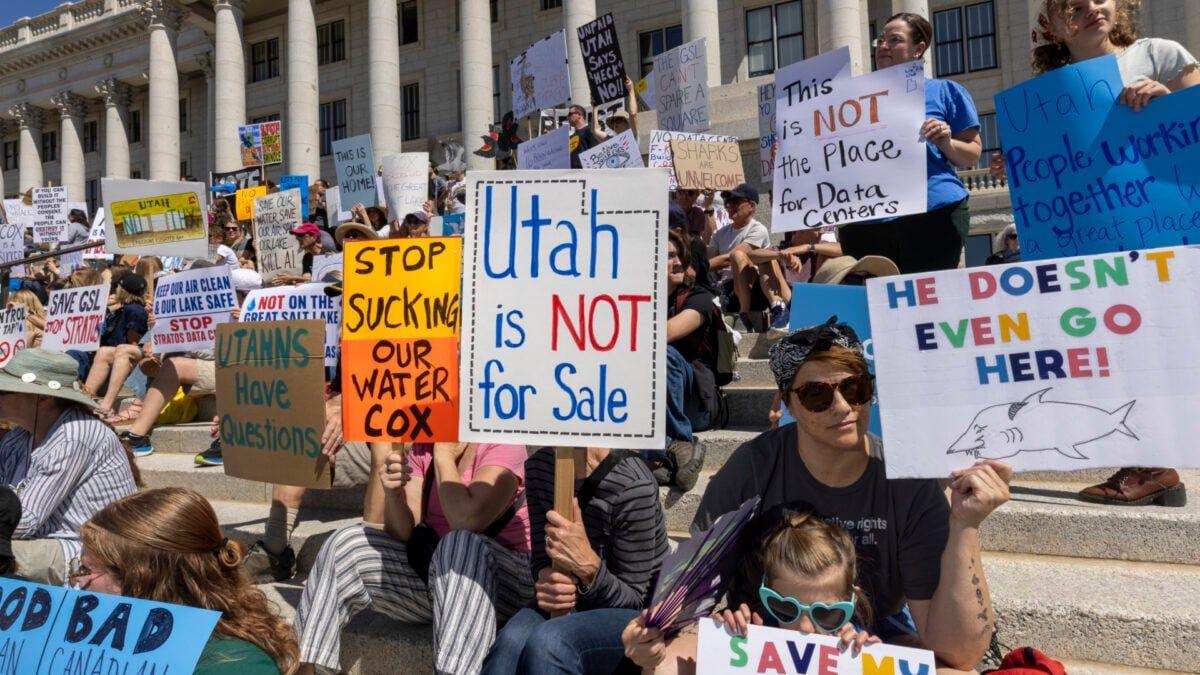
Demonstrators take part in a protest May 23 at the Utah State Capitol in Salt Lake City to oppose the construction of a massive data center. (Natalie Behring/Getty Images) Utahns took to the streets of Salt Lake City last week to oppose the construction of a 40,000-acre data center backed by billionaire "Shark Tank" star Kevin O'Leary in the largely undeveloped northwest corner of the state. His fiery response was quickly echoed by the Trump administration but triggered worries in tech and conservative policy circles that Silicon Valley's struggles to sell skeptical Americans on the benefits of the artificial intelligence boom could soon become even more difficult. O'Leary claimed in a video posted Monday that "nefarious accounts out of the country" linked to the Chinese Communist Party were driving the backlash to his project, by flooding Utah with false claims in a foreign-backed influence campaign aimed at stopping America's AI buildout. Interior Secretary Doug Burgum echoed those claims on Fox Business on Tuesday. "Any place that's trying to build data centers is getting bombarded with foreign-directed propaganda to try to block these from being built," he said. "This is just another attack on the U.S. and our ability to be competitive." Conservative and tech-related think tanks have recently made similar claims. Neither Burgum nor O'Leary, who is Canadian, shared conclusive evidence backing their claims of malign foreign influence. The allegations drew criticism from allies of the AI industry and Trump administration, including tech insiders, China hawks, White House-aligned conservatives and Trump voters protesting data center projects in their communities. The detractors said that the claims of foreign influence reflect an industry and political establishment seemingly in denial about the root of public anger against data center projects. Overwhelming majorities of Americans oppose construction of the facilities in their communities, a Gallup survey found earlier this year. Most Americans think AI will have negative effects on society and reduce the number of jobs available for humans, multiple surveys have found. "This is like gaslighting 101," Kyle Schmidt, a three-time Trump voter who organized neighbors to fight a Google data center outside Tulsa, said of the suggestion by O'Leary and the Trump administration that campaigns like his are part of a foreign plot. "They are saying, 'Trust me. It is not what you think. It is what I am telling you.'" "I would love to sit down with Mr. Wonderful and ask him: Do you want one of these in your backyard?" said Schmidt, using O'Leary's nickname for himself. Schmidt said his community is funding its lawsuit against Google's project almost entirely with small donations raised from door knocking and a barbecue in a local parking lot. The only big donor is the Oklahoma Farm Bureau, Schmidt said, which kicked in $15,000. Ryan Fedasiuk, an analyst at the American Enterprise Institute, a conservative think tank, wrote in a post on X that "CCP-led anti-data center propaganda is a real problem and I'm glad people are raising it." But he added that the warnings of foreign influence could backfire, potentially making it even harder for industry and government to advance U.S. AI ambitions. "We also have to get real that China isn't the reason AI buildouts are unpopular in the United States ... Telling the hundreds of millions of Americans who are today anti-AI 'Your opinions were paid for by the CCP' is not a winning political message," Fedasiuk wrote. President Donald Trump has closely allied himself with the AI industry and its building spree, encouraging data center construction and speeding up the process of obtaining permits for the facilities. In January he responded to protests against data centers and said his administration would pressure tech companies to ensure they did not push up electric bills. O'Leary did not respond to requests for comment. The Interior Department did not respond to detailed questions about Burgum's claims that foreign operators and radical climate groups were fomenting backlash to data center projects. In recent weeks, several think tanks and advocacy groups aligned with the tech industry and Trump administration have issued reports that allege pushback on data center expansion in the United States is not what it seems. "The opposition to U.S. data center construction is not a spontaneous grassroots movement," a report from the American Energy Institute, a nonprofit that promotes fossil fuels, said. "It is a coordinated campaign financed in substantial part by foreign donors, operating through a network of national advocacy organizations and their local chapters." The Bitcoin Policy Institute, a think tank that advocates for cryptocurrency, and the Trump-aligned nonprofit Power the Future, which advocates for domestic energy production, issued reports with similar findings. The reports generally did not present direct evidence that foreign conspiracies are driving public sentiment on data centers. Instead they pointed to grants to U.S. environmental groups from donors -- generally with progressive interests -- that are based overseas or have international connections. The U.S. groups that received those grants typically spend a fraction of their resources on issues related to data centers. O'Leary claimed in his video that there was a foreign-financed anti-data center slush fund of "millions, hundreds of millions of dollars" linked to the opposition in Utah. His firm pointed to a website that highlighted tax filings for groups involved in the fight that show the amount of foreign-linked philanthropic funding they receive that could potentially fuel anti-data center efforts is a tiny fraction of that -- in the tens of thousands of dollars. A $460,000 donation identified by that website as going to the Put Utah First PAC in 2022 is not listed in filings as specifically connected with data centers. It went to the unsuccessful Senate campaign of Evan McMullin, who ran as an independent that year. Groups called out by the website and reports alleging foreign interference told The Washington Post they were flummoxed by the allegations and that tax filings and other public documents cited by their accusers don't support the claims. "The Wyss Foundation does not provide funding to block or oppose data centers," said a spokesperson for the philanthropic foundation, which was criticized in the Bitcoin Policy Institute report for funding U.S.-based advocacy groups. "These reports are false, misleading and an attempt by big crypto special interests to manipulate the public into accepting data centers." Code Pink, a group that campaigns against war, said claims in the same report that it is a mouthpiece of the Chinese government because it receives funding from U.S. expatriate Neville Roy Singham, a former consultant to Chinese telecoms firm Huawei now living in Shanghai, are "false and defamatory." Spokeswoman Melissa Garriga said she was confused about why Code Pink was singled out, as data center advocacy is not a main focus of the organization, although it did post a video about the Utah project online. "It does not take much for people to look into the public records and realize these accusations of millions of dollars flowing into our organization from the Chinese Communist Party are laughable," said Elizabeth Hutchings, communications manager at the advocacy group Alliance for a Better Utah, one of O'Leary's central targets. The author of the Bitcoin Policy Institute report, Sam Lyman, a former senior adviser to Treasury Secretary Scott Bessent, said it revealed "a clear demonstrated foreign influence campaign against American AI. ... We think there should be a deeper investigation into how exactly these nonprofits are coordinating with each other." Most of the foreign resources involved are steered toward coordinated social media campaigns, he said, pointing to videos on TikTok, instagram and YouTube, including from Code Pink. But Lyman acknowledged that foreign propaganda is just one factor driving data center opposition. "Americans do have serious concerns that need to be heard," he said. Even the fiercest opponents of the AI buildout accept that bots and foreign government-orchestrated social media messaging are likely to be joining online discussions about data centers, as can be expected for every divisive U.S. political issue. But it is highly unlikely that such activity could drive the widespread pushback on data centers across the U.S., said Tamara Kneese, a senior researcher at the Partnership on AI, a tech industry-backed nonprofit focused on the responsible use of AI. "It is pretty hard to make the argument this is driven by foreign influence when you are dealing with people in sometimes very small communities showing up at town hall meetings angry about things directly affecting them," Kneese said. Justin Pearson, a Democrat in Tennessee's House of Representatives said that instead of trying to discredit American voters, tech leaders should try meeting with them. He helped lead local opposition to data centers built by Elon Musk's xAI outside Memphis that created local pollution by burning natural gas on-site. "You are trying to delegitimize people who you've never met in communities you've never visited, so that you can continue to exploit the lives of people that you don't give a damn about," said Pearson, who is running for a seat in the U.S. House this year. "If you think they're lying, go there, meet them, turn on the water, and drink it yourself. If this is so necessary a technology, put it in your neighborhood." Musk's xAI has said installing its own power infrastructure helps prevent price hikes for local rate payers. The company did not immediately reply to a request for comment. Some in the tech industry are discouraged by the focus on foreign conspiracies, seeing it as evidence that companies and the administration are failing to engage honestly with communities that have legitimate concerns. "The data center industry has not handled this backlash well," said Daniel Golding, former director of global data center infrastructure at Google. "No one has tried to explain to people why these data centers are a good idea ... Everyone wants to think these companies are uber competent. We are not," said Golding, who is now a senior adviser at AI-oriented investment firm MGX, which secured a stake in the U.S. spin-off of TikTok brokered by Trump last year. "The real story here is that public engagement is an area Big Tech is not really good at," Golding said. Nii Osae, CEO of Mindbeam AI, a start-up that develops software used at data centers, said the highly visible rush to cash in on the AI infrastructure building boom did the industry no favors. "We need to show what the AI ecosystem is doing to make this more people friendly and not necessarily Wall Street friendly," he said. Nitasha Tiku contributed to this report.
[3]
China fueling anti-data center sentiment across US, Trump admin and 'Shark Tank' star Kevin O'Leary claim
The Trump administration and "Shark Tank" star Kevin O'Leary claimed anti-data center sentiments across the US are being fueled by a Chinese propaganda campaign. O'Leary -- whose 40,000-acre data center plans outside Salt Lake City have been met with protests -- claimed in a Monday video that "nefarious accounts out of the country" tied to China were spreading misinformation about his project as part of a coordinated attack on American AI infrastructure. Interior Secretary Doug Burgum agreed during a Tuesday appearance on Fox Business. "Any place that's trying to build data centers is getting bombarded with foreign-directed propaganda to try to block these from being built," Burgum said. "This is just another attack on the US and our ability to be competitive." O'Leary backed his claims with "90 pages of evidence" which he said indicated "millions, hundreds of millions of dollars" worth of funds were being funneled from entities around the world to fuel targeted misinformation campaigns against his data center. And he isn't the only one to arrive at such conclusions -- at least three reports from tech and Trump-aligned thinktanks and non-profits, including the Bitcoin Policy Institute, Power the Future and the American Energy Institute, drew similar conclusions about Chinese meddling in US data-center sentiments in studies of their own. "The opposition to US data center construction is not a spontaneous grassroots movement," a recent American Energy Institute report read. "It is a coordinated campaign financed in substantial part by foreign donors, operating through a network of national advocacy organizations and their local chapters." But at least two of the groups named in those reports told the Washington Post they had nothing to do with a foreign influence campaign against data centers -- and that they were baffled by the allegations. "These reports are false, misleading and an attempt by big crypto special interests to manipulate the public into accepting data centers," said spokesperson for the Wyss Foundation, an environmental conservation and Democratic party non-profit. The anti-war group Code Pink, also named in the reports, called the claims "false and defamatory" -- while a spokesperson for Alliance for a Better Utah, who O'Leary mentioned in his claims, called the Chinese allegations "laughable." O'Leary's data center has been met with the kind of backlash many have faced as they've begun to crop up across the country to meet the rising computing needs of AI systems. Many locals have decried having the massive facilities -- warehouses filled with computer servers, often covering hundreds or thousands of acres -- dropped in their communities, while others have raised fears about water and power costs going up, along with real estate being devalued. Some have also raised concerns about how such facilities could affect the health of surrounding communities. About 70% of Americans oppose the developments, according to a 2026 Gallup survey, with many fearing negative societal effects and job losses from AI proliferation. But O'Leary has insisted his project -- called the Stratos Project, in Box Elder, Utah -- is taking every precaution to roll out responsibly, telling NBC News Thursday that the project would be developed in stages over 10 years to ensure local safety concerns were met. He also said only about 9,000 acres of the project's 40,000-acre plot would be used after that time, and that upwards of 6,000 jobs would be brought to the area -- which he also said was in nobody's backyard, but in the middle of remote and arid pasturelands. Some opponents still aren't convinced, however, and think O'Leary and the Trump administration's claims of a Chinese plot are a clear sign of big tech trying to pull out the stops to get what it wants. "This is like gaslighting 101," said activist and three-time Trump voter Kyle Schmidt, who organized opposition to an Arizona data center despite his president's strong support for the tech industry. "They are saying, 'Trust me. It is not what you think. It is what I am telling you,'" he added. "I would love to sit down with Mr. Wonderful and ask him, do you want one of these in your backyard?"
Share
Copy Link
Shark Tank billionaire Kevin O'Leary claims Chinese propaganda is driving opposition to his $100-billion Utah data center project. Interior Secretary Doug Burgum echoed the claims, stating foreign-directed propaganda targets AI infrastructure. Critics dismiss the allegations as gaslighting, pointing to legitimate local concerns about rising electricity costs, water usage, and job losses as 70% of Americans oppose data center construction in their communities.
Shark Tank billionaire Kevin O'Leary has sparked controversy by claiming that Chinese propaganda is fueling the data center backlash against his massive $100-billion, 40,000-acre project in Utah. In a video posted on May 26, O'Leary alleged that "nefarious accounts out of the country" linked to the Chinese Communist Party were driving opposition through a coordinated misinformation campaign
2
. The investor, known as "Mr. Wonderful" to fans, first made these assertions during a May 10 Fox News interview, later expanding his claims to suggest that "hundreds of millions of dollars" from China were funding the effort, allegedly funneled through other nations to reach paid protesters1
. O'Leary went so far as to claim that 90% of protesters at demonstrations against his Stratos Project in Box Elder, Utah, were bussed in from outside the area1
.
Source: New York Post
Interior Secretary Doug Burgum reinforced the Trump administration claims during a Fox Business appearance on Tuesday, stating that "any place that's trying to build data centers is getting bombarded with foreign-directed propaganda to try to block these from being built"
2
. Burgum characterized the opposition as "not organic and local," instead attributing it to "foreign source dark money coming in" as part of a broader attack on US dominance in AI1
. However, neither Kevin O'Leary nor Doug Burgum has provided verifiable evidence to support these allegations1
. Several conservative and tech-aligned think tanks have issued reports making similar claims, including the Bitcoin Policy Institute, Power the Future, and the American Energy Institute, which stated that "the opposition to US data center construction is not a spontaneous grassroots movement" but rather "a coordinated campaign financed in substantial part by foreign donors"3
.The allegations have drawn sharp criticism from various quarters, including some who support the notion of a Chinese misinformation campaign but question its relevance to the anti-data center sentiment. Ryan Fedasiuk of the American Enterprise Institute acknowledged that foreign interference is real but cautioned "that China isn't the reason AI buildouts are unpopular in the United States"
1
. Kyle Schmidt, a three-time Trump voter who organized protests against data centers outside Tulsa, called the claims "gaslighting 101," saying "They are saying, 'Trust me. It is not what you think. It is what I am telling you'"2
. Schmidt noted that his community funded its lawsuit against Google almost entirely through small donations from door knocking and a local barbecue, with only $15,000 from the Oklahoma Farm Bureau2
. Groups named in the reports, including the Wyss Foundation and Code Pink, denied any involvement, calling the allegations false and misleading3
.Source: Washington Post
Related Stories
The skepticism appears well-founded given that approximately 70% of Americans oppose data center construction in their communities, according to a 2026 Gallup survey
3
. Local concerns about the environmental impact are substantial, as data centers often drive up rising electricity costs in surrounding areas, drain potable water supplies, and may emit infrasonic vibrations1
. The public is also increasingly aware of AI-driven component shortages that have raised prices for laptops, desktops, phones, and other electronics, along with hundreds of thousands of job cuts attributed to automation1
. Multiple surveys indicate that most Americans believe AI will have negative effects on society and reduce available jobs2
.The controversy unfolds against the backdrop of an intensifying AI arms race between the United States and China, with both superpowers pushing government policies that generally favor big tech companies
1
. While O'Leary's claims may seem outlandish at first glance, experts note it's typically safe to assume that any superpower will attempt to meddle with others' efforts, making AI infrastructure a logical target . President Trump has closely allied himself with the AI industry, encouraging data center construction and speeding up the permitting process, though he responded to protests against data centers in January by saying his administration would pressure tech companies to ensure they didn't push up electric bills2
. O'Leary has insisted his Stratos Project would be developed in stages over 10 years, using only 9,000 of the 40,000 acres and bringing upwards of 6,000 jobs to the remote area3
. Yet the broader question remains whether industry and government can successfully address public skepticism about AI expansion, or whether allegations of foreign interference will further complicate efforts to build the infrastructure needed to maintain technological competitiveness.Summarized by
Navi
[2]
28 Jan 2026•Policy and Regulation

09 Dec 2025•Policy and Regulation

06 May 2026•Business and Economy

1
Business and Economy

2
Technology

3
Policy and Regulation