4 Sources
[1]
Kevin O'Leary's Massive Data Center Project in Utah Gets the Greenlight, Locals Are Furious
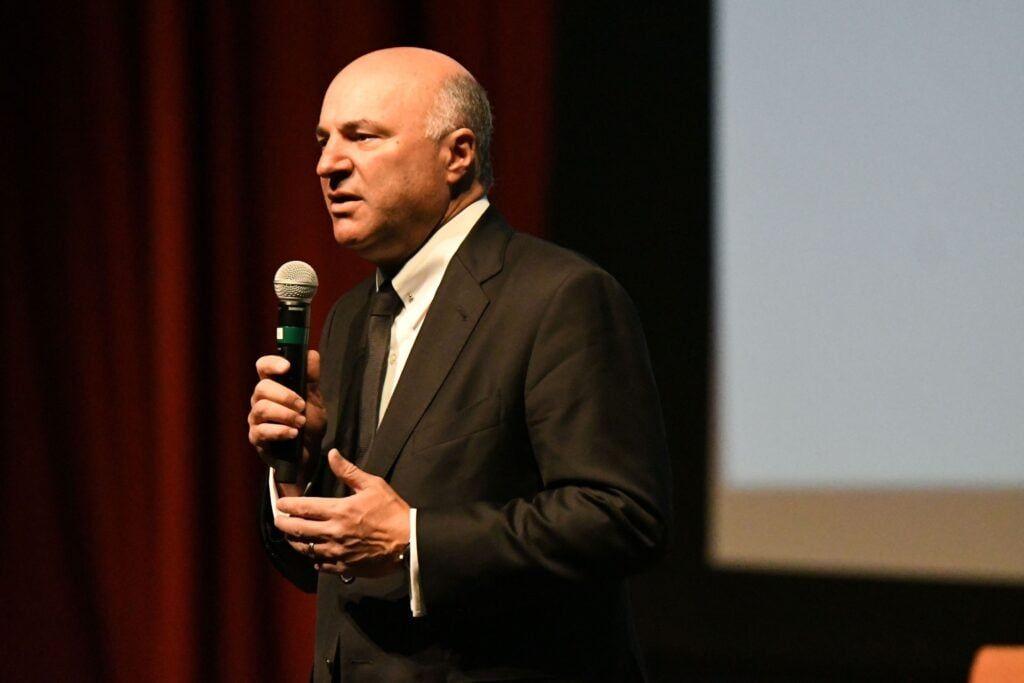
The project would be more than twice the size of Manhattan and could consume more electricity than the entire state currently uses. Shark Tank’s Kevin O’Leary has joined the AI data center boom with newly approved plans for a controversial massive project in Utah. The Box Elder County Commission voted on Monday to move forward with a proposed 40,000-acre AI and cloud computing campus in a rural part of northern Utah near the Great Salt Lake. The site would span more than twice the size of Manhattan. The project, backed by O’Leary Digital, the infrastructure arm of O’Leary Ventures, is expected to eventually produce and consume up to 9 gigawatts of power. That’s roughly double the amount of electricity the entire state of Utah currently consumes, according to The Salt Lake Tribune. The campus is expected to be built in phases and overseen by Utah’s Military Installation Development Authority (MIDA). O’Leary proposed a similar project in Canada in 2024 and has referred to both developments as “Wonder Valley.†Plans for the Utah site include a large-scale energy generation plant, a massive data center campus, and two additional sites that could potentially be used for manufacturing or other uses. A fact sheet posted on Box Elder County’s website says the project plans to generate all of its own power on-site and would have direct access to the Ruby Pipeline for natural gas. “Today’s decision isn’t the end of the oversight process, but just the beginning,†Box Elder County Commissioner Tyler Vincent said in a press release Monday. “We appreciate all the residents who shared comments, questions and concerns with us as we took the necessary time to do a thoughtful evaluation of the project.†Vincent was referring to the intense public backlash surrounding the proposal. Hundreds of people attended the county meeting, where videos posted online showed residents holding protest signs, yelling at commissioners, and chanting “shame, shame, shame.†At one point, the meeting became so heated that commissioners walked out and resumed the proceedings virtually, projecting the remainder of the meeting back into the room. AI data center projects have increasingly faced opposition across the country over concerns about their environmental impact, including water usage and strain on local power grids. County commissioners said they negotiated additional “guardrail provisions†tied to the project, including noise limits and agreements from developers allowing agricultural uses in and around the area. For his part, O’Leary has claimed, without evidence, that much of the opposition to the project was “paid†and that the meeting was filled with “professional protestors.â€Â “We think that over 90% of the protestors are actually not people that live in Utah or Box Elder County. They’re being bussed in,†O’Leary said in a video posted on X. He also claimed backlash on social media surrounding the project was AI-generated. O’Leary Ventures did not immediately respond to a human-issued request for comment from Gizmodo.
[2]
'Shark Tank' Investor Kevin O'Leary Wants To Build A Huge AI Datacenter In Utah To Stop China In Its Trac
"Shark Tank" investor Kevin O'Leary wants to build a massive AI data center in Utah that will generate more than double the power the state currently uses. Dubbed Stratos, the data center recently received Utah's Military Installation Development Authority designation. It would span 40,000 acres of private land and 1,200 acres of military and state-owned property. The Box Elder County Commission, which needs to sign off on the data center, last week delayed a decision after local residents expressed concerns following a county commission meeting. Don't Miss: See What AI Could Build for Your Portfolio -- Try a Custom Index Now From the International Space Station to everyday use -- this NASA-tested diagnostics platform is moving toward at-home lab testing A Data Center People Won't Hate? "Most people don't like data centers for good reason. You tap into the grid and all of a sudden the electricity costs for their Church and the community, and residents all go up," O'Leary told Fox Business in an April 29 interview. "Not in this case. We're building power from scratch from the pipeline." Taking On China In The AI Race According to O'Leary, China is leading in the AI race because it is able to build 10 times the power of the U.S., which faces permitting problems and other issues that stall projects. "Utah stepped up and said look we can compete. Not only do they have the land -- 40,000 acres -- we've got the pipeline running through the land, and we have this designation that can accelerate permitting," O'Leary said. "It's really about how can we catch up with what the Chinese are doing." See Also: What If Your Investment Income Didn't Rely Entirely on Market Swings? Some Investors Are Taking a Different Approach He said natural gas will be burned with turbines, which makes it clean, and that excess power can be given back to the grid. "This shows the Chinese and the rest of the world we're not messing around, we're going to get this done and move it forward to provide the compute power to the AI companies that defend our country," he said. Companies Aren't Waiting For The Grid O'Leary's project joins a growing list of other companies that are building their own power generation instead of waiting for utility connections, which The Center for Strategic and International Studies said can take several years. What's Next As investment pours into AI infrastructure, energy, and data center capacity, some investors are looking beyond individual stocks and focusing on how to gain exposure to the broader trend. Read Next: Traders Are Flocking to Direxion ETFs -- Targeting Tesla and Elon Musk's Market Moves Investors With $1M+ Often Use Advisors for Tax Strategy -- This Tool Matches You With One in Minutes Building Wealth Across More Than Just the Market Connect Invest Mode Mobile rHealth rHealth is building a space-tested diagnostics platform designed to bring lab-quality blood testing closer to patients in minutes rather than weeks. Originally validated in collaboration with NASA for use aboard the International Space Station, the technology is now being adapted for at-home and point-of-care settings to address widespread delays in diagnostic access. Backed by institutions including NASA and the NIH, rHealth is targeting the large global diagnostics market with a multi-test platform and a model built around devices, consumables, and software. With FDA registration in progress, the company is positioning itself as a potential shift toward faster, more decentralized healthcare testing. Direxion Immersed Arrived Masterworks Public AdviserMatch Accredited Debt Relief Image: Imagn Market News and Data brought to you by Benzinga APIs To add Benzinga News as your preferred source on Google, click here.
[3]
Kevin O'Leary Says He's The Only Data Center Developer Who Studied Environment, Slams Backlash Against Ut
On Tuesday, Kevin O'Leary pushed back against growing opposition to his massive Utah AI data center project, arguing environmental criticism is overstated even as concerns mount over fossil fuel use, water consumption and local ecological strain. O'Leary Defends Utah AI Data Center The "Shark Tank" investor addressed backlash surrounding his proposed Stratos project in Box Elder County, Utah -- a sprawling 40,000-acre development expected to generate up to 9 gigawatts of power for artificial intelligence infrastructure. O'Leary said sustainability remains central to the project, citing alternative cooling systems, battery improvements and renewable energy options. "I'm pretty aware of what these concerns are," O'Leary said in a video shared on X, pointing to issues including air, water use, heat and pollution. "Sustainability is at the heart of what we do." He also dismissed some opposition as manufactured, saying that many protesters are outsiders and calling aspects of the social media backlash AI-generated, adding it was "kind of hypocritical." Utah AI Megaproject Faces Scrutiny Last month, Military Installation Development Authority executive director Paul Morris told county officials that the project's power supply would be entirely generated by natural gas, Axios reported. He added that while the site is ultimately expected to scale to 9 gigawatts, compared with Utah's average annual power consumption of 4 gigawatts, the additional capacity could also serve as a valuable backup energy source for the state. The scale of the development has intensified fears over emissions and water demand in drought-prone Utah, where the shrinking Great Salt Lake already poses environmental challenges. During a county meeting, dozens of residents protested the proposal, with signs reading "People before profits," reflecting broader local concerns over resource strain. AI Infrastructure Boom Meets NIMBY Resistance O'Leary's Utah and Alberta projects highlight the increasing tension between AI expansion and community resistance. Disclaimer: This content was partially produced with the help of AI tools and was reviewed and published by Benzinga editors. Photo courtesy: Kathy Hutchins / Shutterstock.com Market News and Data brought to you by Benzinga APIs To add Benzinga News as your preferred source on Google, click here.
[4]
Local Utah officials' approval of 'Shark Tank' mogul Kevin O'Leary's massive new data center enrages residents: 'Shame!'
Hundreds of furious Utahn residents packed a gym and erupted in chants of "Shame! Shame! Shame!" this week as county commissioners pushed through approval of "Shark Tank" star Kevin O'Leary's colossal AI data center project -- a sprawling development critics warn could transform the rural region forever. The controversial proposal ignited a political firestorm in Box Elder County, where regulators voted to advance O'Leary's planned "hyperscale" data center -- a massive complex expected to generate and consume more than twice the electricity currently used by the entire state of Utah. The fierce backlash in Box Elder County, population 64,100, reflects a growing national revolt against massive AI data centers. Critics say the sites guzzle enormous amounts of water and electricity, receive lavish tax breaks and permanently transform rural communities while creating relatively few long-term jobs. Last month, small-town Missourians voted to oust several councilmembers who backed a $6 billion data center despite intense opposition from locals. Opponents of the Utah project have raised alarms over the potential for pollution, drought strain, rising energy demand and what they describe as a rushed approval process that gave residents little say over a development expected to reshape tens of thousands of acres of open land. The proposed site would span roughly 60 square miles -- making it nearly three times the size of Manhattan -- and would be powered largely by natural gas, according to state officials. Hundreds of residents jammed into the Box Elder County Commission's special meeting Monday carrying protest signs and blasting commissioners over what critics described as a rushed and secretive process. The fury inside the gym boiled over into hallways and parking lots as demonstrators shouted at officials after the vote, with some accusing county leaders of selling out the region's land, water and air quality. Commissioners moved the meeting from their usual chambers to a larger fairgrounds facility in Tremonton after anticipating an unusually large turnout, according to local reports. O'Leary brushed off much of the backlash by claiming the demonstrations were fueled by outside agitators rather than local residents. "We think over 90% of the protesters are actually not people that live in Utah or Box Elder County. They're being bussed in," the investor said this week in a video posted to social media. The fallout from the vote became so heated that one commissioner said police officers were stationed outside commissioners' homes after the meeting amid fears demonstrators could show up at there. "Today I have policemen parked in front of my house," Commissioner Lee Perry told ABC4, adding that protesters were "attacking, not just me personally, but my family." Scientists and environmental experts warned the proposed facility's massive energy appetite could dramatically worsen pollution in Utah because the project would rely heavily on natural gas generation. One Utah State University physicist estimated the project could raise the state's greenhouse gas emissions by roughly 50%. At full buildout, the sprawling AI campus is projected to require up to 9 gigawatts of electricity -- more than double Utah's current average statewide power consumption, according to state officials. The project has also drawn scrutiny over lucrative incentives approved by state officials in an effort to secure the development. Utah's Military Installation Development Authority, or MIDA, approved a sharply reduced energy tax rate of 0.5% for the project -- far below the 6% rate it was authorized to charge. State officials also acknowledged they aggressively fast-tracked the proposal as they competed with rival states to land the project. "It's a competition," MIDA executive director Paul Morris said last month. "That's also why we've been rushing it so fast." Kirk Offel, CEO of Overwatch Mission Critical, told The Post that the Utah project's proposed 9-gigawatt scale would have been unimaginable just a few years ago -- but said the AI boom is rapidly changing the economics and infrastructure demands of the industry. "Nine gigawatts is aggressive. But it's not unrealistic. Not anymore," Offel said. "We are no longer building data centers, we are building industrial infrastructure for intelligence." Offel said the biggest challenge facing hyperscale AI projects is no longer demand, but execution -- including whether developers can secure enough power, build workforce capacity and maintain community trust. He also acknowledged the enormous environmental concerns surrounding the Utah proposal, saying projects of this size force "hard choices into the open' over water use, emissions and sustainability." "Natural gas is being used as a bridge, not because it's perfect, but because it's available, scalable, and dispatchable right now," Offel told The Post. "The real issue is this: We have demand moving at exponential speed, and policy, infrastructure, and environmental alignment moving at linear speed."
Share
Copy Link
Box Elder County commissioners approved Kevin O'Leary's controversial AI data center project in Utah despite hundreds of furious residents protesting the decision. The 40,000-acre campus could consume up to 9 gigawatts of power—more than double what the entire state currently uses. Critics warn of environmental damage, while O'Leary claims opposition comes from outside agitators.
Box Elder County commissioners voted Monday to advance Kevin O'Leary's controversial AI data center project in Utah, igniting fierce local backlash from hundreds of residents who packed a gym and chanted "shame, shame, shame" at officials
1
. The proposed 40,000-acre campus, dubbed Stratos and also referred to as Wonder Valley, would span more than twice the size of Manhattan in a rural area near the Great Salt Lake1
. Backed by O'Leary Digital, the infrastructure arm of O'Leary Ventures, the Shark Tank star's hyperscale development represents one of the most ambitious AI infrastructure projects in the country1
.
Source: New York Post
The meeting became so heated that commissioners walked out and resumed proceedings virtually, projecting the remainder back into the room as protesters held signs reading "People before profits"
1
3
. One commissioner reported that police officers were stationed outside commissioners' homes after the vote amid safety concerns4
.The project is expected to generate and consume up to 9 gigawatts of power at full buildout—roughly double the amount of electricity the entire state of Utah currently uses
1
4
. Plans call for a large-scale energy generation plant powered entirely by natural gas from the Ruby Pipeline, with direct access running through the property1
. Paul Morris, executive director of Utah's Military Installation Development Authority, confirmed the power supply would be generated entirely by natural gas, though excess power could serve as backup energy for the state3
.The campus will be built in phases and overseen by the Military Installation Development Authority, which also approved a sharply reduced energy tax rate of 0.5% for the project—far below the 6% rate it was authorized to charge
4
. The site would span 40,000 acres of private land and 1,200 acres of military and state-owned property, housing cloud computing infrastructure and two additional sites potentially used for manufacturing1
2
.Environmental concerns have fueled intense opposition to the massive data center project, with scientists warning it could dramatically worsen pollution in Utah. One Utah State University physicist estimated the project could raise the state's greenhouse gas emissions by roughly 50%
4
. Critics have raised alarms over water consumption in drought-prone Utah, where the shrinking Great Salt Lake already poses environmental challenges3
.Box Elder County, with a population of 64,100, reflects a growing national revolt against AI data centers that critics say guzzle enormous amounts of water and electricity, receive lavish tax breaks, and permanently transform rural communities while creating relatively few long-term jobs
4
. The local backlash mirrors recent events in Missouri, where small-town residents voted to oust councilmembers who backed a $6 billion data center despite intense opposition4
.O'Leary defended the project's sustainability credentials, citing alternative cooling systems, battery improvements, and renewable energy options. "Sustainability is at the heart of what we do," he said in a video shared on X, addressing concerns about air quality, water use, heat, and pollution
3
. County commissioners negotiated additional "guardrail provisions" tied to the project, including noise limits and agreements allowing agricultural uses in and around the area1
.
Source: Benzinga
Related Stories
O'Leary has positioned the project as essential to competing in the AI race with China, arguing that China leads because it can build 10 times the power of the U.S., which faces permitting problems and regulatory delays
2
. "Utah stepped up and said look we can compete. Not only do they have the land—40,000 acres—we've got the pipeline running through the land, and we have this designation that can accelerate permitting," O'Leary told Fox Business2
.He emphasized that natural gas would be burned with turbines for cleaner operation and that the project would provide compute power to AI companies that "defend our country"
2
. State officials acknowledged they aggressively fast-tracked the approval process to compete with rival states. "It's a competition. That's also why we've been rushing it so fast," Morris said4
.O'Leary dismissed much of the opposition as manufactured, claiming without evidence that over 90% of protesters were outside agitators bussed in from outside Box Elder County and Utah
1
. He also alleged that social media backlash was AI-generated, calling the criticism "kind of hypocritical"3
. Box Elder County Commissioner Tyler Vincent acknowledged resident concerns, stating that "today's decision isn't the end of the oversight process, but just the beginning"1
.Kirk Offel, CEO of Overwatch Mission Critical, told The Post that the 9-gigawatt scale would have been unimaginable just years ago but that the AI boom is rapidly changing infrastructure demands. "We are no longer building data centers, we are building industrial infrastructure for intelligence," Offel said, noting that natural gas is being used "as a bridge" because it's available, scalable, and dispatchable
4
. The project joins a growing list of companies building their own power generation instead of waiting for utility connections, which can take several years according to The Center for Strategic and International Studies2
. Opponents warn the rushed approval process gave residents little say over a development expected to reshape tens of thousands of acres and permanently transform the rural region4
.Summarized by
Navi
[1]
[2]
[3]
09 Dec 2025•Policy and Regulation

28 Jan 2026•Policy and Regulation

05 Mar 2026•Business and Economy

1
Health

2
Technology

3
Technology