Kevin Roose Chronicles the High-Stakes Race to Build AGI as Tech Giants Accelerate Development


2 Sources
[1]
Kevin Roose says the race to build superintelligence is accelerating
What happens when a technology becomes more powerful than its creators can fully understand? Rachel Feltman: For Scientific American's Science Quickly, I'm Rachel Feltman. I remember when, just a few years ago, the idea of using generative AI to create a weird portrait of yourself was fringe
[2]
Inside the jagged era of AGI: 5 key takeaways
We're not waiting for the technology to arrive. We're already living in the early, awkward years of artificial general intelligence. Below, Kevin Roose shares five key insights from his new book, The AGI Chronicles: The Inside Story of the Race to Create an Artificial Superintelligence. Roose is
Share
Copy Link
Tech journalist Kevin Roose releases The AGI Chronicles, documenting how AI evolved from barely functional systems in 2017 to tools used by billions today. The book reveals AI researchers' paradox: building technology they fear while racing against competitors. Roose compares the San Francisco AI scene to the Manhattan Project, highlighting institutional unpreparedness for AGI's arrival.
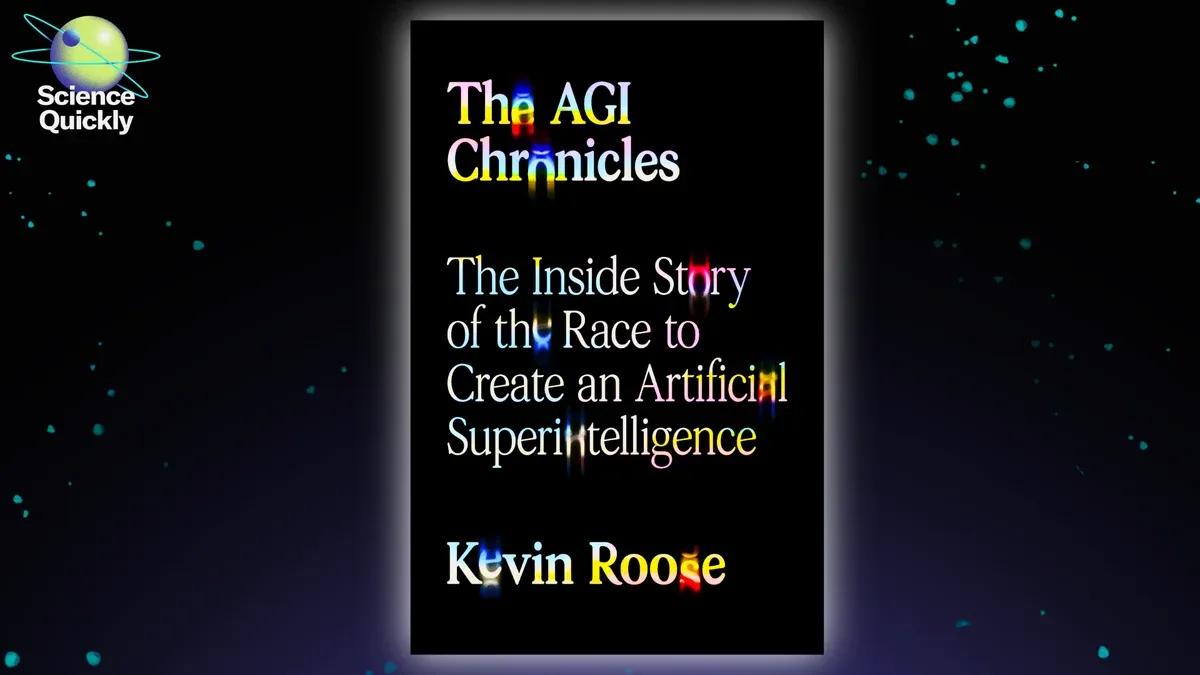
Kevin Roose Documents Decade of Explosive AI Growth
Tech journalist Kevin Roose has released The AGI Chronicles: The Inside Story of the Race to Create an Artificial Superintelligence, offering an inside look at how artificial general intelligence evolved from concept to reality
1
. The book chronicles the period from 2016 to 2026, which Roose describes as "extraordinarily historically relevant" for technological advancement1
.Roose, who spent a decade as a technology columnist for The New York Times and now cohosts the AI-focused podcast Machine Gods, had unprecedented access to the inner workings of major AI labs
2
. His perspective from within the San Francisco tech scene provides unique insights into how AI researchers transformed theoretical concepts into systems now used by billions of people.The Paradox Driving AGI Development
The AGI Chronicles reveals a striking contradiction at the heart of the race to build superintelligence: the people most afraid of AI are the ones building it
2
. AI researchers who took existential risks seriously concluded that if superintelligent machines were inevitable, they needed to be built by people who understood the dangers and would implement appropriate safeguards.Roose identifies three tribes within the AI world. Scientists view AGI as the ultimate intellectual challenge for discovering new drugs and curing disease. Seekers see it as an evolutionary turning point for humanity. Survivalists believe that if they don't build it responsibly, bad actors will
2
. Yet all three groups reach the same conclusion: they must accelerate development to stay ahead.Dario Amodei, CEO of Anthropic, exemplifies this paradox. He left OpenAI partly because of concerns about moving too fast, then founded a competitor that had to move just as quickly to remain competitive
2
. For years, new hires at Anthropic received a copy of Richard Rhodes' The Making of the Atomic Bomb, Amodei's favorite book, which explicitly influenced how he structured his career1
.Manhattan Project Comparisons and Ethical Considerations
Roose draws explicit parallels between the race to build superintelligence and the Manhattan Project, describing his experience living in San Francisco as similar to "living in Los Alamos in 1943 when the Manhattan Project rolled into town"
1
. This comparison isn't merely metaphorical—AI researchers actively study the Manhattan Project as a historical model for managing transformative technology development.The societal impact of AGI raises profound questions about institutional unpreparedness. Roose argues that "our institutions are dangerously unprepared for what comes next"
2
. The rapid transformation from AI that "basically didn't work in 2017" to systems solving Millennium Prize Problems in mathematics and conducting groundbreaking scientific research happened faster than regulatory frameworks could adapt1
.Related Stories

Big Blob of Compute: The Secret Behind AI Advancements
The AGI Chronicles reveals that the breakthrough enabling modern AI was surprisingly simple. For most of AI's history, researchers assumed building intelligent machines required understanding the human brain and encoding knowledge systematically. What actually worked was Amodei's "Big Blob of Compute" hypothesis outlined in a 2017 paper
2
.The approach involves taking a neural network, feeding it enormous amounts of data, and applying massive computational power. The model learns to recognize patterns the same way human toddlers do—through repeated exposure until understanding clicks
2
. This simple recipe reoriented OpenAI's research away from narrow applications toward the general approach that led to GPT-1, GPT-2, and ultimately the large language models transforming industries today.Feeling the AGI and Cultural Shift
Within San Francisco's AI community, researchers discuss "feeling the AGI" as a spiritual awakening that comes from living on the technological frontier
2
. Ilya Sutskever, former chief scientist of OpenAI, would lead chants at company gatherings and burn effigies, reminding colleagues: "This is not a tool. This is something more like a being"2
.This mindset treats AI development as a humanitarian mission: deliver AGI safely before someone else mishandles it. The people who felt the AGI early—who internalized the enormously fast pace of progress and built toward something unimaginably vast—became the leaders now running some of Earth's most powerful companies
2
.Roose emphasizes there is no finish line in AGI development. The goal posts keep moving as AI becomes more capable, meaning we're already living in the early, imperfect years of artificial general intelligence rather than waiting for its arrival
2
. Watch how regulatory bodies respond to this acceleration and whether the ethical considerations voiced by AI researchers translate into meaningful safeguards as capabilities continue expanding.References
Summarized by

Navi
[1]
[2]
Related Stories
The AGI Debate: Progress, Skepticism, and Societal Implications
12 Mar 2025•Technology

Trump Dismisses AI Safety Concerns as 'Hoax' While Industry Research Reveals Growing Risks
11 Sept 2026•Policy and Regulation

AI Safety Under Scrutiny as Self-Regulation Clashes With Calls for Federal Oversight
28 Sept 2026•Policy and Regulation

Recent Highlights
1
Google's AI Policy Forces Schools to Accept AI Overviews or Lose Search Access Entirely
Technology

2
Jensen Huang's Affair with Suspected Chinese Spy Exposes $7 Billion AI Chip Smuggling Network
Policy and Regulation

3
Anthropic launches Fable 5.2 and Mythos 5.2 with 20% price cut and 30% faster output
Technology

Recent Highlights
Today's Top Stories








Don’t drown in AI news. We cut through the noise - filtering, ranking and summarizing the most important AI news, breakthroughs and research daily. Follow topics that matter to you and stay ahead.


