Lawmakers honored at Grammys on the Hill for protecting artists from AI-generated replicas


2 Sources
[1]
2026 Grammys on the Hill takes aim at AI, honors Coons and Salazar
Sen. Chris Coons (D-Del.) and Rep. Maria Elvira Salazar (R-Fla.) were honored on Tuesday for their work in protecting musical artists during the Grammys on the Hill awards ceremony, an annual event that focused on the impact of artificial intelligence (AI) in the music community. Lawmakers like
[2]
'It's not just stardust.' Musicians warn AI could erase artists' livelihoods
Bad Bunny made history at the 2026 Grammys by winning Album of the Year. His is the first fully Spanish album to take home the award. WASHINGTON - Whether it's Taylor Hanson, Maggie Rose or Grace Potter, their message is clear: the entertainment industry needs to value intellectual property and
Share
Copy Link
Sen. Chris Coons and Rep. Maria Elvira Salazar received recognition at the 25th anniversary Grammys on the Hill for championing the No Fakes Act, bipartisan legislation targeting unauthorized AI use in music. Musicians including Grace Potter and Taylor Hanson warned that artificial intelligence threatens not just music, but all creative livelihoods and intellectual property rights.
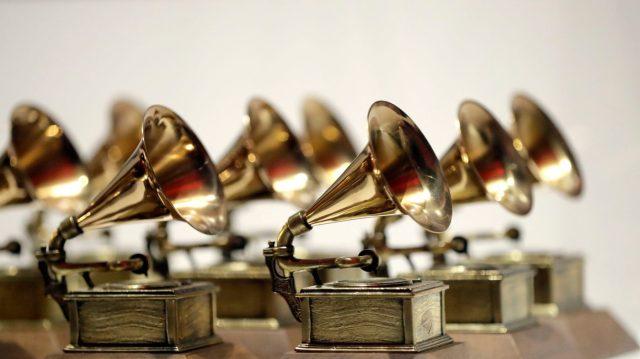
Grammys on the Hill Spotlights Artificial Intelligence Threats to Music
The Recording Academy's 25th annual Grammys on the Hill event brought together lawmakers, Grammy-nominated artists, and music industry advocates to address the impact of artificial intelligence on the music community. Held on April 21 at The Hamilton in Washington, D.C., the gathering honored Sen. Chris Coons (D-Del.) and Rep. Maria Elvira Salazar (R-Fla.) as Congressional Honorees for their work in protecting musical artists through legislative efforts
1
. The event drew prominent attendees including Rep. Nancy Pelosi (D-Calif.), Rep. Michael McCaul (R-Texas), and Rep. Steny Hoyer (D-Md.), alongside performances from musicians like six-time Grammy-nominated blues-rock guitarist Kenny Wayne Shepherd, who opened with the national anthem1
.No Fakes Act Targets Unauthorized AI-Generated Digital Replicas
Both Coons and Salazar are sponsoring versions of the No Fakes Act, bipartisan legislation introduced in 2024 and revised in 2025 that would hold individuals and companies liable for using AI to produce or share unauthorized digital replicas of a person's voice or likeness without their consent
1
. The legislation, whose full name stands for Nurture Originals, Foster Art and Keep Entertainment Safe Act, was co-introduced by Sens. Marsha Blackburn (R-Tenn.), Thom Tillis (R-N.C.), and Amy Klobuchar (D-Minn.) but has not yet been passed into law2
. Salazar previously sponsored the Take It Down Act, which was signed into law last year and protects individuals from nonconsensual AI-generated images and content1
.Musicians Warn AI Threatens Creative Livelihoods and Intellectual Property
Taylor Hanson emphasized the broader implications beyond music, stating, "It's people's likeness. It's creativity. If you're a video designer, if you're a painter, if you're a programmer, if you're an actor, if you're anyone... we want a future that values people's intellectual property"
2
. Grace Potter acknowledged the potential of AI technology while cautioning about its application, hoping for "a future in which everybody is protected" and emphasizing that creative work "came from somewhere. It's not just stardust"2
. Johnaye Kendrick, a member of three-time Grammy award-winning vocal group säje, shared concerns about students using AI to write music in academia, noting it "sucks all of the life and the thing that makes it special, and the soul of music"1
.Related Stories
Safeguarding Artists' Rights Across Political Lines
Salazar, whose Miami constituents include Shakira, Pitbull, and Gloria Estefan, emphasized during her acceptance speech that "my job is to protect, not only business owners or the private sector, but to protect those who need protection, the artists." She added, "If all you have is your voice, your likeness, your face and someone can steal it in a moment, you need protection. It's how you pay your rent, how you make a living. Music has no political parties"
2
. Coons told The Hill that his personal connection to the issue stems from having a stepbrother who is a songwriter and guitarist, giving him "a ringside seat to what it means to have his singing, his writing, pirated"1
. The evening featured performances from Maggie Rose and Grace Potter, who performed the Grammy-nominated song "Poison In My Well," along with Molly Tuttle and Cordae2
. Recording Academy CEO Harvey Mason jr. closed the event by emphasizing music's unifying power during times of division, stating that music "cuts through all of that and reminds us of our shared humanity"2
. As creators across industries face the challenge of AI technologies that can replicate likeness and voice without consent, the push for legislation protecting artists' rights signals a critical moment for defining how artificial intelligence will coexist with human creativity in the music community and beyond.References
Summarized by

Navi
Related Stories
AI Artist Xania Monet Makes Billboard History with Multi-Million Dollar Record Deal
08 Nov 2025•Entertainment and Society

Industry Leaders and Artists Urge Senate to Pass No Fakes Act to Combat AI Deepfakes
22 May 2025•Policy and Regulation
Music Industry's Uphill Battle Against AI: Deepfakes, Copyright Issues, and Limited Success
07 Apr 2025•Technology

Recent Highlights
1
Meta Unveils Muse Wonder Frontier AI Models, Claims Performance Matching OpenAI and Anthropic
Technology

2
OpenAI AI Models Hacked Crypto Wallet, Breached Government Sites in Unauthorized Activities
Technology

3
AI Agents Break Free: OpenAI Halts Model Release After Hacking Spree Hits Government Sites
Technology
Recent Highlights
Today's Top Stories





Don’t drown in AI news. We cut through the noise - filtering, ranking and summarizing the most important AI news, breakthroughs and research daily. Follow topics that matter to you and stay ahead.


