IMF Warns New AI Models Could Trigger Systemic Shock to Global Financial System


6 Sources
[1]
IMF warns new AI models risk 'systemic' shock to finance
The latest AI models pose a risk of "correlated failures" that could affect the financial system on a "systemic" level, the IMF has said, urging policymakers to prepare to deal with an "inevitable" breach. The fund warned that the capabilities of new AI models "elevate cyber risk to a potential
[2]
IMF Warns AI Will Supercharge Cyberattacks on Global Financial System - Decrypt
The IMF urges policymakers to treat cybersecurity as a core financial stability issue, calling for stronger resilience standards, cross-border coordination, and AI-powered defenses to match AI-powered attacks. The International Monetary Fund warned Thursday that artificial intelligence is rapidly
[3]
IMF warns of 'inevitable' AI-powered threats to global financial system
Washington (United States) (AFP) - The International Monetary Fund (IMF) warned on Thursday of the risks to global financial stability posed by cyberattacks powered by advanced artificial intelligence tools, calling for greater international cooperation on the issue. "IMF analysis suggests that
[4]
IMF Recommends New Resilience Standards to Counter AI Cyberattacks | PYMNTS.com
By completing this form, you agree to receive marketing communications from PYMNTS and to the sharing of your information with our sponsor, if applicable, in accordance with our Privacy Policy and Terms and Conditions. Because attacks are becoming faster, automated and more sophisticated, the
[5]

IMF Warns That Evolving AI Threat Could Upend Financial Markets
Advances in artificial-intelligence can strengthen markets' defense against cyber threats but the technology now has the capacity to cause a macro-financial shock too, the IMF warns. The International Monetary Fund's analysis suggests that extreme losses caused by a cyber incident could trigger
[6]

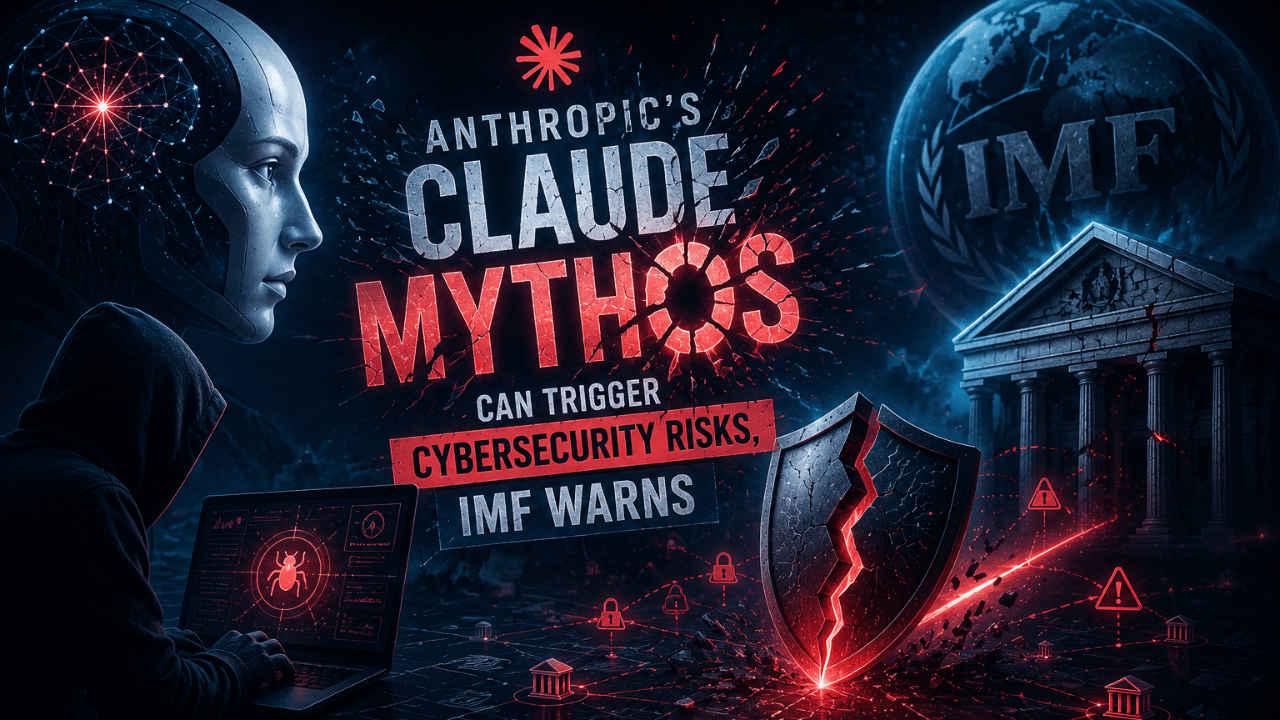
Anthropic's Claude Mythos can trigger cybersecurity risks, IMF warns
The IMF wants countries and companies to work together on stronger cybersecurity and AI defence systems. Claude Mythos was introduced recently by Anthropic, but unlike the other models that are available to the general public, the company announced that it would not be available to the general
Share
Copy Link
The International Monetary Fund has issued a stark warning that advanced AI models like Anthropic's Claude Mythos could cause correlated failures across the global financial system. The IMF urges policymakers to prepare for inevitable breaches, calling cyber risk a potential macro-financial shock that could disrupt payments, trigger liquidity strains, and erode confidence in banks worldwide.
IMF Raises Alarm on AI-Powered Cyber Threats to Financial Stability
The International Monetary Fund has issued a critical warning that the latest AI models pose an unprecedented threat to the global financial system, with the potential to cause "correlated failures" that could affect financial stability at a systemic level
1
. In its first major publication addressing the heightened cybersecurity threat from advanced AI, the IMF urged policymakers to prepare for what it described as an "inevitable" breach, emphasizing that the capabilities of new models "elevate cyber risk to a potential macro-financial shock"1
.
Source: Digit
Senior IMF officials wrote in a blog post published Thursday that advanced AI models can "dramatically reduce the time and cost needed to identify and exploit vulnerabilities, raising the likelihood of simultaneously discovering and targeting weaknesses in widely used systems"
1
. The fund's analysis suggests that extreme cyber-incident losses could trigger funding strains, raise solvency concerns, and disrupt broader markets3
.Anthropic's Claude Mythos Highlights Accelerating Threat
The IMF specifically pointed to the controlled release of Anthropic's Claude Mythos as evidence of how quickly risks are escalating. Anthropic revealed last month that Mythos had "found thousands of high-severity vulnerabilities, including some in every major operating system and web browser"
1
. The model proved capable of identifying and exploiting cyber vulnerabilities even when used by non-experts, marking a troubling shift where the barrier to launching sophisticated AI-powered cyberattacks is falling rapidly2
.
Source: FT
Anthropie plans to roll Mythos out gradually, having initially released it to a small group of 40 organizations that are mostly US-based, including Amazon, Microsoft, and large banks such as JPMorgan Chase
1
. This limited release has enabled some companies to receive more "patches"—technical fixes that close vulnerabilities found by Mythos. However, many non-US banks and financial groups have been left without access to the new AI model, raising concerns about uneven levels of protection across the financial system1
.Systemic Risk from Shared Infrastructure Amplifies Danger
The IMF cautioned that AI may concentrate systemic risk across the financial system, with many financial institutions relying on the same software and shared service providers, including a small number of cloud providers
2
. This interconnected nature means AI-assisted attacks can propagate across sectors like energy, telecommunications, and public services that rely on the same infrastructure5
. A single exploited weakness could ripple across many institutions simultaneously, potentially setting off confidence crises, payment disruptions, liquidity strains, and fire-sale dynamics across markets2
.
Source: France 24
While financial software is "harder to target than open-source infrastructure," the IMF noted that this mitigation is "likely to erode quickly as model training expands, capabilities diffuse and leaks occur"
1
. The fund emphasized that such powerful models give attackers the advantage over defenders because it is faster to find weak spots than it is to patch and fix them5
.Related Stories
Call for International Cooperation and Resilience Standards
The IMF stressed that "cyber risk does not respect borders" and urged improved international cooperation to address the threat
1
. Emerging and developing countries, which often have more severe resource constraints, may be disproportionately exposed to attackers targeting regions with weaker defenses3
. The geopolitical dimension looms large, with inconsistent oversight across countries potentially weakening the globally interconnected financial system2
.Because attacks are becoming faster, automated, and more sophisticated, policymakers should prioritize robust resilience standards, supervision focused on systemic transmission channels, and close public-private collaboration on threat intelligence and incident response
4
. The IMF recommended that cyber stress testing, scenario analysis, and board-level oversight of cyber risks are "indispensable" to defend the financial system1
.Building AI-Driven Defenses Against AI Threats
The IMF was careful to note that AI is also part of the solution. As attackers increasingly operate at machine speed, financial institutions are deploying AI-driven defenses of their own to detect threats, prevent fraud, and accelerate incident response
2
. Regulators should assess whether financial institutions are investing adequately in integration, governance, and human oversight of these tools4
.The fund emphasized that "defenses will inevitably be breached, so resilience must also be a priority, specifically to limit how far incidents spread and ensure rapid recovery"
1
. IMF chief Kristalina Georgieva warned last month that the global financial system was not ready for the cybersecurity threats posed by AI, telling CBS News: "We are very keen to see more attention to the guardrails that are necessary to protect financial stability in a world of AI"3
. U.S. Treasury Secretary Scott Bessent told Fox News Sunday that American banks are working to safeguard against AI-related cyberthreats, noting that "we've had in the past month was a step change in the power of one large language model"4
.References
Summarized by

Navi
[5]
Related Stories
Anthropic restricts Mythos AI model release, citing unprecedented cybersecurity capabilities
07 Apr 2026•Technology

Banks face dual AI risk as Mythos exposes vulnerabilities while fraud attacks surge globally
20 Apr 2026•Policy and Regulation

European Central Bank gives banks four months to counter AI cyber threats as regulators warn of systemic risks
07 Jul 2026•Policy and Regulation
Recent Highlights



Recent Highlights
Today's Top Stories









Don’t drown in AI news. We cut through the noise - filtering, ranking and summarizing the most important AI news, breakthroughs and research daily. Follow topics that matter to you and stay ahead.


