Anthropic warns US has until 2028 to secure AI dominance over China or risk authoritarian control


5 Sources
[1]
Anthropic urges Uncle Sam to kneecap China's AI ambitions before 2028
Claude maker warns authoritarian regimes could set the rules unless Washington tightens chip and model controls AI monger Anthropic wants America and its allies to tighten measures aimed at curbing China's AI progress, warning of the consequences if "authoritarian governments" take the lead rather
[2]
Anthropic warns China could overtake the US in global AI race by 2028
Anthropic is releasing a new policy paper warning that China could eventually overtake the United States in the global AI race if Washington fails to strengthen chip restrictions and defend its technological advantage. The paper argues that advanced artificial intelligence will soon become one of
[3]
The Critical Warning Hidden in Anthropic's US-China AI Stance
The escalating competition between the United States and China in artificial intelligence (AI) is reshaping global power dynamics, with far-reaching implications for governance and societal norms. In a detailed analysis, Matthew Berman highlights Anthropic's exploration of this rivalry, focusing on
[4]
US vs China: Anthropic warns how America wins or loses AI race
Chip smuggling and distillation attacks keep China close to frontier Right in the middle of Trump's official trip to China, Anthropic decided to publish a policy paper that goes beyond just throwing caution to the wind. It tries to gauge US-China AI competition and how it will unravel by 2028,
[5]
Anthropic warns AGI could arrive by 2028, says US must stay ahead of China in AI race
Anthropic called for tighter chip export controls and restrictions on overseas compute access to preserve the US advantage in AI development. Anthropic has published a new research and policy paper warning that artificial general intelligence (AGI) can come to reality by 2028 and urging the United
Share
Copy Link
AI developer Anthropic issued a stark warning that the US must tighten chip export controls and model access restrictions before 2028 to maintain its lead in the US-China AI race. The company paints two scenarios: one where democracies set AI norms, another where authoritarian regimes shape global AI governance through surveillance and censorship technologies.
Anthropic Issues Urgent Call for Stronger Controls in US-China AI Race
Anthropic has released a comprehensive policy paper warning that the United States has a narrow window until 2028 to secure its position in the global AI competition against China
1
. The San Francisco-based AI developer argues that advanced AI development will deliver transformational economic and societal impacts in the coming years, and the outcome depends critically on where the most capable systems are built first1
. The company's timing is notable, as the policy paper emerged during President Trump's official trip to China, deliberately inserting itself into ongoing discussions about technological sovereignty4
.
Source: Digit
Two Contrasting Futures for AI Governance by 2028
The Claude maker outlines two starkly different scenarios for what the world could look like in 2028, when it expects transformative AI systems to have emerged
1
. In the first scenario, America has successfully defended its compute advantage, allowing democracies to set the rules and norms around AI development1
. This would enable the US to guide AI toward transparency, accountability and ethical use, reinforcing democratic values3
. The second scenario presents a darker picture: China overtakes the US, leading to AI norms and rules shaped by authoritarian regimes, with the best models enabling automated repression at scale1
. Anthropic warns that Artificial General Intelligence (AGI) could arrive by 2028, describing a future with a country of geniuses in data centers where AI models can accelerate scientific discovery and even AI research itself5
.China's AI Ambitions Fueled by Workarounds and Innovation
Despite existing chip export controls, Chinese AI labs have built models that come close to those developed in America, according to the policy paper
1
. Anthropic attributes this to China's talent pool and their ability to exploit loopholes in export restrictions, along with distillation attacks that illicitly extract innovations from American companies1
. The company claims that export-controlled Nvidia silicon is either smuggled into the country or accessed via offshore datacenters, while Chinese firms employ distillation attacks on top US frontier models to stay competitive4
. According to one China-based cybersecurity analyst, the preview of Claude Mythos sent serious shockwaves, with the analyst describing it as facing a fully automatic Gatling gun while China is still sharpening swords4
.Semiconductor Export Controls as Critical Battleground
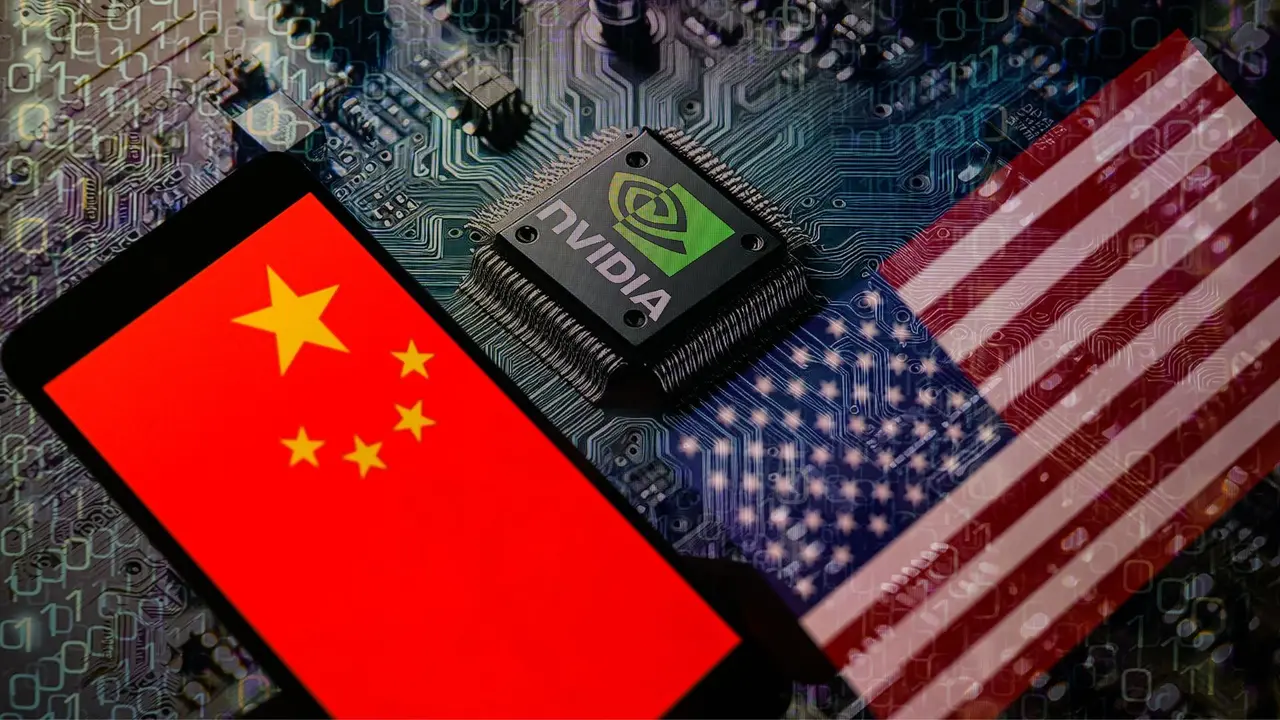
Anthropic analyzed Nvidia and Huawei's roadmaps for manufacturing silicon and concluded that Huawei will only be able to produce roughly 4% of Nvidia's total AI compute capability in 2026 and just 2% in 2027
4
. This means China cannot bridge the AI compute gap with Nvidia on its own, and if chip export controls are tightened, the US will have roughly 11 times more AI compute than China4
. The paper argues that advanced semiconductor chips are the most important ingredient in frontier AI development, and currently democracies, especially the US, dominate in producing the latest AI chips4
. The company called for tighter chip export controls and restrictions on overseas compute access to preserve the US advantage5
.
Source: Interesting Engineering
Geopolitical Implications and the Stakes of Authoritarian AI
The policy paper emphasizes that advanced artificial intelligence will soon become one of the world's most important geopolitical tools, shaping military power, cyber capabilities, economic growth and global influence
2
. In China, AI is already being used for mass surveillance, automated repression and military advancements, with AI-driven facial recognition systems deployed to track individuals in real-time and predictive policing algorithms targeting potential dissenters3
. The company specifically warned that authoritarian governments could potentially use powerful AI systems for mass surveillance, cyber operations and social control5
. If China overtakes the US in AI leadership, these practices could become international norms, threatening democratic freedoms worldwide3
.Related Stories

Criticism and Alternative Perspectives on Export Controls
The policy paper has drawn criticism for showing blinkered thinking by implying that China can only advance by riding on America's coattails and is incapable of innovating, despite the shockwaves generated by the release of the DeepSeek R1 model early in 2025, believed to be on par with the best US models
1
. Many experts argue against export control, suggesting DeepSeek as evidence that it actually helps China innovate around the hurdles faster4
. Jeffrey Ding, a prominent US-based expert on China's AI capabilities, points out how AI dominance among nations shouldn't just be based on innovation but also on diffusion of technology to people at scale4
. Another problem with the plan is that many countries, especially in Europe, view both American and Chinese AI supremacy as a threat to democracy, with a concerted push for digital sovereignty to minimize reliance on US technology1
.US Policy Response and Path Forward
Anthropic can draw little comfort from the Trump administration, which has a constantly shifting attitude toward the US-China AI competition
1
. Export controls were reportedly not high on the agenda during the President's trip to Beijing, and it was reported that the US has now cleared around 10 Chinese firms to buy Nvidia's second-most powerful AI chip, the H2001
. To maintain technological dominance, Anthropic argues the US must tighten export controls, disrupt distillation attacks and accelerate AI adoption in democratic nations, which could allow a 12 to 24-month advantage over Chinese rivals3
5
. Failure to act will allow China to export its AI infrastructure and models to the world, especially the Global South, with Huawei and Alibaba growing to take a greater chunk of the global AI market share4
.
Source: Geeky Gadgets
References
Summarized by

Navi
[2]
[3]
Related Stories
AI Safety Warnings Collide With Accelerating US-China Competition as Doomsday Predictions Spark Debate
16 Sept 2026•Policy and Regulation

US-China AI competition shifts as regulation clashes with China's cost-efficient model strategy
26 Jun 2026•Policy and Regulation
Mistral CEO calls China's AI lag a 'fairy tale' as debate intensifies over US-China AI race
23 Jan 2026•Policy and Regulation

Recent Highlights



Recent Highlights
Today's Top Stories






Don’t drown in AI news. We cut through the noise - filtering, ranking and summarizing the most important AI news, breakthroughs and research daily. Follow topics that matter to you and stay ahead.


