AI model detects hidden pancreatic cancer up to 3 years before doctors spot it on CT scans


3 Sources
[1]
New AI model spots hidden pancreatic cancer long before diagnosis
By Dr. Sanchari Sinha Dutta, Ph.D.Reviewed by Lauren HardakerMay 7 2026 A next-generation AI model uncovers invisible signs of pancreatic cancer on standard CT scans long before symptoms appear, potentially transforming early detection and improving outcomes in one of the deadliest cancers Study:
[2]
New AI model spots pancreatic cancer up to 3 years earlier than human doctors in test
A new AI tool finds early hints of pancreatic cancer in CT scans that doctors would otherwise miss, an early test found. A new artificial intelligence (AI) model can help doctors detect pancreatic cancer up to three years before physicians typically spot tumors on CT scans, a new study
[3]
AI learned to spot invisible signs of deadly pancreatic cancer before diagnosis
A new artificial intelligence system has detected early traces of pancreatic cancer in normal-looking scans an average of 475 days before patients were diagnosed. That extra time could move some patients toward surgery before the disease spreads beyond reach. Inside routine abdominal CT scans,
Share
Copy Link
Mayo Clinic researchers developed REDMOD, an AI model that identifies pancreatic cancer on routine CT scans an average of 16 months before clinical diagnosis. The system detected 73% of pre-diagnostic cases that appeared normal to radiologists, with detection rates nearly three times higher for scans taken more than two years before diagnosis. This breakthrough could enable earlier intervention in one of the deadliest cancers.
AI Model Outperforms Radiologists in Spotting Invisible Cancer Signs
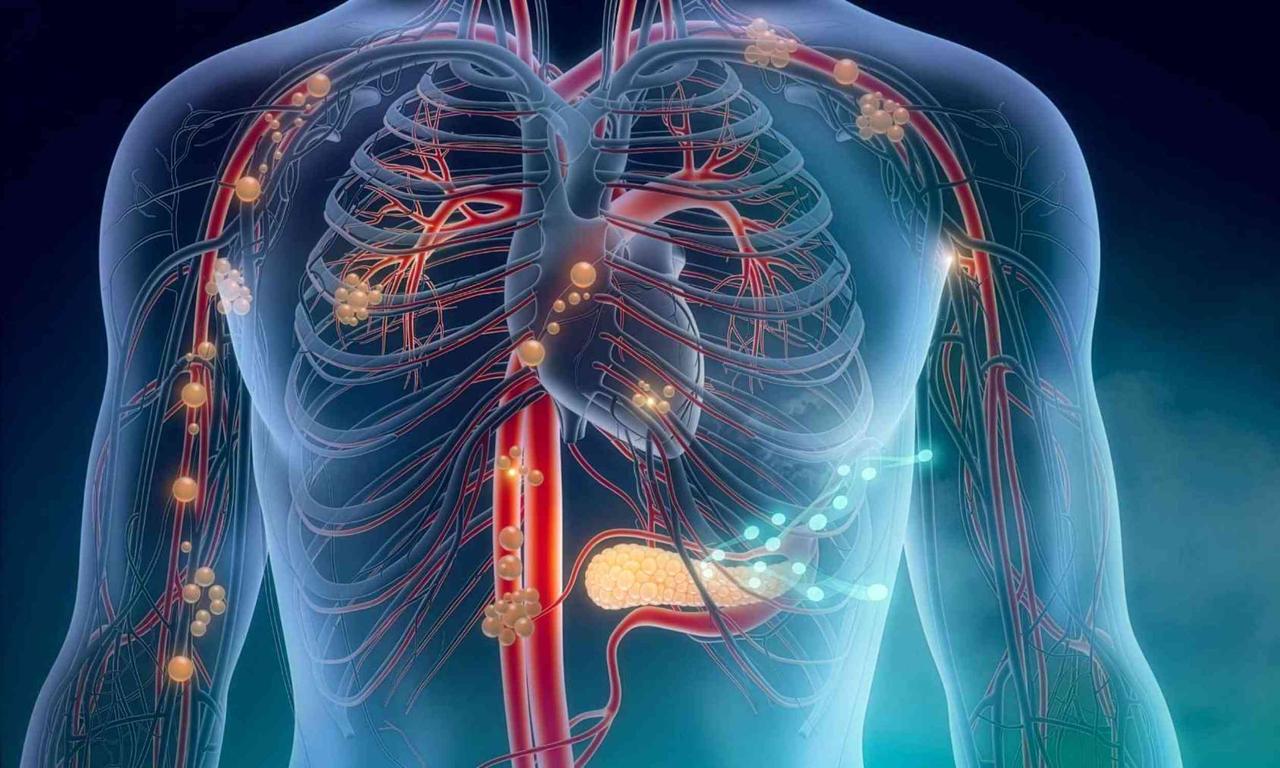
Researchers at Mayo Clinic have developed an AI model called Radiomics-based Early Detection Model (REDMOD) that can detect early signs of pancreatic cancer on routine abdominal CT scans well before symptoms emerge
1
. Published in the Gut journal, the study demonstrates how AI for cancer detection is transforming the landscape of pre-diagnostic detection for one of medicine's deadliest malignancies2
.
Source: Earth.com
The system identified 73% of hidden pancreatic cancer cases at a median lead time of approximately 16 months before clinical diagnosis, achieving an area under the curve (AUC) of 0.82
1
. This represents nearly a twofold higher detection rate than specialists reviewing the same scans without AI assistance. For scans obtained more than two years before diagnosis, the detection rate increased to nearly threefold, with the AI identifying 68% of cases compared to just 23% for radiologists3
.Why Early Detection Matters for Pancreatic Cancer Survival
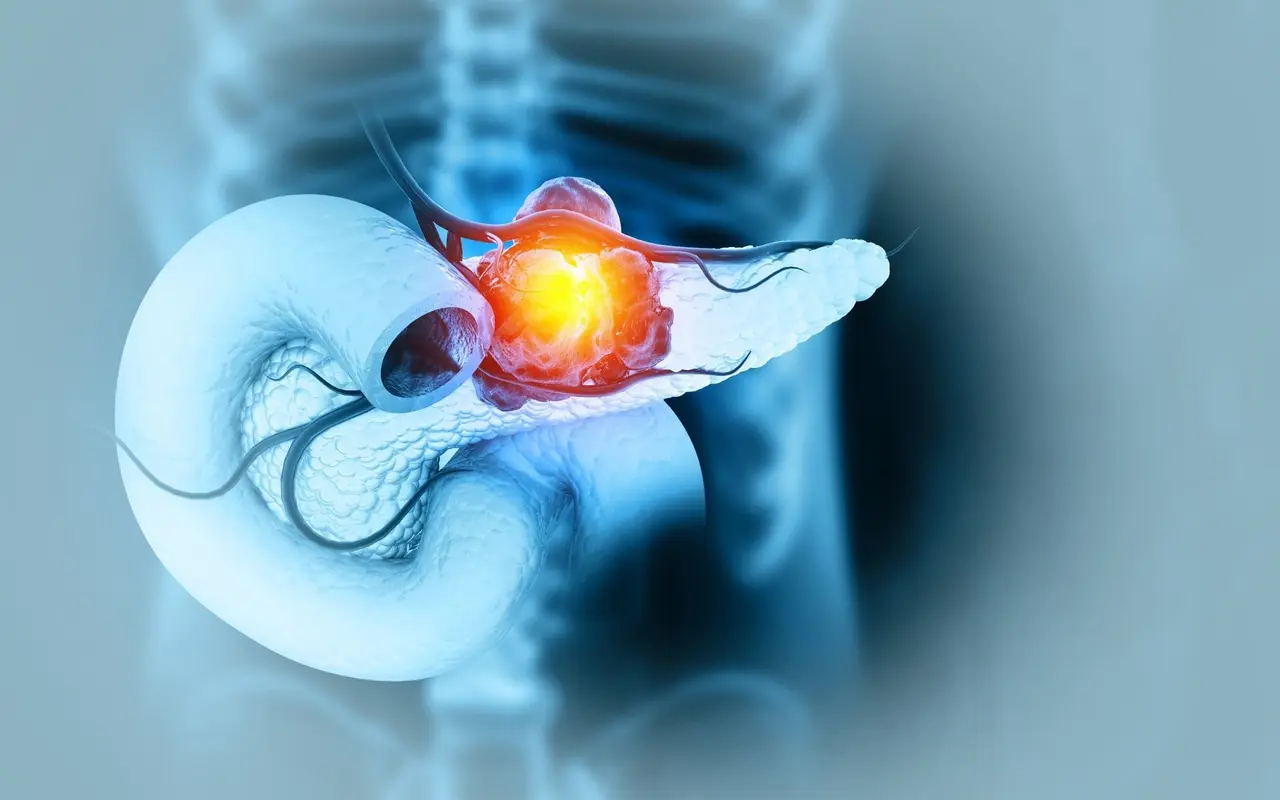
Pancreatic cancer remains one of the deadliest cancers, with a five-year survival rate of less than 15% in the United States
1
. According to Ajit Goenka, study co-author and radiologist at Mayo Clinic, "The five-year survival rate is about 12% to 13% because of our inability to detect it at a time when therapeutic options could work their magic"2
. The disease has been predicted to become the second leading cause of cancer-related deaths in the United States by 20301
.
Source: News-Medical
More than 85% of pancreatic cancer cases remain undiagnosed until the cancer spreads to other organs and becomes unmanageable by therapeutic interventions
1
. The National Cancer Institute estimates 67,530 new U.S. cases and 52,740 deaths in 2026, with survival rates dramatically better when cancer remains confined to the pancreas3
. Modeling studies show that increasing the rate of localized pancreatic adenocarcinoma detection from 10% to 50% could more than double survival rates3
.How REDMOD Detects Cancer on CT Scans Using Radiomics
The researchers trained REDMOD with 156 pre-diagnostic and 813 control abdominal CT scans from multiple institutes, then validated it using an independent set including 63 pre-diagnostic and 430 control scans
1
. The system converts CT scan images into mathematical representations, building a 3D model of the pancreas from 2D images and evaluating tissue texture pixel by pixel2
."It's taking each and every pixel in that image and it is quantifying the degree to which it differs from the rest of the organ, and then it's comparing that against the controls where you don't expect that change to be present," Goenka explained
2
. The mechanistic analysis revealed that the model captures subtle biological changes by analyzing quantitative imaging features that describe tissue texture and structure, with filtered radiomic features serving as primary drivers of predictive ability1
.Balancing Sensitivity and Specificity in AI-Powered Workflows
While REDMOD demonstrates superior sensitivity in improving survival rates through early detection, it achieved a specificity of about 81.1% in correctly identifying disease-free patients, compared with an average of 92.2% for human radiologists
2
. This false positive rate means some healthy patients could face additional imaging, worry, and potentially invasive testing3
."The radiologist was less likely to flag a healthy patient incorrectly," Goenka noted. "So there is a complementary role for both of them, for physician expertise combined with AI augmentation"
2
. The system exhibited consistent and stable predictive accuracy over time, with predictions agreeing on repeat scans in 90% to 92% of cases, supporting its use as a triage tool for longitudinal monitoring1
3
.Related Stories

Targeting High-Risk Groups for Maximum Impact
Broad screening for everyone would make little sense because pancreatic cancer remains relatively rare
3
. According to Tatjana Crnogorac-Jurcevic, professor of molecular pathology at Queen Mary University of London, "There are defined high-risk groups for which surveillance will be possible—individuals with a family history of pancreatic cancer, those with other cancer mutations, and patients with new-onset diabetes"2
.The National Institute for Health and Care Excellence (NICE) currently recommends urgent abdominal CT scans for individuals aged 60 years or older with glycemically-defined new onset diabetes and weight loss
1
. An AI flag could sharpen these clinical pathways, though testing must prove it improves outcomes rather than simply labeling risk earlier3
.What Comes Next for Clinical Trials and Implementation
Goenka hopes the model could be routinely implemented in clinics within the next five years, with clinical trials currently underway to further validate pre-diagnostic detection capabilities
2
. Future trials must test real patients before diagnosis, measure false positives, and track whether earlier alarms actually lead to curative treatment3
.The dataset also requires deeper validation across race, ethnicity, scanners, hospitals, and image quality to ensure the augmented intelligence system performs reliably outside research settings
3
. Someone with a high-risk result might receive repeat imaging, blood tests, or endoscopic ultrasound, though surgery would still require proof of disease given the serious risks of removing pancreatic tissue3
. The system's ability to detect cancer on CT scans obtained for unrelated medical issues positions it as a potentially valuable screening layer within existing abdominal imaging workflows.References
Summarized by

Navi
[2]
Related Stories
AI detects pancreatic cancer up to 3 years before diagnosis, outperforming radiologists by nearly 3x
29 Apr 2026•Health

AI Breakthrough: Deep Learning Model Revolutionizes Pancreatic Cancer Diagnosis and Treatment
13 Dec 2024•Health

ChatGPT-4 Matches Radiologists in Pancreatic Cyst Analysis, Promising Efficient Healthcare
16 Jul 2025•Health

Recent Highlights
1
Microsoft and Nvidia Launch Surface Laptop Ultra: A $2,599 AI-Ready PC With RTX Spark Chip
Technology

2
Trump Consulted Grok AI Before Ordering Venezuela Invasion and Capture of Nicolás Maduro
Policy and Regulation

3
Scientists Build AI Model That Reconstructs Images From Brain Scans in Record Time
Science and Research

Recent Highlights
Today's Top Stories







Don’t drown in AI news. We cut through the noise - filtering, ranking and summarizing the most important AI news, breakthroughs and research daily. Follow topics that matter to you and stay ahead.


